3 Steps to Fix Your Trail Braking for Good
If you want to know how to fix your trail braking, the answer almost always starts in the same place: the way you visualise what braking actually is. Most drivers treat the brake pedal as a single event — press, slow down, turn in. Once you break it into its two distinct stages and train each one deliberately, everything else clicks into place.
In this guide I'll walk you through the exact three-step process I use with my students. We'll cover the off-car muscle-memory drill, why trail braking is really a second steering wheel, and the fine-detail work that separates a clean lap from a great one.
Why You Need to See Braking in Two Stages
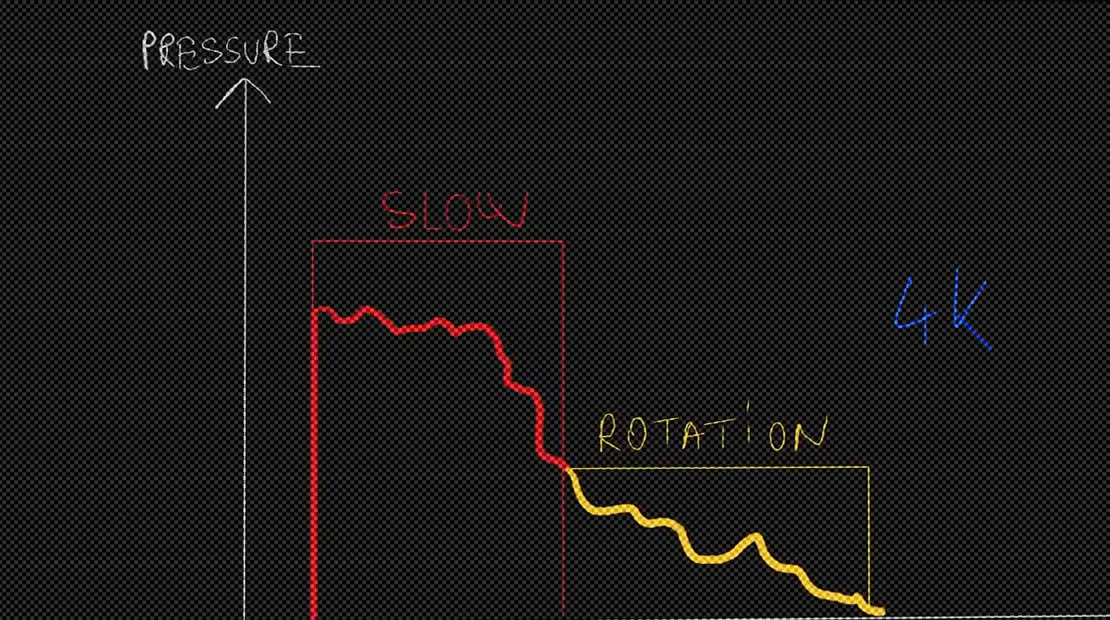
Look at any clean brake trace and you'll notice a shape: one bigger block that slows the car down, followed by a smaller, tapered section that exists purely to help the car rotate. Those are your two components.
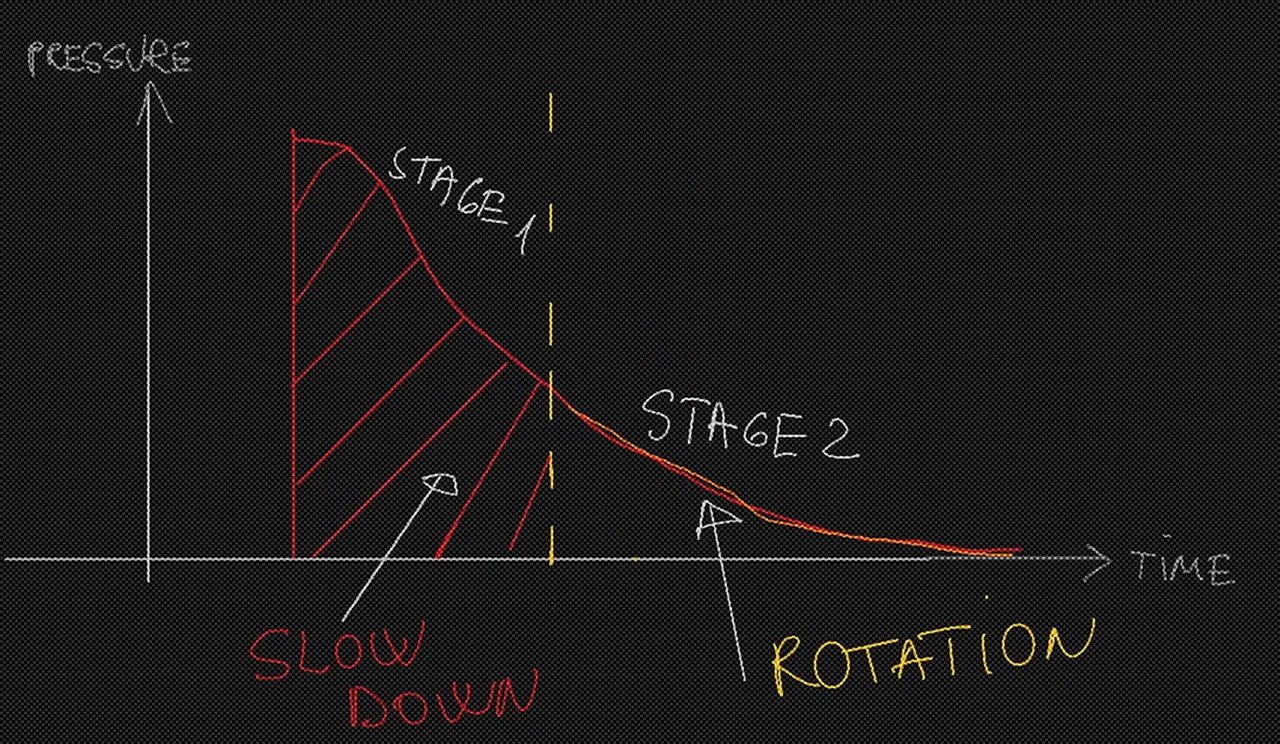
- Stage 1 — Threshold braking: the hard, high-pressure phase where the goal is purely to scrub speed.
- Stage 2 — Trail braking: a gradual, progressive release of brake pressure that carries load onto the front tyres through the corner entry and helps the car turn.
Both stages require their own muscle memory. You can't build that memory on the fly at 200 km/h — you have to practise it deliberately, and the best place to start is actually standing still.
Step 1 — Build the Muscle Memory Off-Track First
This is the drill I give every driver who tells me their trail braking feels inconsistent. You don't even need to be moving.
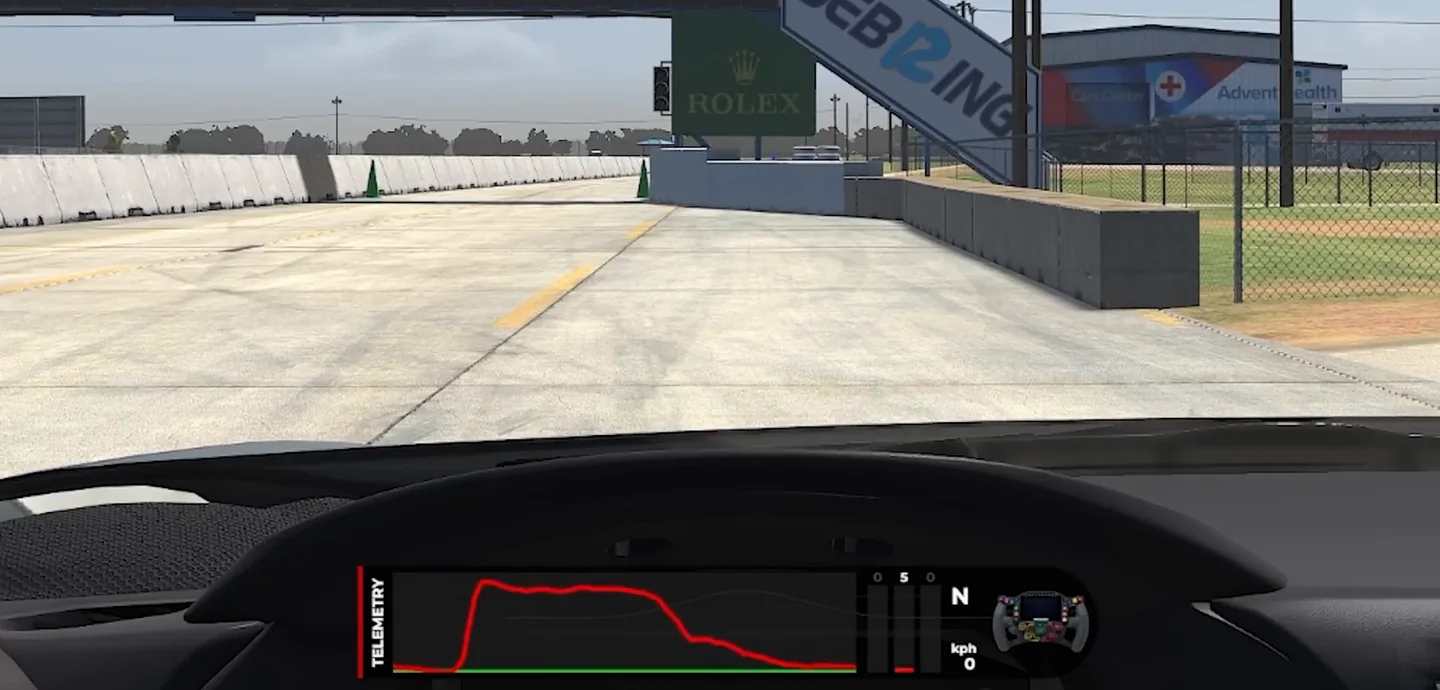
The Stationary Pedal-Shape Drill
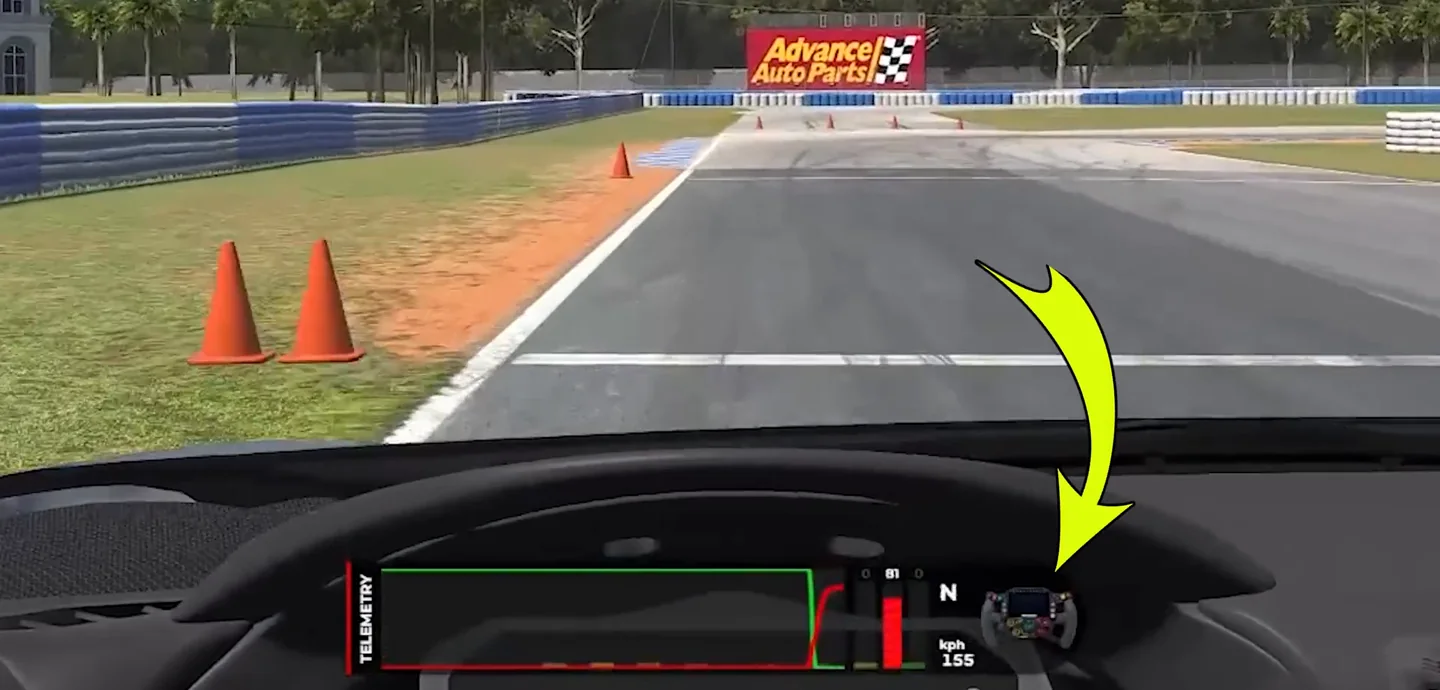
- Sit in your rig with a telemetry overlay visible on screen — any tool that draws your brake trace in real time.
- Press the brake pedal hard and hold constant pressure for a couple of seconds. This is your threshold block.
- Now gradually release the pedal so the trace tapers down smoothly. Overexaggerate the shape at first — you want a long, obvious taper, not a sudden drop.
- Check whether the shape on screen roughly matches the classic trail-braking profile. Repeat until hitting that shape feels automatic.
GT car vs. formula car: in a GT car, bias your shape toward a heavier initial hit. In a formula car, attack the brakes hard but accelerate the trailing release — the taper is steeper and shorter.
Best track for live practice: pick a circuit with minimal elevation change so mechanical grip stays consistent throughout the lap. Sebring is a great starting point for this reason.
Once you can draw that shape without thinking — once your foot just does it — you have the foundation. Stage 1 is done. Move to Step 2 only when this feels automatic, because Step 2 demands your full mental attention. The same rule applies one level up: trail braking is the fourth of the twelve driving techniques, and it wants vision, line and straight-line braking repeatable before you start it.
Step 2 — Understand Why Trail Braking Makes You Faster
The whole reason we trail the brakes isn't just to look smooth on a data overlay. It's to rotate the car sooner.
When you carry brake pressure through the early part of a corner, the weight stays loaded over the front axle. The nose dips, the front tyres gain grip, and the rear loses a little. The car wants to rotate. That rotation means you get through the apex with more speed aligned in the right direction — and you can get back on the throttle earlier.
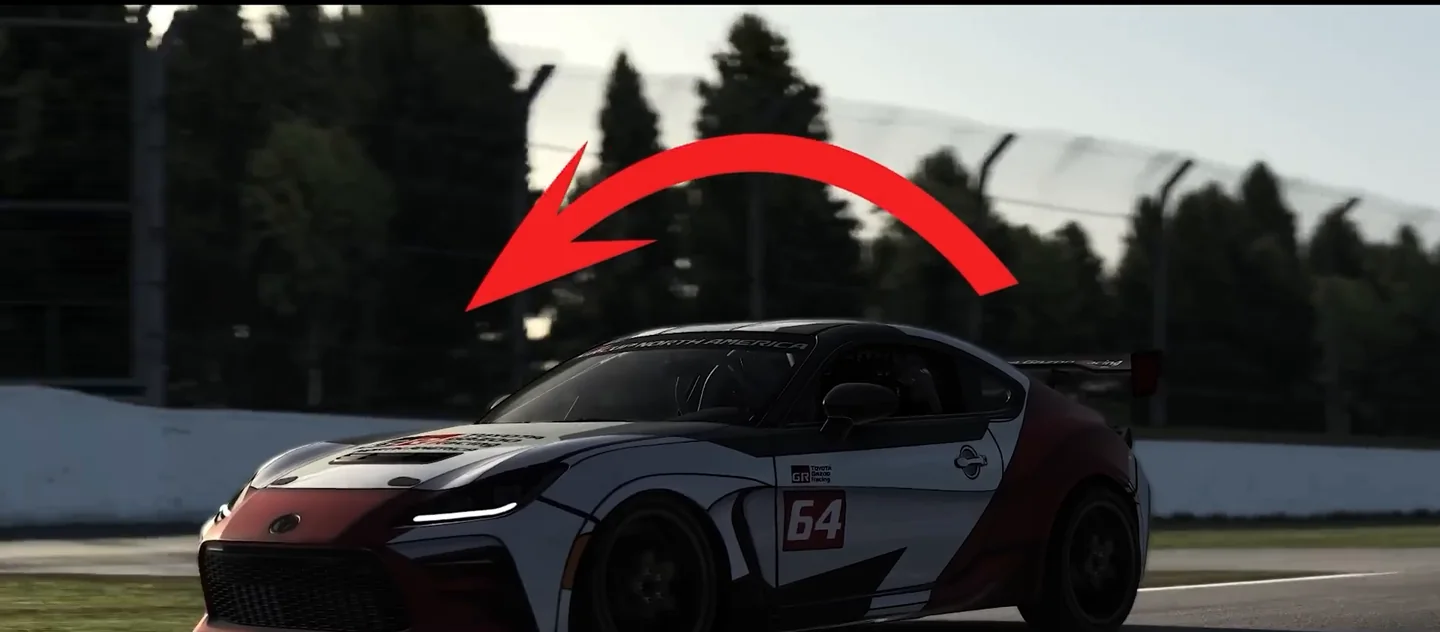
We're slowing the car down in order to go quicker. If the car rotates sooner, we get on the gas earlier. The time you gain on the exit is almost always more than anything you can find on the entry.
The fastest way to feel this — really feel it, not just understand it intellectually — is to go from one extreme to the other.
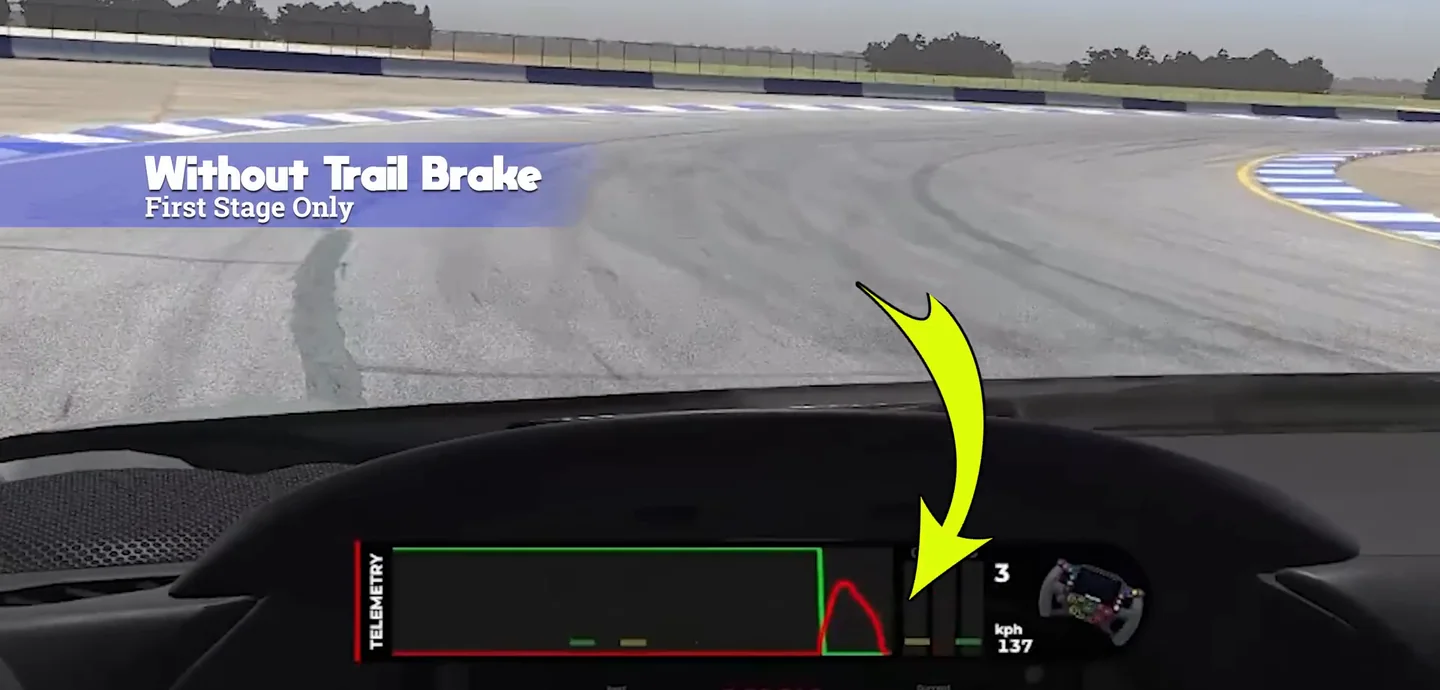
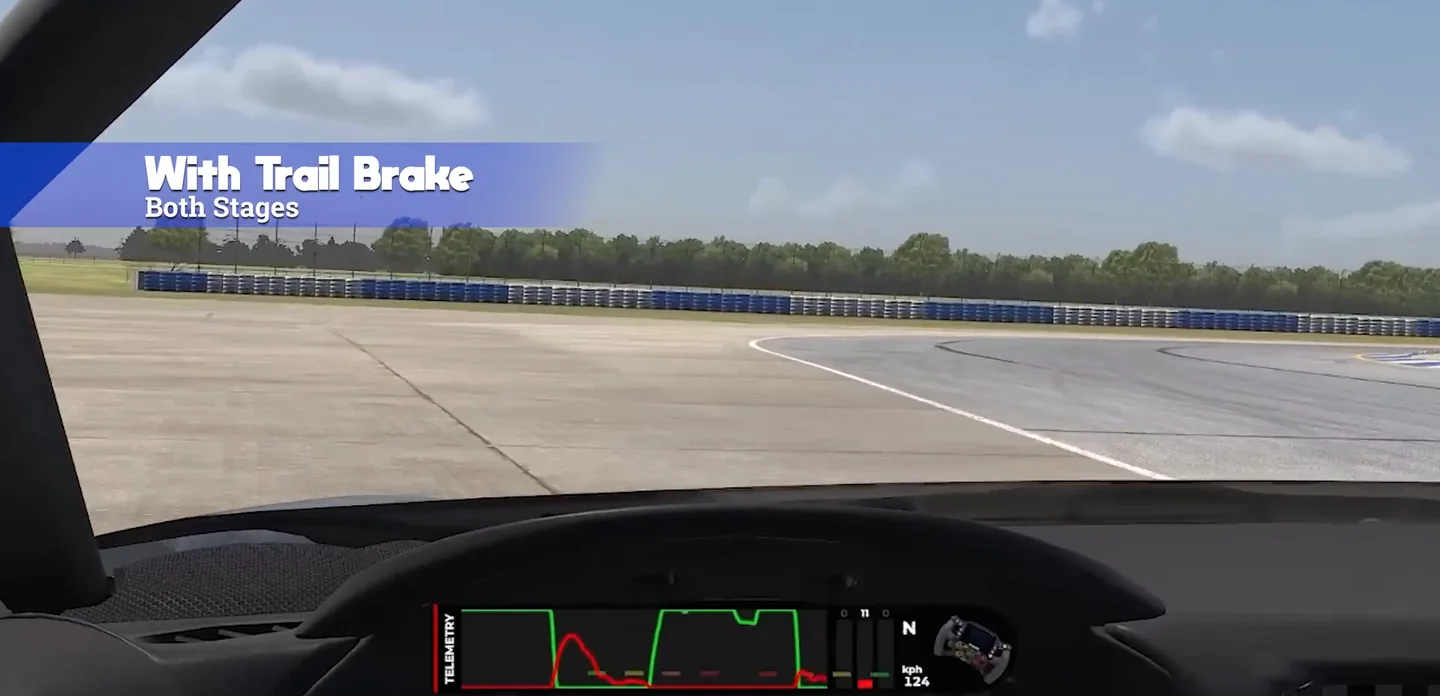
The Two-Extreme Comparison Exercise
- First lap — zero trail braking. Complete Stage 1 of braking, then drop the pedal completely before turning in. Note how much steering lock you need to navigate the corner. The car feels lazy, front end is light, and you're working the wheel hard.
- Second lap — add trail braking. Apply the muscle memory from the stationary drill. Keep progressive pressure on the pedal as you start turning in. Use the same steering angle as the first lap.
- Notice the difference. With the same steering angle the car will now turn too much — it feels like it wants to oversteer. That's your signal that the trail braking is working.
Reduce steering angle to compensate. You now have two inputs doing the rotating work, not one.
I describe it to my students like this: once you add trail braking, you effectively have two steering wheels — one in your hands and one under your right foot. Your job is to coordinate both. The third one is the throttle, and how all three change the car's balance is the mechanism underneath this whole page.
Step 3 — Refine the Resolution From 360p to 4K
Here's where most drivers plateau. They learn to trail brake, they feel the rotation benefit, and then they get stuck because the car feels inconsistent — sometimes it understeers, sometimes it snaps loose. That's a resolution problem.
Think of it this way: in Step 1 we drew a rough two-block shape, like a 360p image. Now we need to zoom in and see every fine detail — every percentage of brake pressure, every degree of steering angle. We're going to 4K.
The Tyre Grip Budget
Braking and steering are not independent inputs. They share a fixed grip budget from the front tyres. The more you brake, the less you can steer — and vice versa. This relationship has to be built into everything you do with trail braking.
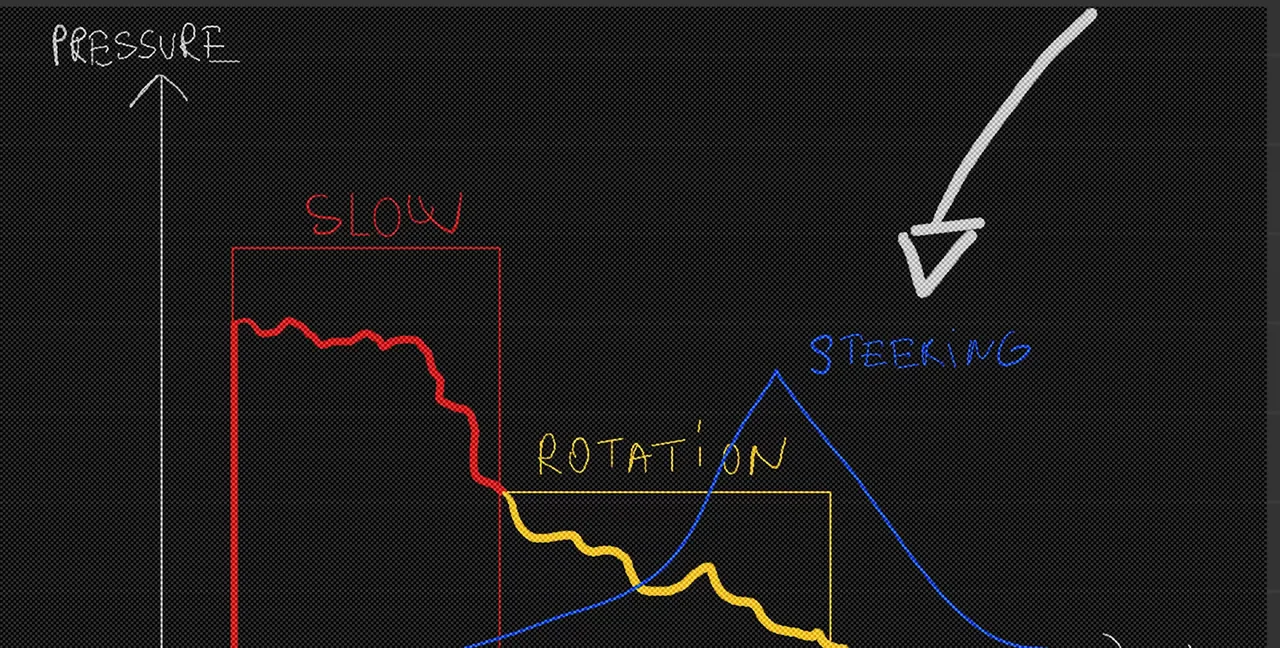
- During Stage 1 (threshold braking), keep the steering wheel almost straight. The tyres' entire grip budget is allocated to slowing the car. Add even a few degrees of steering and you're forcing the tyre to split that budget — which means you have to brake less hard to avoid a lock-up or push. That makes braking inefficient.
- During Stage 2 (the trail), you're progressively releasing brake pressure. As that pressure comes off, grip frees up for turning. This is exactly when you should be opening up the steering — gradually applying more angle as the brake pressure reduces.
Finding the Neutral Balance — the G-Spot of Sim Racing
The fine-detail challenge of trail braking is finding the exact combination of brake percentage and steering angle that keeps minimum speed high and the car in a neutral, balanced state. Miss it in one direction and you get understeer — too much brake pressure for the steering angle you've applied pushes the front tyres past their limit and the car won't turn. Miss it in the other direction and you get oversteer — reduce the braking too much while holding the same steering angle and the rear goes loose because the car still has speed but now the nose is digging in.
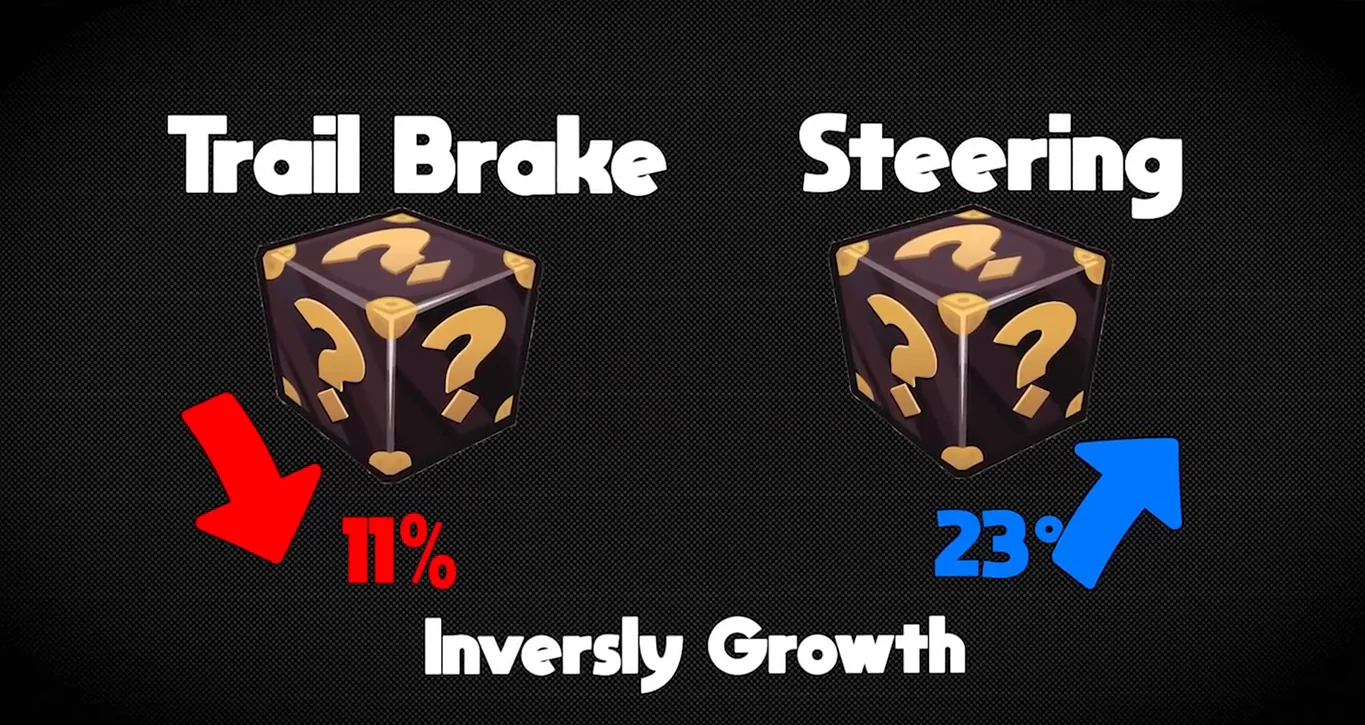
- Understeer signal: braking too hard relative to the steering angle. The front washes wide. Back off the steering slightly or release the brake a little faster.
- Oversteer signal: trailing too softly with too much steering angle. The rear snaps. Either increase the brake pressure marginally or reduce the steering angle.
Every corner has its own golden ratio of these two inputs. Learning to read the car's balance and micro-adjust both pedal and steering in real time is what separates a driver who understands trail braking conceptually from one who actually uses it to find lap time. If you can't tell which way you're missing it, work on it with a coach who can see both inputs as you drive.
Putting It All Together
The three steps build on each other deliberately. Nail the muscle memory first so the shape is automatic. Then use the two-extreme comparison to feel the rotation benefit and recalibrate your steering. Finally, zoom into the fine details — respect the tyre grip budget during threshold, open the steering as the trail releases, and hunt for the neutral balance that keeps the car on the edge without tipping it over.
And if none of the usual faults describe you — the release is smooth, the trace looks right, and you are still slow — the problem may be one habit repeating across several corners rather than a trail-braking fault at all.
And if the honest answer is that the release is not the only thing missing, trail braking is the wrong place to start. Car control, braking and references come first, and the course path starts there. GT3 drivers also have a class-specific version of this fault — ABS intervening in the release phase — which the GT3 driving guide covers with the instructor's own drawings.
Start with the stationary pedal drill tonight, pick Sebring or another flat circuit for your first live session, and go through the two extremes back to back. The improvement will be immediate and obvious — and once you've felt the difference, you won't want to drive any other way.
Fix your trail braking FAQ
What is trail braking and why does it make you faster?
Trail braking is the second stage of braking: instead of fully releasing the pedal before turn-in, you taper pressure off gradually as you start to steer. That trailing pressure keeps weight loaded over the front tyres, so the nose grips and the car rotates toward the apex sooner. Because it points in the right direction earlier, you can get back on the throttle sooner, and the exit-speed gain almost always outweighs anything you find on entry.
What is the correct brake release shape for trail braking?
Picture two blocks: a tall, square threshold section where you scrub speed, then a long, smooth taper that bleeds pressure off as you steer in. The release should be progressive, never a sudden drop off the pedal. In a GT car bias the shape toward a heavier initial hit with a gentler taper; in a formula car attack the brakes hard then release faster, giving a steeper, shorter trail. Practise the shape standing still until your foot draws it automatically.
When should I get back on the throttle after trail braking?
There is no jump straight from brake to throttle. As you release the last of the brake pressure near the apex, the front grip you used to rotate frees up and the steering starts to unwind, and that is your throttle cue. Squeeze the throttle in progressively as you open the wheel, not all at once. If the car still feels like it is rotating hard, you are off the brake but not ready for full power yet, so feed it in smoothly.
How do I fix trail braking understeer that pushes the front wide?
A front-wide push on entry almost always means you are braking too hard for the steering angle you have applied, so the front tyres are over their grip budget and will not turn. Braking and steering share one front grip budget, so fix it by bleeding pressure off a little faster as you turn in, or by carrying slightly less steering until the pressure drops. As the brake comes off, open the wheel progressively rather than holding a fixed angle.
How do I fix trail braking oversteer or a snap on corner entry?
A snap of oversteer on entry usually means you released the brake too quickly while still holding a lot of steering, so the nose digs in and the rear goes light just as it unloads. The car had the speed but lost its front-rear balance. Either feed the last of the brake off more smoothly, or trim a touch of steering angle as you release. If the rear does step out, a small dab of brake settles it before you reapply.
How do I practise trail braking and check my brake release shape?
Use a live pedal overlay so you can see your release in real time: most sims have a built-in inputs or pedal-trace box, and ACC also exports a MoTeC telemetry session you can review after a lap. Start with the stationary pedal drill to groove the taper, then pick a flat, low-elevation circuit so mechanical grip stays consistent. ACC's GT3 cars reward a heavier hit and a smooth trail, while iRacing's wide car range lets you compare GT and formula shapes.
This guide is part of the free library at GitGud Racing Academy — an online sim racing academy built around weekly lap reviews, structured courses, drills and training tools.
Train this the right way
Reading is step one. Build it into muscle memory with structured, car-specific courses and personal lap reviews from a coach — inside the Academy.
Join the Academy · $39.99/mo incl. VATWatch the full video on YouTube