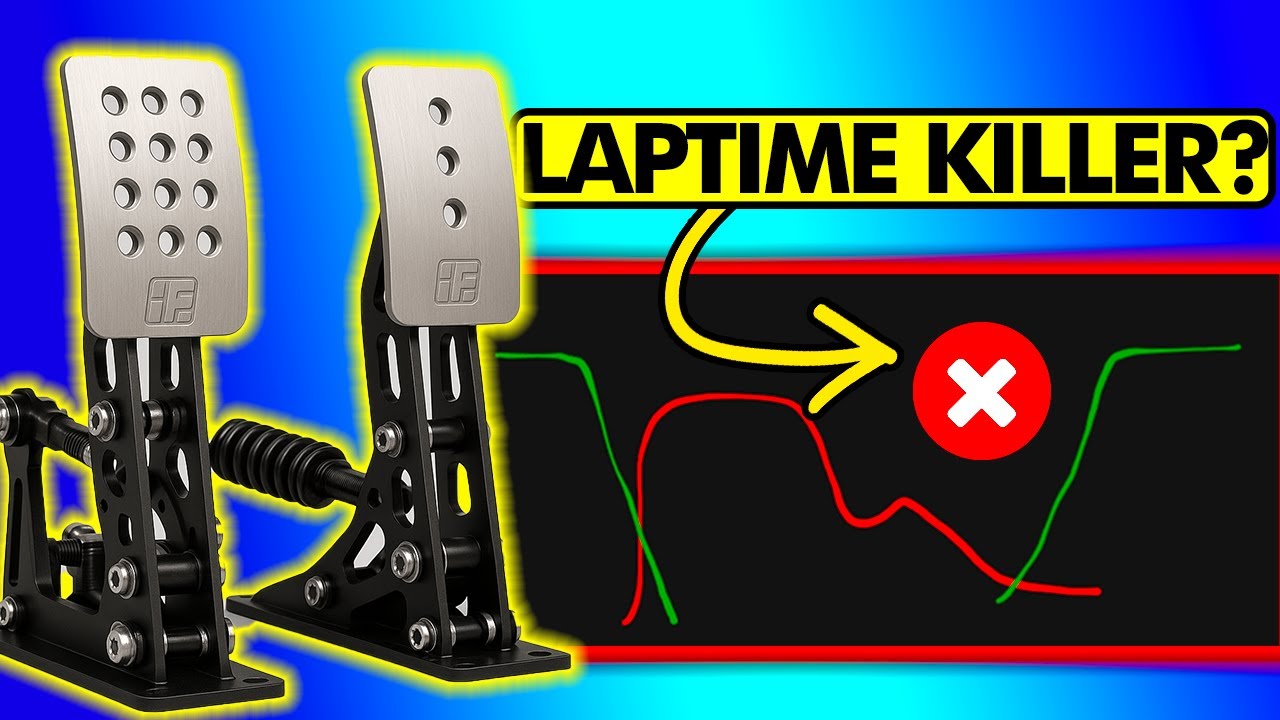
Conspit CHS Review: Best Value Dual Shifter of 2026?
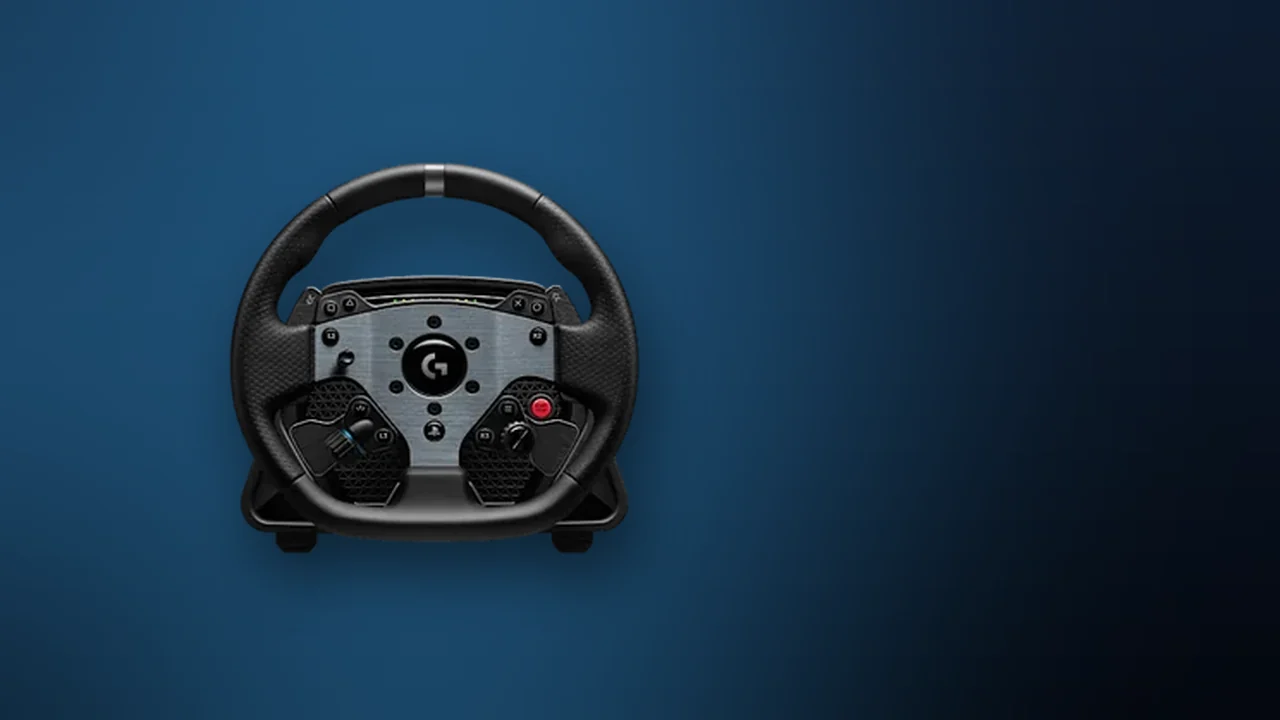
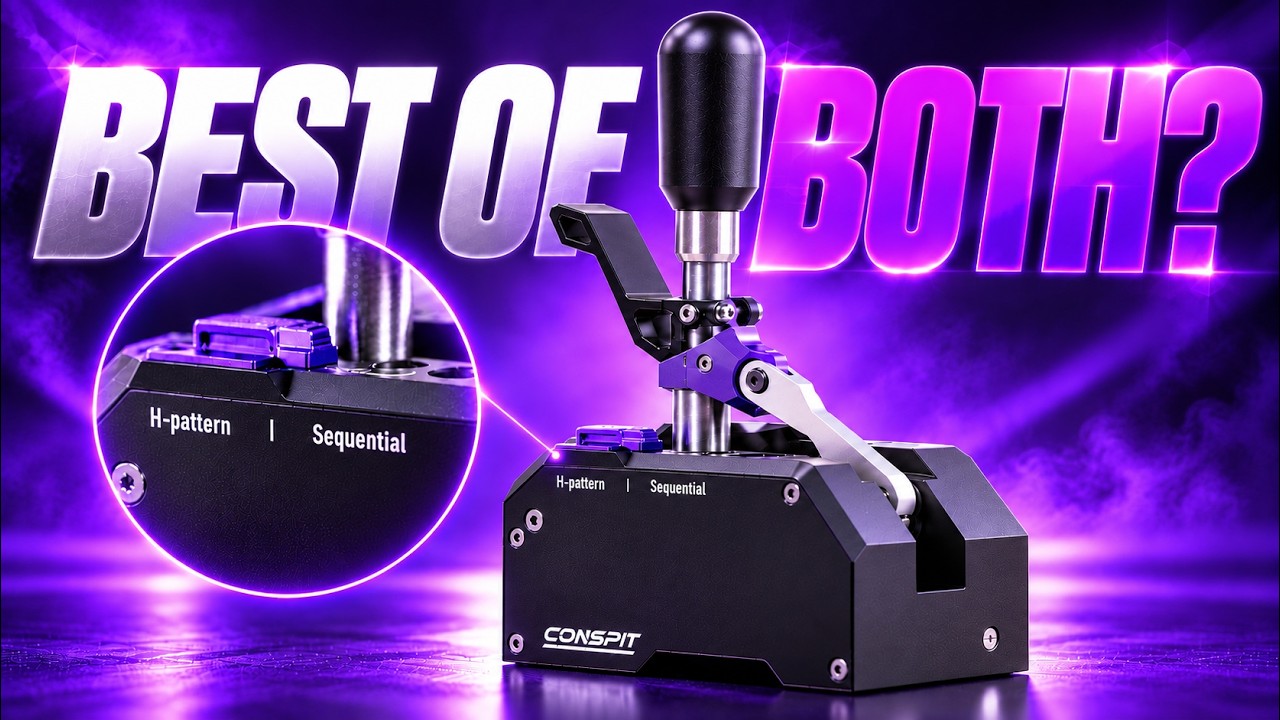
The H-pattern is among the most car-like I have used, and the sequential is very good for a dual shifter. Here is where it gives ground, and to what.
Free Guides
Want to actually get faster at sim racing? Start here. I'm Marian Barbieru — coach to 1,500+ drivers, 25M+ views — and these guides break down the braking, racing lines, force feedback and setup that win lap time on iRacing, ACC and beyond.
Free Tools
FOV Tool
Get the correct field of view for your monitor + distance, converted for every major sim.
Open the tool
FFB Tool
Pick your wheelbase + sim for cross-checked force-feedback settings — base firmware and in-game, for every major brand.
Open the tool
Monitor Tool
Compare single, ultrawide and triple screens side by side, then set yours up in the right order: seat, screen, measurements, FOV.
Open the tool
Ergonomic Tool
Four angles from one photo. Which sit outside the band for what you drive, in which direction, and what to change first.
Open the tool
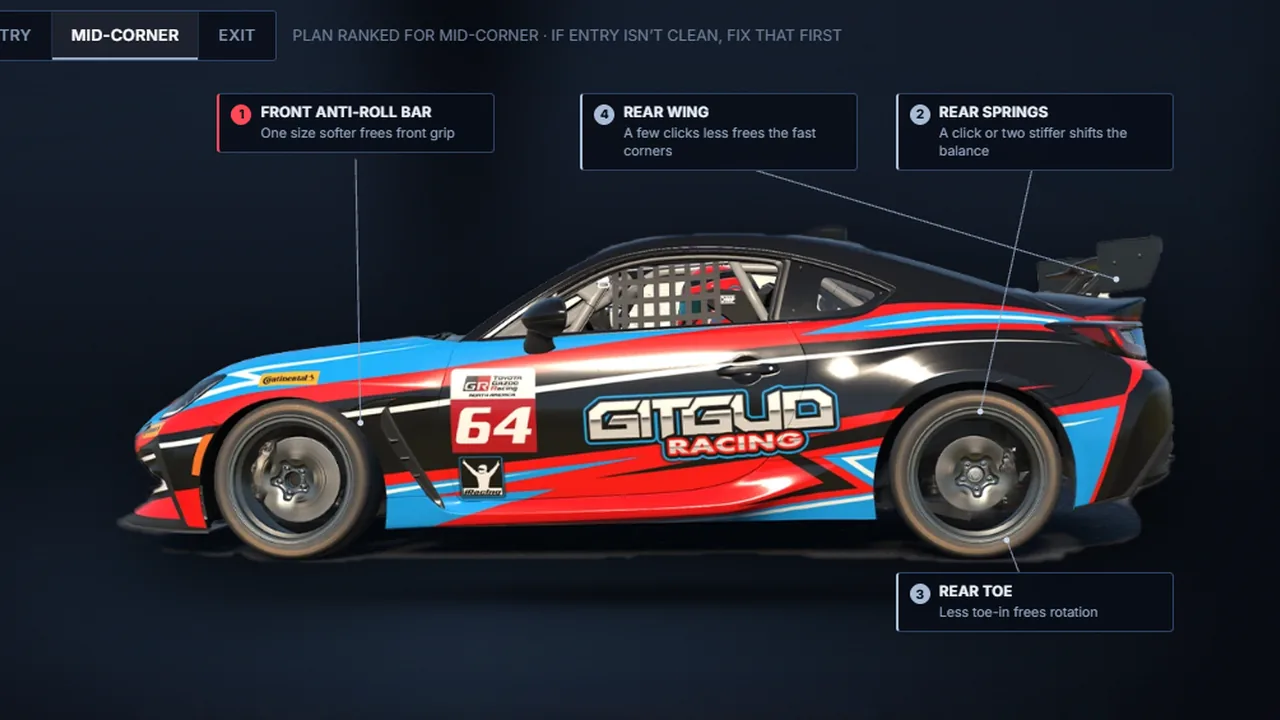
Car Setup Tool
A sim racing setup troubleshooter for two iRacing cars: pick the handling problem and corner phase, get ordered setup changes with their trade-offs, then test one at a time.
Open the toolExplore practical guides on braking, cornering, racecraft, practice and setup. Choose a topic or search for the problem you’re working on.
The H-pattern is among the most car-like I have used, and the sequential is very good for a dual shifter. Here is where it gives ground, and to what.
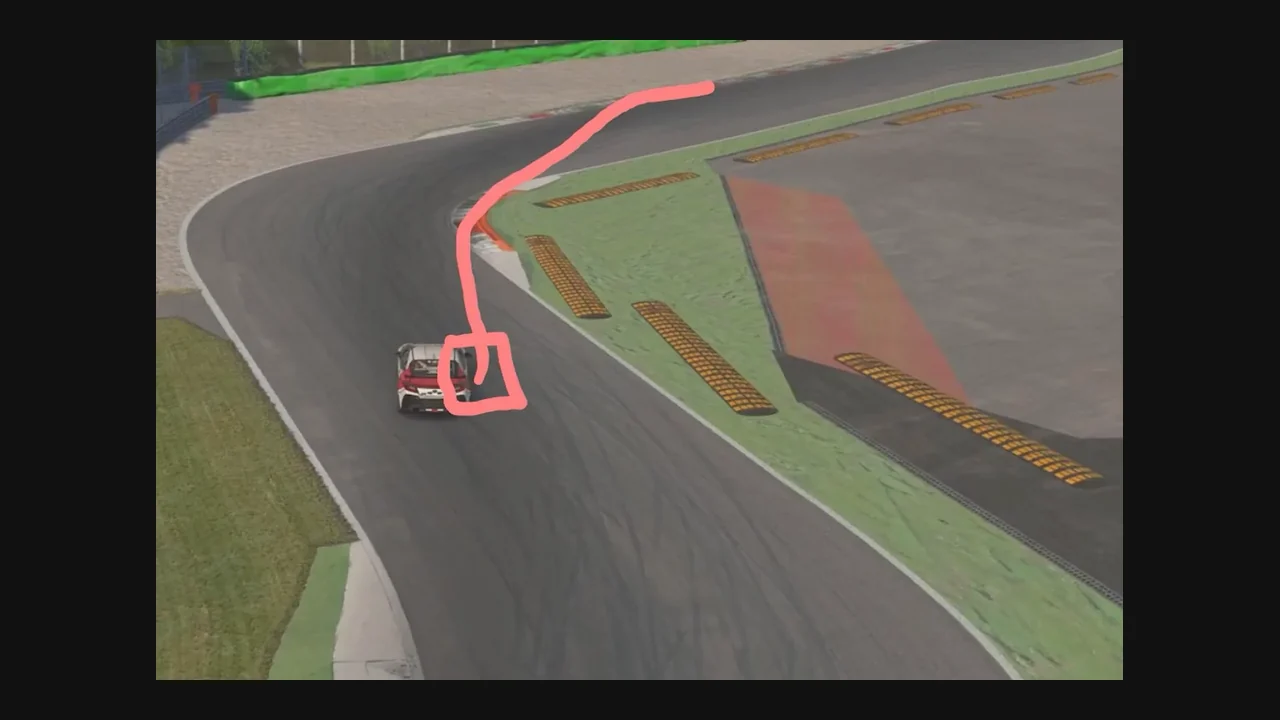
Two apexes, one corner. The decision is how wide to run in the middle, and it has a real answer: car type first, then the straight that follows.
A chicane is decided by where you are on the exit of the first turn. One or two metres there changes the arc you get through the second.
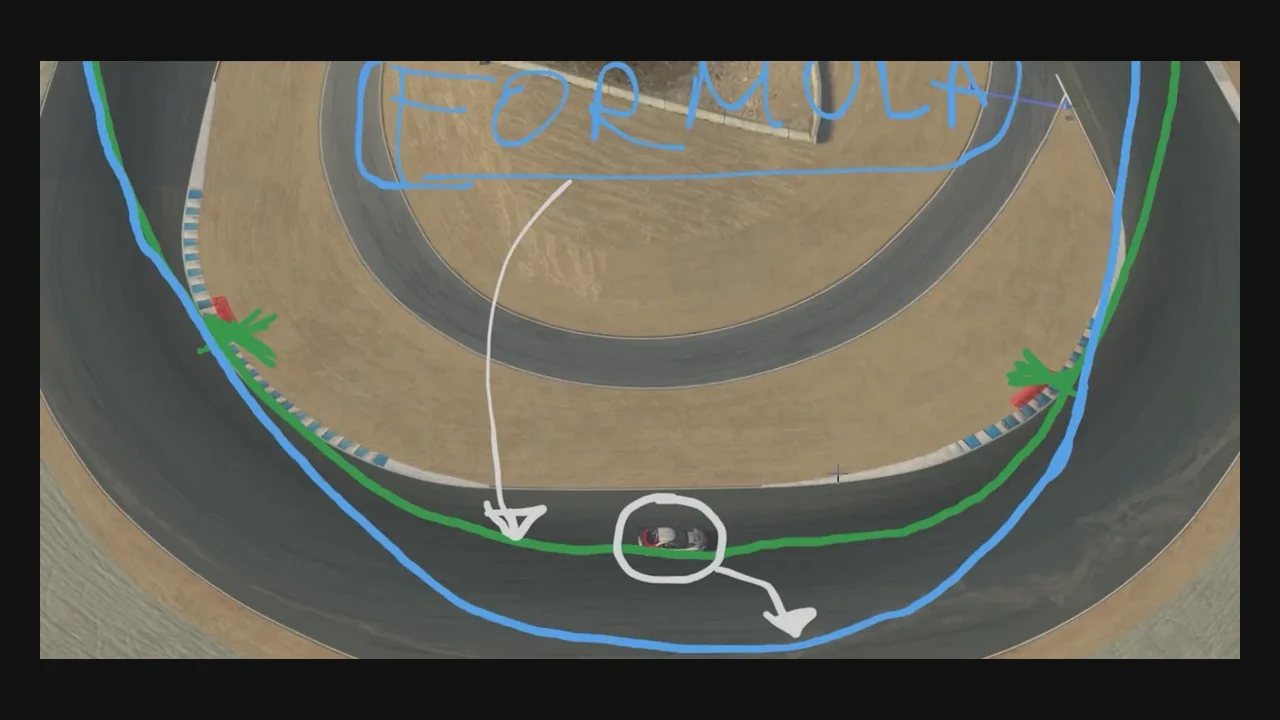
The rounded arc carries more speed and the late apex gets you out sooner. Which one wins, why, and the drill that settles it for your car.
Every corner belongs to a family, and the family tells you what it punishes before you have driven a lap of it. The shapes, seen from above.
Racecraft is what you do once the track is no longer empty: read the other driver, position early, and choose the move that wins the race rather than the corner. With the footage.
A little entry oversteer, created on purpose, points the car at the apex sooner and gets you to the throttle earlier. The four ways to induce it, and where too much begins.
Steering and braking share one set of front tyres. Where the steering belongs in each phase of a corner, the kick that finds the limit, and the mistake of adding lock after the apex.
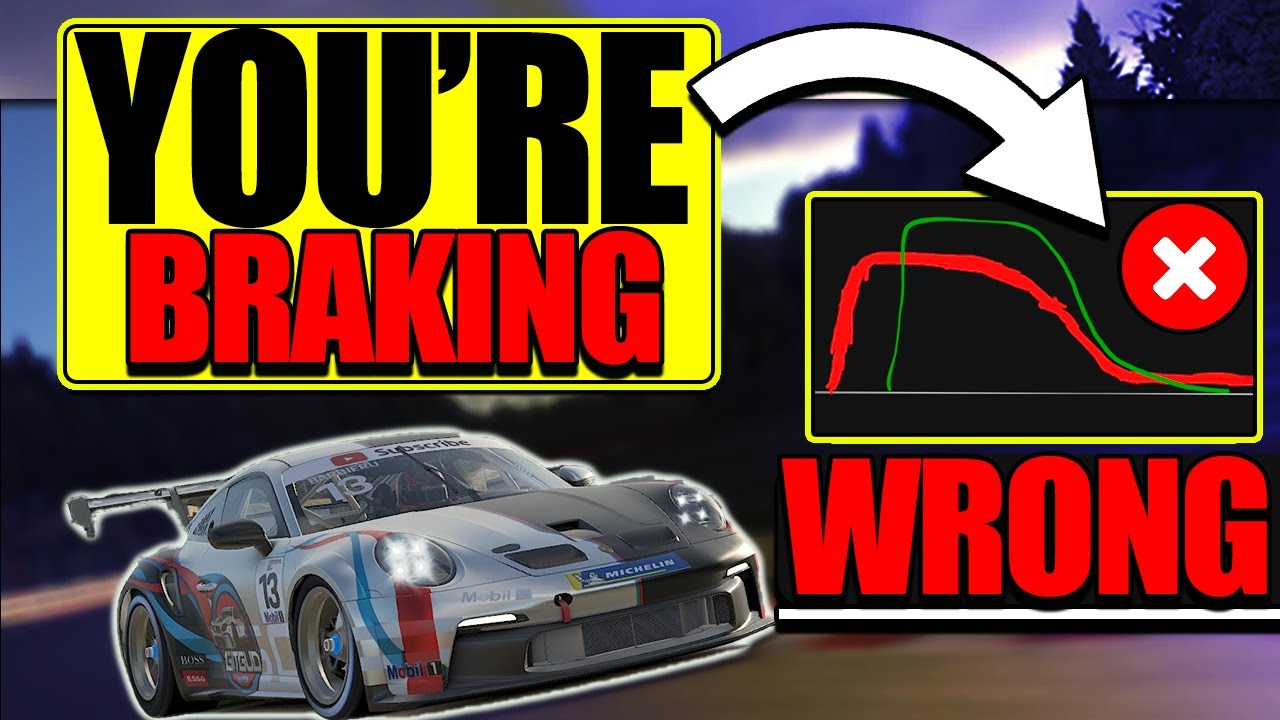
Why 'just brake later' never works, the four inefficiencies that make your braking zone longer than it should be, and the step-by-step way to move the marker.
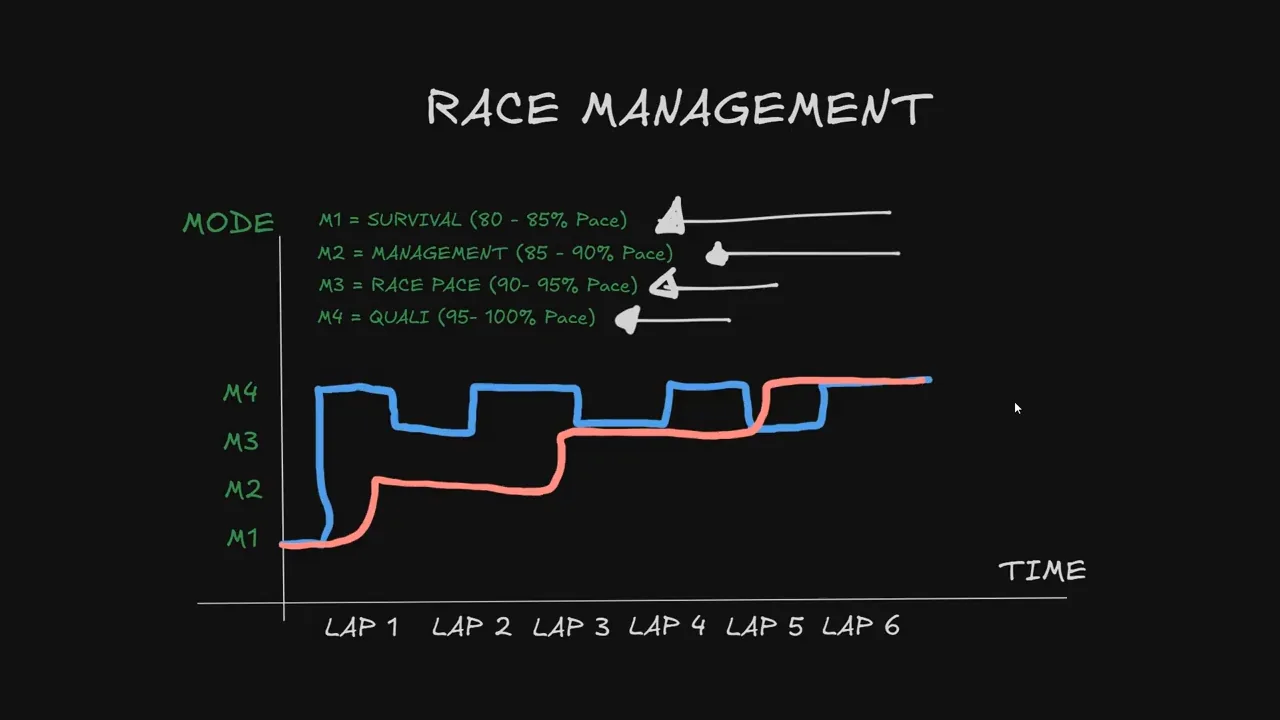
Turn a qualifying lap into race pace: reach it sooner in the opening laps, hold it through the stint without overdriving, and measure the whole stint rather than your fastest lap.
How a coach reads a lap: find the loss in the delta, check the line and speed, inspect the inputs at the first real difference, then test one change.
The twelve fundamentals that make you faster, the order we coach them in, and the common symptom that tells you which one to work on next.
Braking without ABS, steering, throttle and racecraft in open-wheelers, and how the technique changes from low-aero Vee and FF1600 cars through F4 to high-downforce F3, Super Formula and F1.
Braking, ABS, traction control and corner exits in GT3 cars: a quick start, one corner walked through phase by phase, a symptom-to-practice troubleshooter and three free GT3 Masterclass lessons.
Eight stages for learning a circuit you have never driven, one corner followed through all of them, a four-line corner-notes template, and a compressed protocol for a weekly iRacing rotation.
The grip limit is where more input stops producing more. How to tell underdriving, useful tyre slip and overdriving apart, which cues to trust, and a one-corner drill to find yours.
Six sims compared by what each one is actually for, not by rank. A decision table up front, then honest notes on iRacing, ACC, Assetto Corsa, Assetto Corsa EVO, Le Mans Ultimate and Automobilista 2.
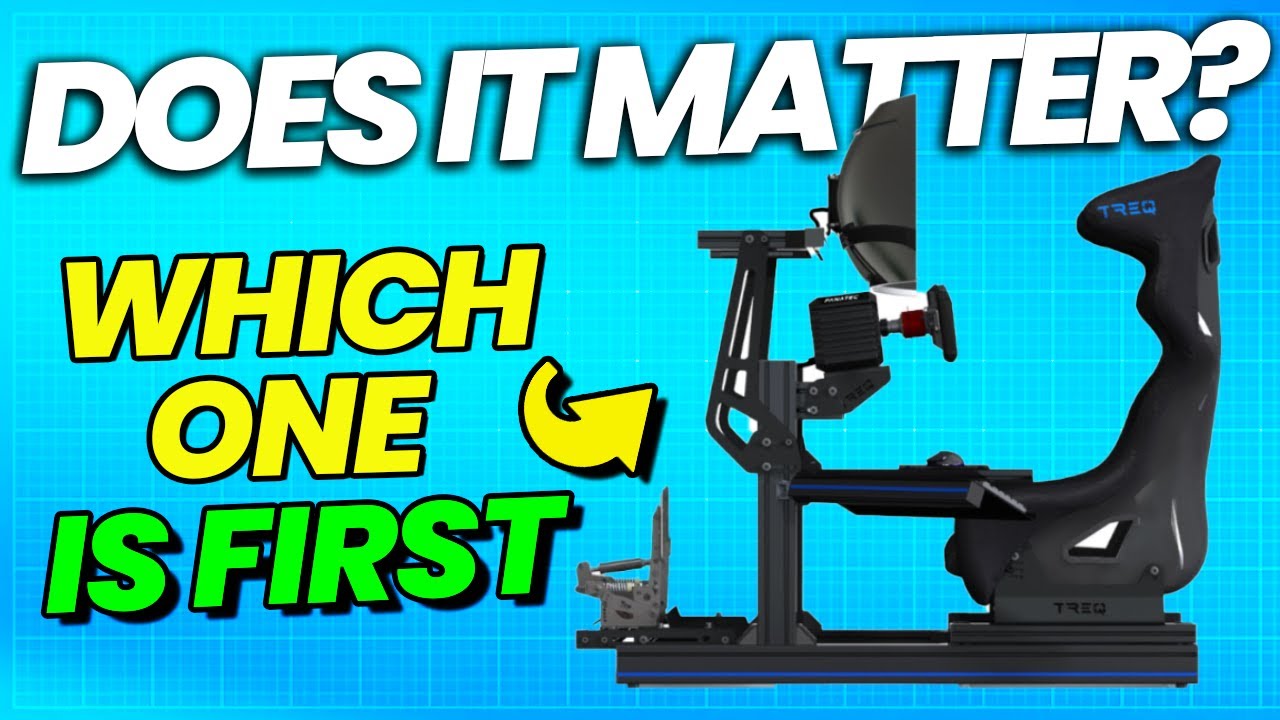
There is no universal upgrade order. Upgrade whatever is currently stopping the hardware you already own from doing its job.
A good place to start and a bad place to settle. The cost is not lap time; it is not being able to tell whether your technique worked.
Find the crash you keep having and the decision that comes before it. Predictability is the safety mechanism, not caution.
A circuit is not a neutral container for practice. It is a syllabus, and each one teaches a different subject.
Race from where you are, not from where you think you should be. Loss aversion turns one bad result into five.
The goal is not maximum rear bias. It is neutral balance: move rearward until the rear objects, then take one step back.
Six faults in one lap, and the sensation underneath four of them. What a coach changed, and why he refused to fix them where they appeared.
If your tyres are gone by lap six, the setup is usually not the problem. The habits that cook them, and the corner-by-corner method from two coaching workshops for keeping them alive in a race.
How braking, acceleration and cornering move load between the four tyres, how to recognise it from the cockpit, and why the timing of a lift decides whether the car rotates.
Most of your deficit is in one or two corners. Seven steps for taking one apart and putting it back together.
Five exercises for one corner, each with a pass you can call from the cockpit. Not tips — things to actually do tonight.
Why a car won't rotate: entry speed, line, braking, steering or setup. Plus a real case where precise trail braking cost a second a lap.
Five separate problems in one lap that turned out to be one habit showing up in five places.
Not a research list. The accessories I bought with my own money and still use — and the one that is pure decoration.
Half a second on the same track, same car, same setup — and nothing about the flying lap changed. It was the out lap.
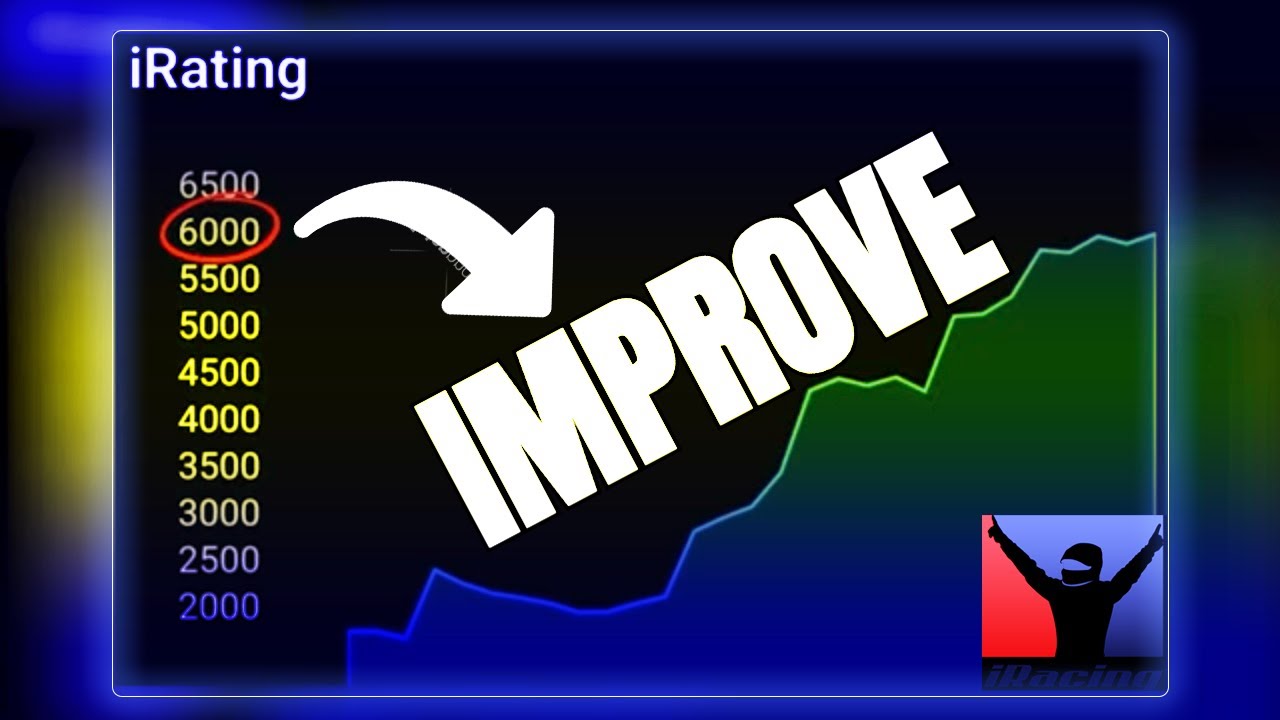
iRating is a scoring formula, not a skill score. What moves it, what does not, and why the climb slows.
No custom 3D print needed. The parts to order, the bracket angle, and the pedal bolt you borrow to hold it on.
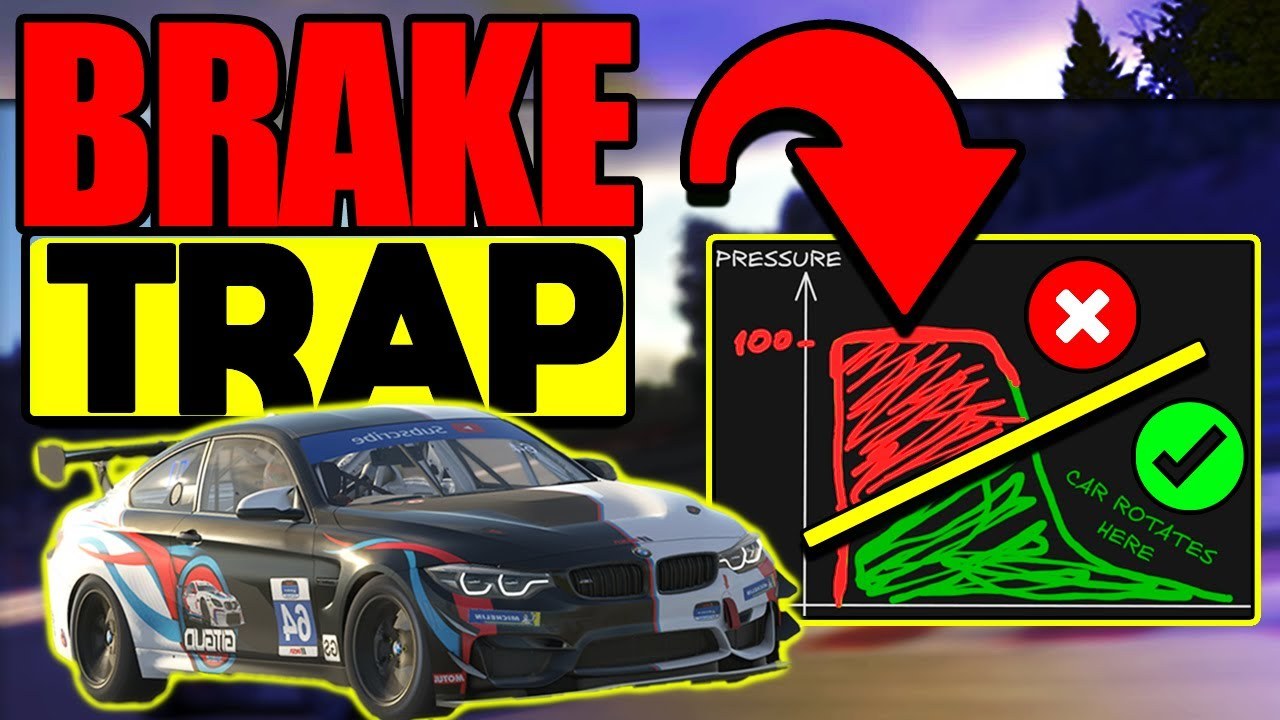
Same apex speed as the reference, still two tenths down. The release, the pressure spike, and why your pedal is working against you.
It moves the window; it does not make the window bigger. What a webcam tracker is genuinely good for on one screen.
The effects and numbers I run on two seat shakers and the pedals, and the one I deliberately keep off the brake.
Five stages take a driver from survival to alien. What each one feels like, and how to tell which one is yours.
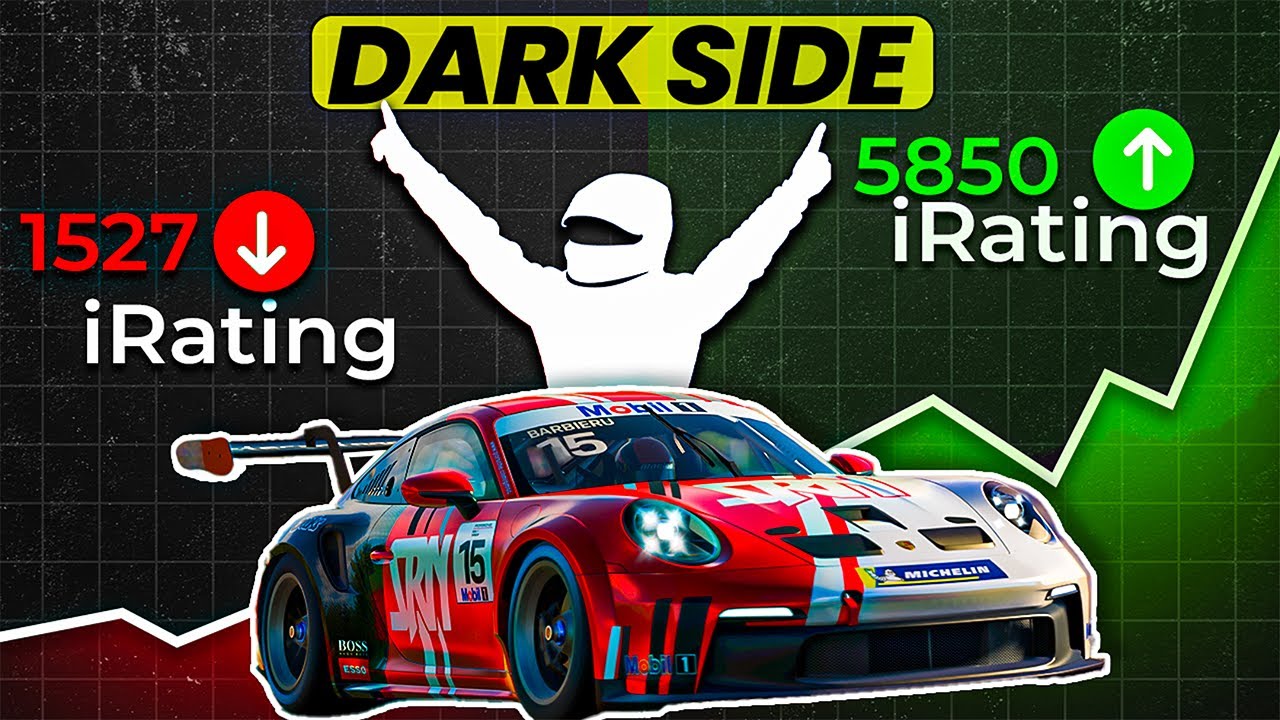
The method behind a 1.5K to 6K iRating year: what to fix first, how to practise, and the weekly routine that made it stick.
The hidden costs, plateaus and mindset traps that catch new sim racers off guard.
Racecraft, self-awareness and practice truths that actually change how you drive.
The fundamentals that actually create speed — and the practice that makes them stick.
Where to spend first for the biggest speed gain per euro — pedals, feel and mounting.
Ten clever, low-cost mods — button boxes, brake feel, eye tracking and more.
Setup, FanaLab and firmware gotchas that trip up new CSL DD owners — and how to dodge them.
Set FFB strength and clipping so you feel grip instead of clipping noise — and go faster.
Mounting, feel and calibration tweaks that make your braking repeatable and fast.
Set brake force, curve and feel so you can trail brake consistently — on any pedals.
Why copying pro brake traces fails — and how to build trail braking from the exit backwards.
Three fixes for the most common trail-braking mistakes that keep drivers stuck.
The weight transfer, two drills, pedal feel and when not to do it — trail braking made practical.
Dial in the FFB, pick a car to master, use Test Day, and apply the fundamentals that create pace.
Setup, which class to learn first, the braking fundamentals, and the endurance racecraft that wins stints.
FFB & FOV, tyre pressures, the electronics, and the GT3 driving style that finds lap time.
Setup, iRating & Safety Rating, the right cars to learn in, and the fundamentals that build pace.
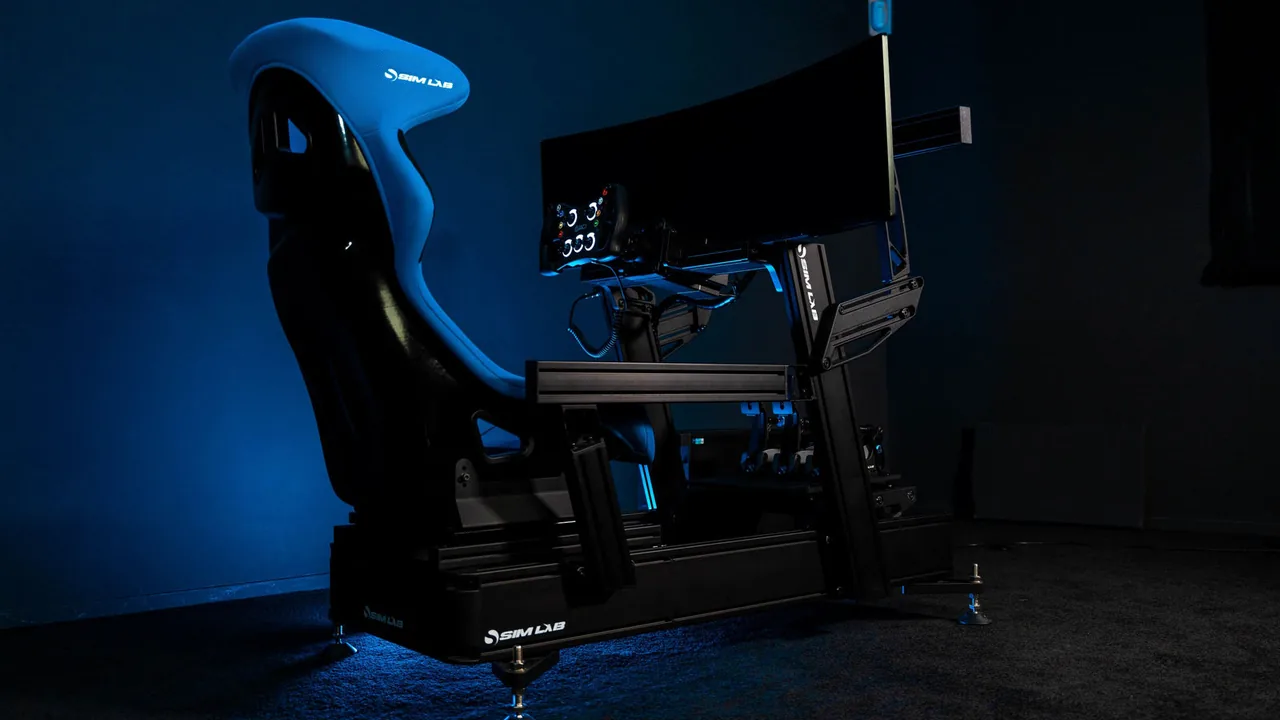
GITGUD5 takes 5% off at Sim-Lab checkout. How to apply it, and what to check before buying a cockpit.
10% off GO Setups — plus the pricing, the sim support gaps, and the refund catch.
Partner codes for sim-racing gear, each with an honest verdict on whether to buy.
Stop grinding laps. One objective per session, corner-first reps, and the review loop that turns practice into pace.
The eight usual causes of inconsistent lap times, and a diagnosis order that finds yours instead of guessing.
Try a different category, or clear the search.
Get started
Get structured, car-specific courses, drop a lap for coach review, and train these techniques the right way inside the Academy.
Join the Academy · $39.99/mo incl. VAT