5 Tracks That Teach You to Drive Fast
Most advice about getting faster is about how much you practise. This one is about where. Two drivers can put in the same forty hours and come out with different skills, because a circuit is not a neutral container for practice — it is a syllabus, and each one teaches a different subject.
The obvious move is to practise on the track you are racing next week. That is fine for a result. It is a poor way to build a driver, because the track you happen to be racing was chosen by a schedule, not by your weaknesses.
So this is a different list: five circuits picked for what they expose. None of them are here for being famous. They are here because each one makes a specific fault impossible to hide.
Why some tracks teach and others just get driven
A track teaches when the gap between a good input and a bad one is visible to you, in the car, in real time.
Short corners hide mistakes. You turn in slightly wrong, the corner is over before the car has finished reacting, and the lap time difference is two hundredths that you cannot attribute to anything. You drive fifty laps and learn nothing except the layout.
Long corners, elevation, low grip and blind entries do the opposite. They stretch the consequence out until you can feel it. That is the whole selection criterion below: does the circuit give your mistake enough time and space to become obvious?
If you want the method for learning any circuit — references, corner isolation, how many sessions a corner actually takes — that is a separate subject and we have a step-by-step method for learning a new circuit, alongside the wider guide to practising effectively. This page is only about which five are worth your hours.
1. Lime Rock Park — where you learn what the car is telling you
Lime Rock has a reputation as the rookie playground. That reputation is half right and completely misleading. It is easy to get around. It is unusually hard to get right, and the reason is exactly what makes it valuable.
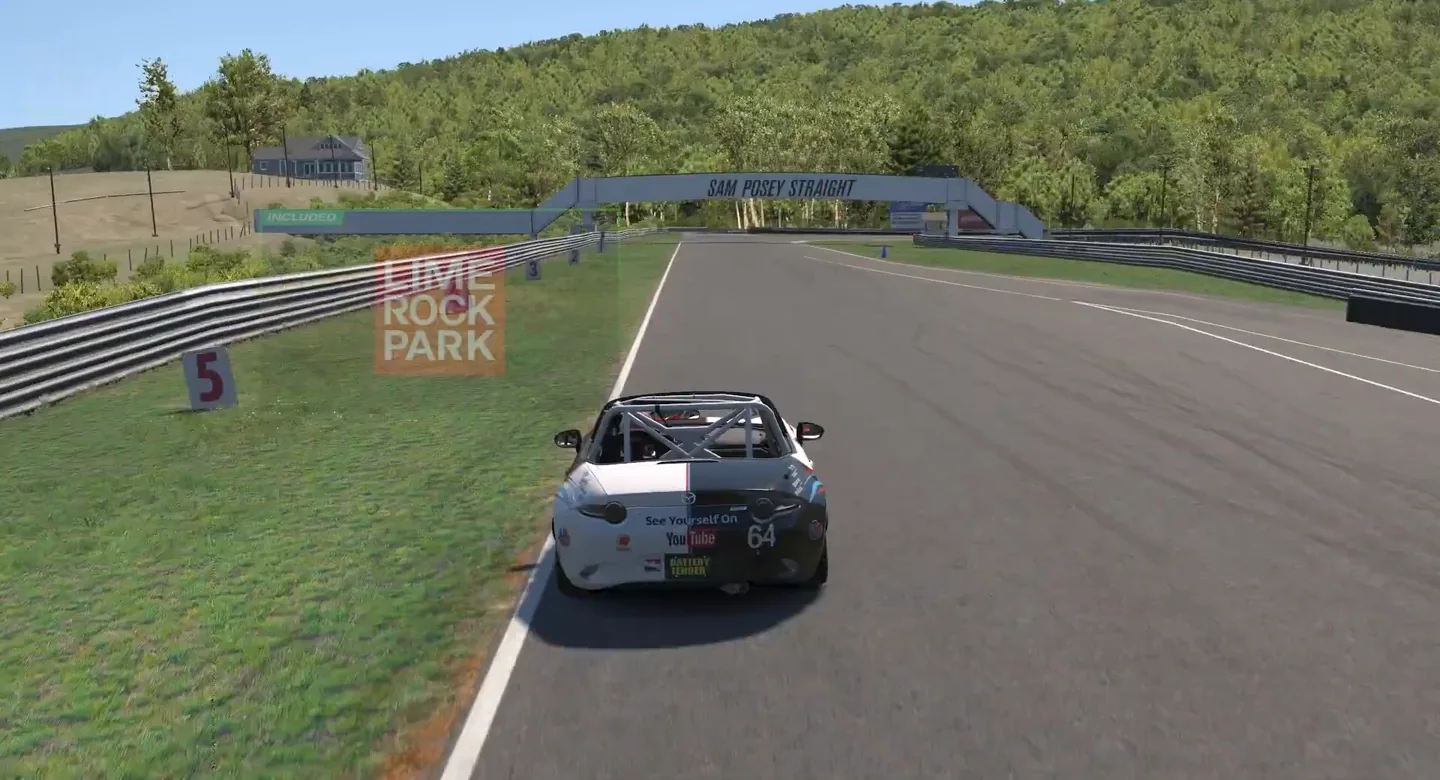
The corners are long. You spend a large fraction of the lap actually cornering rather than travelling in a straight line between braking zones. That means the car spends a long time in the loaded, sliding, rotating state where all the interesting information lives — and you have time to feel it happening rather than inferring it afterwards from a lap time.
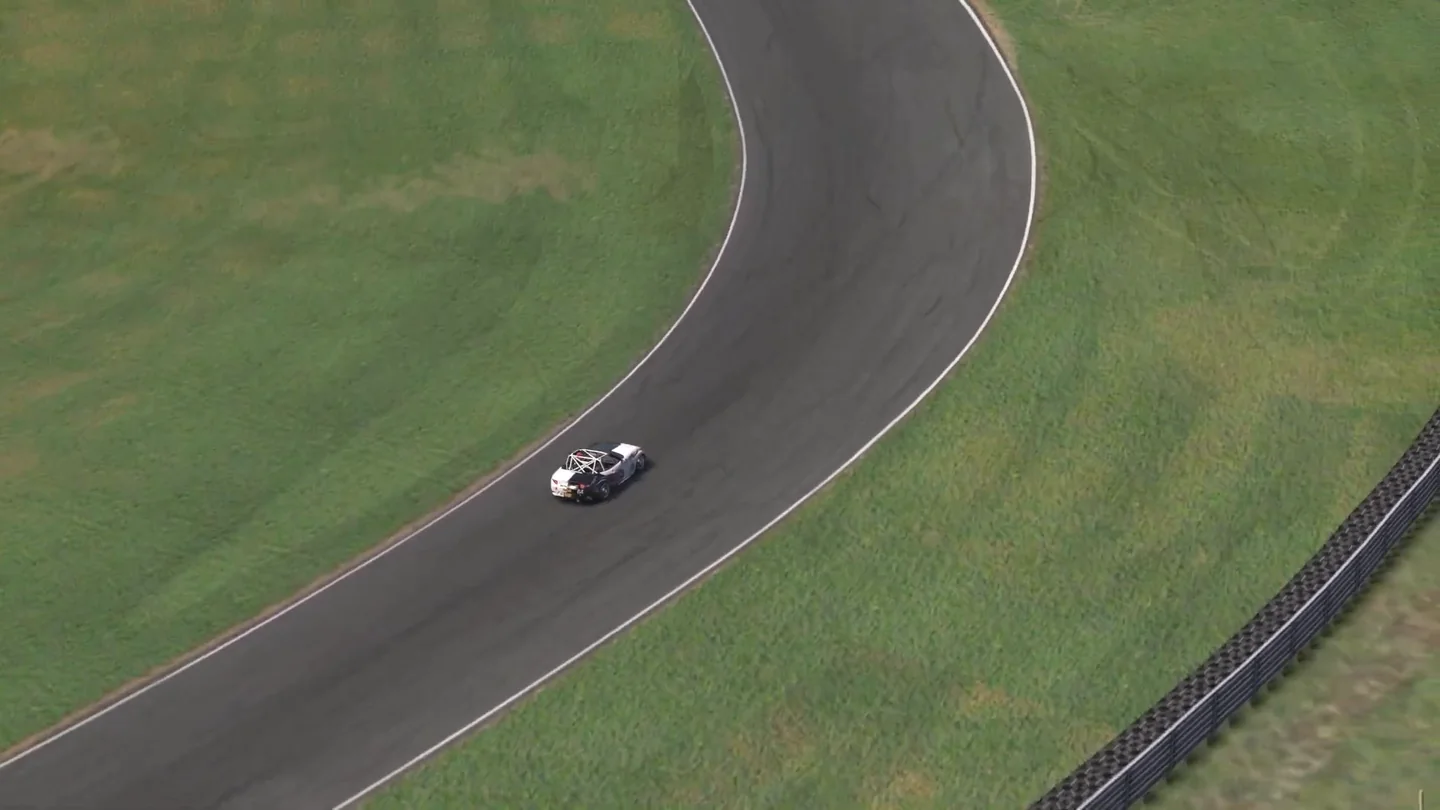
Get too early on the throttle and the car pushes wide, and you feel it push. Get too late and you feel the rotation die. There is nowhere for either to hide.
What to actually practise here
One thing: turn the car with your pedals, not with the steering wheel.
Pick a corner where you brake. Hold a little brake pressure past turn-in and notice that the car rotates further toward the apex without you adding any steering angle. Then find a corner where you barely brake, and use a throttle lift alone to do the same job. Same result, different tool.
Once you can produce rotation on demand from the pedals, understeer and oversteer stop being things that happen to you and start being things you chose. That is the single biggest step in car control, and this is the best place to take it. Pair it with a slower car so everything happens at a speed you can process — the mechanism is identical in a GT3, just faster.
This is the same feedback loop the weight transfer guide describes from the physics side, and the pedal work itself is covered in how to trail brake.
2. Interlagos — where you learn to brake less
Almost every driver who is losing time on entry is braking too much, and almost none of them believe it. Interlagos is unusually good at settling the argument, because the circuit does part of the braking for you and punishes you for not noticing.
Turn one runs downhill into a compression. Gravity is already loading the front tyres before you touch the pedal. Smash the brakes on top of that and you have overloaded the front axle — the car refuses to turn, and it refuses in a way that feels like a setup problem rather than a driver one. Brake less and the same corner works.
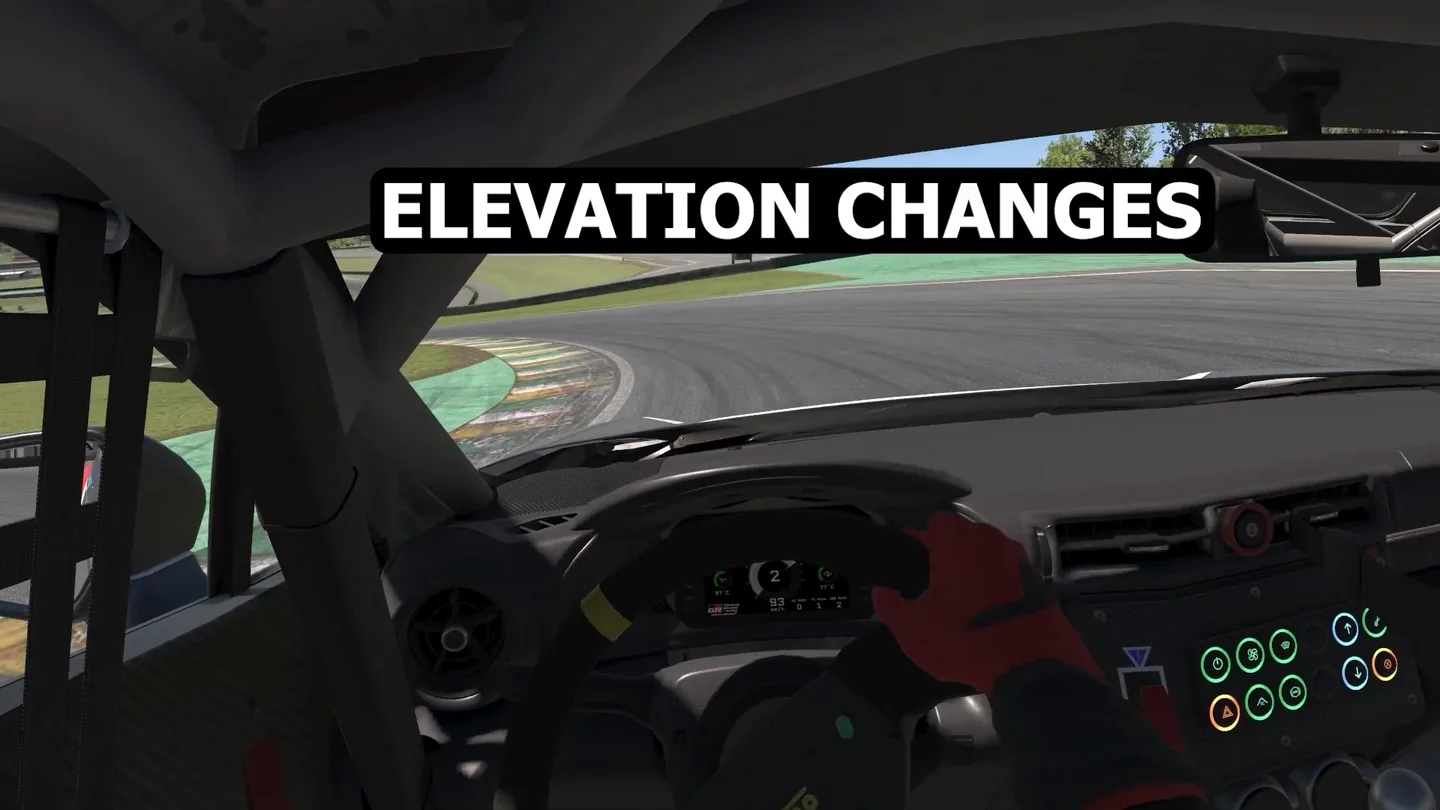
That lesson generalises further than any other on this list. Every downhill braking zone on every circuit is asking the same question.
The rest of the lap adds three more subjects. The kerbs need to be used rather than avoided — cut through them cleanly or accept being slow. It is Brazil, so the track is hot and grip is low, which makes the tyres unusually easy to lock and unusually keen to overheat. And the final corner feeds a long straight, so everything you do on entry, apex and exit is multiplied all the way to turn one.
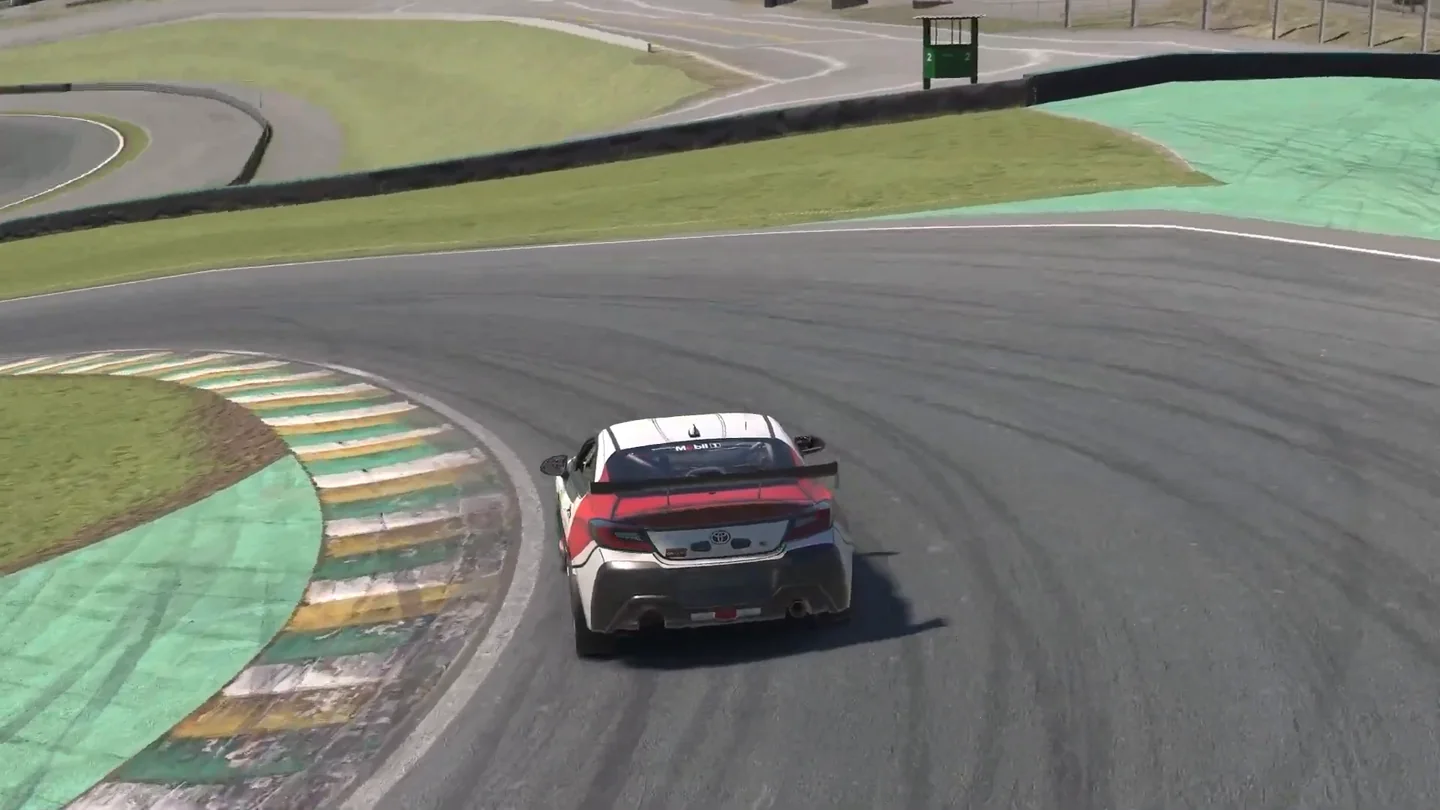
That last point is why Interlagos builds something most tracks do not: a sense of which corners matter. Not every corner deserves equal attention, and a lap where you prioritise the exits that feed straights is worth more than a lap where you attack all of them.
3. Laguna Seca — where you learn precision, because there is no forgiveness
This one is on most people's list of the three hardest circuits in the world, and it earns it with a single design decision: there is essentially no run-off. The gravel functions as a wall. Understeer off the road here and you are not losing three tenths, you are losing the session.
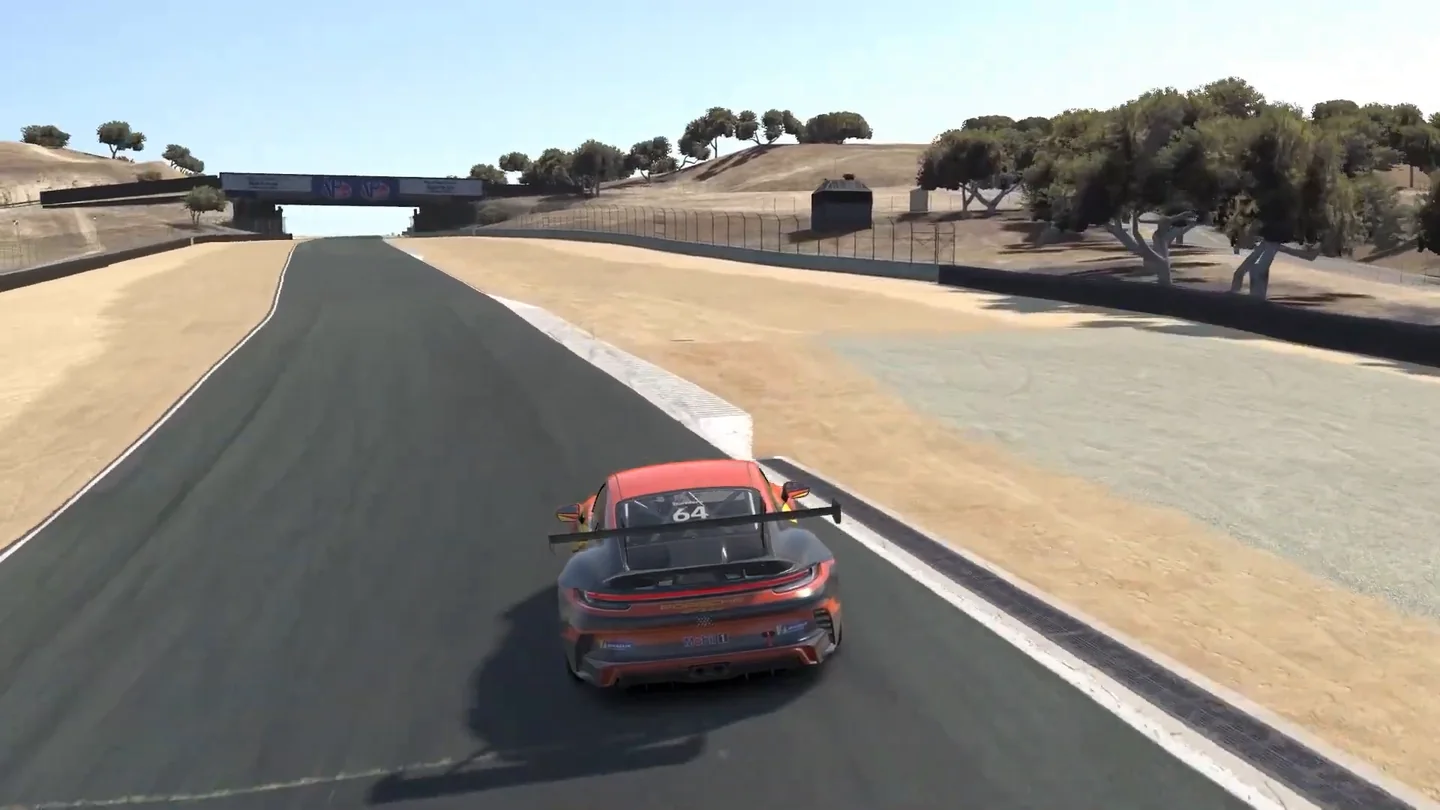
That changes how you drive in a way that a wide-run-off circuit cannot. When a mistake is genuinely expensive, you stop making the small careless ones.
Turn one is a double apex that punishes putting the tyres in the wrong place on entry. The next sequence needs the full width and asks you to get as near as you dare to the red sausage kerb without touching it, because touching it unsettles the car at the exact moment you need it settled. Then it climbs to a fast, banked, slightly uphill corner where missing the apex by a car's width puts you in the dirt.
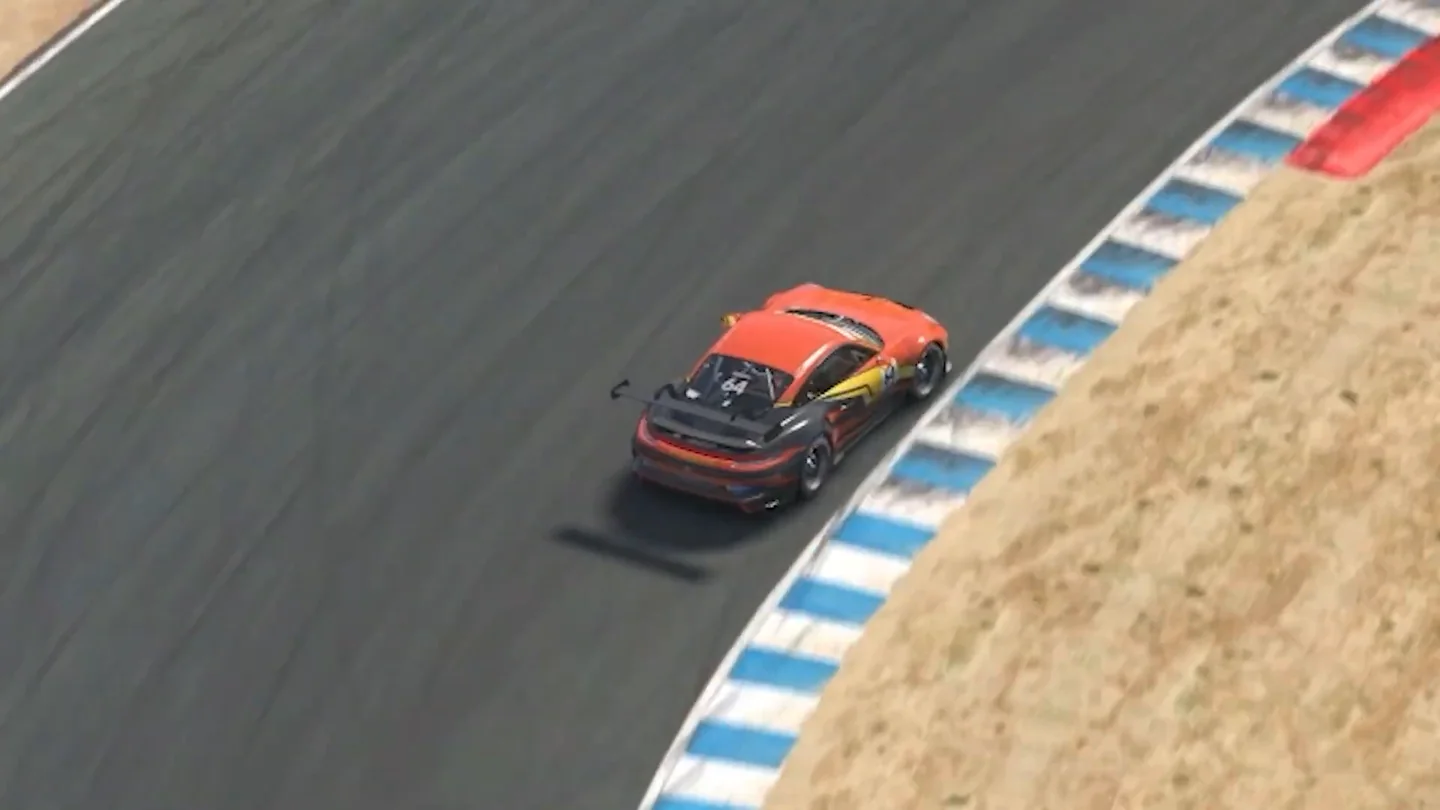
The Corkscrew
And then the corner everyone knows. You brake uphill, turn in completely blind over a crest, and drop through a sharp left-right with the elevation working against you the whole way. If your line is wrong you either bounce over the inside or miss the exit entirely.
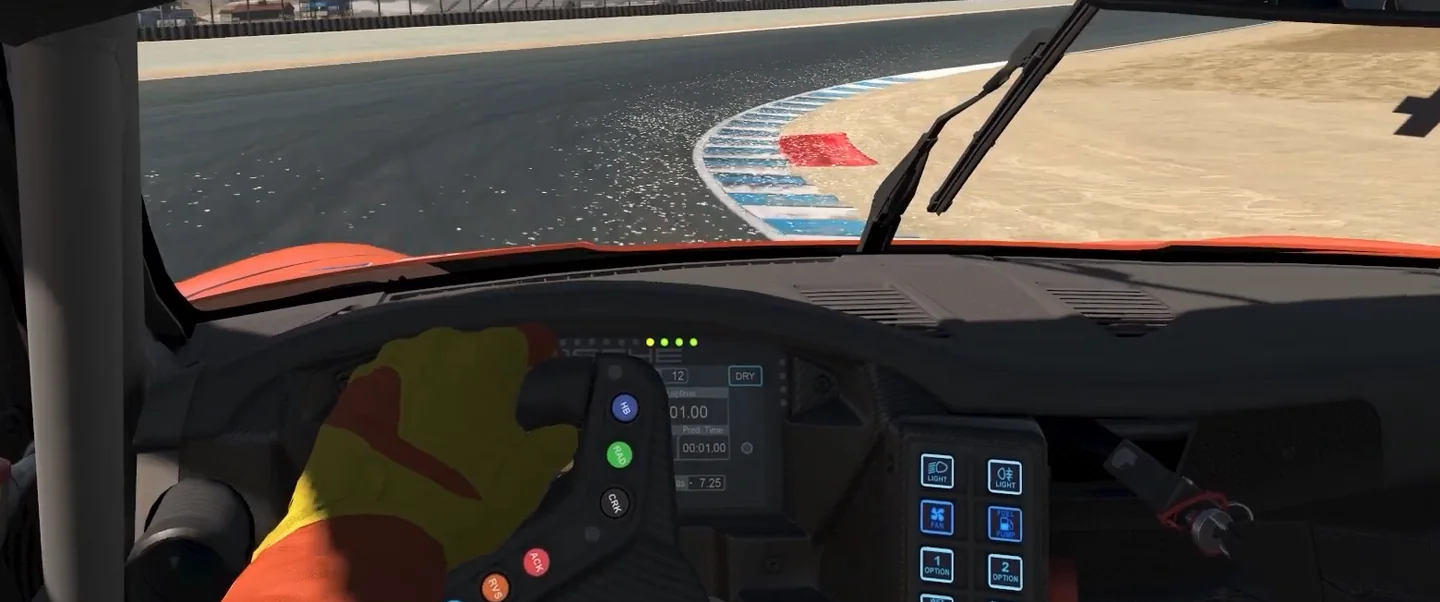
What makes it a teaching corner rather than a party trick is that you cannot drive it with your eyes. The apex is not visible when you commit to it. You are driving from memory and from peripheral markers, and that is a genuinely separate skill from following a visible racing line.
Every circuit has corners you cannot fully see. Most drivers approach them tentatively forever. Spend time in the Corkscrew and blind corners stop being a category you are afraid of.
4. Suzuka — where you learn that corners are linked
The Esses are the reason Suzuka is on this list. They are fast, they are continuous, and — this is the part that matters — they are linked. Get the timing slightly wrong at the first one and you will spend the next four corners recovering from it rather than driving them.
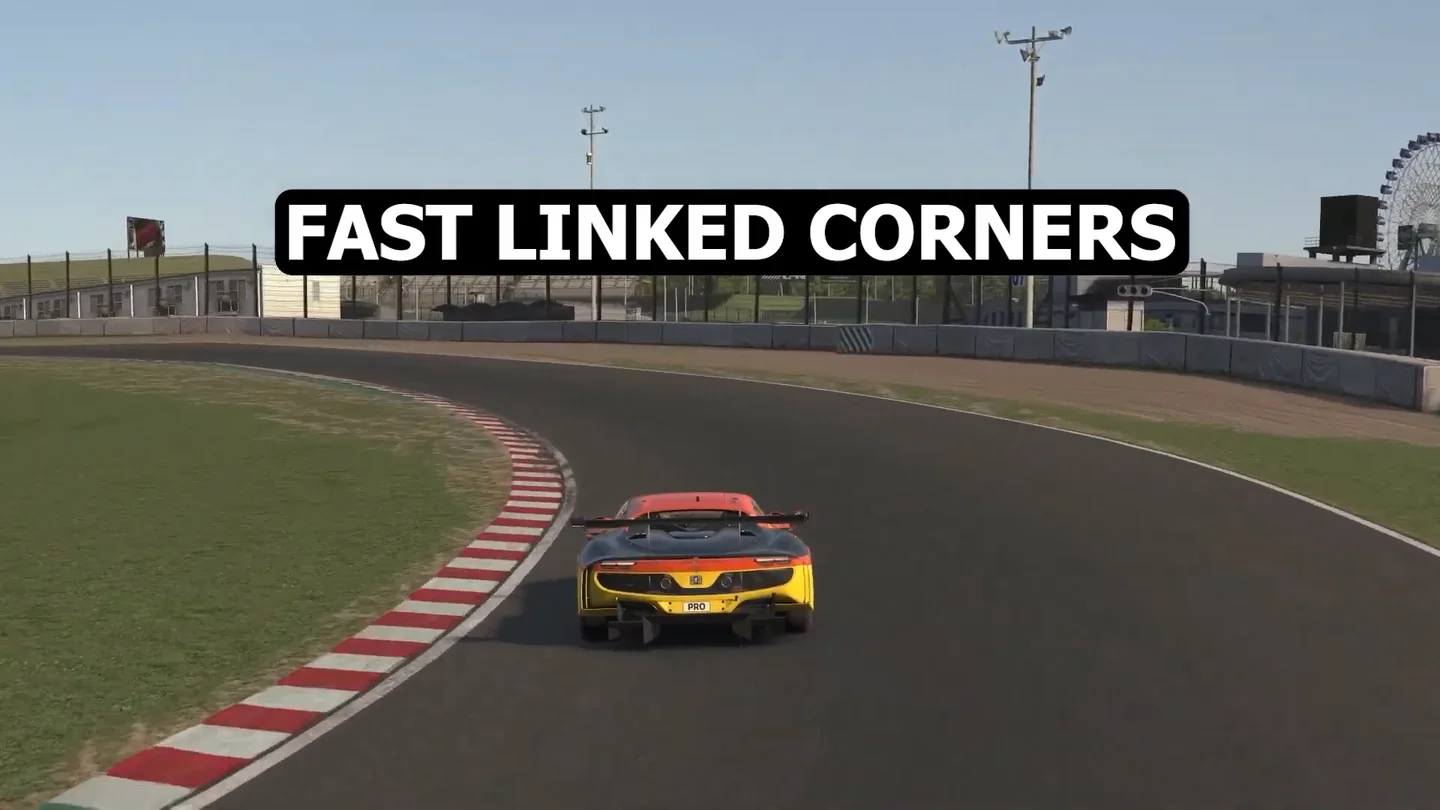
Almost nothing else in sim racing teaches that a mistake has a future. Most practice trains you to treat corners as independent problems, because on most circuits they nearly are. Here, a small error five corners ago is still costing you now.
Two failure modes show up immediately. Push the tyres too hard anywhere in the section and the final corner — the one feeding the long straight — is slow, so you lose far more than you gained. And over-preparing each direction turns the section into a snake, adding distance and scrubbing speed, when the quick version flows as close to a straight line as the kerbs allow.
Beyond the Esses there is a hairpin that demands a quick brake release or it understeers, two fast right-handers where judging the speed is genuinely hard, and Spoon, where using all the road and getting to throttle early is the whole corner.
Suzuka is also the best rehearsal on this list for managing tyres over a stint, because the section punishes over-driving immediately rather than ten laps later.
5. Monza — where you learn low downforce
Monza looks like the easy one. Long straights, few corners, how hard can it be. Then you drive it in a low-downforce configuration and discover the car has nothing holding it down.
It is the only circuit here that puts genuinely slow and genuinely fast corners in the same lap. Turn one is a slow chicane that teaches how a chicane should actually be approached. The second chicane is about exploiting the kerbs and protecting a minimum speed rather than scrubbing it away. If low-speed corners are your weakness, those first two corners are a complete drill on their own.
Then it flips. Ascari is a fast chicane where precision and careful kerb use at high speed decide the lap. And the Parabolica is the best lesson on the circuit, because its radius opens on exit — which means the earlier you rotate the car, the earlier you can be on throttle, and the whole straight afterwards is multiplying that decision. Getting the rotation early enough usually means accepting a little oversteer on entry that you would instinctively avoid.
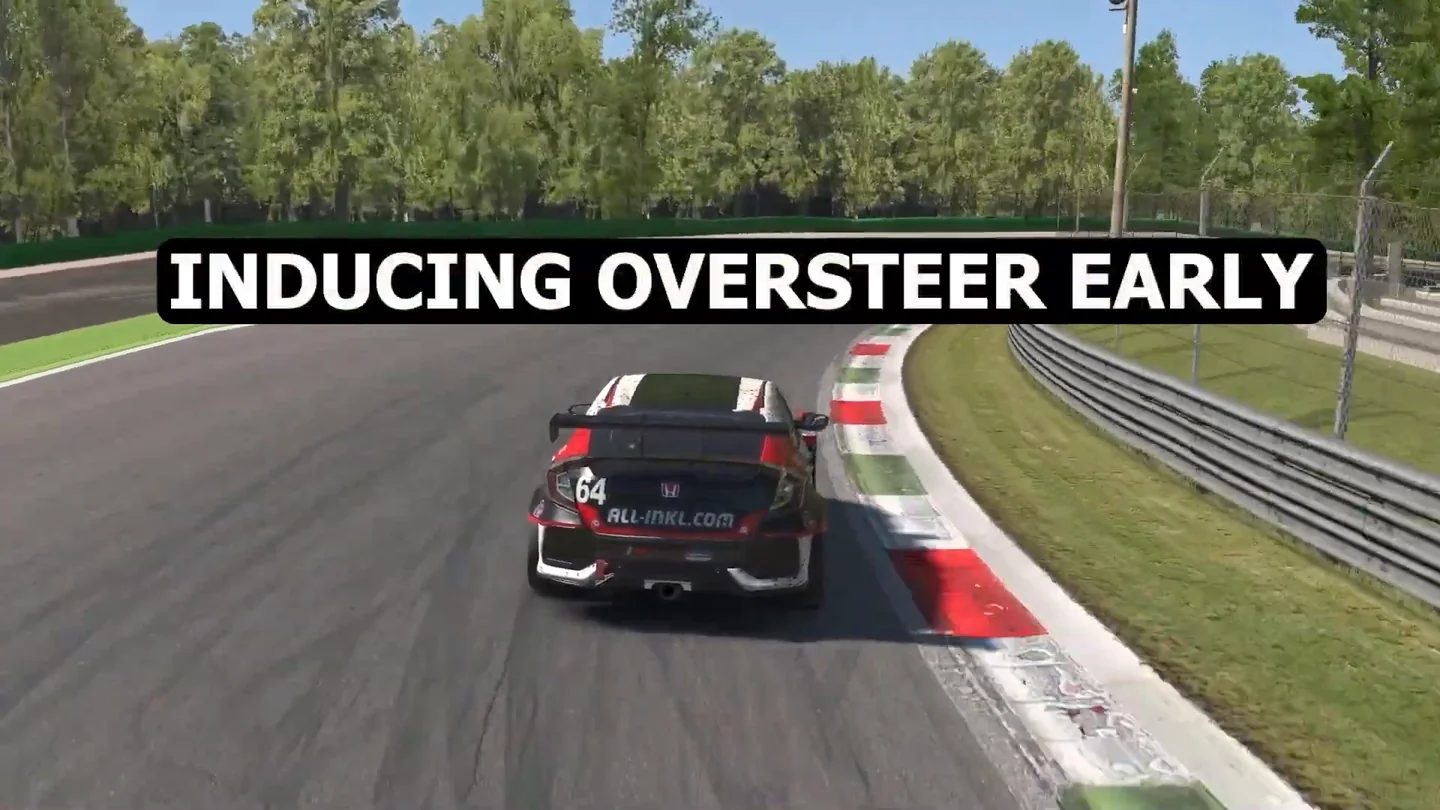
The broader payoff: get quick with low downforce and everything else feels easy. High-downforce cars flatter you. Take the aero away and every input has to be honest.
How to actually use this list
Do not run all five. That is a schedule, not a plan.
Pick the one that matches the fault you already know you have:
- You cannot feel what the car is doing — Lime Rock, in something slow.
- You brake too much and the car will not turn — Interlagos.
- You are inconsistent and make careless mistakes — Laguna Seca.
- You are quick in isolation but lose it in sequences — Suzuka.
- You are lost without downforce, or slow in slow corners — Monza.
Then stay there long enough for it to work. The goal is not to learn the circuit; it is to fix the thing the circuit exposes. A useful target is to close on the quick drivers' pace on that one track — by the time you have, the underlying skill has moved with you, and it goes to every other circuit you drive. For what those skills are and the order they build in, the twelve driving techniques is the list; each circuit here isolates one or two of them.
If you are not sure which fault is yours, that is a fair answer and a common one. The five beginner drills are a faster way to find out than guessing, and why your lap times are inconsistent covers the case where the problem is repeatability rather than pace.
One caveat worth stating: this is a personal list, not a ranking. There is nothing wrong with the circuits that are not on it — Red Bull Ring teaches track usage as well as anything, it just does not teach as much else as Interlagos does. If a different track has done a job for you, it did the job.
Tracks that teach FAQ
What are the best tracks to learn sim racing on?
Pick the track for the weakness you want to fix rather than for its reputation. Lime Rock Park teaches car balance because its long corners give you time to feel the car respond. Interlagos teaches braking under elevation change. Laguna Seca teaches precision because there is no run-off to save you. Suzuka teaches linked corners and tyre management. Monza teaches low-downforce driving and slow-corner technique in the same lap.
Which sim racing track is best for learning car control?
Lime Rock Park, ideally in a slower car. The corners are long enough that you spend a large share of the lap actually cornering, so the car stays in the loaded, rotating state where the useful information lives and you can feel it happen rather than infer it from a lap time afterwards. Shorter corners end before the car has finished responding, which hides the mistake you are trying to learn from.
Should I practise on one track or rotate between many?
One at a time, chosen for the fault you are working on, and stay long enough for it to change something. Rotating constantly means you keep relearning layouts instead of building the underlying skill. The point is not to know the circuit; it is to fix the weakness the circuit exposes, and that improvement travels to every other track you drive.
Why is Laguna Seca so difficult in sim racing?
Because there is effectively no run-off, so the gravel behaves like a wall and an ordinary mistake ends the session rather than costing a couple of tenths. Add a double-apex first corner, a sequence that needs the full width without touching the sausage kerb, and the Corkscrew, where you brake uphill and turn in completely blind before dropping through a sharp left-right. It punishes carelessness harder than almost anything else.
What makes the Suzuka esses so hard to get right?
They are linked, which most corners are not. A slightly mistimed entry at the first one is still costing you four corners later, so the section teaches that a mistake has a future. The two common faults are pushing the tyres too hard early, which makes the final corner onto the straight slow, and over-preparing each direction so the car snakes and travels further than it needs to.
Is Monza a good track to practise on?
Yes, for two specific things. It is the rare circuit with genuinely slow and genuinely fast corners in one lap, so the first two chicanes work as a low-speed drill while Ascari and the Parabolica demand high-speed precision. And it is normally driven with low downforce, which removes the aero that flatters sloppy inputs. Get quick without downforce and higher-downforce cars feel considerably easier.
This guide is part of the free library at GitGud Racing Academy — an online sim racing academy built around weekly lap reviews, structured courses, drills and training tools.
Train this the right way
Reading is step one. Build it into muscle memory with structured, car-specific courses and personal lap reviews from a coach — inside the Academy.
Join the Academy · $39.99/mo incl. VATWatch the full video on YouTube