How to Learn a New Track in Sim Racing
The first time you drive a circuit you have never seen, everything is unknown at once — where it goes, where the grip is, which corners decide the lap. The usual response is to pile up laps and watch the number at the end of each one. For the first stretch of a new track that number mostly measures how much of the layout you have memorised, and it falls on its own whether or not you learn anything you can use next week. So the method below keeps lap time out of the way until it starts telling the truth.
This page is only about learning an unfamiliar circuit. What makes a driver fast in general is in the fundamentals guide, and how to structure any session is in how to practise effectively. Track learning itself is the ninth of twelve driving techniques that build on one another, and that list is the wider set this method sits inside.
What is the fastest way to learn a new track in sim racing?
Learn it in stages and finish each stage before starting the next. Get the layout into your head at a pace where nothing surprises you. Build one precise reference point per action instead of an approximate one. Establish the line before you touch the braking point. Then vary things on purpose to find what each corner rewards, walk up to the limit in measured steps, and only then compare against a faster lap. Drilling the corners that decide the lap comes last, not first.
The order is the whole thing. Every stage after the second is a measurement, and a measurement taken before the previous stage is stable tells you nothing.
| Stage | What you are doing | Move on when |
|---|---|---|
| 1. Layout | Learning where it goes | Nothing surprises you |
| 2. References | One exact cue per action | You can say it out loud |
| 3. Line | Entry, apex, exit | Same path twice running |
| 4. Grip | Changing one thing at a time | You know what each change costs |
| 5. Prediction | Input before the correction | Saves stop feeling like saves |
| 6. The limit | Stepping up to the edge | You found it deliberately |
| 7. Comparison | Locating the time | You can name the corners |
| 8. Drill and connect | Worst corner, then the lap | The gain survives the lap |
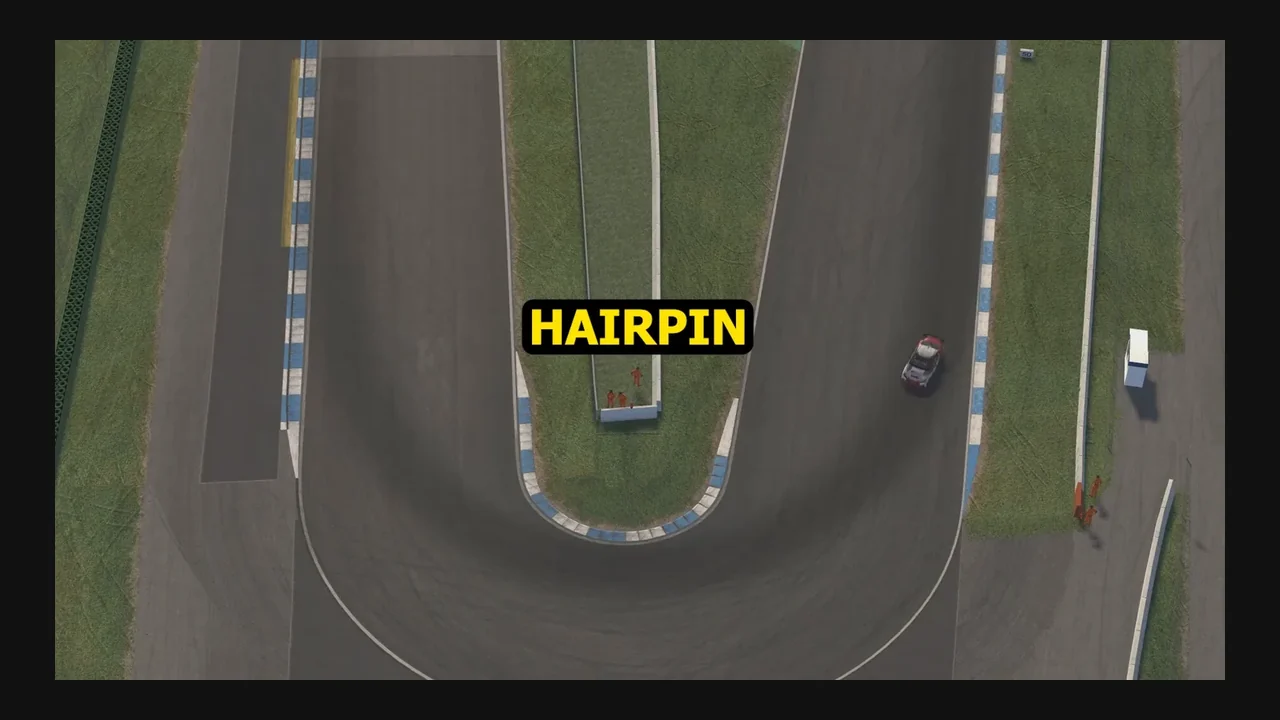
To show what each stage actually produces, one corner runs through all of them below: a hairpin at the end of a long straight, with braking boards on the approach. What you learn about it goes onto a four-line corner note, and there is a compressed version for a weekly iRacing rotation.
Step 1: Learn where the track goes, and ignore the lap time
Drive it well below what you are capable of. Not cautiously — slowly, on purpose, with the delta hidden if your overlay lets you hide it.
The goal is one state: you stop being surprised. Being surprised is the expensive condition, because every input you make while surprised is late by definition. You are not braking early out of nerves, you are braking when you finally find out there is a corner there. You are done when you can name the next corner before you can see it — direction, roughly how tight, whether the road rises or falls into it.
The conventional advice is to push from lap one so you find the limit early. That has the order backwards: you cannot find the limit of a corner you cannot predict, only the wall outside it.
The example hairpin. At this stage all you need is that it is coming, which way it turns, and what follows it. The long straight after it is already the most useful fact you have, because that straight is what the exit will be judged on.
Step 2: Turn approximate cues into precise reference points
This is where track learning quietly fails, and it fails invisibly, because it looks like it worked.
A driver sets a braking reference and moves on. Ask what it is and they will tell you: "I brake around the 100 board." That is not a reference point, it is a region. The board occupies several metres, you approach it at speed, and "around" covers a spread of braking points wide enough to contain most of the time you are looking for. You land somewhere different every lap and conclude the corner is inconsistent.
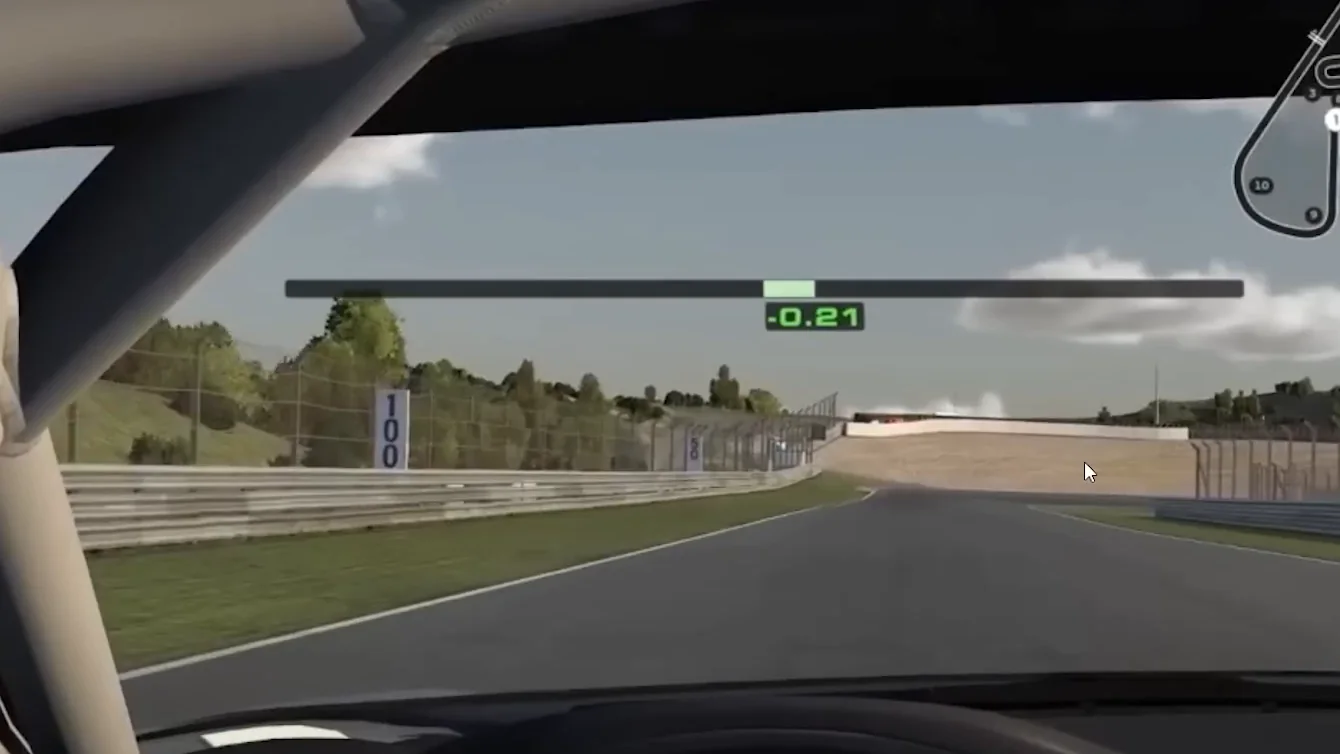
A precise reference point names one instant and only one. Not the 100 board, but the moment the left edge of the 100 board reaches a specific point in your view — the edge of the windscreen pillar, a particular spot on the dash, whatever sits in the same place in your field of vision every lap. That event happens once. It cannot happen approximately. The shorthand for a cue like this is an atomic reference: one that cannot be split into a range.
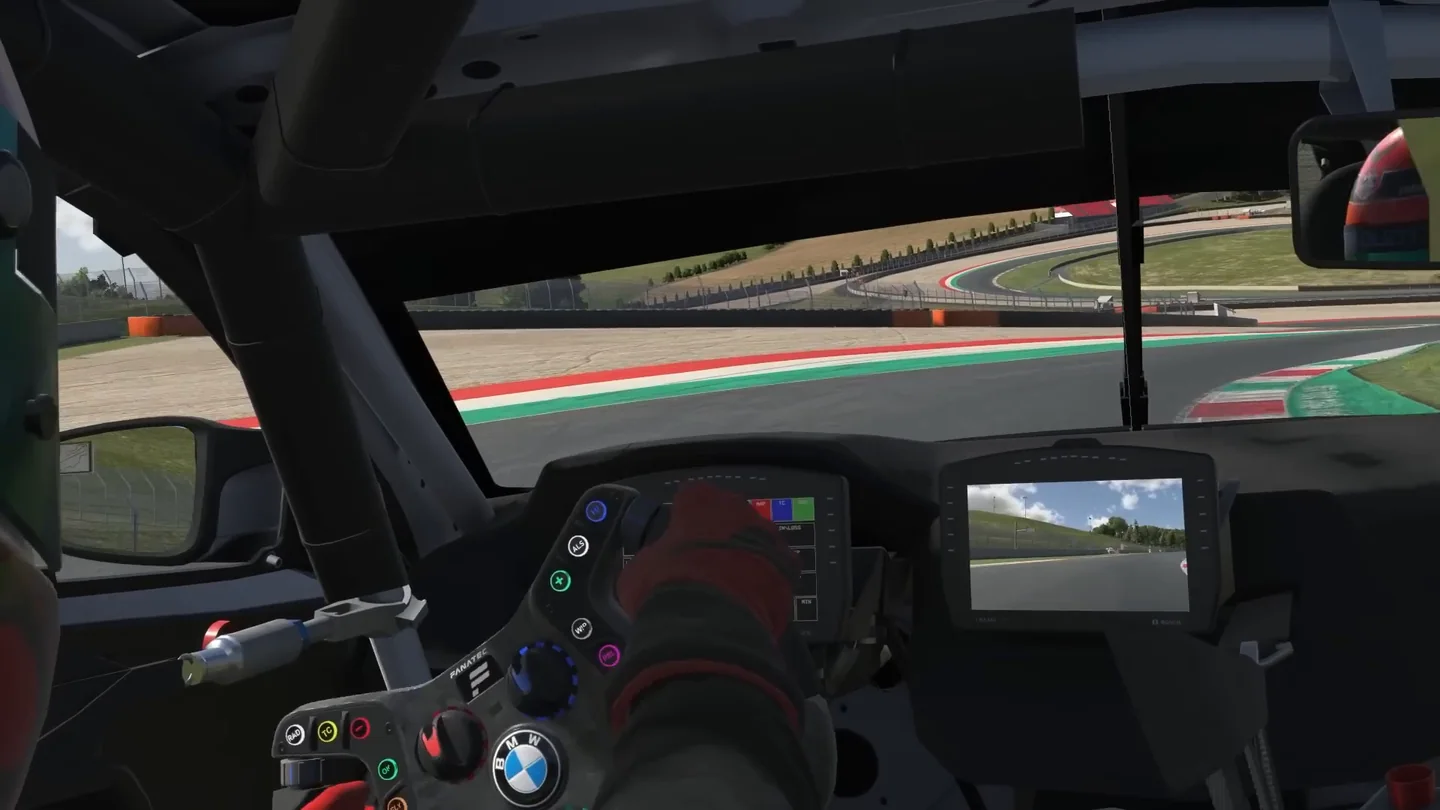
Two tests for whether yours is precise yet:
- Could someone else execute it from your seat? Say it out loud. If the sentence contains "about", "around", "roughly" or "near", it is not a reference yet.
- Does it survive a change of car? A cue that depends on your cockpit moves when your eye height does. A cue built from two things on the track lining up does not. Both are fine — it is worth knowing which kind you built.
One reference per action, and only for the corners that matter. It belongs here rather than later because everything after it is a comparison: step four asks you to move your braking point and see what happened, and you cannot answer that if the braking point was never twice in the same place. The change you made and the noise in your own execution would be the same size.
The example hairpin. "Brake around the 100 board" becomes "brake when the left edge of the 100 board reaches the windscreen pillar". Turn-in and throttle get the same treatment: three sentences, each naming one instant.
Where the track offers nothing exact — a long featureless kerb, or nothing at all — manufacturing a cue is its own skill, and the cornering guide covers the ways to build one. If your references are vague everywhere rather than at one corner, why your lap times are inconsistent is the better diagnosis.
Step 3: Build the line before you chase the braking
Arriving at a new track and immediately braking later is the most common thing drivers do, because braking later is the change that feels like progress. It is also the change most likely to make the corner worse, for a reason that is easy to miss: entry speed is downstream of the path. If the line is wrong, a later braking point does not buy a faster corner. It buys a wider entry into a compromised arc, and the exit pays for it. Once the line is settled, moving the braking point is a sequence of its own, and it is earned through straight-line efficiency rather than chosen: how to brake later.
So settle where the car is supposed to be first — entry position, apex, how much road the exit needs — at a pace low enough that geometry is the only variable. From the cockpit you cannot see your outside tyre, so your sense of how much track you are using is optimistic; check one corner on an external replay camera. And if a corner is slow, establish the exit first and keep the entry conservative until it works. That ordering, and the drills for training a line as its own skill, are in the five beginner drills.
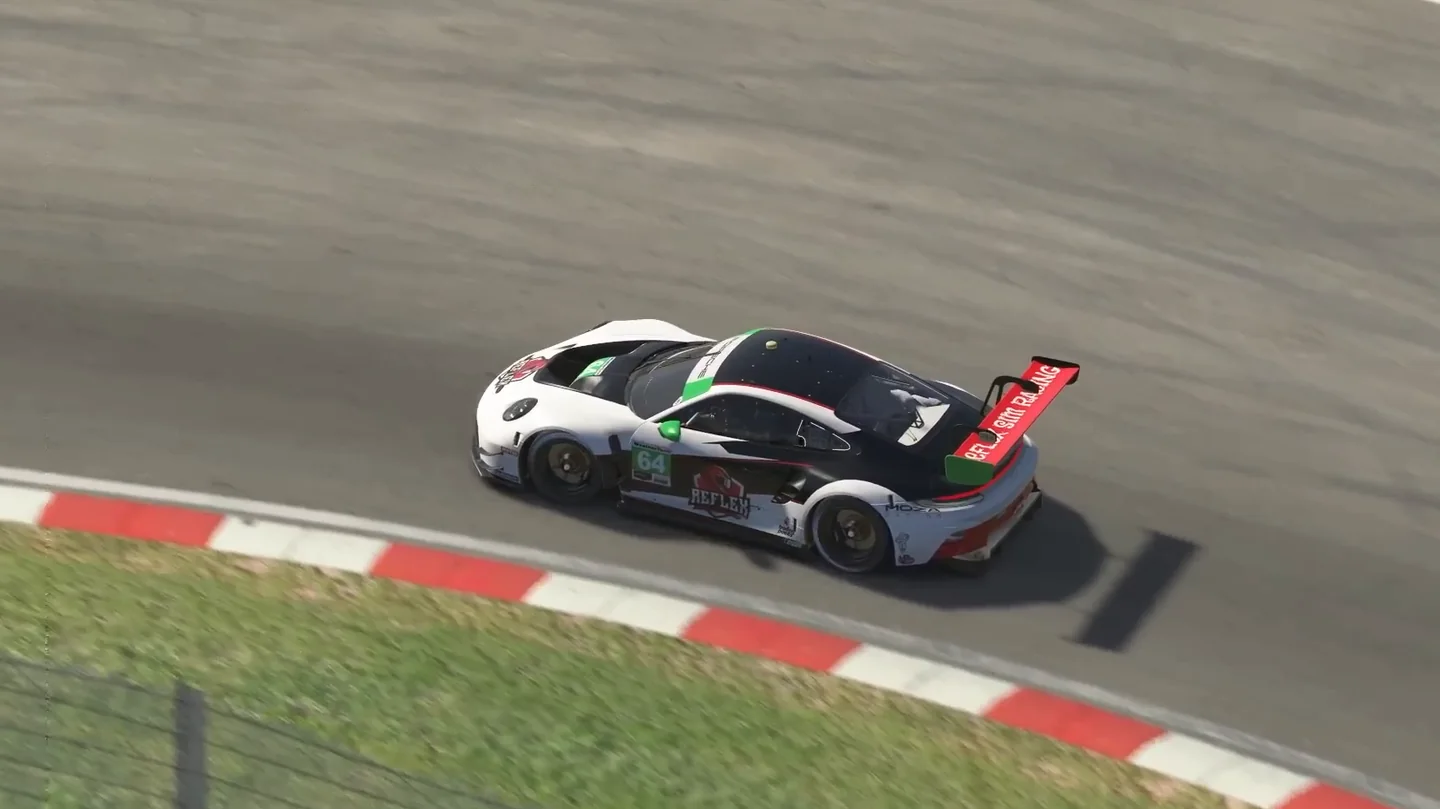
The example hairpin. A slow corner onto a long straight is the clearest case for exit first: settle where the car needs to be to get back to full throttle early and straight, and leave the braking reference where step two put it. Whether that means a late apex or a rounder arc depends on the car and on how long the straight is; the hairpin racing line guide draws both.
Step 4: Fish for grip — change one thing on purpose
Now the driving starts, and it is not repetition: identical laps hand you the same data point again. What you want here is a map of consequences — what this corner does when you do more of something.
So change one thing per attempt and hold the rest fixed. Move the braking point a car length later. Carry a little more speed to turn-in. Try an apex slightly earlier and see whether the exit opens or closes. What you are actually feeling for here has a name and a mechanism, and it is worth reading once: how to find the grip limit covers why more steering stops producing more rotation, which is the signal this step is training you to notice. Some answers will be uncomfortable — a corner that wants a later apex than it looks like it wants is common, and you only find it by trying the version that feels wrong. Some corners give nothing back for a later braking point at all, and knowing that is worth as much as knowing where the time is, because it stops you spending the session there.
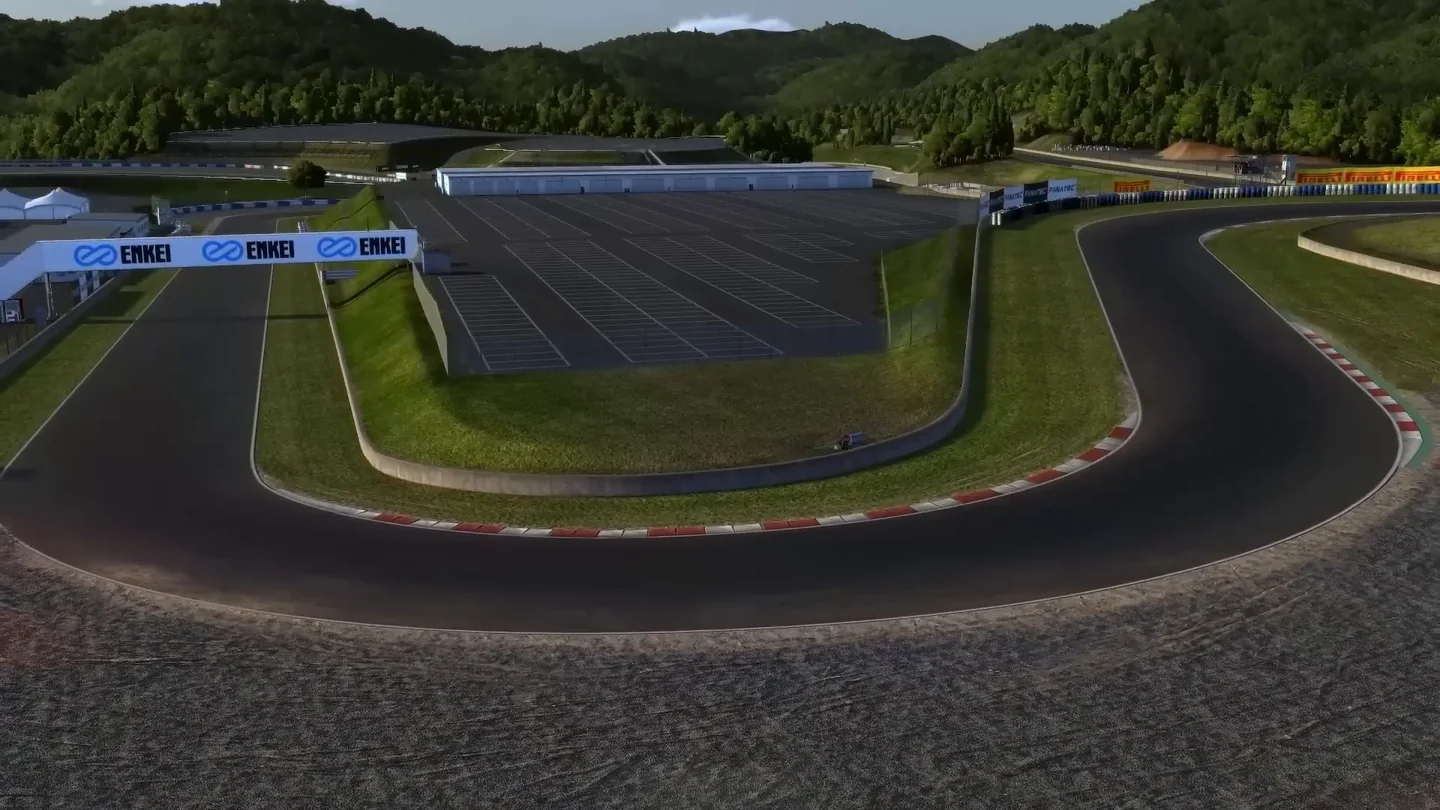
The example hairpin. One attempt with the braking point a car length later, everything else held. Then one with the apex a car length later. Note what each did to the exit onto the straight — that note, not the lap time, is the result of the attempt.
The fine-grained version — the small deliberate brake-pressure adjustments fast drivers make while trailing off — is explained in the fundamentals guide. On a track you learned an hour ago you are working at a coarser resolution than that.
Step 5: Stop reacting and start predicting
This is the difference people describe as talent, and it is not talent. It is the most learnable thing on the list once you can see what it actually is.
Watch a beginner and the sequence is always the same: the car moves, then the driver responds. There is a gap between the two, it is never shorter than human reaction time, and everything expensive lives inside it. The correction is late, so it has to be bigger, so it unsettles the car, so the next one is needed. Watch a fast driver and the correction is not there — not because they caught it sooner, but because the input arrived first.
The part worth being precise about: you cannot train your way into reacting faster than physics. What is trainable is knowing earlier, and it is assembled from the three stages you just did. The reference told you exactly where you were. The line work told you what the corner is asking for. The grip-fishing told you what happens at that speed, at that angle. Prediction is those three arriving together.
Which is the honest explanation of why a new track feels so bad. Your car control has not gone anywhere; your prediction has. Everything is a reaction again for a session or two, and it returns as fast as you rebuild the inputs it is made of. You notice it before you can measure it: corrections get smaller, then earlier, then stop.
Step 6: Walk up to the limit in measured steps
Attacking until something goes wrong teaches you where the wall is rather than where the edge was. Never going near the edge, which is most drivers, produces a clean lap several tenths short of the car.
The systematic version is dull and it works. Pick one corner and one variable. Step it in increments you can measure — a car length on the braking point, a couple of km/h of entry speed — and hold everything else exactly where it was, which is only possible because of stage two. Then go one step past the point where it stops working. Once. A limit you never crossed is not a limit, it is a guess about where one might be. Come back one increment and that is your working number for the session. It costs laps that are visibly slower, and it buys a following week that is better.
The example hairpin. The braking point moves a car length at a time against the 100-board cue. Keep stepping until one attempt stops working — the car will not slow enough for the apex, or the exit onto the straight gets worse — then come back one step.
Step 7: Compare against a faster driver — but do not copy yet
Getting hold of a quicker lap is the easy part. Copying it immediately is the mistake, and almost everyone makes it here.
Two jobs, in order. The first is locating the time — where the gap opens, which is often not where it is biggest, because a large loss on an exit was created by a small decision earlier. Compare the path before the pedal traces; the cornering guide covers that reading order, and the telemetry guide covers overlaying the two laps once you know which corner to look at.
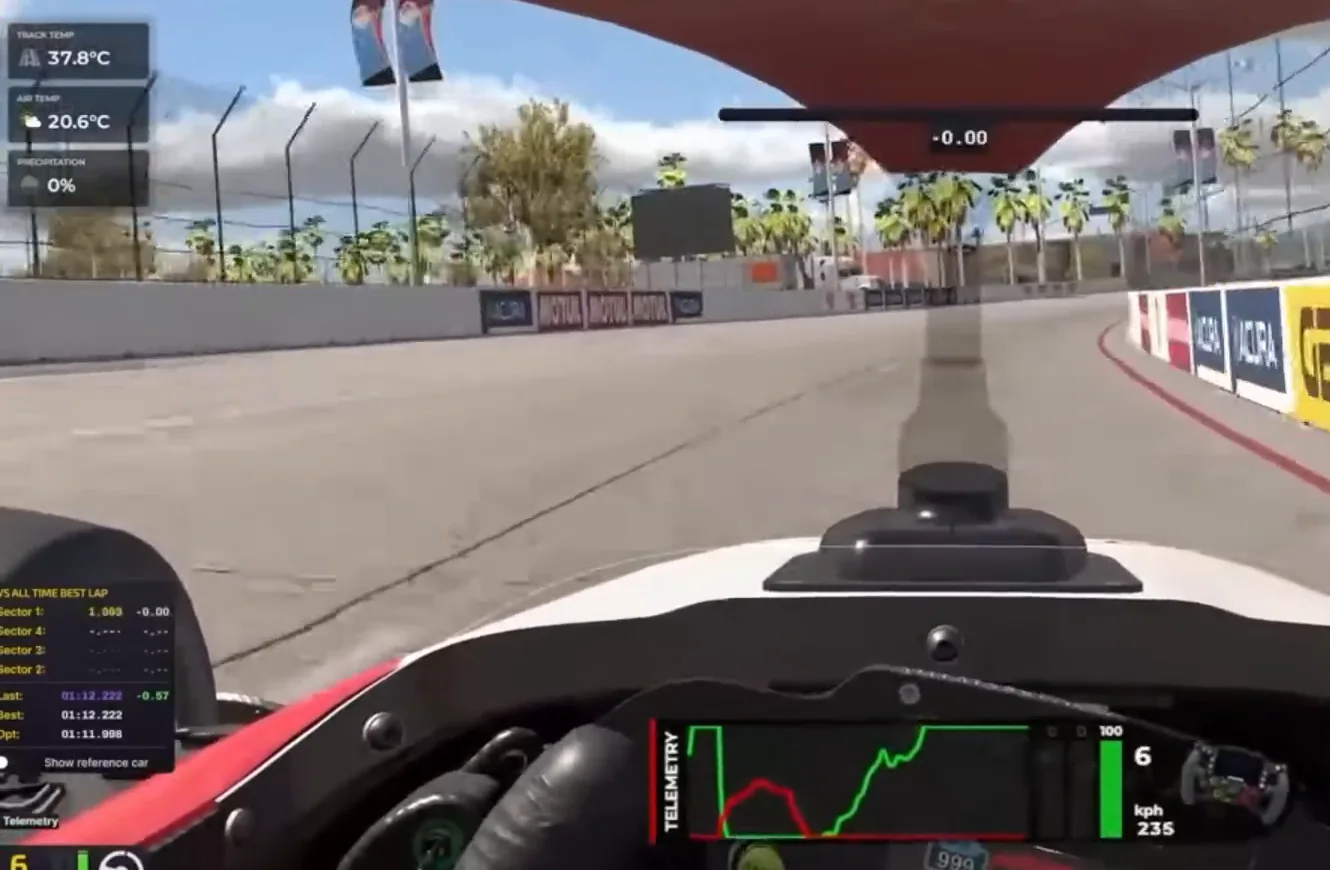
The second job belongs to this page: decide whether the difference is track knowledge or technique, because the fixes are completely different. Track knowledge is when they are doing something you are perfectly capable of and did not know was available — a kerb that takes far more than it looks like it will, an apex you can be earlier to because the exit opens out of sight. Copy that immediately; it is free lap time. Technique is when they are doing something you currently cannot execute, like carrying brake pressure much deeper or rotating the car on entry rather than steering it. Copying that on a track you learned this afternoon produces a worse lap and a habit you will have to unlearn. It is not a track-learning problem at all — it belongs in a practice block of its own.
A quick way to separate them: attempt their version at reduced pace. If you can do it slowly and it works, it was knowledge, and speed will follow. If it falls apart at every speed, it was technique.
The example hairpin. If the gap shows on the straight after it, look earlier for the cause — the apex or the throttle point. A kerb or an apex you had not tried is knowledge: copy it. Brake pressure carried deeper into the turn than you can manage yet is technique: park it.
Step 8: Drill your weakest corner, then connect the lap
Every circuit has two or three corners that decide the lap. Find them from the comparison you just did, not from feel — the corner that feels worst and the corner that costs most are regularly different, and the one that feels bad is usually just dramatic.
Then isolate it. Driving a full lap for one attempt wastes most of a session; in iRacing, Active Reset drops you back to a saved point on a straight so you can take the corner again immediately, and the cornering guide explains how to set it up. Before you start repeating it, name the corner — hairpin, double apex, medium-speed sweeper, compression, decreasing radius. That sounds like bookkeeping and it is the opposite. The type decides the technique, and a driver who has not labelled the corner is applying whatever worked at the last track and hoping.
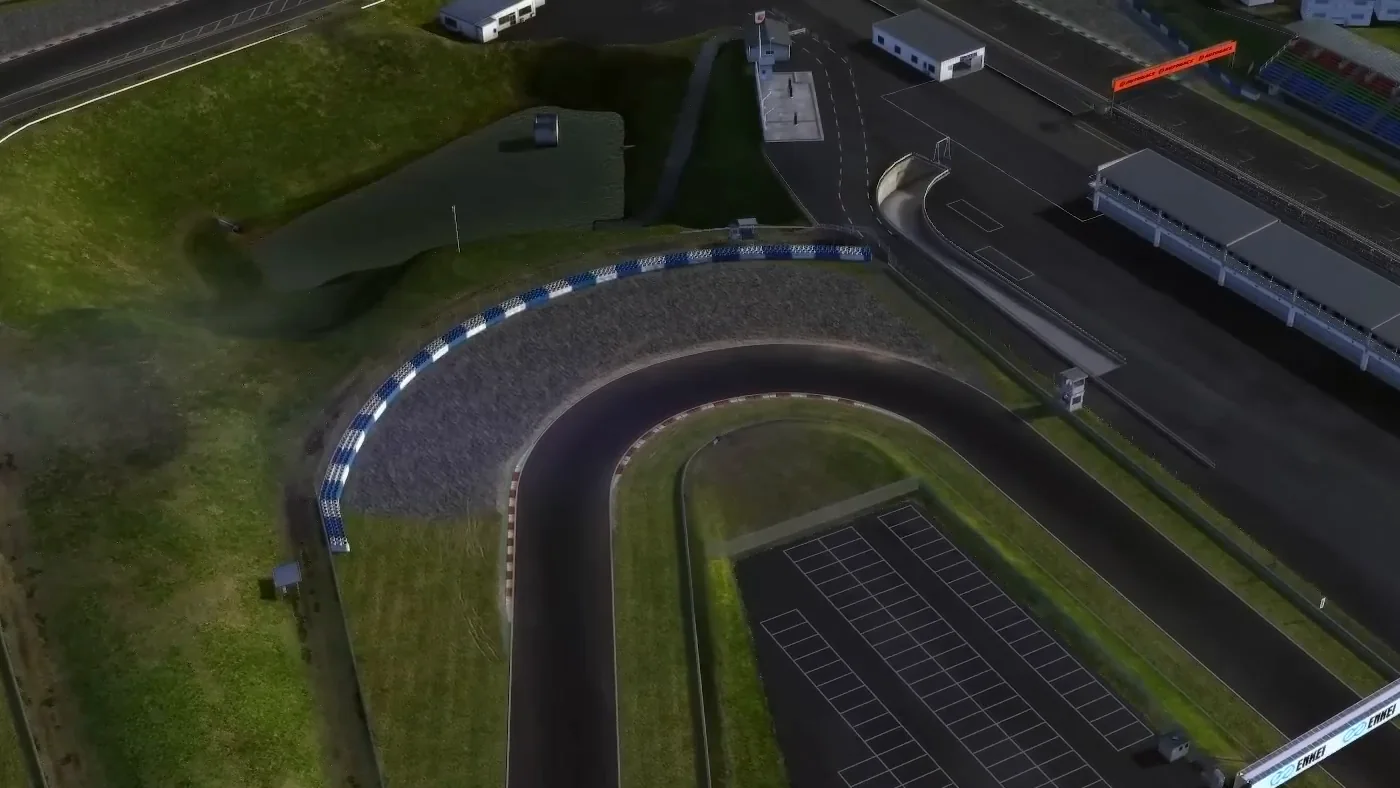
Then connect it back, which is where the gain usually disappears. A corner drilled in isolation is entered from a saved snapshot at a known speed on a clean line; in a lap it is entered from whatever the previous corner left you with. Run the sector, then the lap, and expect it to be worse at first. That gap is not a failure of the drill — it is the actual work.
The example hairpin. If the comparison put it among the corners that decide the lap, it gets the isolated block: labelled a hairpin, reset to the straight before it, then run inside its sector and finally inside the lap.
Corner notes: four lines per corner that matters
Keep one note for each corner that decides the lap, update it as the stages go, and start the next session from it rather than from memory. Four lines are enough:
| Line | What to write | The example hairpin |
|---|---|---|
| Entry reference | One instant for braking and one for turn-in, worded so someone else could execute them | Brake when the left edge of the 100 board reaches the windscreen pillar |
| Apex | Where the car should be at the apex, and the cue that tells you it got there | The apex settled in step three, checked once on the external replay camera |
| Exit objective | What the exit has to deliver for the next part of the track | Back to full throttle early and straight onto the long straight |
| Next test | The one variable you will change next, and by how much | Braking point one car length later, everything else held |
The last line is the one that matters most. A session that starts with a written next test has a question to answer; one that starts without it turns back into laps.
How do you learn a new track every week in iRacing?
The method above assumes you have time. A series that changes circuit every week does not give you any: a few evenings, one of which has the race in it. So it compresses, and the compression is about refusing to do stages out of order rather than doing each for less time. The numbers below are a starting point — scale them with the length of the lap, and cut the middle blocks rather than the first if you run short.
The one-week track protocol
- First 5 to 8 laps — layout only. Well off pace, delta hidden. Stop when nothing surprises you.
- Next 8 to 10 laps — references. One precise cue each for braking, turn-in and throttle, in the corners that look like they matter. Say each out loud; if it needs the word "around", rebuild it.
- Next 10 laps — the line. Around ninety per cent, path only. Entry position, apex, exit width. Check one on an external replay camera.
- Next 10 to 15 laps — fish for grip. One change per lap. Note what each corner gives back and what it refuses.
- One comparison session. A quicker lap, one pass to find where the gap opens, one pass to split what you found into knowledge and technique. Copy the knowledge now; park the technique.
- 15 to 20 minutes on the worst corner, isolated. Label the corner type before you start.
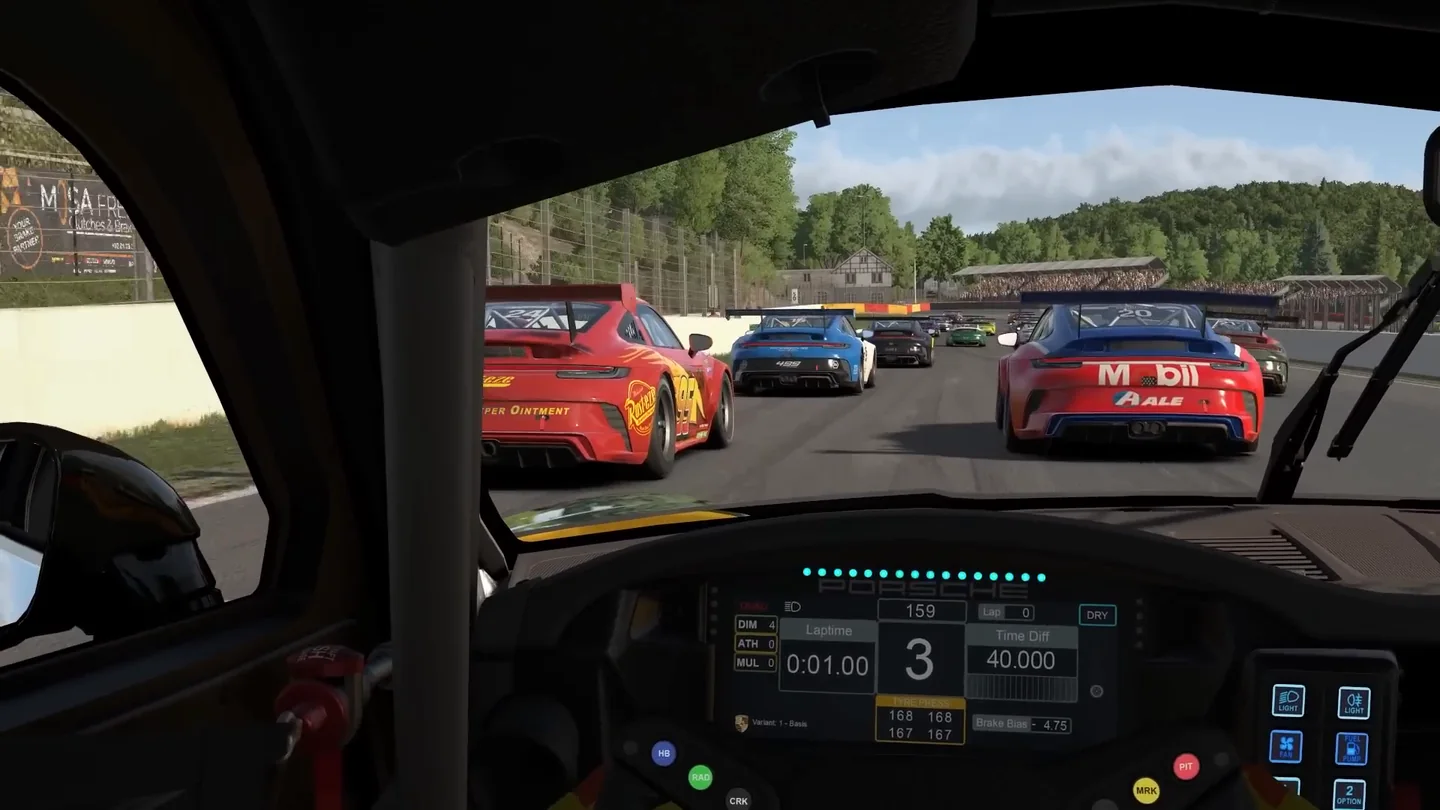
- One race-length run, no resets. With traffic if you can get it.
The last item is the one that gets dropped and the one that decides your Saturday. A lap you can only produce alone on clear track is not the lap you will be asked for, and the gap between the two is its own well-known problem.
And not every week deserves the whole protocol. If the circuit is one you have driven before, or one built from corner types you already have answers for, start at the grip stage and spend the saved evening on the race instead.
Why the fifth new track takes half the time the first one did
You are not really learning tracks. You are learning racing corner types, and there is a limited number of them. The second time you meet a downhill entry into a decreasing radius you are not starting from nothing — you know the shape of the answer, and you are only checking this version of it for banking, kerb and camber. The puzzle piece was cut somewhere else and it still fits.
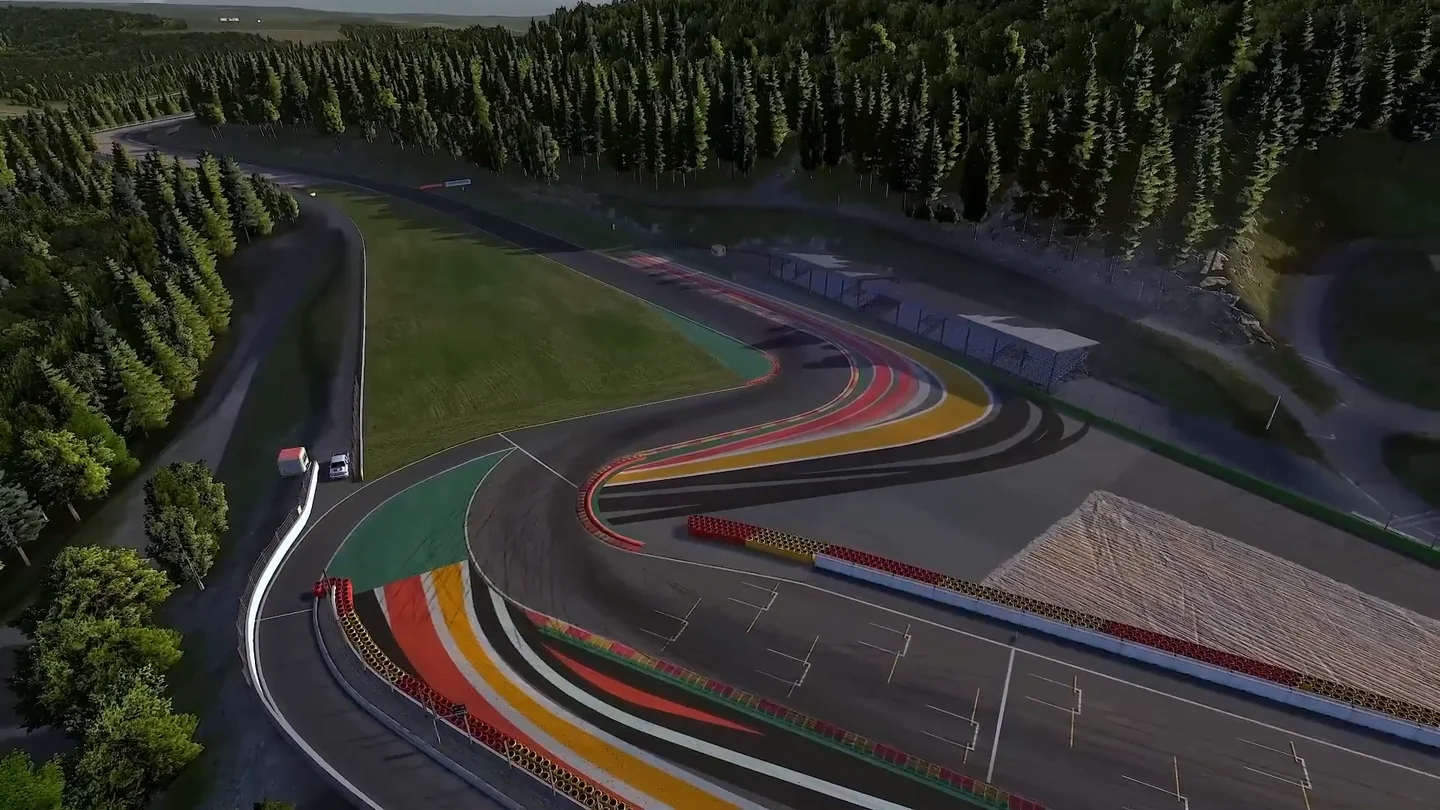
That is what is going on with drivers who look quick everywhere. They are not memorising more circuits than you; they are recognising more corners, so most of a new lap is already solved when they arrive.
It is also why "just drive more laps" half works: layout knowledge alone is worth real time on a new track, so unstructured driving improves you at first and then stops. Why practice stops producing improvement covers what breaks next. To compound faster on purpose, choose practice circuits for the corner types they contain rather than for what is on the schedule — five tracks worth your hours picks them by what each one exposes.
The fastest way to learn a new track, in the end, is not to drive it more. It is to arrive already knowing what most of its corners are, and to spend the session on the handful that are new.
Learning a new track FAQ
What is the fastest way to learn a new track in sim racing?
Learn it in stages and finish each one before starting the next. Drive it well below pace until nothing surprises you, then build one exact reference for each action — braking, turn-in, throttle — rather than an approximate one. Establish the racing line before you move the braking point, then change one variable at a time to find out what each corner rewards. Walk up to the limit in measured steps, compare against a faster lap only after that, and drill the two or three corners that decide the lap last. Lap time is the final check, not the first.
How many laps does it take to learn a new track?
Fewer than most drivers use, because most of those laps go on the wrong thing. The layout itself usually takes under ten laps at reduced pace, and you are done with that stage when you can name the next corner before you can see it. What takes longer is everything after it: building exact references, settling the line, and finding out what each corner rewards. That work is measured in deliberate changes rather than distance, since thirty identical laps give you one data point thirty times. Count the questions you have answered, not the laps.
What makes a good reference point in sim racing?
Precision: it should name one instant, not a region. "I brake around the 100 board" is not one, because the board is several metres long and "around" covers a spread of braking points wide enough to hide most of the time you are chasing. A precise version names a single event: the moment the left edge of that board reaches a specific point in your view, such as the edge of the windscreen pillar. This is sometimes called an atomic reference, because it cannot be split into a range. The test is whether somebody else could execute it from your seat. If your description needs "about" or "roughly", it is not precise yet.
Should you learn a new track slowly or at full pace?
Slowly first, and slower than feels productive. Pushing from lap one is the common advice and it inverts the order: you cannot find the limit of a corner you are not yet able to predict, so what you find instead is the wall outside it. Drive well under your capability until nothing on the lap surprises you, because every input made while surprised is late by definition. Pace comes back in stages — the line at a moderate speed, then deliberate variation to learn what each corner gives back, then a systematic walk up to the limit one variable at a time.
How do you learn a new track every week in iRacing?
Compress the sequence rather than skipping stages. A workable split: five to eight laps well off pace for the layout, eight to ten building one exact reference each for braking, turn-in and throttle, ten at around ninety per cent settling the racing line, then ten to fifteen changing one variable per lap to learn what the corners reward. Then one session comparing against a quicker lap, fifteen to twenty minutes isolated on your worst corner, and one race-length run with traffic. That last run is the one people drop and the one that decides race day.
Should you copy a faster driver's lap when learning a track?
Not immediately. First work out where the gap opens rather than where it is biggest, then decide whether the difference is track knowledge or technique, because they need different responses. Track knowledge is something you could already do and did not know was available — a kerb that takes far more than it looks like it will, an apex you can be earlier to because the exit opens out of sight. Copy that straight away. Technique is something you cannot currently execute, such as carrying brake pressure much deeper, and copying it on a track you learned this afternoon buys a worse lap and a habit to unlearn.
Why do I feel slow and clumsy on a track I have never driven?
Because what a new circuit removes is prediction, not car control. Fast driving is not faster reactions — reaction time is close to fixed. It is knowing what the car is about to do early enough that the input arrives before a correction is needed, and that knowledge is assembled from exact references, a settled line, and having already found out how each corner behaves at speed. None of it exists on lap one, so everything becomes a reaction again and the corrections are late and therefore large. It returns as quickly as you rebuild the pieces it is made of.
Should you learn a new track in your race car or something slower?
Either works, but be deliberate about which. A slower car makes the layout stage quicker because everything happens at a speed you can process, and it is a reasonable way to spend the first few laps. The catch is references: a cue built from your cockpit, such as a point on the dash or the edge of the windscreen pillar, moves when your eye height changes, so it will not survive the swap into the race car. Cues built from two things on the track lining up do survive. Sight the track in something else and expect to rebuild the cockpit-based ones.
This guide is part of the free library at GitGud Racing Academy — an online sim racing academy built around weekly lap reviews, structured courses, drills and training tools.
Train this the right way
Reading is step one. Build it into muscle memory with structured, car-specific courses and personal lap reviews from a coach — inside the Academy.
Join the Academy · $35.99/mo incl. VATWatch the full video on YouTube