Racing Corner Types: How to Recognize Them and Choose Your Line
Every corner you will ever drive is a member of a small number of families, and the family tells you what it punishes before you have driven a single lap of it. That is the entire value of learning corner types: not trivia, but a plan in advance for a corner you have never seen.
This is the visual reference. Each type below is shown from above, with what identifies it, what it rewards, and what it takes from you if you get it wrong. Where a type has enough depth to need its own page — hairpins, chicanes, double apexes — there is a link to the full treatment. The shapes and the drawings come from the corner-types chapters of our Foundations course.
Racing corner types at a glance
Before the detail, the identification table. Read the left column while you are still on the straight approaching a corner you do not know.
| What you see | Type | What it changes |
|---|---|---|
| The road doubles back roughly 180° | Hairpin | Exit is everything; late apex, big steering angle, straighten early |
| Two turns in opposite directions, close together | Chicane | Position on the first exit decides the second; kerbs and quick hands |
| One corner, two tightenings, a release between | Double apex | One long brake, two clipping points, how wide to run in the middle |
| A long, fast, constant curve | Sweeper | Minimal steering, commitment, stability over rotation |
| Opens wide, then tightens towards the exit | Decreasing radius | A much later apex than it looks like it wants |
| Narrow entry, then opens up | Increasing radius | Throttle far earlier than feels reasonable |
| A clean right angle, often walled | 90-degree | Apex in the middle; braking-limited rather than grip-limited |
| Very long, banked, constant lock for seconds | Carousel | One continuous input; corrections are expensive |
| Turns and drops at the same time, over a crest | Corkscrew | Brake earlier and softer; the car is light when you commit |
| Outside edge lower than the inside | Off-camber | Less grip than the shape promises; entry speed must come down |
| Track dips, then rises through the corner | Compression | A window of extra grip — usable, but only where it sits |
| The road rises and you lose sight of the exit | Crest | The car goes light exactly where you wanted to commit |
| You must turn before you can see the apex | Blind | References replace vision; feel is not enough |
| A corner whose exit feeds a more important one | Compromised | Deliberately slower here to be faster next |
| Four to eight corners forming one section | Linked | Only the last corner's exit tells you if the sequence worked |
One warning before the detail: these labels are not mutually exclusive. A single corner can be a decreasing-radius, off-camber, blind hairpin — and in that case all four descriptions apply at once, and they stack. The label is a starting hypothesis, not a box.
One session, or a coach every week
- Personalized feedback
- One coaching session
- Advice based on your driving
 GITGUD ACADEMY
A full month for less than one 1-to-1 session.
Hairpins: the tight corners where exit is everything
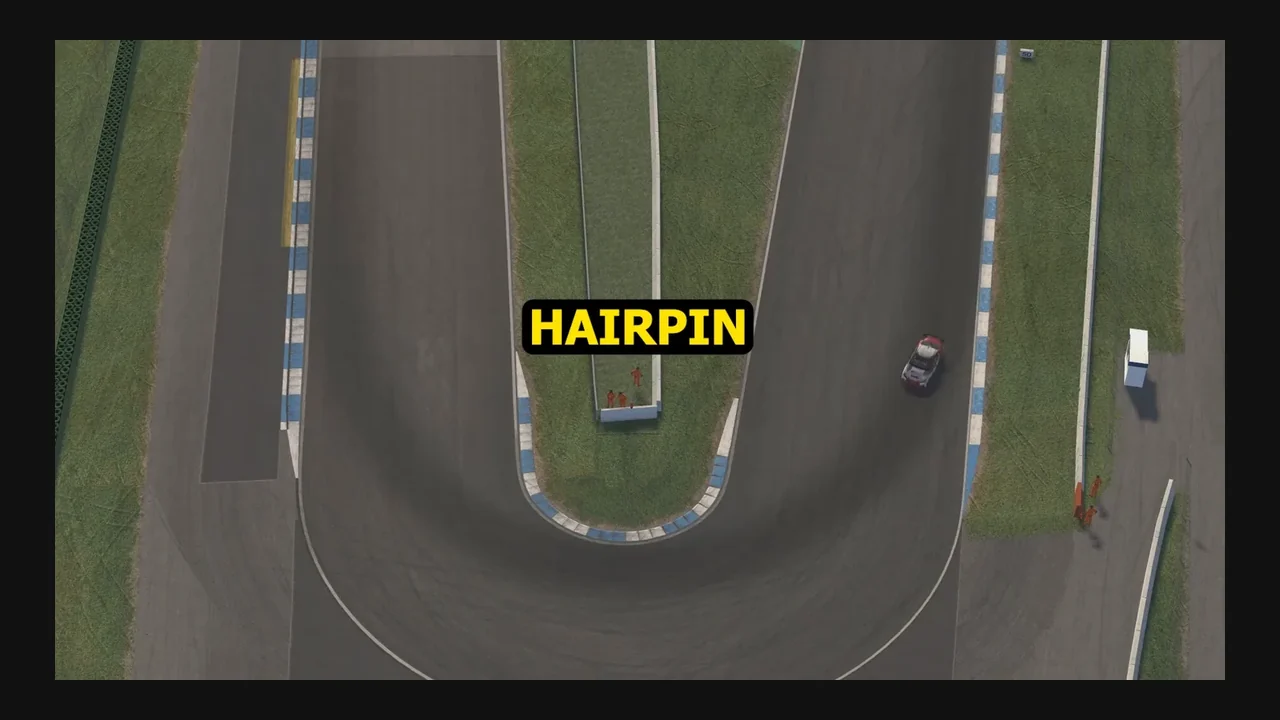
A hairpin turns roughly 180 degrees and almost always leads onto a long straight. That combination means the corner exists to be exited well, and everything you do on entry is subordinate to that.

What it rewards: straight-line braking at zero steering, a late apex around the middle of the corner, a large steering angle at the apex, and a fast unwind onto the throttle. What it punishes: turning in when it feels natural, which is too early, and leaves the car pointing at the outside of the track when it should be pointing at the exit.
The line choice here is genuinely two-sided — a rounded arc with a higher minimum speed against a late apex with a better exit — and which one wins depends on the car and on how long the following straight is. That comparison, drawn on the corner, is in the hairpin racing line guide.
Chicanes and esses: connecting two direction changes
A chicane is a pair of corners in opposite directions, close enough that they must be driven as one problem. Circuits use them to interrupt a straight, so the second exit is usually the thing worth protecting.
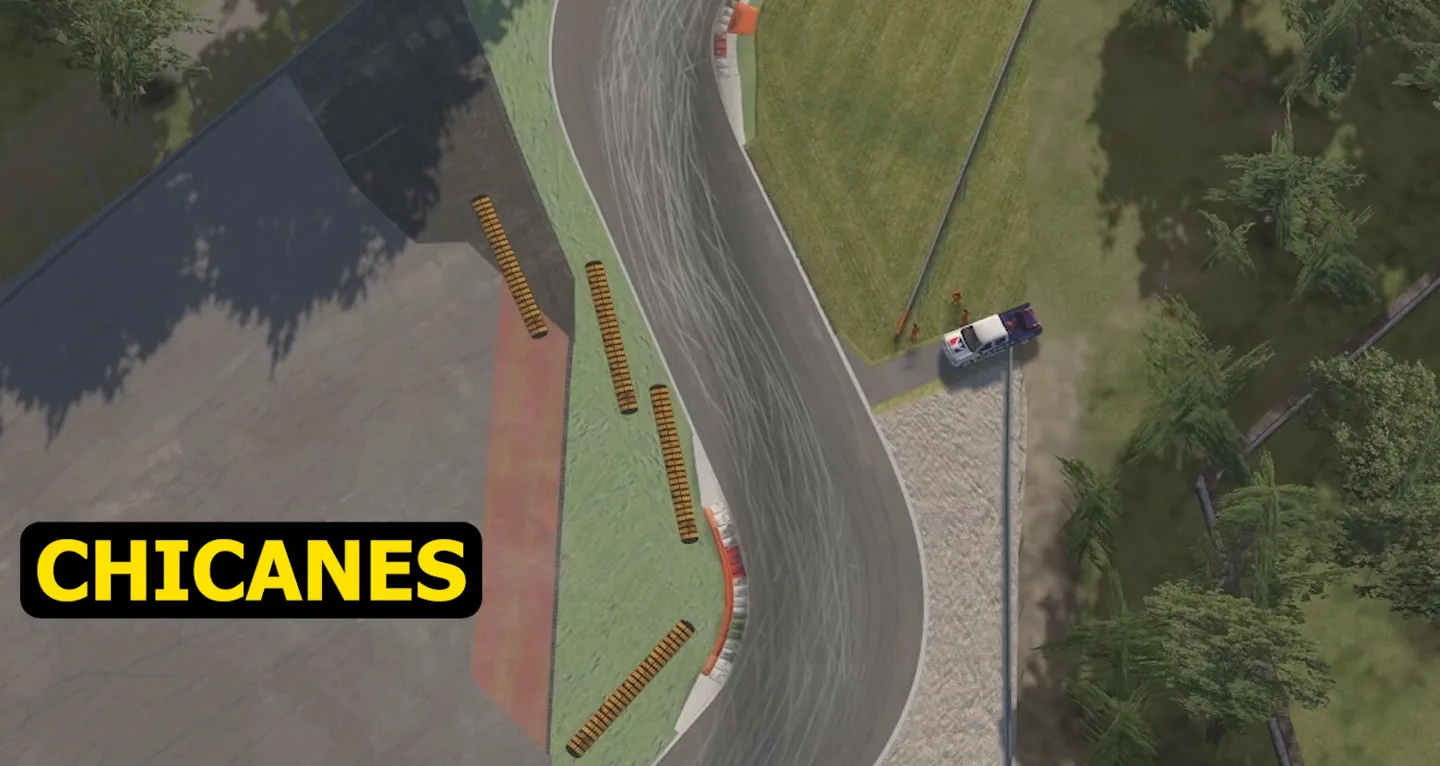
What it rewards: using every legal centimetre, cutting the kerbs, and above all arriving at the exit of the first turn near the centre of the track. What it punishes: hesitation, slow hands through the transition, and a first-turn exit one or two metres too wide — which forces a narrower arc through the second turn and a second slowdown you had not planned.
Esses are the same problem repeated: a rhythm section where each exit is the next entry. The full treatment, including the two opposite ways to get the first turn wrong and how kerb use and track limits interact, is in the chicane racing line guide.
Double apexes: one corner with two clipping points
A double apex has two tightenings with a brief release between them. The defining decision is not where the apexes are — it is how wide you let the car run between them.

What it rewards: treating the whole thing as one corner with one continuous set of inputs, and a long trail brake that holds the nose tight enough to reach the second apex. What it punishes: releasing the brake early, which gets you to the throttle sooner, runs the car wide, and misses the second apex entirely.
The width decision has a real rule behind it — car type first, then the length of the straight that follows — and both extremes are slower than the middle. That reasoning, with the lines drawn and two of them rejected, is in the double-apex guide.
Sweepers and constant-radius corners
Sweepers are fast, flowing corners that ask for stability and commitment rather than rotation. They often arrive in series, which means one mistake contaminates the whole section.
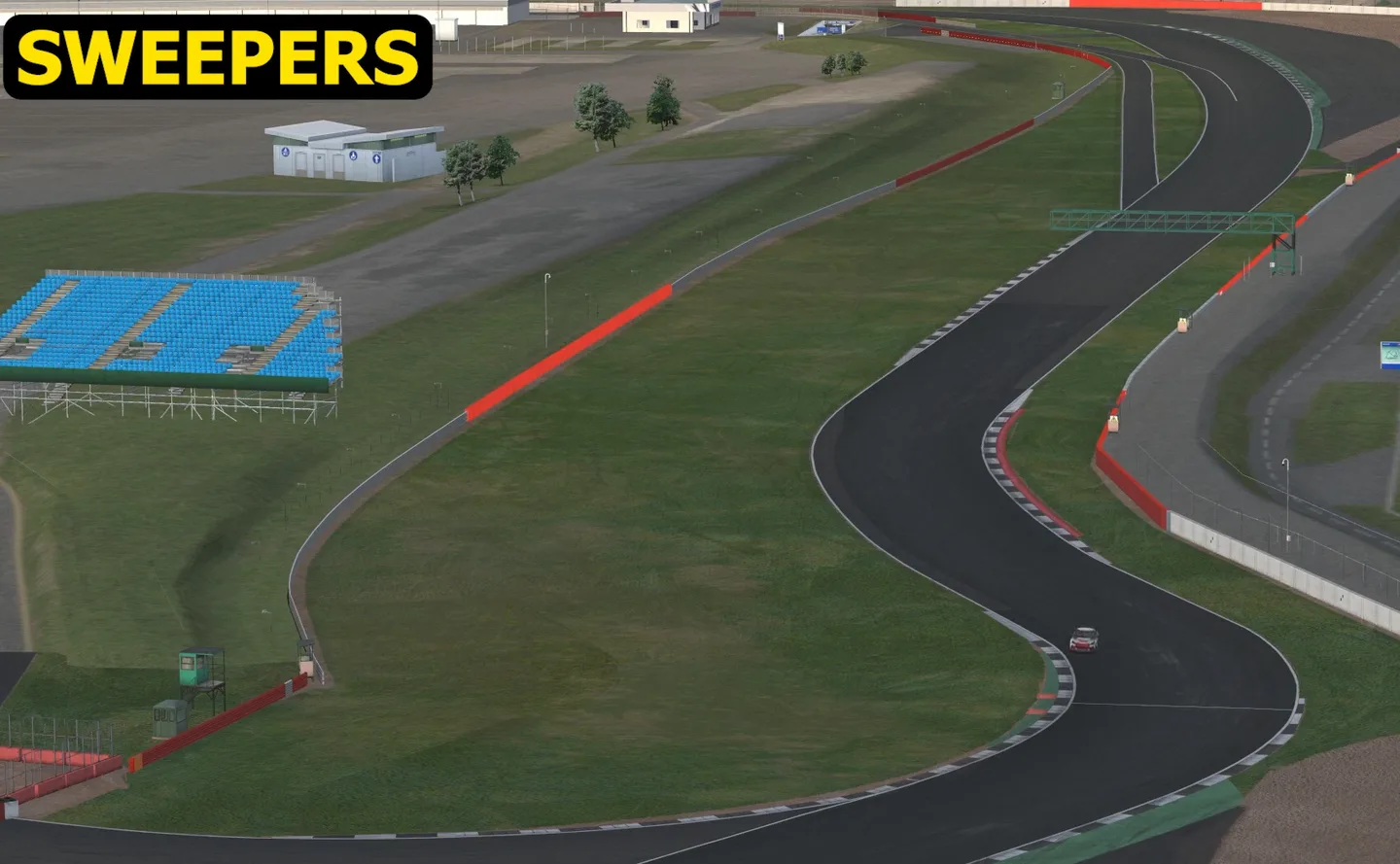
The counter-intuitive instruction is to use less steering, not more. The course guidance is to point the car quickly with a short input and then do the rest with the brake pedal, and to avoid large angles — beyond roughly 45 to 90 degrees of wheel you are already at a disadvantage, because at that speed the front tyres are near their limit and extra lock scrubs speed instead of adding rotation. The mental image is to draw as straight a line as possible between the corners of the section rather than snaking left to right.
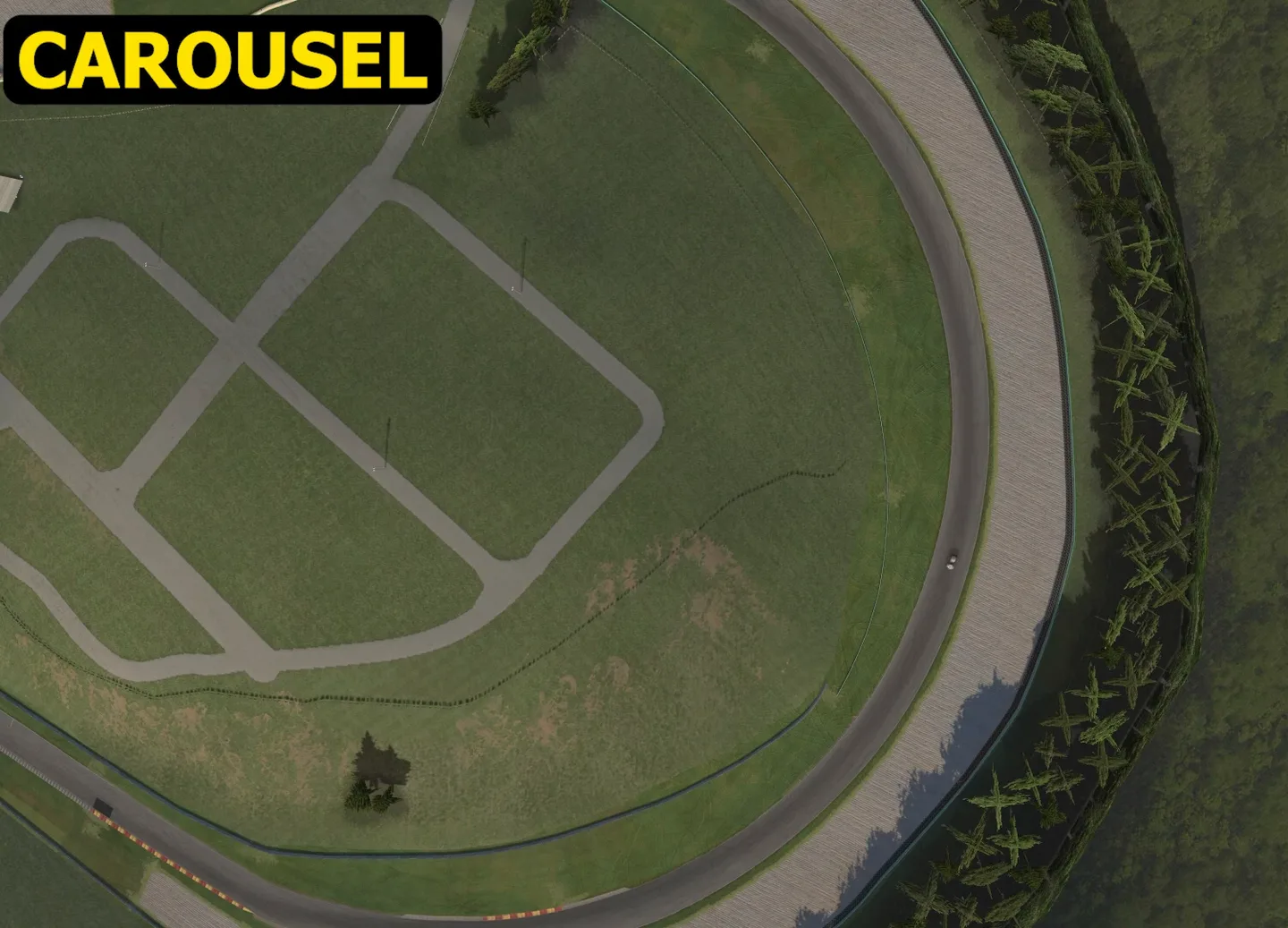
A carousel is the extreme version: a very long, heavily banked, constant-radius corner where you hold lock for several seconds. The banking generates grip, but you are committed the moment you drop into it. The input pattern is one motion — throttle, a touch of brake, then straight back to throttle — because repeated corrections in a corner this long bleed momentum you cannot recover.
Why lock past a certain point makes a fast corner slower rather than tighter is the subject of the grip limit guide.
Increasing and decreasing radius corners
These two are mirror images, and they are the pair most worth learning to spot, because each one invites exactly the wrong instinct.

A decreasing-radius corner starts open and wide — and it looks like it is giving you permission to carry speed. Then it tightens progressively all the way to the exit, and the speed you accepted at the entry becomes a problem you cannot solve with the wheel. The answer is a much later apex than the corner appears to want, and entry discipline that feels like leaving time on the table.
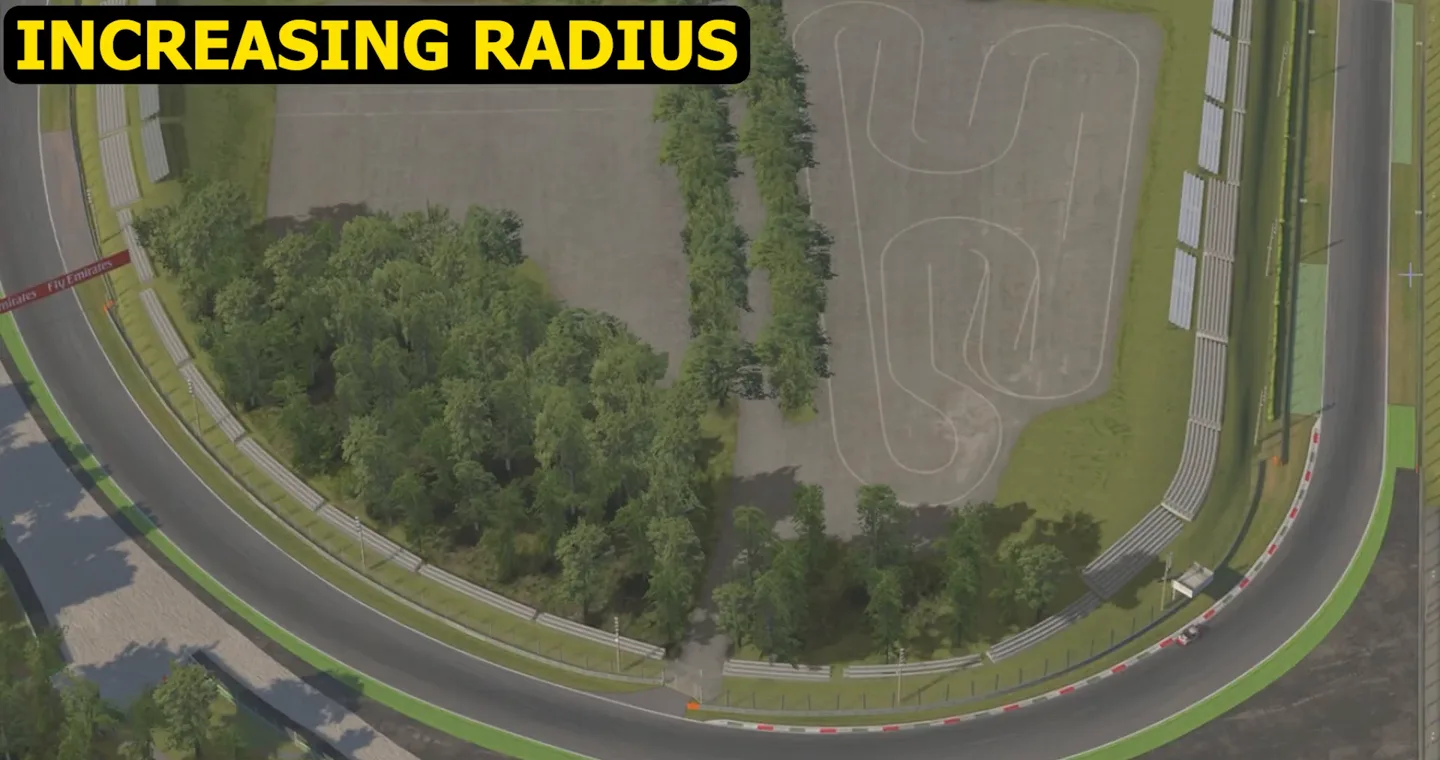
An increasing-radius corner is the opposite: a narrow entry that opens up as it goes. The mistake is to drive the whole corner as though it were the entry, which means slowing for a radius that stops existing. Done properly it allows a throttle application that looks far too early on a replay, because the road is widening faster than the car is.
Both are why the label matters more than the feel. A decreasing radius punishes exactly the confidence an increasing radius rewards.

A 90-degree corner is the simple case, and often walled in street layouts. Apex in the middle — not early, which forces a wide, braking exit — and treat it as a braking problem rather than a cornering one, because the corner is short enough that where you stop the car matters more than how you carry it round.
How banking, camber, crests and compressions change a corner
The types above are shapes seen from above. These are properties, and they layer on top of any shape — which is why the course teaches them as a separate chapter.

Off-camber means the outside edge of the corner is lower than the inside. Gravity now works against you, pulling the car away from the apex while the lateral load rises with no support. There is less grip than the shape promises, and the failure mode is understeering wide or losing the rear on entry. The correction is entry speed: an off-camber corner will not forgive a speed that a flat corner of the same radius would.
Banked is the reverse, and it is a gift — the slope supports the car, vertical load rises, and you can carry speed that would be impossible on a flat corner of the same radius. The catch is that the grip disappears when the banking does, which is usually at the exit.
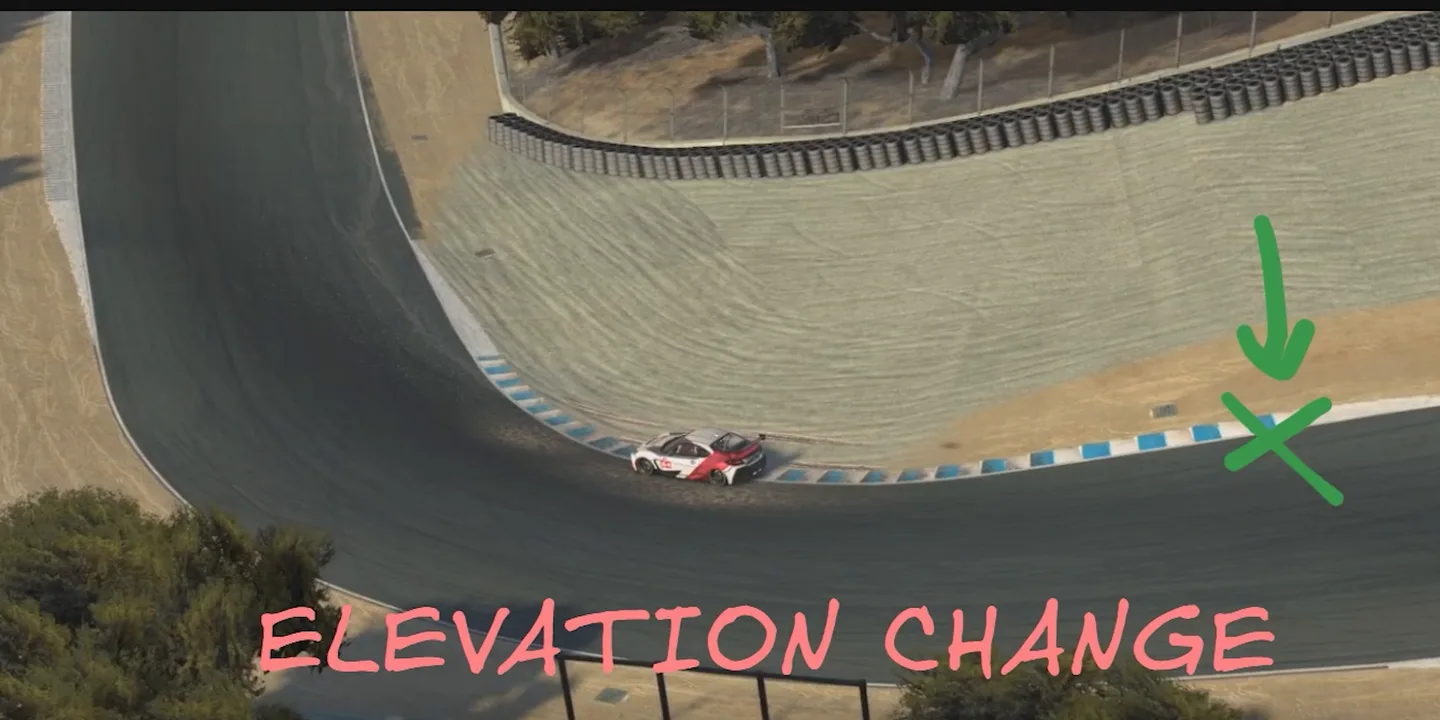
Compression is an elevation change where the track drops and then levels or rises, squashing the suspension and pressing the tyres into the road. For a moment there is genuinely more grip than the corner looks like it offers. The practical point is that the surplus is only useful where it sits: in a braking zone it is braking grip, at an apex with the road rising it lets you get to power earlier, and just before a crest it vanishes exactly where you would have wanted it.
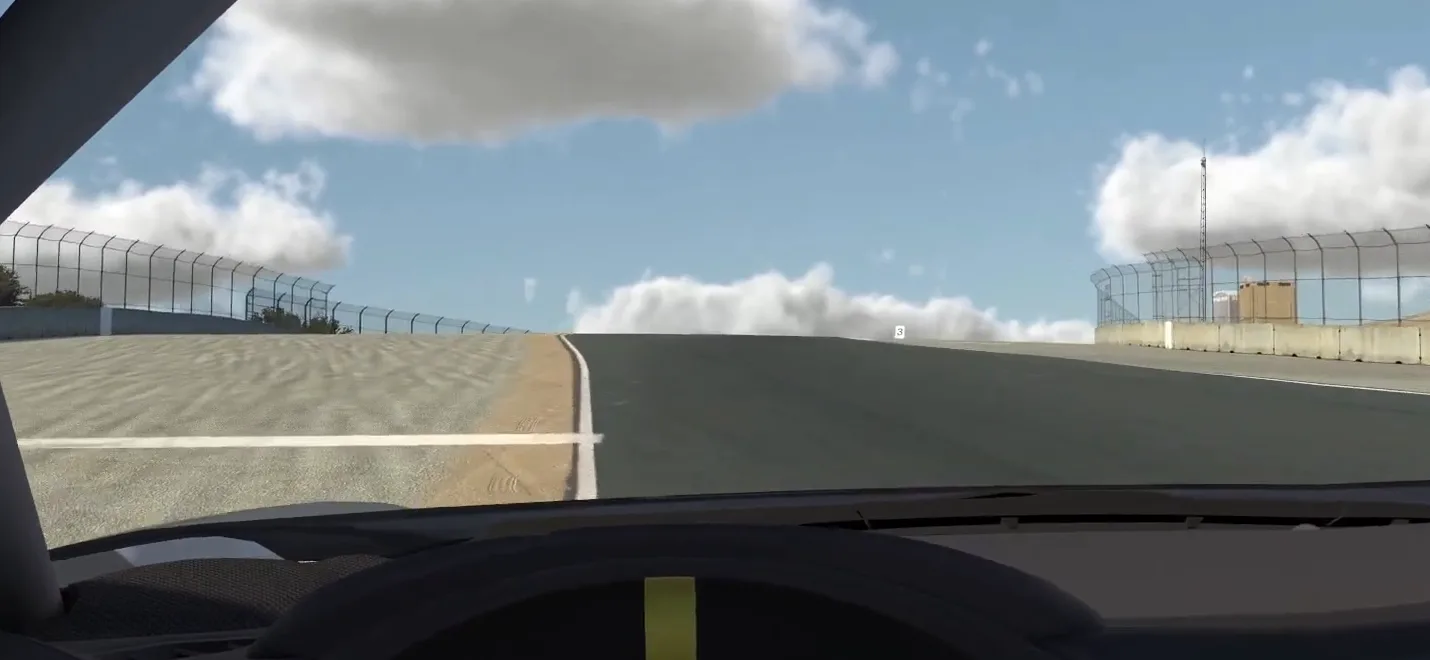
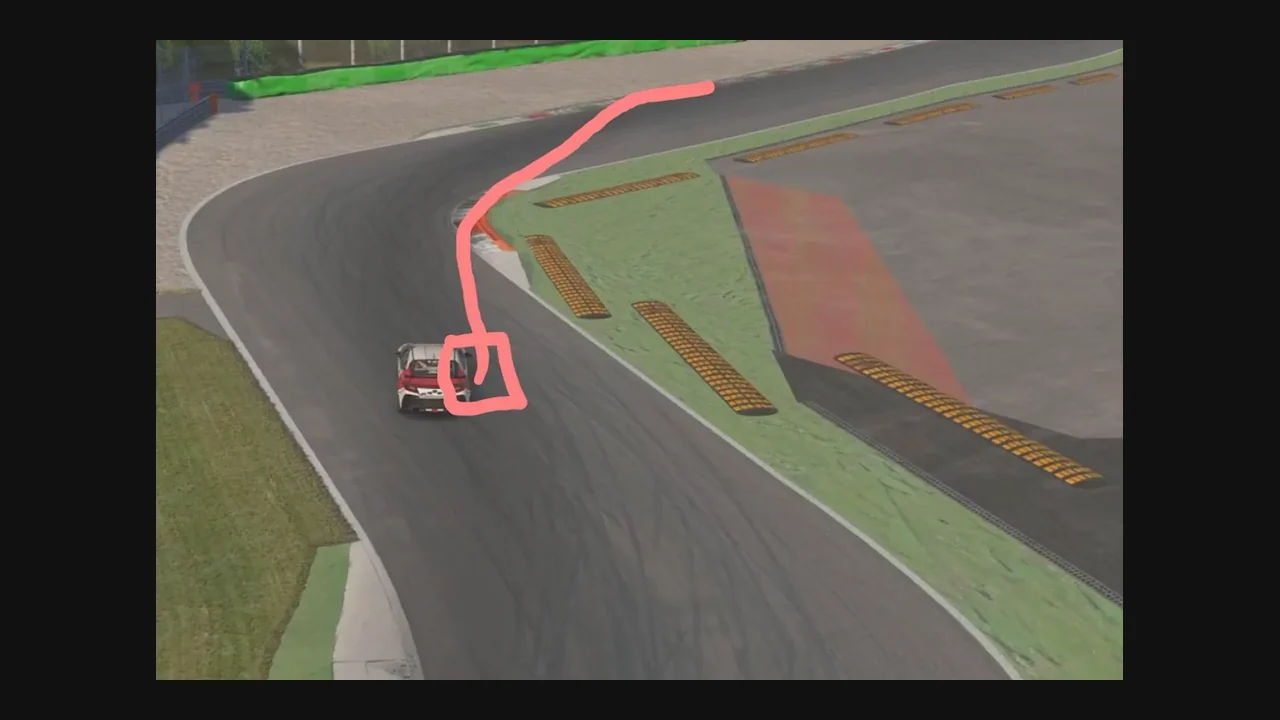
Crests are the opposite and the more dangerous of the two. As the car goes over the top, vertical load drops, the suspension extends, and the car feels disconnected from the road — precisely at the moment the corner is asking you to commit. Anything you are doing at the crest, you are doing with less grip than you had a metre earlier, so braking must be earlier and softer than the corner's shape suggests.
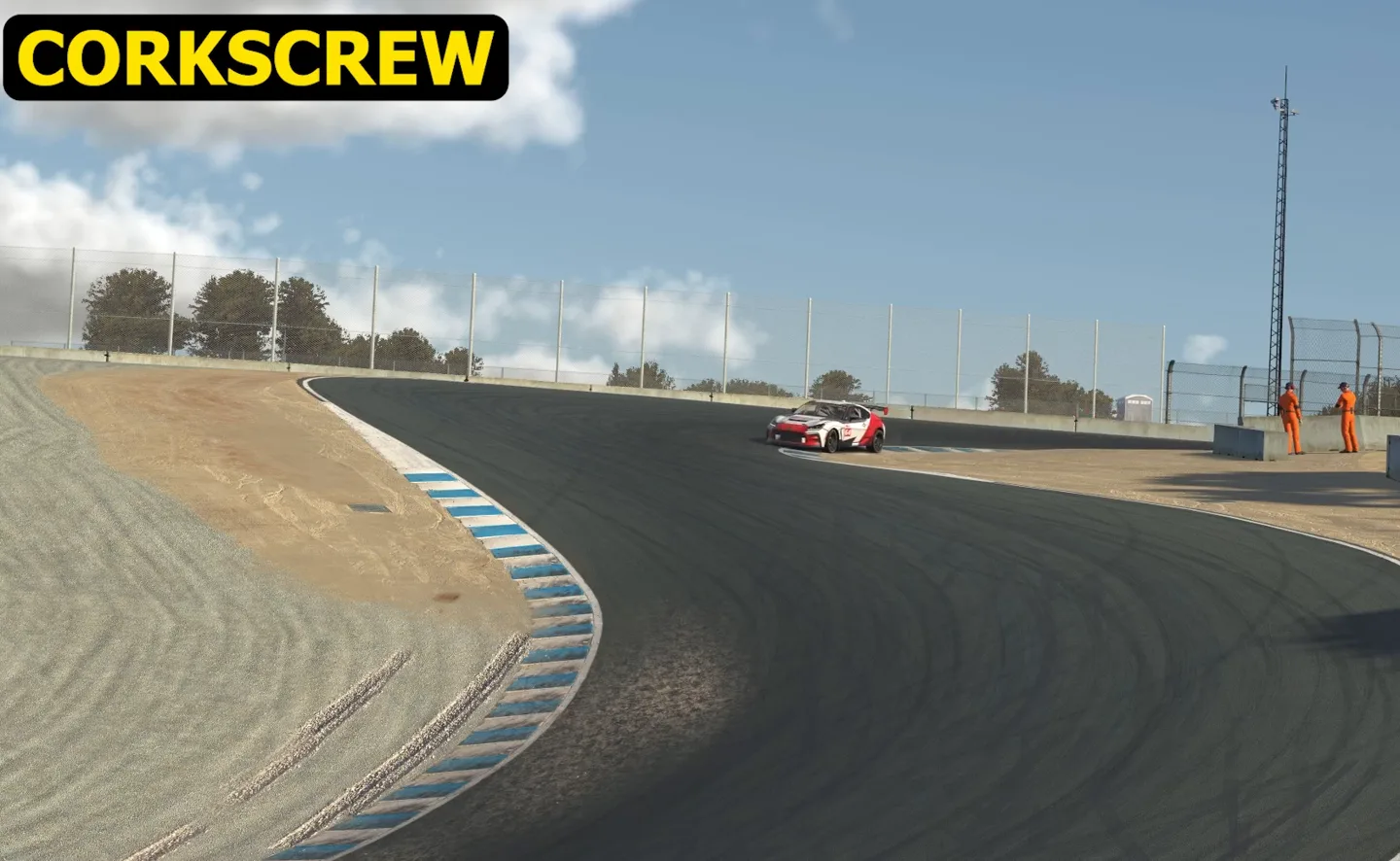
A corkscrew is all of these at once: a blind crest, a direction change and a sudden descent stacked into one complex. The car is light exactly where you are turning in, the suspension is extending, and then the road drops away. The course's guidance is to brake earlier and more softly into the crest, because overloading braking and turning while the tyres are unloaded puts you over the limit immediately.
Blind, compromised and linked corners
The last three are defined by their relationship to something else — to what you can see, or to the corner that follows.

Blind corners require you to turn before you can see where you are going. Feel does not survive this; references do. The method is to build a reference you can actually perceive — a white line, a marker, a kerb edge, even a change in engine note or a shift in the force feedback — and commit to the turn-in when the reference arrives rather than when the corner appears. Building those reference chains is the subject of how to learn a track.
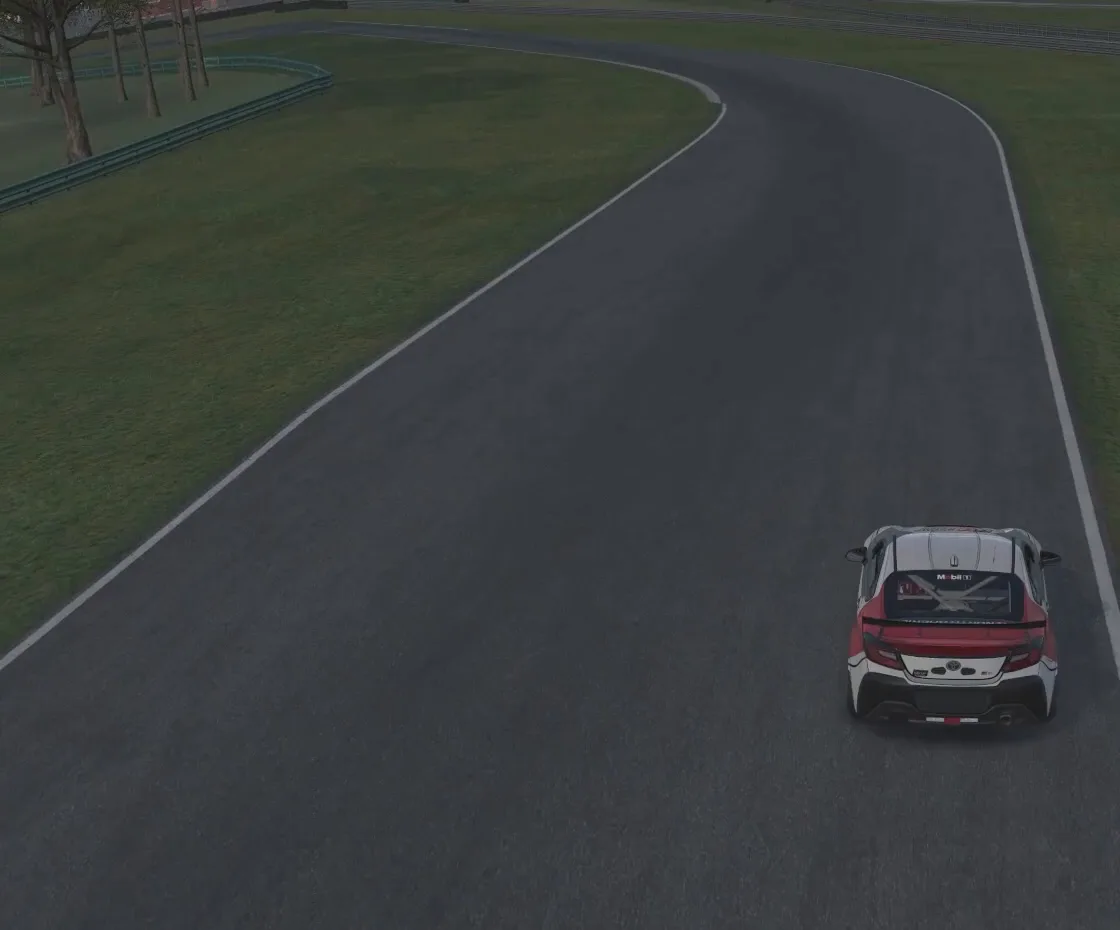
Compromised corners are the ones you drive slowly on purpose. Given two lines — a short one hugging the inside and a longer one going round — the short line is quicker through that corner and leaves you badly placed for the next, more important one. Compromising means accepting the loss where it is cheap to buy a gain where it is expensive. The judgement is always about which corner feeds the longer straight.

Linked corners are sequences of four, six, even eight corners that function as one section, and they come with a warning about how you measure them: the last corner of the sequence is the only one that tells you whether the sequence worked. You can gain time in the middle with a line that ruins the exit, and the delta bar will happily show you up until the moment it collapses. Treat the whole section as a single corner that ends at the exit of the last one, and judge it there.
How to identify a corner before you practise it
Naming the corner is the cheapest thing you can do to a track you do not know, and almost nobody does it. Three passes, none of them at speed:
- Look at the map. Shape first — is it a hairpin, a chicane, a double apex, a sweeper? That tells you which family's rules apply and roughly where the apex belongs.
- Drive it slowly once. At half pace, looking for the properties the map cannot show you: does the radius tighten or open, is the camber against you, does the road rise or dip, can you see the apex when you have to turn?
- Ask what it feeds. Long straight after it, or another corner immediately? That single question decides whether you are optimising exit or minimum speed, and it is the difference between a fast lap and a tidy one.
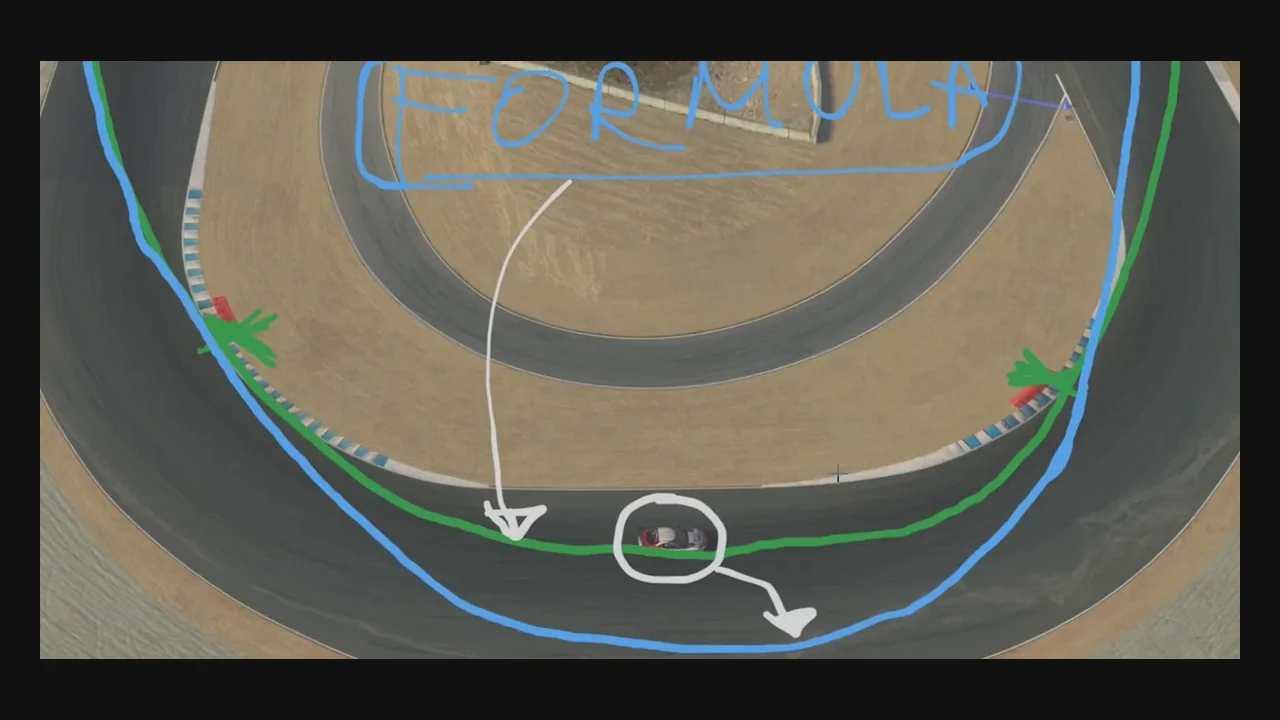
Then work the corner. Labelling tells you where to look; it does not tell you what you are doing wrong, and the method for finding that — checkpoints, references, comparing your best lap to your worst — is the seven-step process in the cornering guide. Or have a coach find it with you: in 1-on-1 coaching you drive the corner while they watch. If you drive one class in particular, the GT3 guide and the Formula guide each carry a corner-type section written for that car.
The full set — every type above as a lesson with a matching practical drill you can run in the sim — is the corner-types chapters of the Foundations course.
Corner types FAQ
What are the main types of corners in racing?
By shape: hairpins, chicanes, double apexes, sweepers, constant-radius corners, 90-degree corners, and corners whose radius increases or decreases through the turn. On top of those sit properties that change any shape — banking and off-camber, crests and compressions, blind corners, and corners that are deliberately compromised for the sake of the next one. The labels are not exclusive: a corner can be a decreasing-radius, off-camber, blind hairpin all at once. The identification table.
How do I recognise a corner type before I have driven it?
Three passes, none at speed. Look at the map for the shape, which tells you which family's rules apply. Drive it once at half pace looking for the things a map cannot show — whether the radius tightens or opens, whether the camber is against you, whether the road rises or dips, and whether you can see the apex when you have to turn. Then ask what the corner feeds: a long straight, or another corner immediately. That last question decides whether you optimise exit speed or minimum speed. How to identify a corner.
What is the difference between an increasing-radius and a decreasing-radius corner?
A decreasing-radius corner starts open and tightens all the way to the exit, so it invites entry speed it will not let you keep; it needs a much later apex than it looks like it wants. An increasing-radius corner is narrow at the entry and opens as it goes, so it allows a throttle application that looks far too early on a replay. They are mirror images, and each one punishes exactly the instinct the other rewards. Radius changes.
Why is an off-camber corner harder than it looks?
Because the outside edge of the road sits lower than the inside, so gravity pulls the car away from the apex at the same time as the lateral load is rising, with no slope to support it. There is less grip than the shape of the corner promises, and the usual result is understeering wide or losing the rear on entry. The correction is entry speed: an off-camber corner will not forgive a speed a flat corner of the same radius would. Camber and elevation.
How should I drive a crest or a compression?
They are opposites. Over a crest the car goes light exactly where the corner asks you to commit — vertical load drops, the suspension extends, and braking or turning there has less grip to work with, so both need to be earlier and softer. A compression is the reverse: the road drops and then levels, the suspension squashes and there is briefly more grip than the corner looks like it offers. The surplus is only useful where it sits, which may be in the braking zone, at the apex, or nowhere you can spend it. Crests and compressions.
What does it mean to compromise a corner?
Driving one corner slower than you could on purpose, because the position it leaves you in is worth more in the corner that follows. The choice is usually between a short line that hugs the inside and is quicker through that corner, and a longer line round the outside that sets up the next one properly. You compromise where the loss is cheap to buy a gain where it is expensive, and the judgement is always about which corner feeds the longer straight. Compromised corners.
How do you judge whether you drove a linked sequence of corners well?
Only by the exit of the last corner in the sequence. A line that gains time in the middle of a section can wreck the final exit, and the delta bar will look encouraging right up until it collapses — so reading it part-way through a sequence is misleading. Treat four to eight linked corners as one long corner that ends at the exit of the last one, and take your measurement there. Linked corners.
Why should I use less steering in a sweeper?
Because at that speed the front tyres are already close to their limit, so lock past a certain point scrubs speed instead of adding rotation. The approach that works is to point the car quickly with a short input and manage the rest with the brake pedal, keeping the wheel angle modest and drawing as straight a line as possible between the corners of the section rather than snaking from one side to the other. Sweepers.
This guide is part of the free library at GitGud Racing Academy — an online sim racing academy built around weekly lap reviews, structured courses, drills and training tools.
Train this the right way
Reading is step one. Build it into muscle memory with structured, car-specific courses and personal lap reviews from a coach — inside the Academy.
Join the Academy · $39.99/mo incl. VAT