12 Sim Racing Driving Techniques Every Driver Should Master
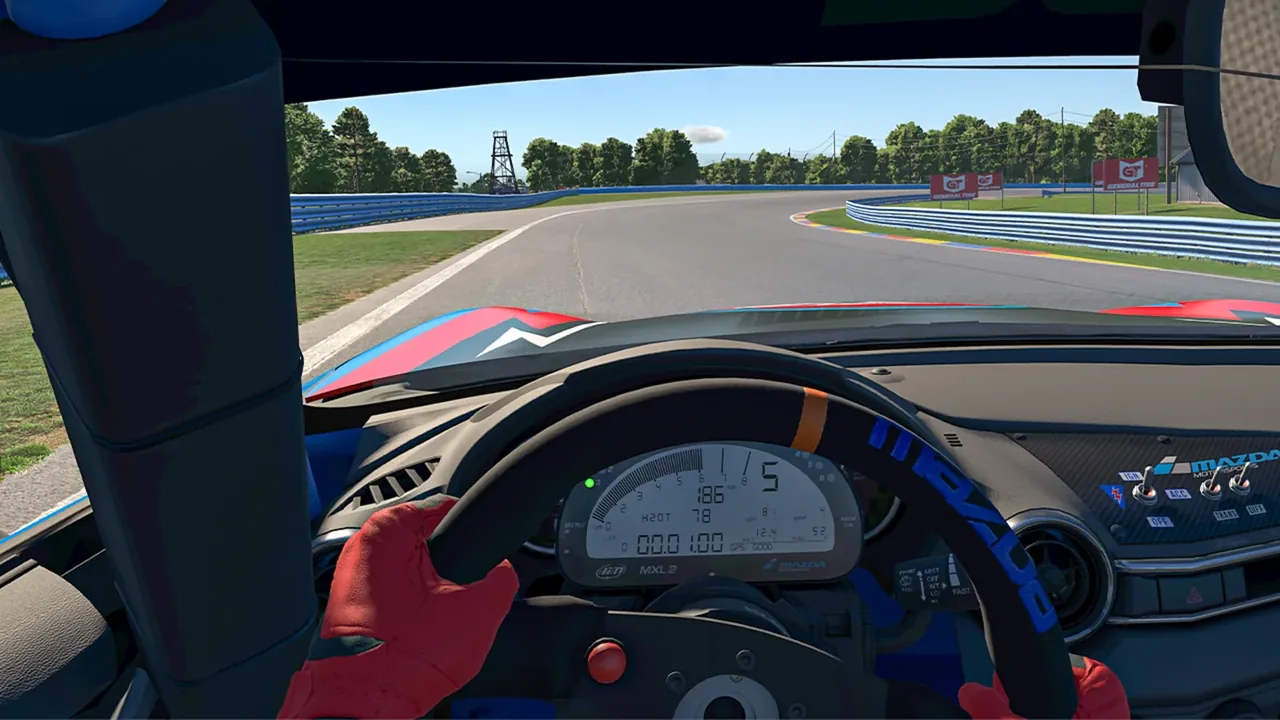
The core sim racing driving techniques are vision and reference points, the racing line, braking, the brake release, steering, throttle control, weight transfer, adapting to corner speed, learning a track, consistency and tyre management, race pace, and racecraft. You do not need to work on all twelve at once. You need the first one that is letting you down, because the skills after it tend to inherit the problem.
To find it, read the common symptom column below and stop at the first row you recognise. That technique's section gives you what it does, the usual mistake, one simple exercise and the guide that covers it in depth. This page helps you choose the skill; how to practise effectively structures the session you spend on it.
The 12 techniques at a glance, and how to spot yours
| # | Technique | Why it comes here | Common symptom | Next guide |
|---|---|---|---|---|
| 1 | Vision and reference points | You cannot repeat an input you cannot time | You miss braking points, or they move lap to lap | Training your senses |
| 2 | The racing line | Drive the right path before optimising how you drive it | You turn in early and leave track unused | Cornering tips |
| 3 | Braking at the limit | Entry speed decides everything that follows | You run wide on entry, or the tyres are silent under braking | Braking technique |
| 4 | The brake release | The release is what rotates the car, not the pressure | The car will not rotate | Trail braking |
| 5 | Steering | Stop overwhelming the fronts you just loaded | You add lock and the car turns less | Steering technique |
| 6 | Throttle control | Convert cornering into exit speed without wheelspin | You spin or wheelspin on exit | The grip limit |
| 7 | Weight transfer | Understand why each input changed the grip | The car feels unpredictable mid-corner | Weight transfer |
| 8 | Corner types | Stop driving every corner the same way | Quick in slow corners and slow in fast ones (or the reverse) | Racing corner types |
| 9 | Learning a track | Apply all of the above somewhere unfamiliar | You are only fast at tracks you know well | Learning a track |
| 10 | Consistency and tyres | Repeat it, and make it survive a stint | One lap is fast and the next five are not, or your pace fades after five laps | Inconsistent lap times |
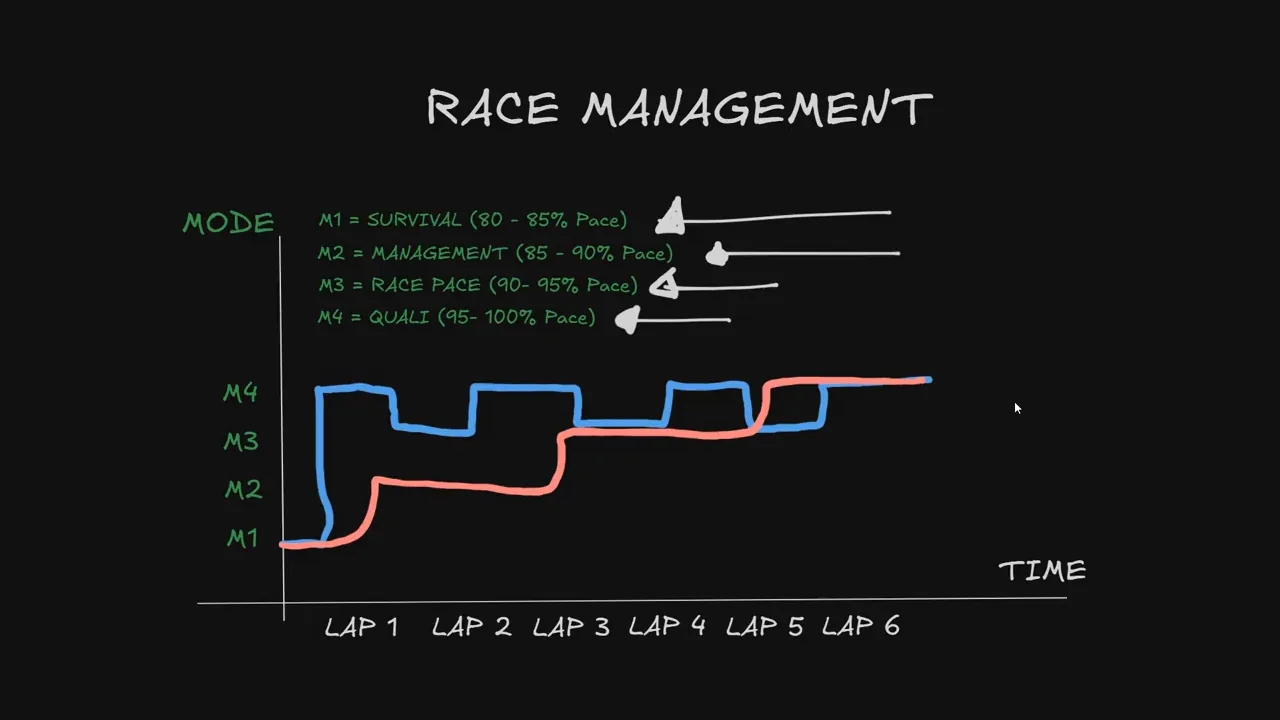
| 11 | Race pace vs qualifying | One lap and thirty laps are different jobs | Quick in qualifying, disappointing in the race | Race pace |
| 12 | Racecraft | All of it, with other cars in the way | You are fast alone and lose places in races | Racecraft |
The order is our coaching framework, not a law. It is the order we teach these twelve in before anyone specialises in GT3 or Formula cars, and it reflects what we see in coaching: a subtler technique rarely shows up in the lap time while the basics under it still change from lap to lap. The classic case is the driver who finds trail braking on YouTube, practises it for a fortnight and sees nothing, because their vision, their line and their basic brake release were never consistent enough for it to register. You can work on any skill at any time; if two symptoms fit, start with the higher row.
Nor is the order a ranking of how much time each technique is worth. Throttle timing sits at six and can easily be worth more than the trail braking at four — in one of our own comparisons a driver who did not trail brake at all, but got his throttle timing right, was a tenth quicker than one who trail braked beautifully at the wrong moment. The order is about what you can usefully learn next, not about what matters most.
1. Vision and reference points
What it does. Every input you make is a response to something you saw, heard or felt, so the quality of your inputs is capped by the quality of what you pick up. Without consistent references, nothing else on this page is repeatable.
Common mistake. Staring at the patch of track immediately in front of the car. At racing speed that is far too late: scan ahead, looking early into the next corner, even on a straight. The second mistake is relying on one reference per corner. References give you consistency; quality references give you speed. A 100-metre board is fine on your own and useless when you are side by side and cannot see it. A white line painted across the track is visible from both sides. So you want a pool of three or four per corner, and the judgement to know which one applies when you are in traffic, in dirty air, or following a train of cars.
The best references are often ones nobody points out: a patch of dirt beside a kerb that marks the apex, a discontinuity in a dirt band, the drain in the middle of a kerb that tells you exactly where the track limit is, or — in one corner we teach — a row of white panels on the horizon, where going back to power as the last one passes the antenna is what makes the corner repeatable.
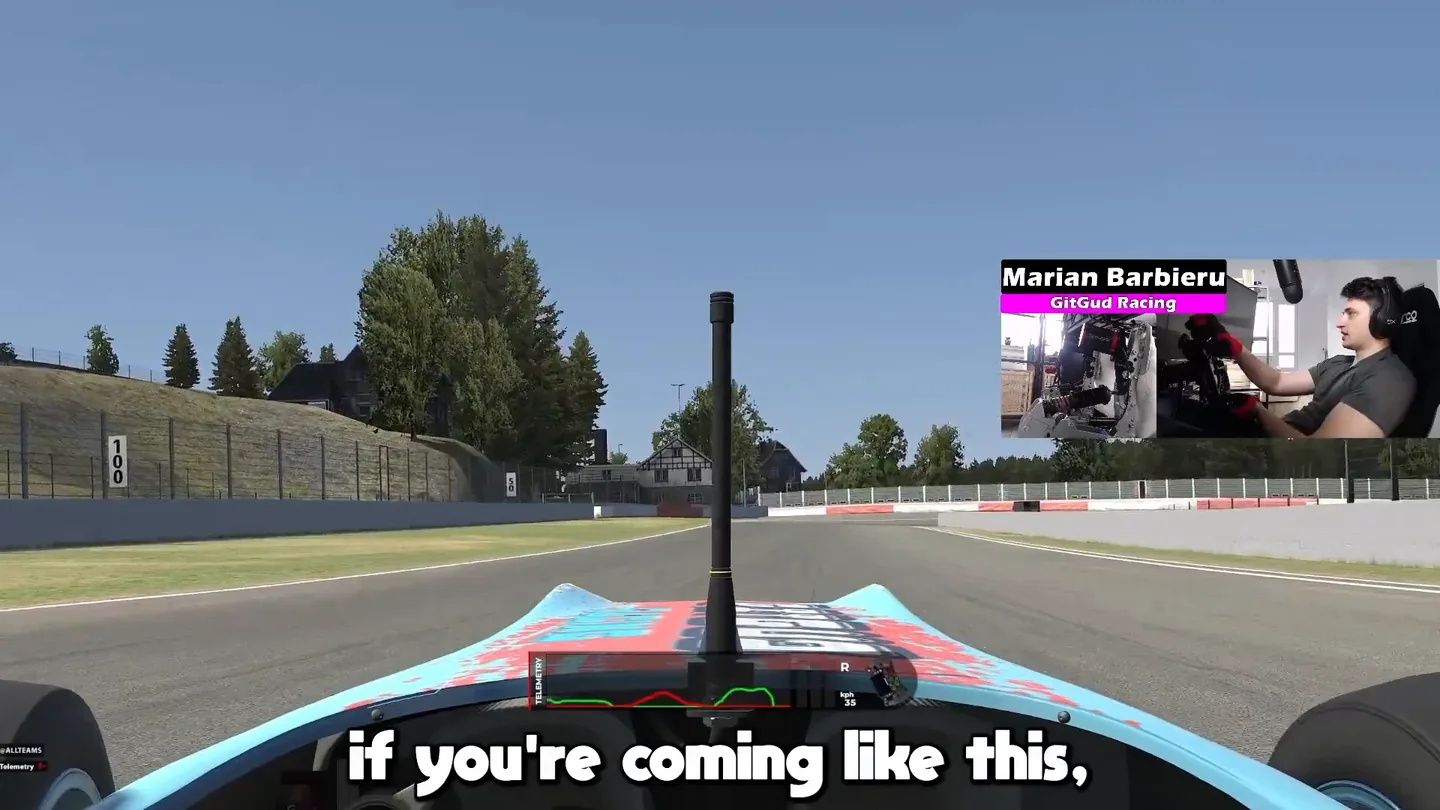
Exercise: vision laps. Take one deliberately slow lap of every track you race, every time you race it. Five minutes. You are not driving, you are looking — for track limits, kerb profiles, usable run-off, and anything that could serve as a marker. Then run three to five laps at about 90%, concentrating only on the visuals, not the force feedback and not the sound. It sounds trivial. It is the single highest-value hour most drivers never spend.
Go deeper: sight, sound and feel trained together are the first step of how to be faster at sim racing.
2. The racing line
What it does. It puts your inputs on the right path; there is no point perfecting them on the wrong one. The basics do not change: use the full width on entry, hit the apex, use the full width on exit, and make the arc through the corner as large as the track allows.
Common mistake. Turning in early and not using all the track. In one of our own comparisons, not using the full width and turning in slightly early cost a tenth in a single corner. Ten or twenty centimetres of extra track width is not a rounding error.
Two refinements are worth knowing. Late apexes win most of the time — apex late and the car is pointed sooner, so you get to power earlier and travel less distance to the exit. The exception is a double apex, where an earlier first apex is usually right. And the line depends on what comes next: a corner leading onto a long straight gets its exit protected at the expense of its entry; a corner leading into another corner does not.
Exercise. Watch a replay of your own lap from a chase camera and note every corner where you left track unused on entry or exit. Pick one and drive it with resets until the car is using that last strip of width.
Go deeper: sim racing cornering tips works through a single corner step by step.
3. Braking at the limit
What it does. Braking sets your entry speed, and entry speed decides everything that follows. It is where the most time is available and where most of it is lost. The fundamentals are the same in every car: get to peak pressure quickly rather than building slowly, use as much of the tyre as it will give you, then release progressively.
Common mistake. Braking a long way under the limit without knowing it, because nothing in the car's behaviour tells you so. Two cues do. The first is sound — you should hear the tyres working under initial braking. If the car is silent at the moment you first load the pedal, there is grip you are not using. The second is the inside front tyre almost locking at turn-in: if it is just on the edge of locking, you are right at the limit rather than comfortably under it. Hearing and feeling those cues is a trainable skill in its own right, and how to be faster at sim racing is where we train it.
Exercise. In a practice session, deliberately nibble at a lockup to find where the limit actually is. Treat it as a calibration tool, not a racing technique: every lockup — even a small one — spikes front tyre temperature, and a single one on an out lap can cost a tenth or two on the lap that follows. Do not go hunting for it in a stint.
How much pressure, how long you hold it, and what shape the trace makes depend on the car — a heavy GT car and a downforce car want almost opposite shapes, which the GT3 and Formula guides cover.
Go deeper: braking technique for the technique itself, and how to brake later for where the braking point goes and how to move it without losing the corner.
4. The brake release and trail braking
What it does. Beginners think braking is about where and how hard. A great deal of the lap time is in how you let go. Holding a reducing amount of brake as you turn keeps weight on the front axle and the rear light, which is what helps the car rotate.
Common mistake. Releasing abruptly, which throws that front load away exactly when turn-in needs it. Release too gradually in the wrong car and you overload the front instead.
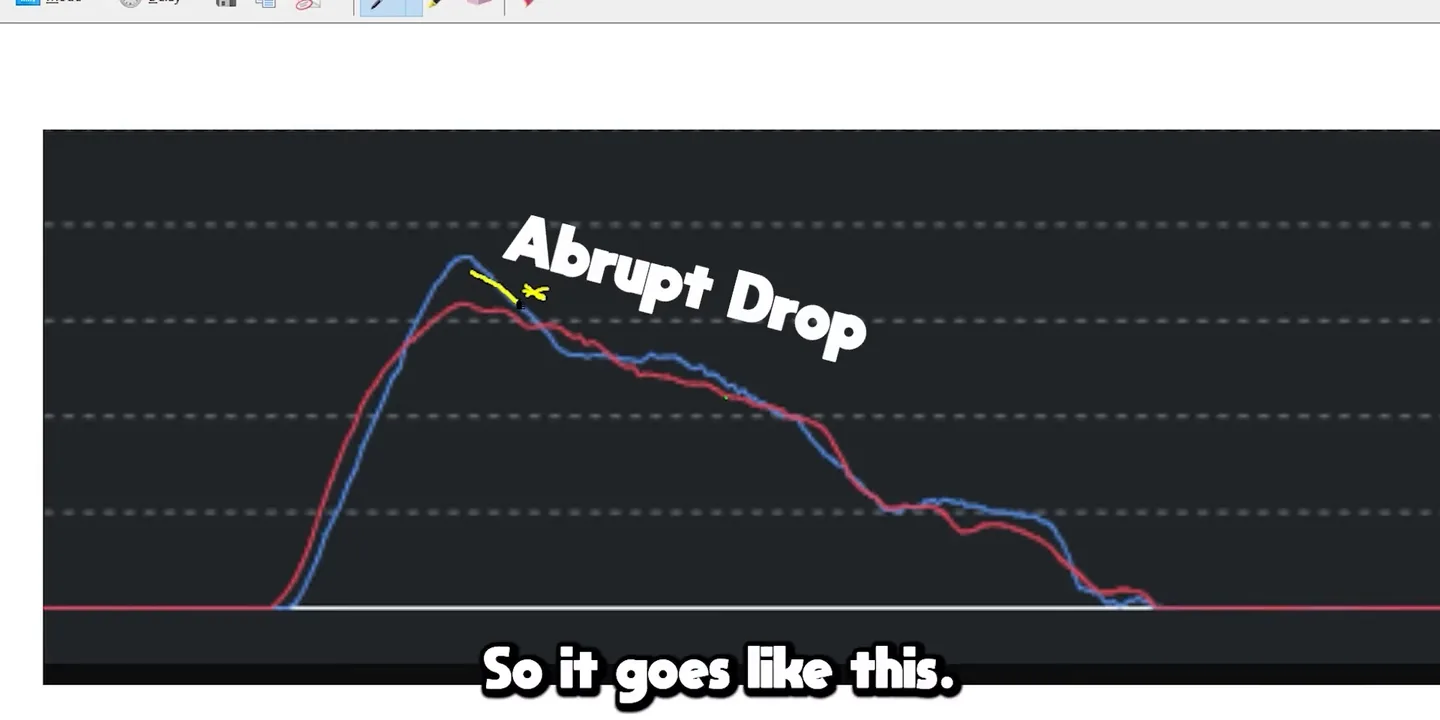
Exercise. Overlay your brake trace on a faster lap for one corner and look for a drop like the one above. Then drive that corner with resets until your release tapers off instead of falling away.
Go deeper: how much, how long, and how it differs by corner and car are covered in the trail braking guide, with the common faults separately. In our coaching we leave it until steps 1 to 3 are reasonably repeatable; trail braking layered on top of an inconsistent brake point is mostly a new way to be inconsistent.
5. Steering and the front-tyre limit
What it does. Steering asks the front tyres for cornering force, up to the point where they are saturated. Past that point, more steering angle does not produce more rotation. It produces more slip, more scrub and more heat.
Common mistake. Adding lock when the car understeers. The car turns less than it did before you added the lock, you read that as needing more, and the loop closes. The other is holding or adding angle past the apex: in most corners maximum steering angle belongs at or near the apex, and on the way out you unwind as smoothly as you wound on, or you scrub speed all the way to the exit.
Exercise. Pick one corner and look at your steering trace in telemetry. Check that the peak angle arrives around the apex and that the trace unwinds afterwards rather than holding or growing.
Go deeper: how fast you build the angle depends on the car, which the GT3 and Formula guides treat differently on purpose. The physics of the saturation point is in the grip limit guide; the full method — near-zero at peak brake, the steering window at the apex, the kick, the unwind against the throttle — is sim racing steering technique.
6. Throttle control
What it does. It converts cornering into exit speed. Grip is a budget shared between braking, cornering and accelerating: use all of it to corner and there is none left for even 1% of acceleration, so through a corner you are constantly trading one for another.
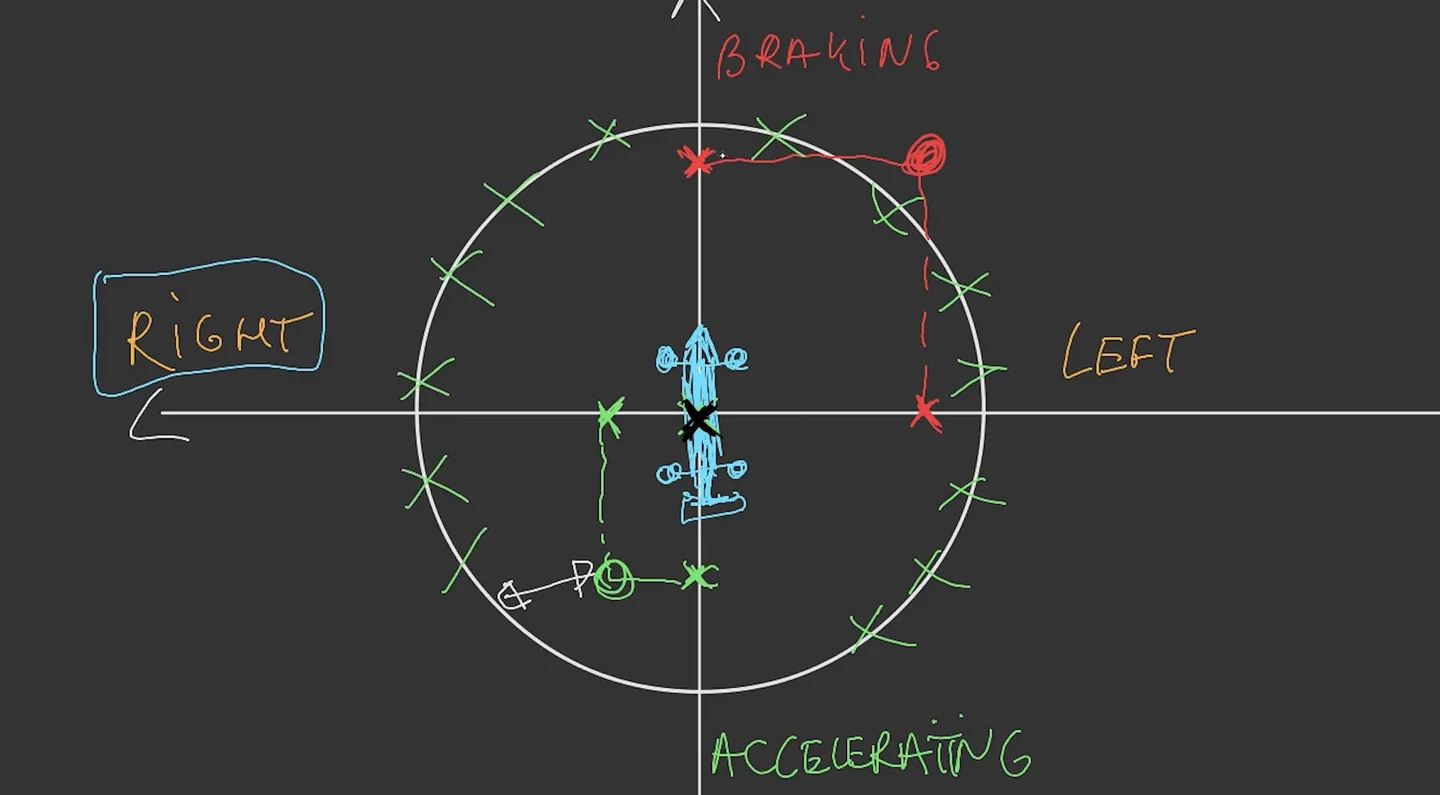
Common mistakes. Three habits separate good throttle control from bad.
- Judge yourself on when you reach 100%, not when you first touch the pedal. Going to power early and then having to back out arrives at full throttle later than a slightly later, committed application. The early version is usually caused upstream: brake too hard, apex too early, get on power too early, understeer, lift, correct. The fix is often braking a little later so you can carry the car straighter and take a later apex.
- Never dip. You can modulate in the low percentages, but the trace should always be going up. In one coaching example a student went 45%, 54%, 52%, 47% and then built up — the first dip alone was worth a tenth, the second another half-tenth. On a corner onto a long straight, those dips are the whole difference.
- Watch the top of the pedal too. In fast corners the goal is often the smallest possible lift — 60% rather than 20% — because you only need to load the front slightly.
Exercise: the small-lift test. On a straight at full throttle, try to lift by just 5 or 10%. If you find yourself dropping to 60 or 70, you do not have fine control in the upper part of the pedal, and that is costing you in every fast corner. Practise it as a two-minute warm-up.
On exit, wheelspin is almost never helping you. In a powerful car, modulate through the first 30% of travel, because overheating the rears in one corner will still be costing you in the next one.
Go deeper: the budget itself, tyre by tyre, is in the grip limit guide.
7. Weight transfer and car balance
What it does. It explains why each of your inputs changed the grip. This comes seventh, not first, on purpose: learning the theory before you have felt the inputs makes it abstract; learning it after gives you the explanation for things you have already noticed.
The version that changes how people drive: cornering hard loads the outside tyres, but what they gain does not cover what the inside tyres lose. In the worked example in the grip limit guide, forty units of grip on the straight become thirty-six in a hard corner. You lose grip simply by transferring weight, and the more violently the weight moves, the less total grip the car has.
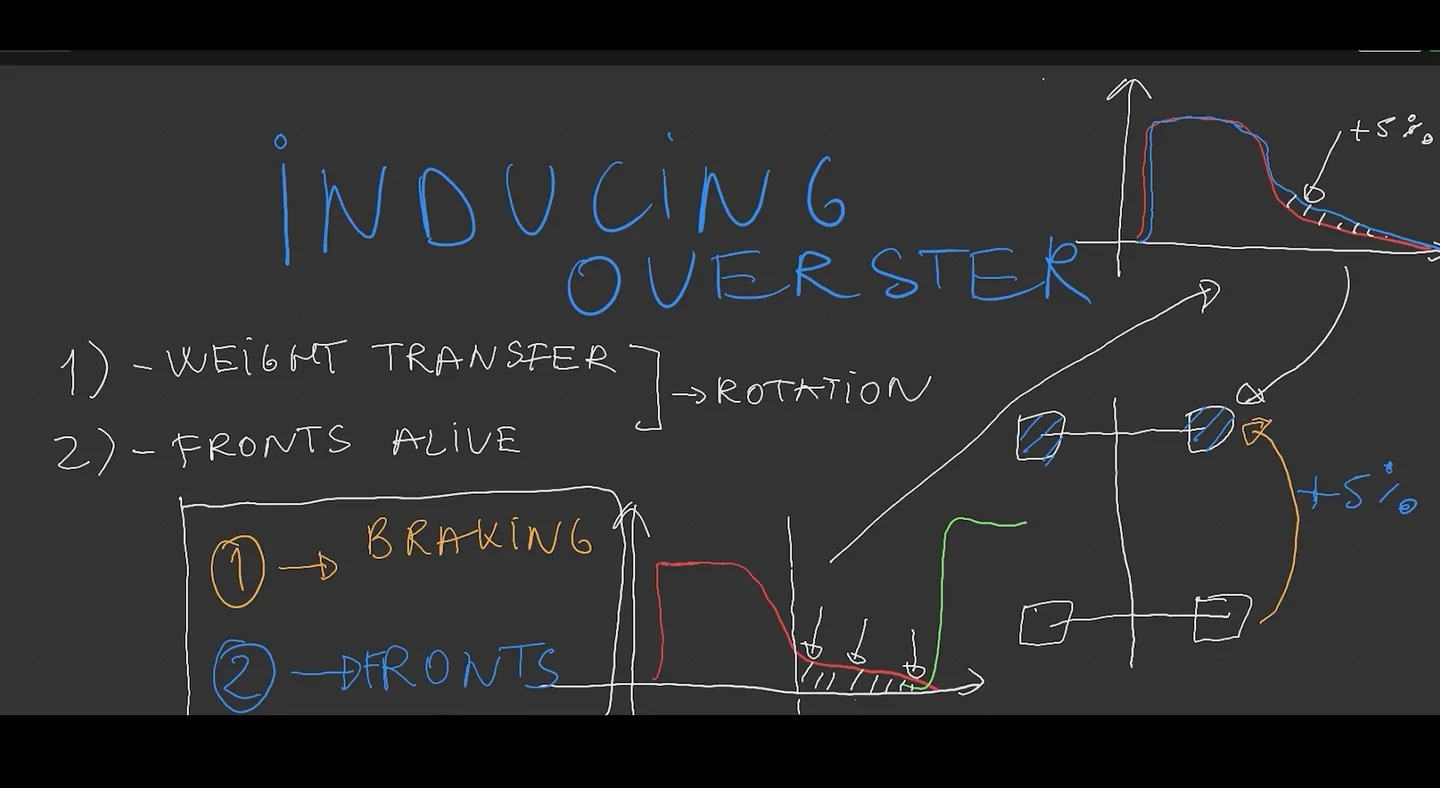
Common mistake. Abrupt inputs. That is the real reason smooth is fast: not because smooth looks tidy, but because every abrupt input costs you grip you could have kept.
Exercise. In one corner, turn the wheel as slowly and as little as the corner allows, and make the pedals move progressively. Compare the lap time and how settled the car feels against your normal approach.
Go deeper: the full mechanism — how load becomes slip angle becomes rotation — is in the weight transfer guide, and the deliberate use of it to rotate the car is in the rotation guide. Going one step further, deliberately shifting the balance past neutral on entry, is how to induce oversteer in sim racing.
8. Slow, medium and fast corners want different things
What it does. Matching technique to corner speed. The three corner speeds genuinely invert some of each other's rules.
Common mistake. Driving every corner with the same technique, one of the most expensive habits in sim racing.
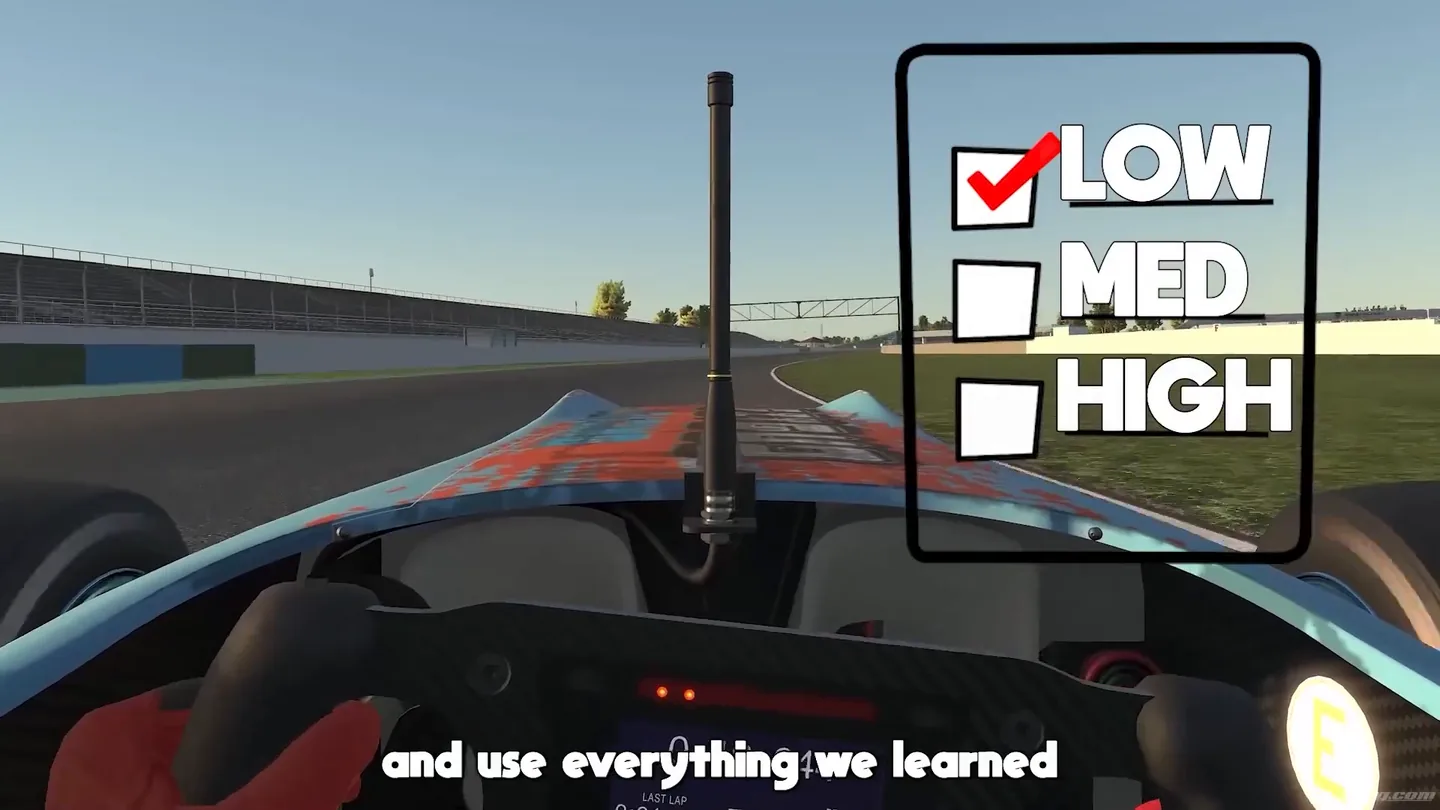
Slow corners are the hardest. A lot can go wrong and mistakes compound. The checklist: hard initial braking, get heat into the tyres under that initial braking, quick downshifts, a late turn-in, a longer trail, and no gaps between your inputs. Brake in a straight line, then turn — and align the car with the edge of the track early, before the braking zone, rather than moving across the track while braking. Doing both at once splits your attention and adds a lateral weight transfer on top of the longitudinal one.
Medium corners are the ones people get wrong most often, because it is not obvious whether you could have gone quicker. The checklist inverts: minimise initial brake pressure, get rotation early, find the minimum trail-brake value rather than the maximum, and apply the throttle confidently without corrections. Here braking and turning happen together — going in slightly diagonally generates rotation on entry. Over-brake and you start the chain: early apex, early throttle, push wide, compromised exit.
Fast corners should be the easiest to perfect, because there is barely any braking involved. Use all the track, scrub as little speed as possible at turn-in, brake lightly if at all (under 10% in most cars), be pixel-precise at the apex, and do not fight the wheel on the way out — let the car roll. In one high-speed corner we use for this, not braking at all instead of a small brake was worth three tenths, and using the last twenty centimetres of track was worth another half-tenth.
Exercise. Take one corner of each speed and work through its checklist one item at a time, with resets, before moving on to the next speed.
Go deeper: the shapes themselves — hairpins, chicanes, double apexes, sweepers — are in racing corner types.
9. Learning a new track
What it does. Once the fundamentals are in place, learning a circuit becomes a process rather than a grind. The condensed version is five laps with analysis between them:
- Out lap and lap one, at 70–80%. Run a track-map overlay. You are learning which way the next corner goes and, from the corner's angle on the map, which corners might be flat.
- Lap two. Deliberately collect off-tracks to find the real track limits, and hunt for visual references.
- Lap three. Set a clean, unambitious baseline lap.
- Analyse the replay. Watch from a chase camera with the driving-line assist switched on as a rough guide. You are looking for unused track, a longer path than necessary, and corners onto straights where you compromised the entry.
- Lap four at 90%, then compare telemetry against a much faster lap. Look for over-slowing on entry, corners where they do not brake and you do, and gearing differences.
- Lap five: push.
Common mistake. Reading a track guide before driving the track, and lapping endlessly once you know it. Look for a track guide after this process, when it will make far more sense.
Exercise. Once you know the layout, use per-sector practice with resets, five minutes per sector, rather than lapping. Most drivers are close to the pace nearly everywhere and lose half a second in two corners.
Go deeper: the full method is in how to learn a track. If you get to choose where to do this, these five tracks were picked because each one teaches a specific thing.
10. Consistency and tyre management
What it does. A fast lap proves you can do it once. Racing requires you to do it repeatedly, without destroying the tyres on the way.
Common mistake. Treating inconsistency as random. Most of it traces back to references that are not precise enough, or to inputs that are only occasionally at the limit. That is why vision is technique number one and this is number ten: consistency is mostly the earlier skills becoming repeatable, not a separate skill you practise directly.
Tyre management is the other half. Every unnecessary input costs temperature: excess steering angle, brake-throttle overlap, wheelspin on exit, repeated big lifts. The pace you can hold on lap twenty is decided by how you drove laps one to five.
Exercise. Run a ten-lap stint, then compare your slowest lap with your fastest, corner by corner. Note where the time went, and which reference or input was different there.
Go deeper: if your lap times swing, the diagnosis is here. For the stint-length detail — temperatures, pressures and what a slide actually costs — see tyre management.
11. Qualifying pace and race pace are different jobs
What it does. Qualifying is a one-lap problem: tyre preparation, finding clear space, and committing to the maximum available grip on the lap that counts. Race pace is a thirty-lap problem: repeatability, tyre temperature, traffic, and knowing which risks are worth taking on lap two versus lap twenty.
Common mistake. Only ever hotlapping. Those drivers are often quick on Saturday and disappointing on Sunday, and the fix is not more pace.
Exercise. Practise stints rather than laps, and learn what your tyres do after five, ten and fifteen laps in the car you actually race.
Go deeper: the one-lap side is how to qualify faster, most of which turns out to be the out lap. The race side — how quickly you reach the pace you already have, and why most drivers take three laps to do it — is sim racing race pace.
12. Racecraft
What it does. Being a second a lap quicker is worth nothing if you lose three seconds every time you meet another car. Racecraft combines everything above with another driver's decisions. The fundamentals are positioning before the braking zone rather than inside it, reading which line the other driver is protecting, and setting a pass up a corner before the one where it happens.
Common mistake. Attempting a move that needs everything to go perfectly. That is a move that will eventually take you both out.
Exercise. This is the one skill you cannot practise alone, which is why it tends to be the last to develop and the first to cost you positions. Take one fundamental into each race — positioning before the braking zone, say — and check it on the replay afterwards.
Go deeper: the full system, from the three ways to defend to overtaking each of them, with clips of every situation, is sim racing racecraft. The defensive half — the habits that keep you out of other people's accidents — is in how to avoid crashes.
Bonus: driving in the wet
Wet running is not dry running with less commitment. The grip level is different, and so is where the grip is — the dry line is often the worst place to be, because it is where the rubber is. You brake earlier and more progressively, you lift rather than stab, and you look for the parts of the track where the water is not standing.
This is also where vision pays the most. Drivers who watch the track change lap by lap — where the water is pooling, which line has dried — find seconds that drivers staring at the car ahead never see.
Why do you spin, and how to catch it
Spins feel random. They are not, and there are only a handful of causes.
- Too much steering angle on exit. The car goes wide, you add lock, you pass the rear's limit. The correction is to unwind, not add more.
- Downshifting mid-corner. A downshift while still braking and holding steering angle stacks three rotation inputs at once. Do them earlier, in a straight line, or later at lower speed.
- Understeer snap-oversteer. You failed to rotate on entry and tried to make it up mid-corner. The fix is patience: wait for the front to regain grip rather than adding more steering or more brake.
- Lift-off oversteer. Lifting sends weight forward and unloads the rear. A little throttle puts it back.
- Brake-induced rotation. You can spin almost any car on the brakes alone. Induce a little understeer to cure it — go to power, or release the brake, both of which move weight rearward.
- Brake bias too far rearward. Past a point the rears lock first under straight-line braking, and that is a spin waiting to happen. Brake bias explained.
How to practise the skill you chose
This page is for choosing the skill. Once you have one, two principles do most of the work. Practise one thing at a time — take a single corner, isolate a single element of the checklist, and repeat it with resets until it stops improving, then add the next element. And make it measurable: a custom sector with an active reset and a telemetry overlay turns "that felt better" into a number.
How to structure the session itself — the objective, the feedback, the log — is how to practise effectively, with specific exercises in the drills library. If you want to know which stage of development you are at rather than which technique to fix, the progression guide maps that out. For the wider process of improving — how to identify what is costing you time, and in what order to fix it — start with how to get better at sim racing.
Sim racing driving techniques FAQ
What are the most important sim racing driving techniques?
Vision and reference points, the racing line, braking, the brake release, steering, throttle control, weight transfer, adapting to corner speed, learning a track, consistency and tyre management, race pace, and racecraft. You do not need all twelve at once: find the first one that is letting you down, because the skills after it tend to inherit the problem.
What order should I learn sim racing techniques in?
We coach them starting with vision and references, because every other input depends on being able to time it the same way twice. Then the racing line, then braking, then the release, then steering and throttle. Weight transfer makes more sense after you have felt those, not before. It is a coaching framework rather than a strict prerequisite: a later skill rarely shows up in lap time while the earlier ones still vary lap to lap. The full order and why.
Why am I inconsistent in sim racing?
Usually because your reference points are not precise enough to repeat an input, rather than because consistency is a separate skill. A driver with one reference per corner loses it in traffic; a driver with three or four keeps a usable one. Fix vision first, then look at whether your inputs are only occasionally at the limit.
How do I know if I am braking at the limit?
Two cues. You should hear the tyres working as you first load the pedal — silence means there is grip you are not using. And the inside front should be close to locking as you turn in. If nothing in the car's behaviour changes, you are comfortably under the limit and have no way of knowing by how much.
Why does adding more steering not help when the car understeers?
Because past the front tyres' peak, more steering angle produces more slip rather than more cornering force. The car turns less than before you added the lock, which invites you to add more. The fix is to reduce what you are asking of the fronts: less entry speed, or an earlier and smoother release.
How do I stop spinning in sim racing?
Identify which spin it is. Too much lock on exit is cured by unwinding, not adding. A mid-corner downshift stacks rotation inputs, so move it earlier or later. Lift-off oversteer wants a little throttle to load the rear. And a brake bias far enough rearward will lock the rears first. All the causes.
How do you take slow, medium and fast corners differently?
Slow corners want hard braking in a straight line, quick downshifts, a late turn-in and a long trail. Medium corners invert it: minimum brake pressure, rotation generated early, and braking and turning happening together. Fast corners are about carrying speed — brake barely if at all, and do not fight the wheel on exit.
How do you learn a new track quickly in sim racing?
Five laps with analysis between them. A slow lap with a track-map overlay for the layout, a lap collecting off-tracks to find the real limits, a clean baseline lap, then a replay review, a telemetry comparison against a much faster lap, and finally a push lap. Look for a track guide afterwards, not before.
Why does smooth driving make you faster?
Because weight transfer costs total grip. Cornering hard loads the outside tyres and unloads the inside ones, and the gain on one side does not fully cover the loss on the other — the car has less grip in total than it did in a straight line. The more violently you move the weight, the more you lose.
How do I improve my corner exits?
Judge yourself on when you reach full throttle, not when you first touch the pedal, and never let the trace dip once it is rising. Most early-throttle problems are actually entry problems: braking too hard produces an early apex, which forces an early throttle you cannot commit to. Braking slightly later usually fixes the exit.
What is the difference between qualifying pace and race pace?
Qualifying is one lap: tyre preparation, clear space, and maximum commitment on the lap that counts. Race pace is a stint: repeatability, tyre temperature, traffic and risk. Drivers who only hotlap are often quick on Saturday and disappointing on Sunday, and the fix is practising stints rather than single laps. How quickly you should reach your race pace once the lights go out is its own question: sim racing race pace.
Should I learn GT3 or Formula techniques first?
In our coaching, the fundamentals here come first. The two classes want almost opposite brake shapes and steering styles, so learning a car-specific technique before you own the basics tends to teach you a habit rather than a skill. Once the basics are reasonably repeatable, pick the class you actually race.
This guide is part of the free library at GitGud Racing Academy — an online sim racing academy built around weekly lap reviews, structured courses, drills and training tools.
Train this the right way
Reading is step one. Build it into muscle memory with structured, car-specific courses and personal lap reviews from a coach — inside the Academy.
Join the Academy · $35.99/mo incl. VAT