The Sim Racing Braking Mistake That Makes Your Apex Speed Meaningless
You load the reference lap. The fast driver hits 110 km/h at the apex. You hit 110 km/h at the apex. And you are still two or three tenths down through the corner. Nothing in the telemetry looks wrong, which is exactly why this one is so hard to fix: the number everybody tells you to chase is the number you already matched. Matching a pro's minimum speed is the most overrated piece of braking advice in sim racing, and this is what is actually happening instead. The second most overrated is "brake later", and it has the same fix in reverse: a later braking point is earned by stopping the car more efficiently, not by moving the marker.
Everything below comes from running the same section of Spa repeatedly with an active reset, comparing my attempts against a reference lap on the telemetry overlay, and deliberately reproducing the mistake so it could be seen. The minimum speed is identical in every example. Only the way it was reached changes.
Same minimum speed, slower corner
First, the definition, because it gets used loosely: minimum speed — or apex speed — is simply the lowest speed the car reaches in the corner. Not an average, not an entry number. One point on the trace.
In the first attempt I braked earlier and harder than the reference. You can watch the delta go red on entry, which is the time being lost. But then I released the brake aggressively and did almost no trail braking at all, so the car stopped decelerating and the speed recovered. By the apex I was at the same minimum speed as the reference — even slightly higher — and the corner as a whole was still slower.
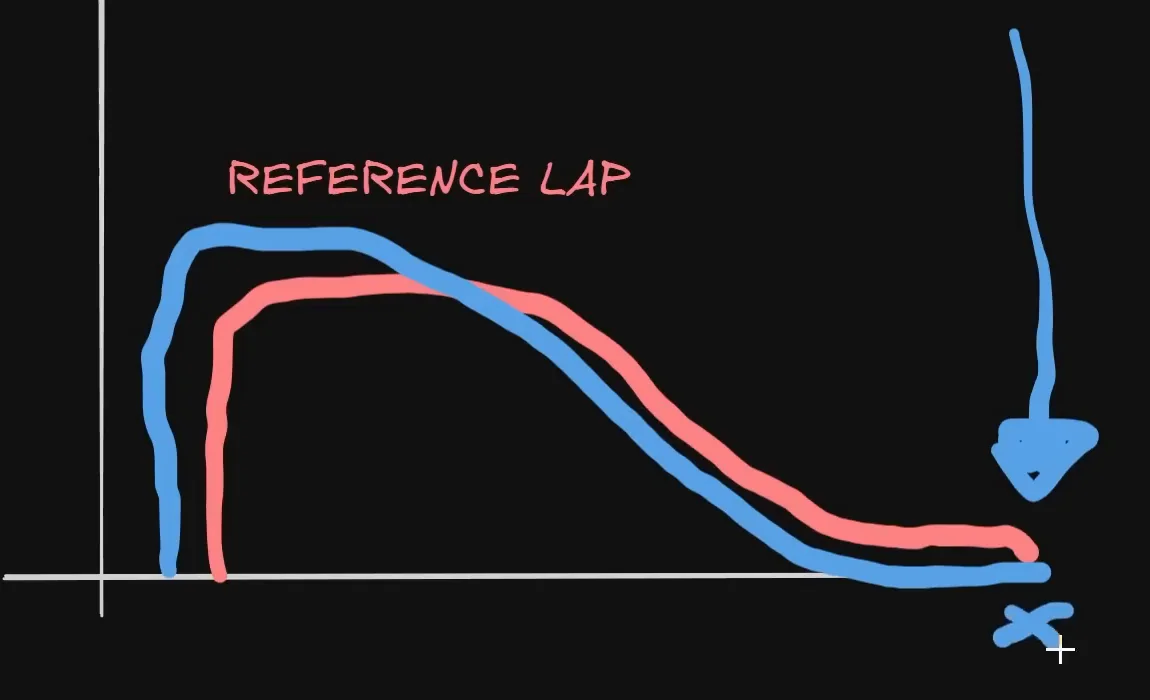
The obvious objection is that this is just bad trail braking. It is not, and the second attempt proves it. I kept the same slow entry and this time deliberately overemphasised the trail brake, adding pressure deeper to force rotation. That was slower again: time lost on entry, time lost to mid-corner, and an exit that was good but nowhere near good enough to pay back the first two.
Why your brain arranges this without asking you
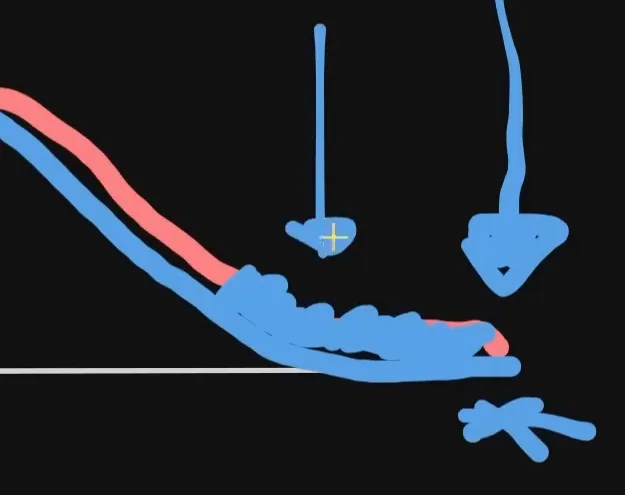
Here is the part I find genuinely interesting. We all carry a rough internal speed clock — a sense of about how slow a given corner needs to be. If you shave off slightly too much speed in the initial braking, then as you approach the turn-in point your brain notices you are already slow enough, possibly too slow, and it quietly starts easing you off the brakes.
You did not decide to do that. But the consequence is expensive: you come off the brake too early, which takes weight off the front tyres precisely when you need it there for rotation. So you spend most of corner entry decelerating at a lower rate than the reference lap, well under the car's actual limit, with too little front load to make the car turn.
And then you arrive at the apex at exactly the right speed. The telemetry appears to agree with you. The delta does not.
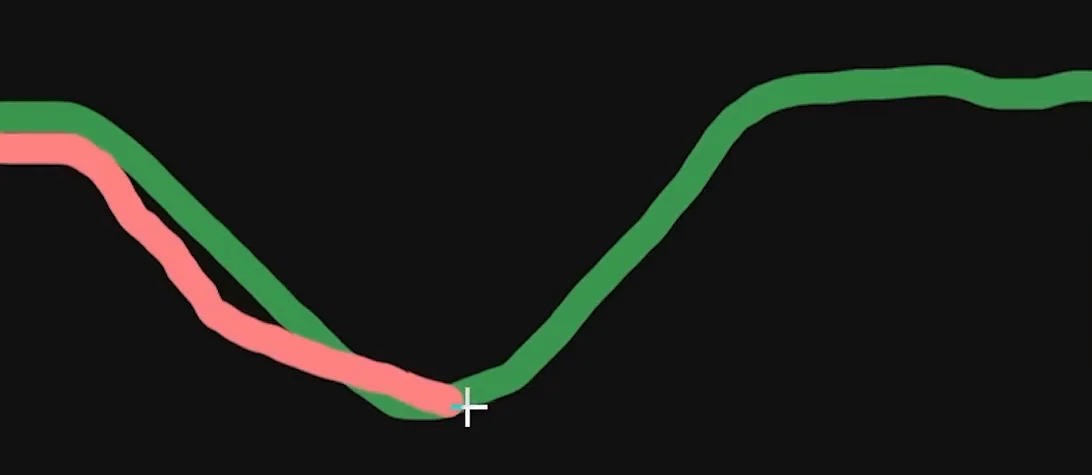
Minimum corner speed only tells you the slowest speed you reached. It tells you nothing about how much time you spent reaching it, whether the car was loaded while you did, where you apexed, or how early you could get back to throttle.
The same mistake, running the other way
The mirror image is just as common. You brake too softly at first, your brain notices you are carrying too much speed, and it self-corrects by adding brake pressure deeper into the corner.
At turn-in you want brake pressure decreasing smoothly, so weight transfers forward and then stays stable. Adding pressure suddenly in the middle of entry spikes the load onto the front and rapidly unloads the rear. That unsettles the platform, so the car will not rotate cleanly, and you have also just made a lockup or an ABS intervention considerably more likely. In a GT3 the ABS intervention is the expensive half of that, and the GT3 sim racing guide draws where the ABS window sits in the brake trace.
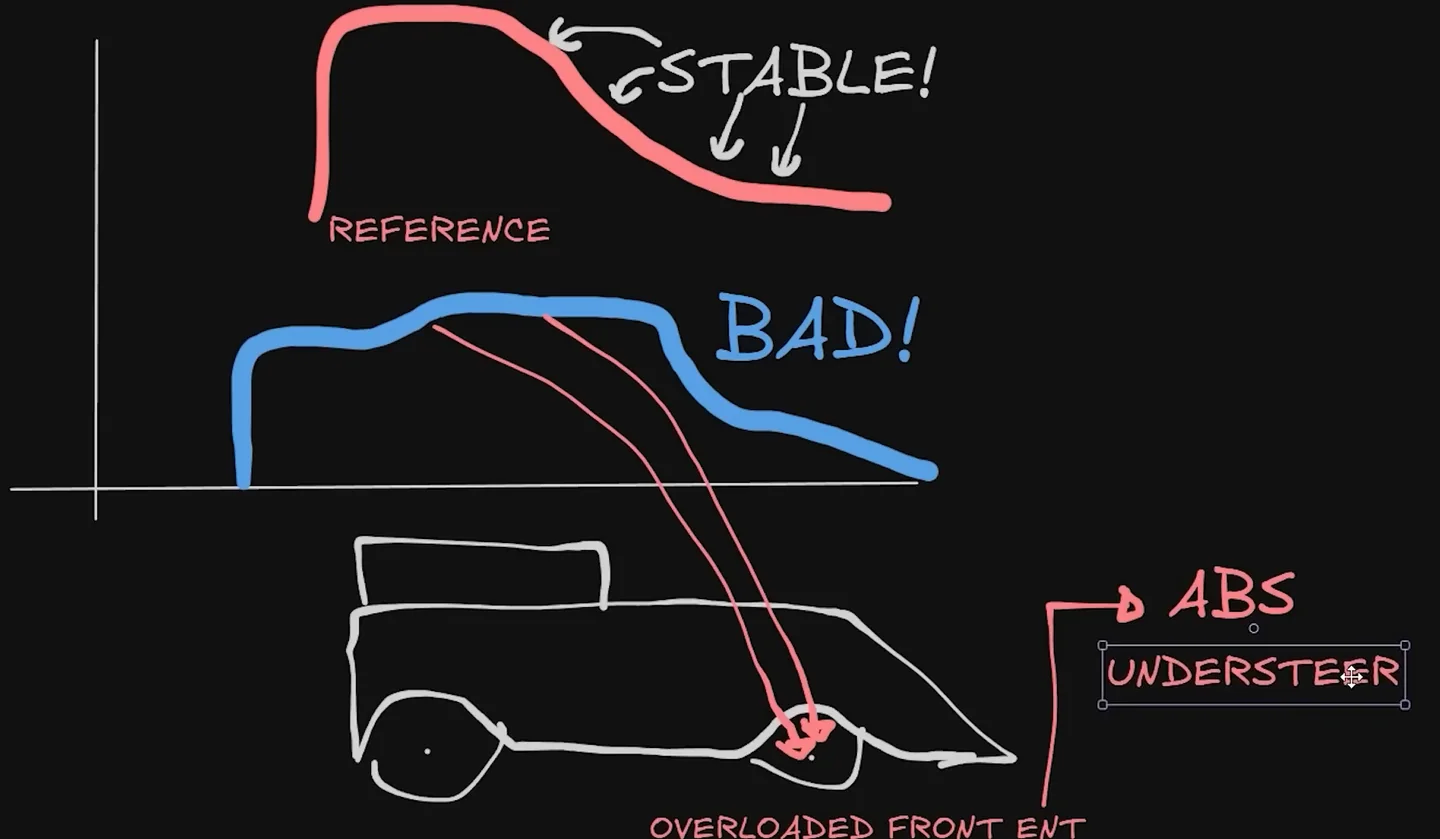
One important distinction, because it looks identical on a trace: a small, deliberate re-application of brake to settle a car that is rotating too much is a technique, not this mistake. The difference is intent and size — a controlled dip you planned, versus a correction your brain made because the initial pressure was wrong. If you are working on the deliberate version, that belongs with the grip-limit work in how to be faster at sim racing.
This is not the same problem as inconsistent laps
Worth separating early. If your laps are scattered several tenths around your best, the problem is repeatability and the diagnosis is different — start with why your lap times are inconsistent instead. This page is about the case where you can repeat the lap perfectly well and it is simply slower than the reference, with the apex numbers agreeing.
Read the shape of the brake trace, not the numbers on it
Once you stop comparing single values and start comparing shapes, the fault becomes obvious. Four shapes cover almost everything:
- What you want — a firm initial application, then a controlled, progressive release that keeps bleeding off as steering builds. How the steering should build against that release — and why it should be near zero at the firm part — is in steering technique.
- Too hard, too early — a high peak followed by a steep drop, with the trail almost absent. This is the one that still hits the right minimum speed.
- Too soft, then rescued — a weak start with pressure climbing deeper into entry. This is the platform-unsettling version.
- Over-slowed — a long, low plateau, because you took too much speed out and are now just waiting for the corner.
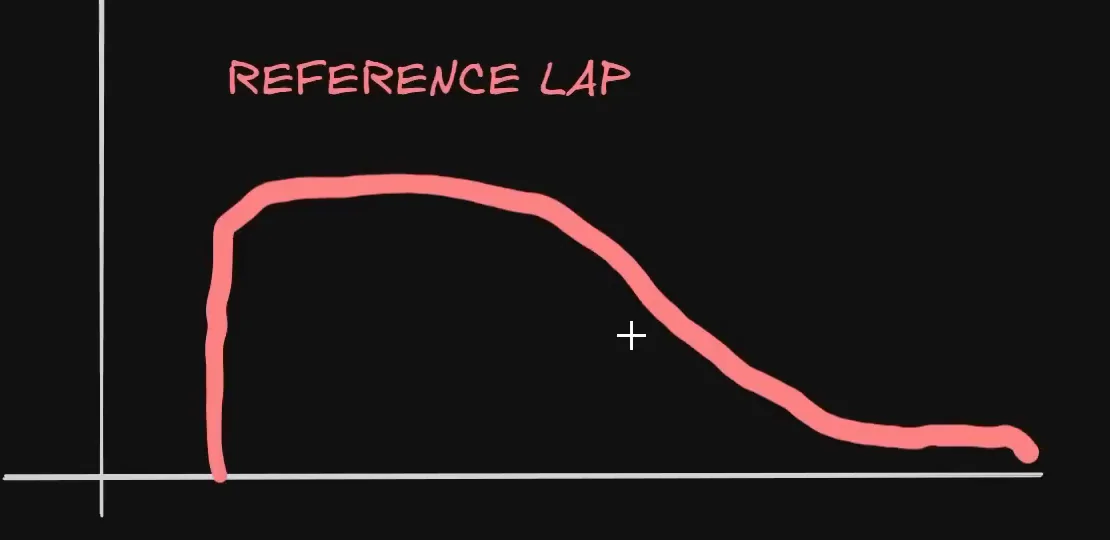
The reason shape beats numbers is that two completely different corners can produce the same minimum speed, and only one of them kept the tyres working the whole way in.
What you are actually trying to do to the car
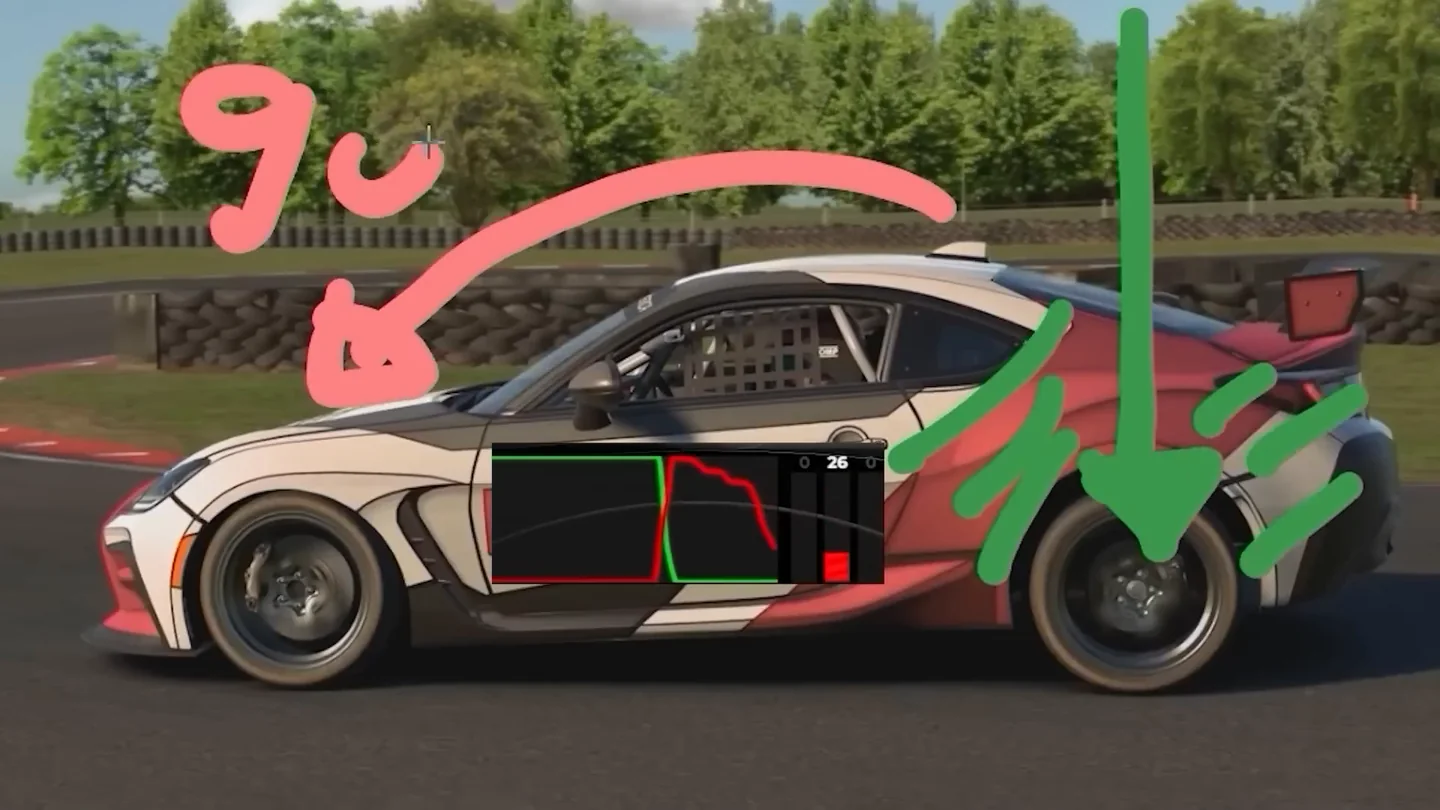
The goal through entry is to keep the car loaded — longitudinally under braking, then progressively laterally as you turn — right up to your throttle reference or the apex. You should not be giving load away at any point before that.
In practice that means the initial braking phase has to genuinely use the front tyres, and then, as you transition from straight-line braking into committing to the corner, the pressure has to stay high enough that the outside tyre is still being worked. You can see it in the car: it should still be leaning on that outside corner all the way to the apex.
The problem is modulation, and usually the release
For beginners the fault is often the application. For intermediate drivers it is almost always the other way round: it is the release, not how you get onto the pedal. That split is why the twelve driving techniques list braking and brake release as separate skills, in that order — the second only becomes the problem once the first is repeatable.
The standard to aim for is a release so gradual it is almost reluctant — coming off in the smallest increments you can control. The reason is simple. If you brake hard and then release quickly through the trail, what are the odds there was a little more grip available in there that you never used? You have no way of knowing, because you left too fast to find out.
If the trailing pressure itself is the thing you cannot control yet, that is its own skill and it has its own guide — how to trail brake in sim racing covers the technique properly, and fix your trail braking deals with the failure states. I am not going to re-teach it here.
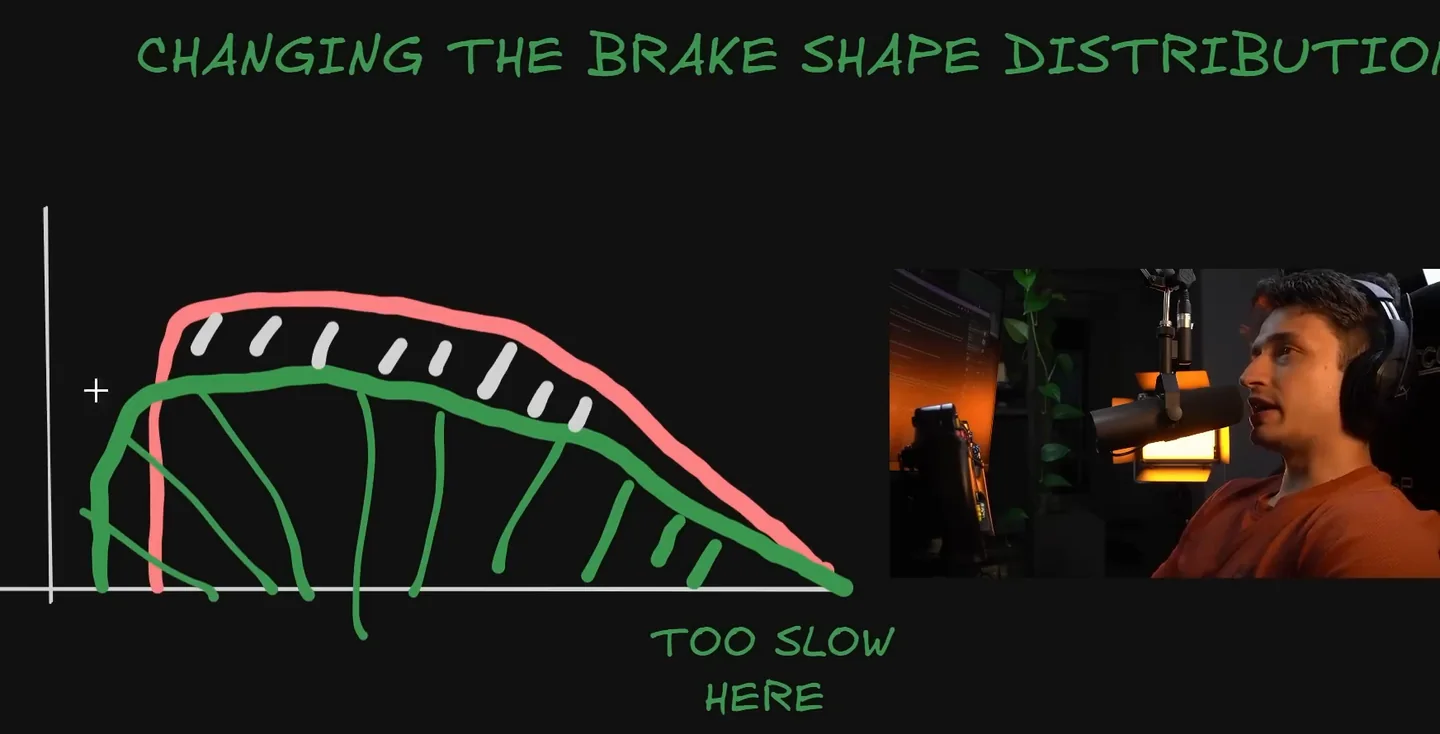
If a gradual release makes you too slow, change the distribution
The obvious objection: brake that hard and then release that gradually and you will be crawling by the apex. Correct — so change where the pressure lives.
Instead of a very high peak followed by a long gradual bleed, brake a little earlier and softer, and hold it longer. The peak is lower but the area under the trace is doing more useful work, and crucially you can now release gradually without over-slowing the car, because you never took that much speed out in one hit. Same amount of braking, distributed into a shape that keeps the front loaded all the way to the apex.
Your pedal is trail braking without you
This is the part almost nobody mentions, and it caught me out for a long time. Try it right now, sitting still: press the brake to a constant value, watch the percentage, and then try to release very gradually. You will see the reading drop faster than you intended.
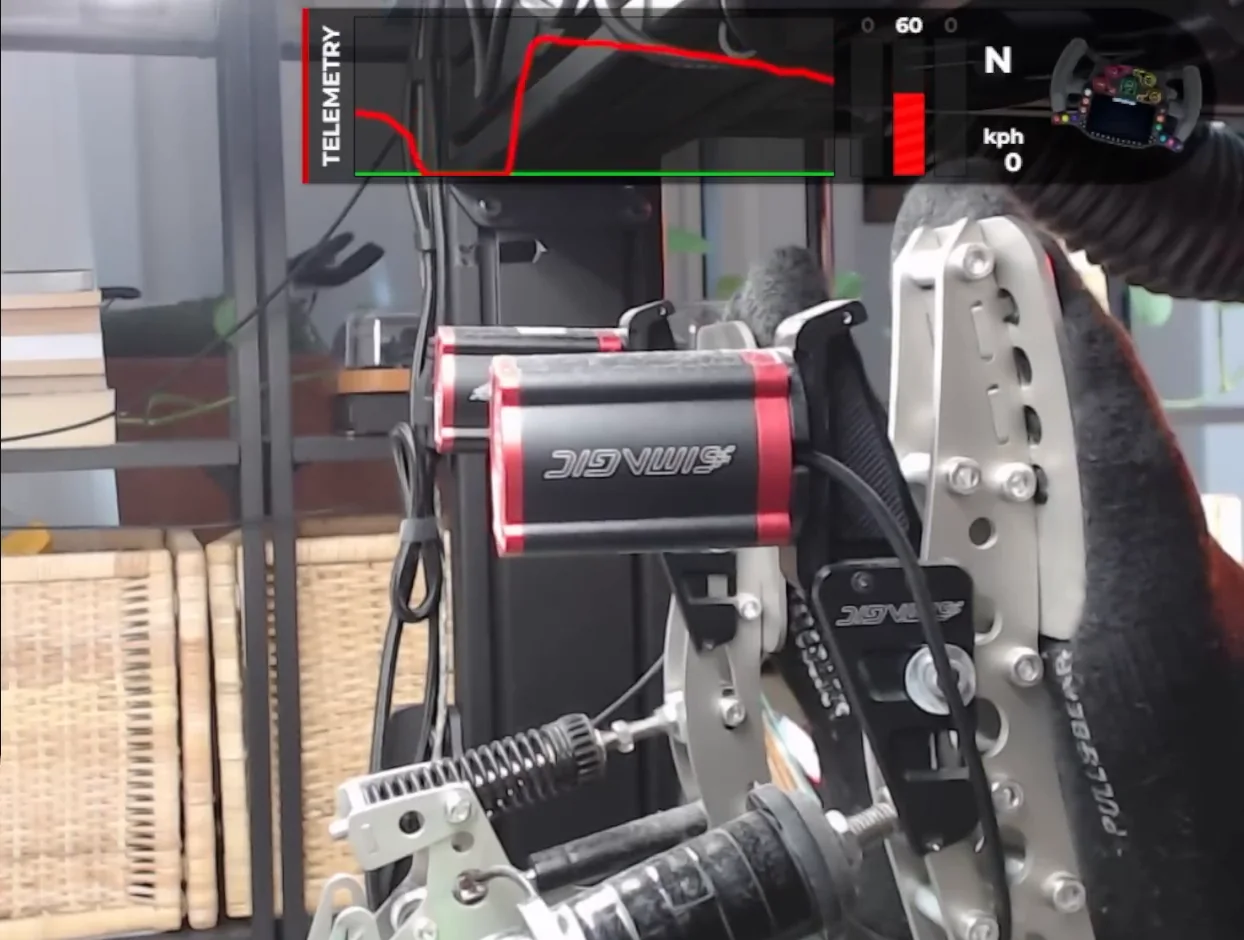
Almost every pedal does this. The elastomers and springs are storing force, and because we set brakes up to require a firm press, your muscles are working near the top of their range — where fine control is worst. The rubbers also heat up during a session and age over months, so the amount they push back changes. Running springs helps a little. None of it goes away.
The consequence is that you release more than you think you are, which means the car stops being laterally loaded earlier than you think it does. If the drop shows up on a stationary pedal, it is not a technique problem — see brake pedal tips for the mechanical side, and brake pedal settings for what stiffness actually changes.
The fix I teach: intend to add pressure through the release
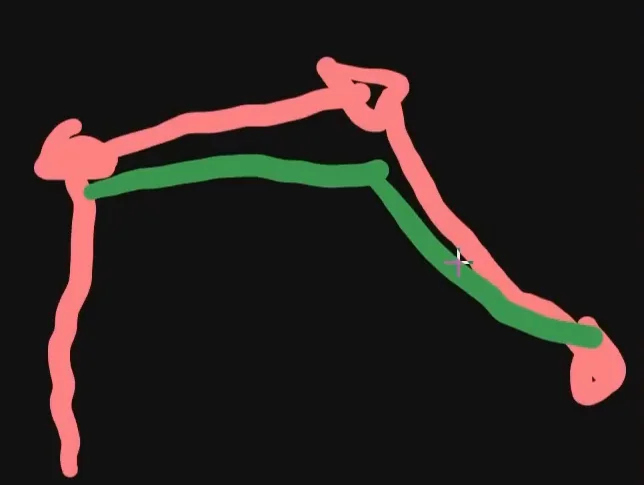
Because the hardware pulls the pressure down on its own, correcting it with more concentration does not work. What does work — and this is what I use with coaching students — is changing what you intend, not what you measure.
What I am thinking on the pedal
- Into the peak: press hard, straight up, no hesitation.
- Through threshold braking: instead of holding a constant pressure, intend to keep adding a little as you go deeper.
- Into the release: still intend to add a little more, even though you are releasing.
This is deliberately not the ideal shape. You are aiming at a wrong target so that the pedal's own behaviour drags the result onto the right one. Do it consciously at first; it becomes automatic.
You can overdo this and end up making the opposite mistake, so introduce it gradually. But if your specific problem is that the car stops being loaded on the way to the apex, this fixes it more reliably than trying harder.
Same apex speed, wrong apex, worse lap
One last demonstration of why the number on its own means nothing. Take two drivers at an identical minimum speed, where one apexes at the correct point and the other apexes early. The early-apex car runs out of road on exit: either it goes wide, or the driver lifts to bring it back. Both cost the exit, and the exit is attached to a straight.
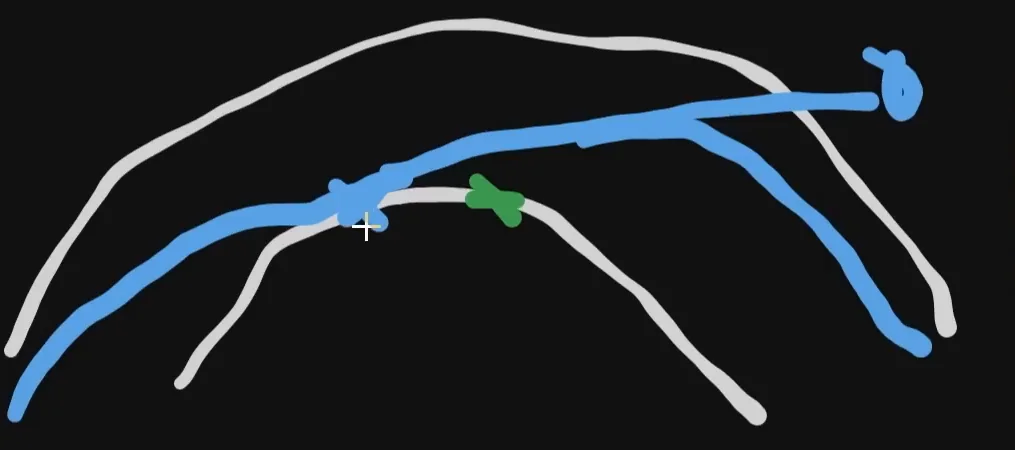
Identical minimum speed. Completely different lap time. The number was never the target — it is a result of doing the corner properly, and chasing it directly is how you end up arranging a slow corner that produces the right reading.
How to test this tonight
Pick one corner you know and set an active reset. Run it against a reference and, instead of comparing minimum speeds, compare the shape of the two brake traces from the moment of application to the moment of full release. Then ask one question: was the car still loaded when I reached the apex, or had I given it away earlier?
If the same fault keeps appearing in corner after corner, it is worth seeing what that looks like diagnosed end to end: five braking mistakes found in a single lap, and the opposite case where too much trail braking delayed the throttle.
If the answer is that you gave it away, you now know it is the release, and you know your pedal is helping you do it. If you would rather have someone look at the trace with you than guess, that is what the GitGud Racing Academy does — send one lap and a coach shows you where the pressure went, with timestamped notes and one thing to drill next.
Braking is not one adjustment but a sequence: application, then release, then keeping the car loaded to the apex. The sim racing courses and lessons teach it in that order, and pair each step with a drill so you can check the shape rather than the apex number.
Sim racing braking technique FAQ
Why am I losing time when my minimum corner speed matches the reference?
Because minimum speed only records the slowest point you reached, not how you got there. The usual cause is braking slightly too hard and too early, at which point your brain notices you are already slow enough and quietly eases you off the pedal. That removes weight from the front tyres exactly when you need it for rotation, so you spend most of corner entry decelerating below the car's limit and still arrive at the apex on the right number.
What is minimum corner speed in sim racing?
It is simply the lowest speed the car reaches in a corner, usually at or near the apex. It is one point on the trace, not an average. That is why it is a poor target on its own: it tells you nothing about how much time you spent reaching it, whether the car was properly loaded while you did, where you actually apexed, or how early you could get back to throttle.
Is a higher apex speed always faster?
No, and chasing it directly can make you slower. Two drivers can hit an identical minimum speed and produce very different lap times, because one apexed correctly and got to throttle early while the other apexed too soon, ran out of road and had to lift. Apex speed is a result of doing the corner well rather than a target to aim at, and treating it as a target is how you arrange a slow corner that produces the right reading.
How do you read a brake trace in sim racing?
Compare shapes, not single values. A good trace shows a firm initial application then a controlled, progressive release that keeps bleeding off as steering builds. A high peak followed by a steep drop with almost no trail is the classic time-loser that still reaches the right minimum speed. A weak start with pressure climbing deeper into entry spikes load onto the front and unsettles the car. A long low plateau means you over-slowed.
Why does my brake pressure drop faster than I intend?
Partly the pedal. Elastomers and springs store force, and because brakes are usually set to need a firm press your muscles are working near the top of their range where fine control is worst. The rubbers also heat up during a session and age over months. Test it stationary: hold a constant pressure, then release as gradually as you can and watch the reading fall faster than you meant. If it does that standing still, it is not a technique problem.
This guide is part of the free library at GitGud Racing Academy — an online sim racing academy built around weekly lap reviews, structured courses, drills and training tools.
Train this the right way
Reading is step one. Build it into muscle memory with structured, car-specific courses and personal lap reviews from a coach — inside the Academy.
Join the Academy · $49.99/mo incl. VATWatch the full video on YouTube