5 Sim Racing Braking Mistakes a Coach Spotted in One Lap
Jason was not slow because he did not know the track. He knew where to brake, he could drive the car, and plenty of his corners looked perfectly respectable on their own. What he could not do was get the car to rotate at the right moment — too early one lap, too late the next, with the timing all over the place.
Watching one lap of his turned up five separate braking problems. But they were not five problems. They were mostly one habit showing up in five places, and the fix in several corners was the opposite of what he expected: brake earlier and softer.
Everything below comes from a real coaching session with one of my students, looking at his actual telemetry.
Mistake 1: braking so hard that the car cannot turn
Turn one. His braking was hard and aggressive, and even though he was shifting a lot of weight onto the front tyres, the car still would not rotate the way he wanted.
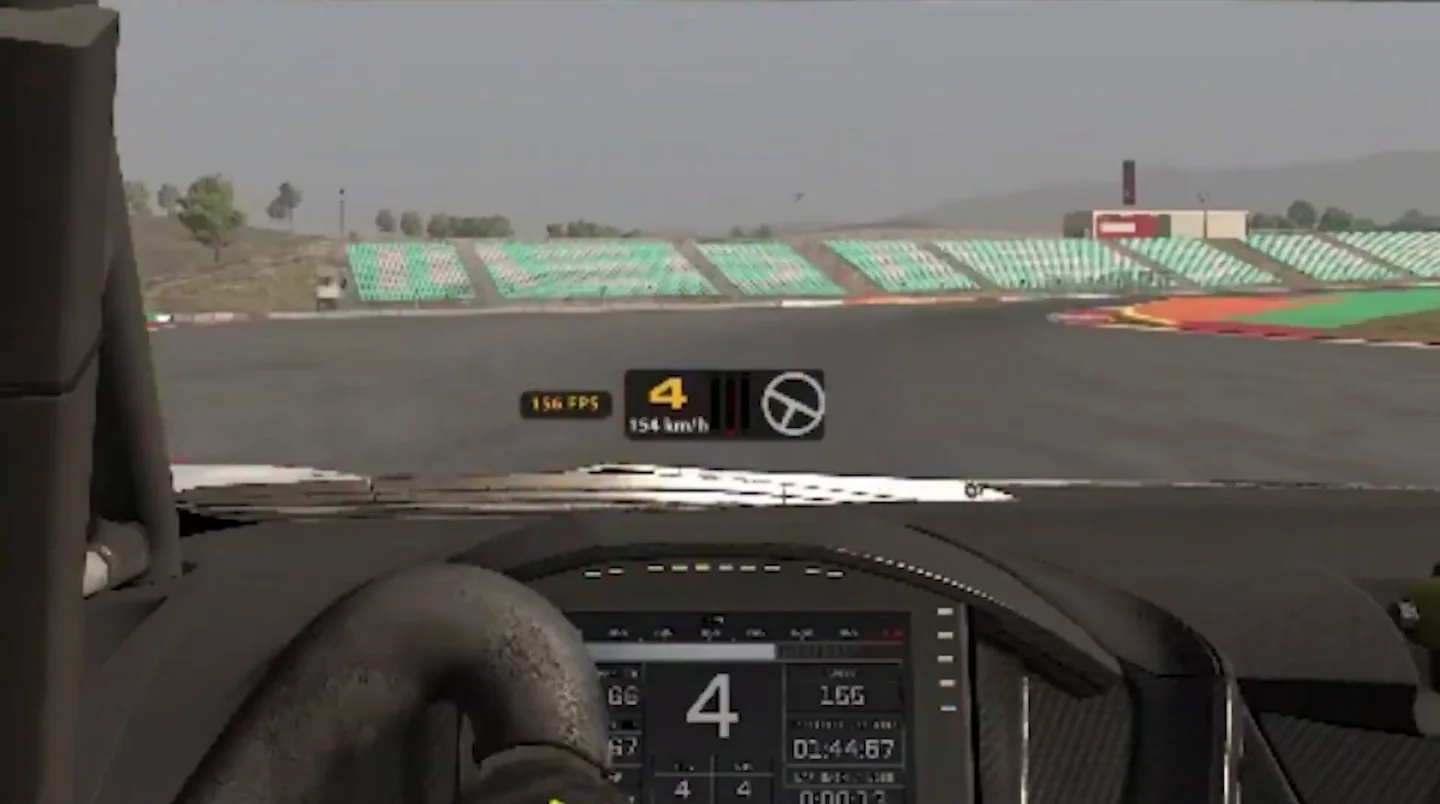
Here is what was actually happening. As he transitioned from threshold braking into the trail, he was still deep in the ABS zone — and while ABS is working, the tyre is micro-locking and releasing over and over. So he would crank the wheel and almost nothing would happen. The steering input went in, the car did not respond.
The real rotation only arrived once he came off the ABS threshold. Which means all the turning he did before that point achieved close to nothing — and that is exactly why the car felt like it turned late.
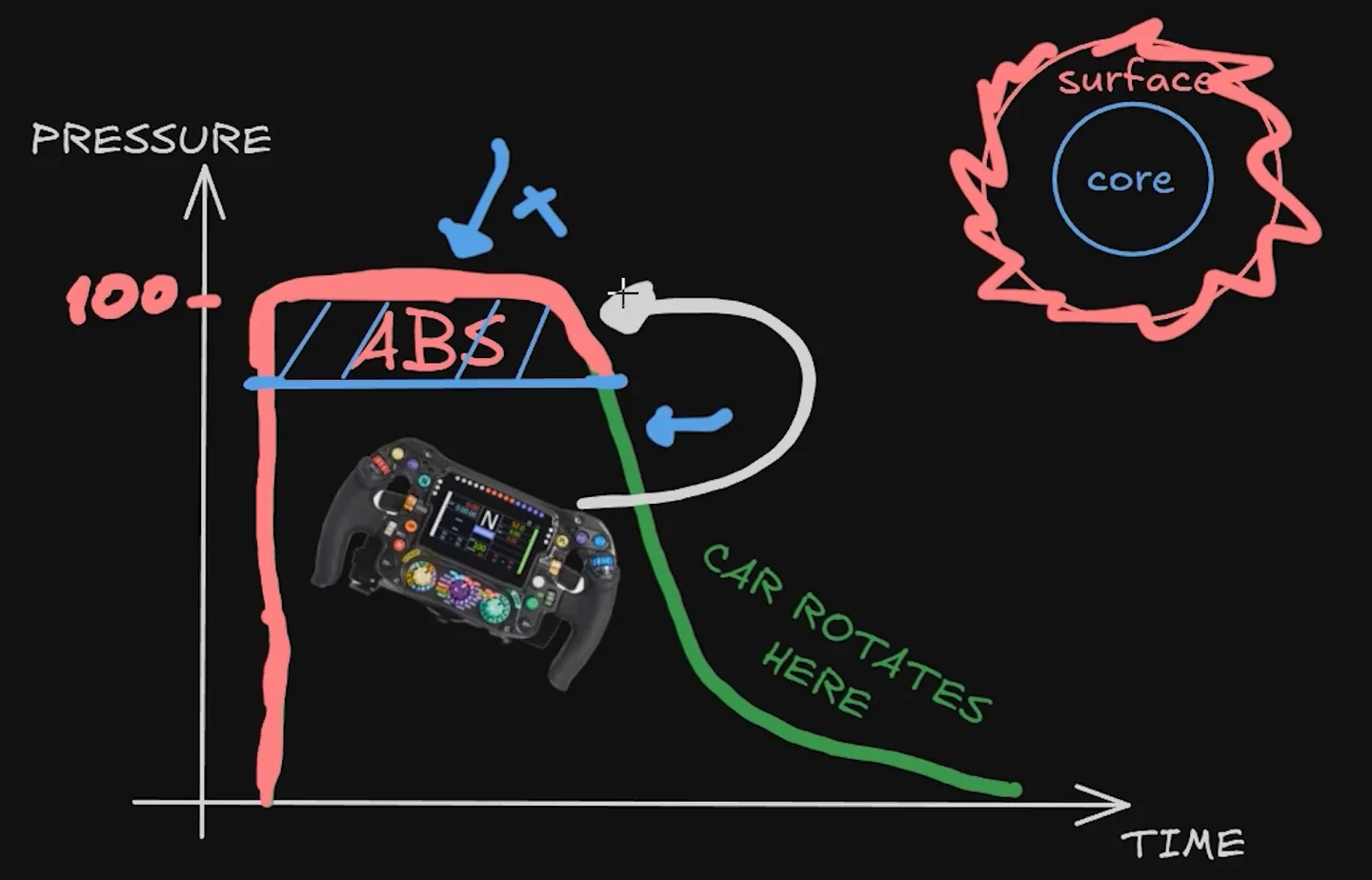
The fix was to brake earlier and softer, staying out of ABS so the car responds at turn-in instead of a moment after it. It worked immediately, and that corner became consistently quicker on its own.
Why more steering makes it worse
This is the trap. When you turn the wheel and the car does not respond, the instinct is to add more steering. But the front tyres are already saturated under ABS, so the extra lock buys you nothing and costs you everything: more demand on the front, understeer, a later apex, and a delayed throttle.
One habit at the start of the corner, three symptoms by the end of it. This is why chasing the symptoms individually never works. It is also why the twelve driving techniques put braking third and steering and throttle after it: the later inputs inherit whatever the brake left them.
Mistake 2: dancing on the brake pedal
His second corner had a different fault, and it is one you can spot in your own telemetry in about ten seconds.
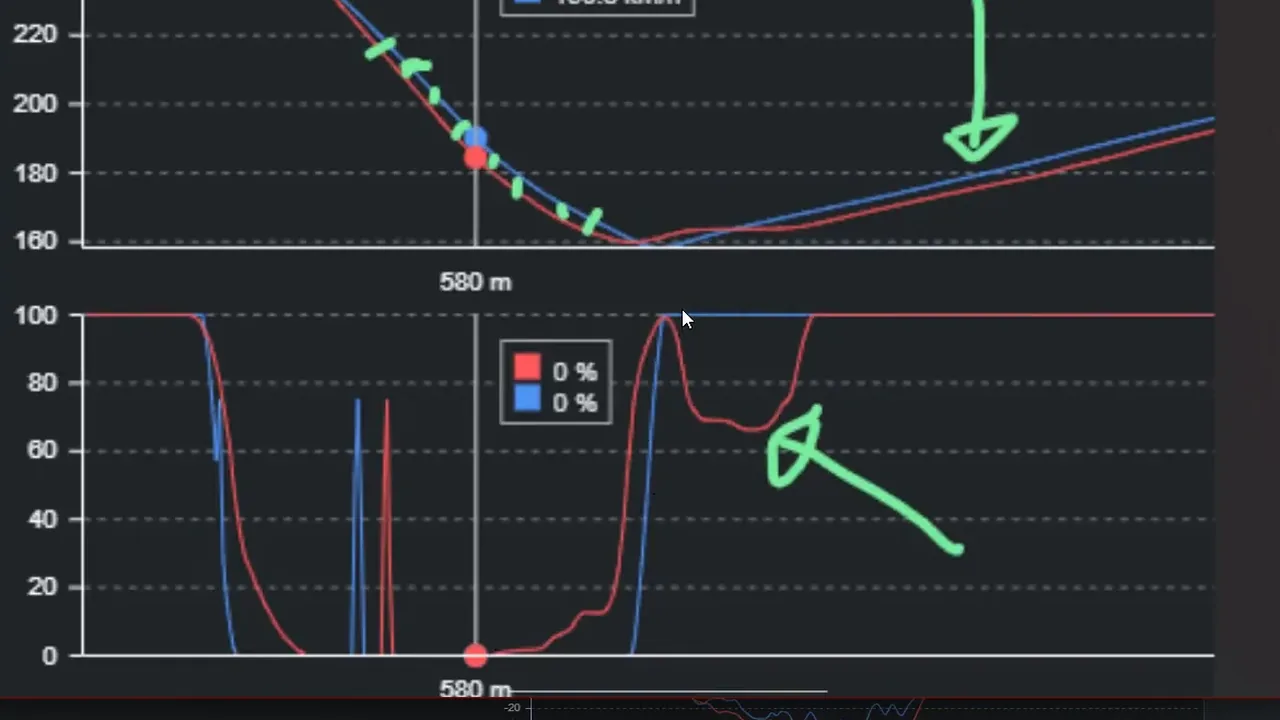
A brake trace should go hard initially and then trail off. His did something else — roughly 90%, dropping instantly to 40, back up to 70, dropping again. On and off, repeatedly.
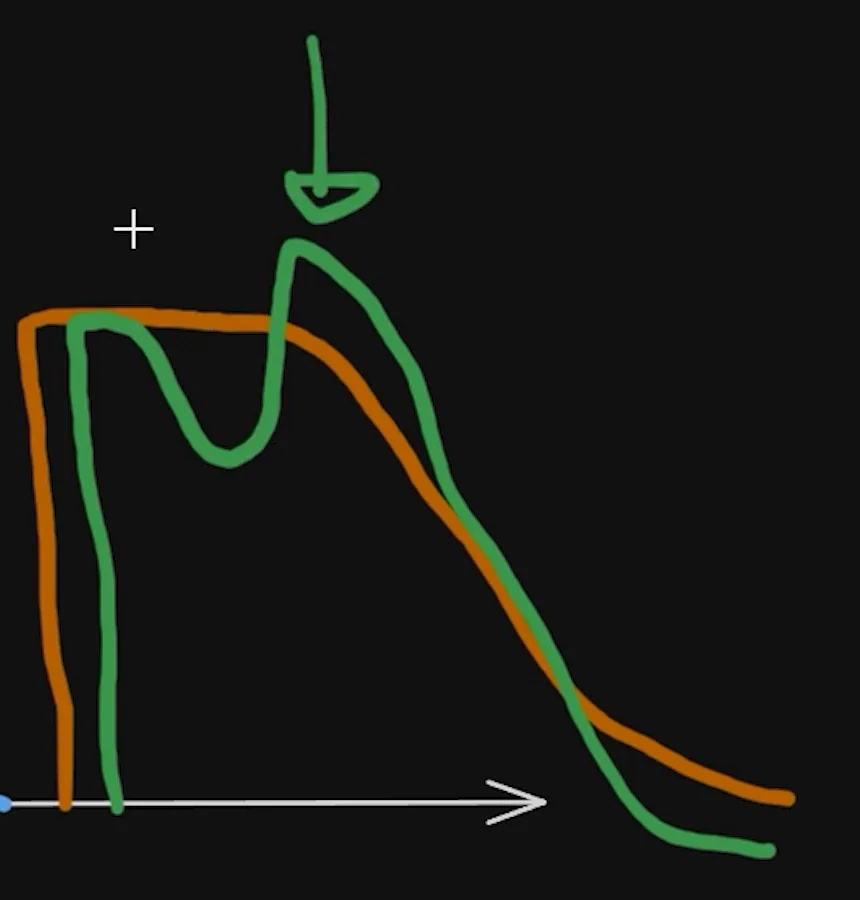
The coaching question that makes this obvious is not "what should the trace look like". It is:
How is the mechanical grip changing as I go through this corner?
Because on that particular braking zone the car was pointing almost straight, there was no elevation change, and the road was flat. The mechanical grip was the same at the start as it was further in. So if grip is not changing, why did the brake pressure need to jump from 40% back up to 70%?
Small corrections are completely normal — dropping 10% a bit quicker, adding three or five percent back. That is just modulating under braking. His corrections were far bigger than that, and nothing about the corner justified them.
Learn to ask that question of your own trace and you stop copying shapes off faster drivers and start reasoning about what the car actually needs.
Worth ruling out one non-technique cause of that pattern before you drill it: an unbraced body. If you are sliding forward under deceleration, the same leg effort lands as a different pedal pressure depending on where your hips have got to, and the trace oscillates without you doing anything different. The seating geometry decides whether you stay put.
Mistake 3: braking downhill as though the track were flat
Into the hairpin, a third fault, and this one is genuinely different technique rather than a bad habit.
When the braking zone runs downhill, gravity is already pulling weight onto the nose of the car. There is far more load on the front tyres before you have done anything. So braking hard at the initial hit will trigger ABS and micro-lock the fronts almost every time.
Downhill you want the opposite of your normal approach: earlier and softer. That puts the front tyres in a much better position to actually turn the car, instead of arriving at turn-in already at the limit.
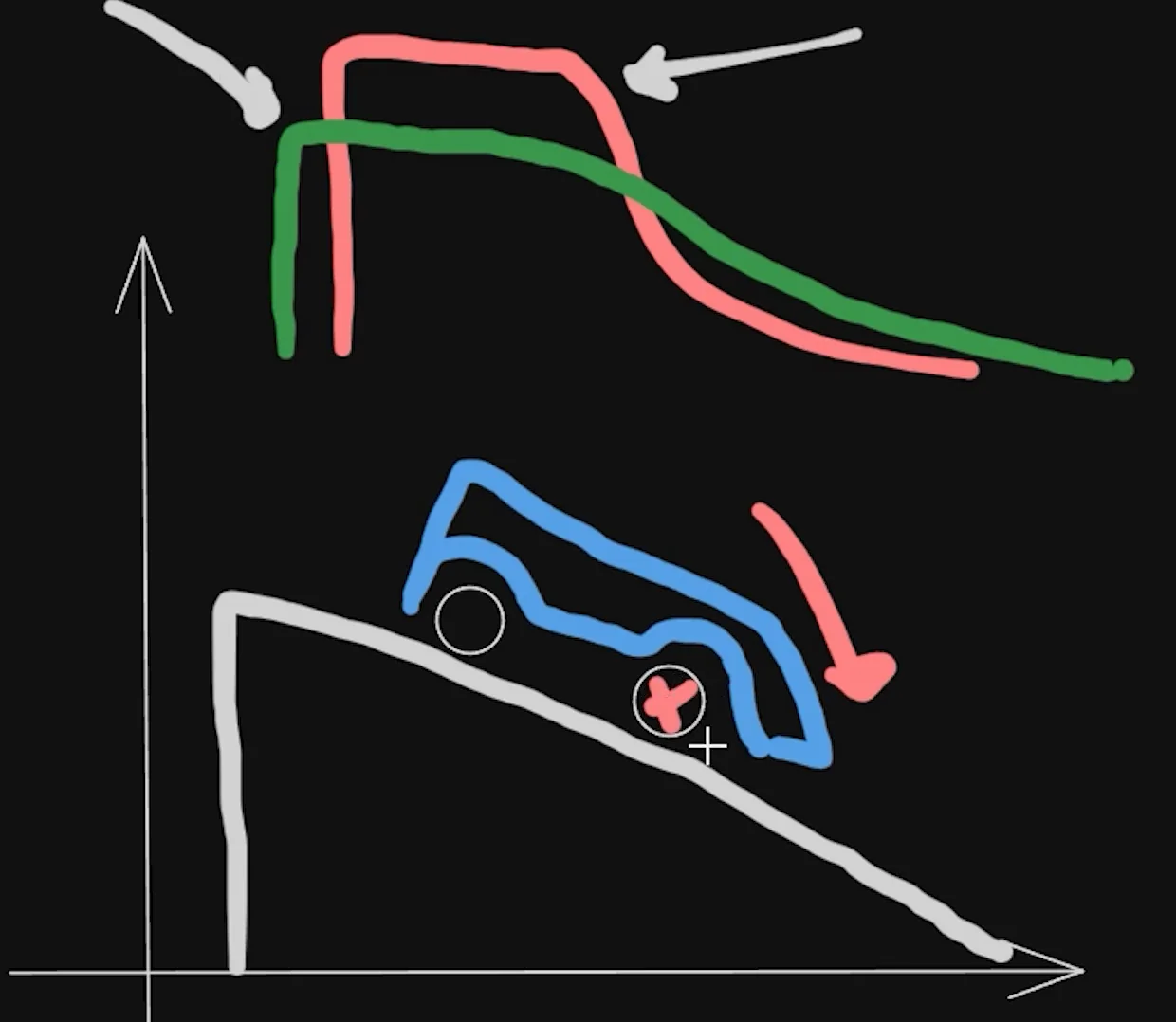
The wider lesson matters more than the specific case. There is no single correct brake trace that you learn once and apply everywhere. The technique changes because the corner changed — and if you are braking downhill the same way you brake on the flat, you have not accounted for the track.
Mistake 4: overdriving corner entry
By this point a pattern is visible. Jason was attacking corner entry so hard that he was taking away the front tyre's ability to do its job.
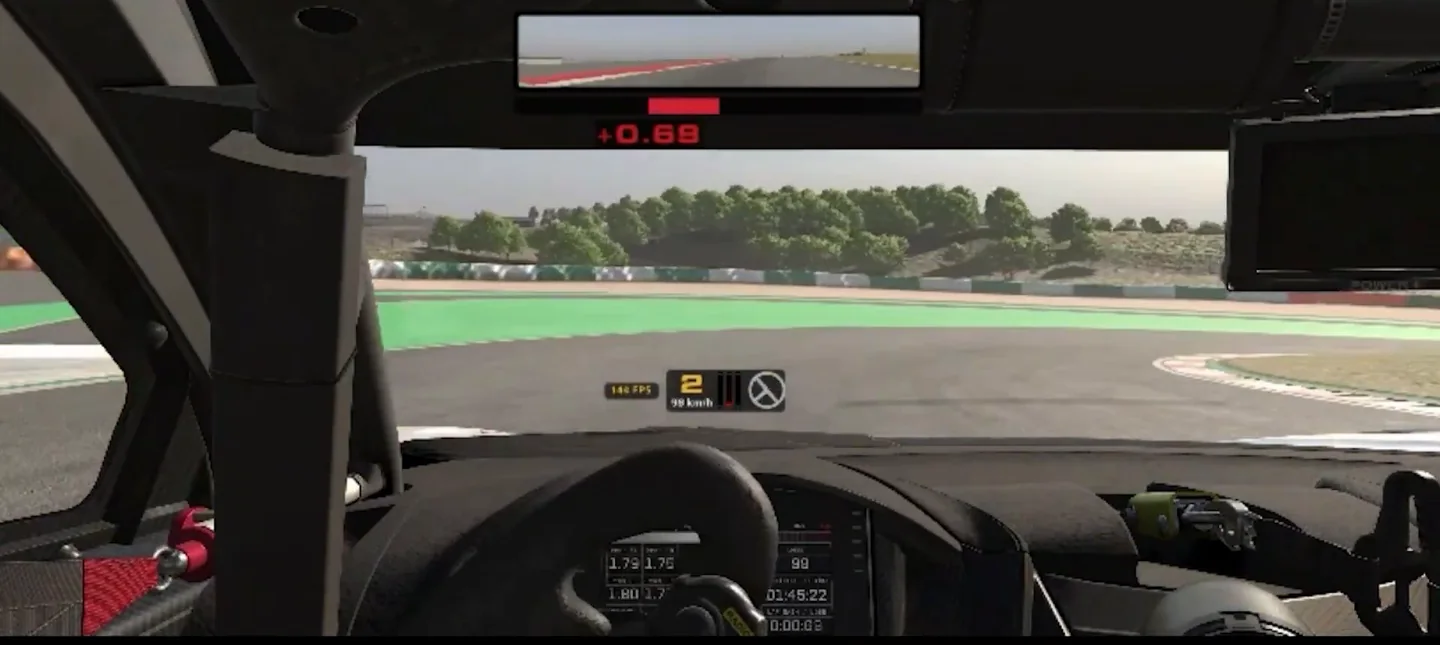
The signs are recognisable, and you can check yourself against them honestly:
- Entries feel tense rather than controlled.
- There is almost no margin — you either nail the corner or miss it.
- Heavy braking, then more steering than the corner should need.
- Understeer on the way in.
- You are always waiting before you can get back to throttle.
If every corner entry feels like 110%, you are probably overdriving it. Not pushing hard — overdriving, which is the version that costs time rather than finding it.
Mistake 5: fixing the symptom instead of the cause
This is the one that keeps drivers stuck for months, and it is the reason the other four are worth writing up together.
Jason sees understeer on corner entry. The available self-diagnoses are all reasonable:
- "I need more front grip." → change the setup
- "I need to turn more." → add steering
- "This car understeers." → blame the car
All three are wrong here, and all three would have sent him down a week-long detour. The actual cause was that he was arriving at turn-in with too much brake pressure and asking more of the front tyres than they had left to give.
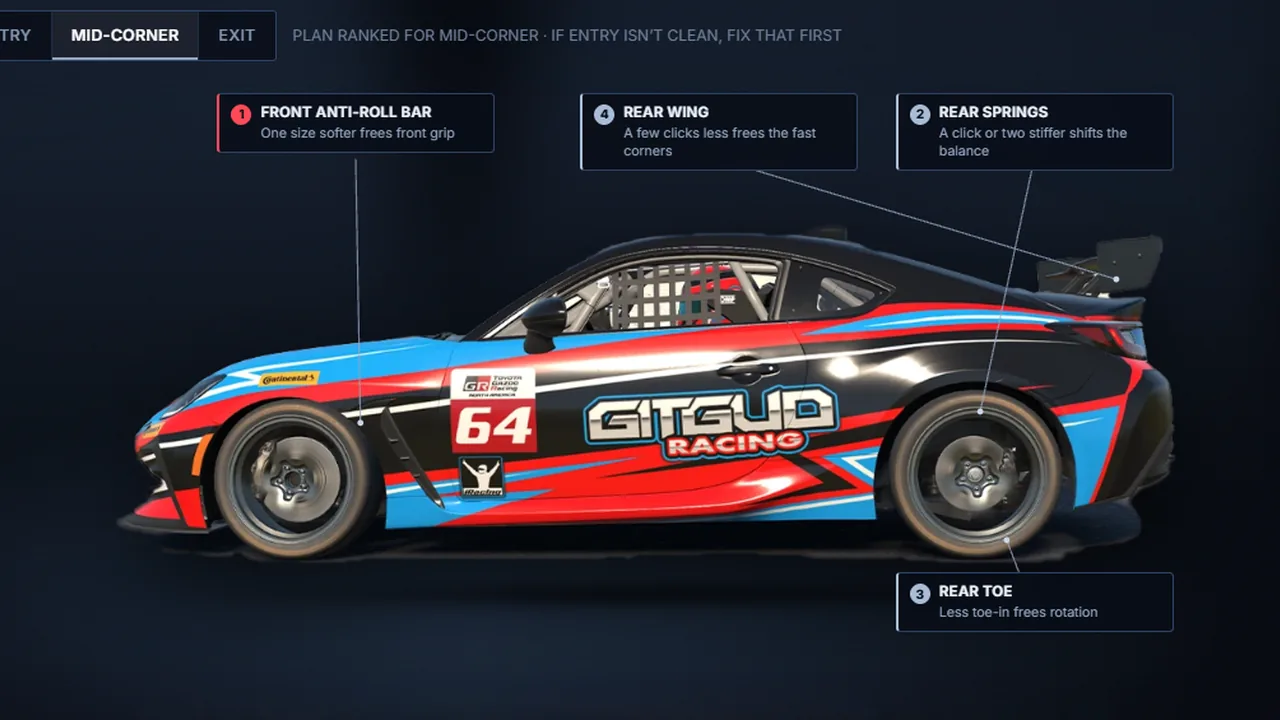
Change the setup and the understeer moves somewhere else. Add steering and it gets worse. The only fix that works is the one aimed at the cause — and from inside the car, the cause and the symptom feel identical. If you want to work through that distinction for whatever the car is doing right now, not just entry understeer, the setup troubleshooter walks driver checks first, setup changes second.
Wondering what your version of this is?
The hard part of getting faster is rarely knowing that you are losing time — telemetry tells you that. It is finding the habit underneath it, which is what a second pair of eyes is for. A personal lap review gets a coach through your lap corner by corner, with the biggest thing to fix named first.
How to tell if you are braking too hard
Seven signs, in rough order of how reliably they point at this:
- You turn the wheel and rotation feels delayed.
- You find yourself adding more steering mid-corner.
- You are hitting ABS just as you begin to steer.
- Your brake trace drops and rises repeatedly.
- Corner entries feel tense.
- You can nail a corner once and cannot reproduce it.
- You are always waiting before you can pick up the throttle.
Three or more of those together, and the problem is almost certainly happening before the apex rather than after it.
That is the whole-lap version of the problem. If instead it is one specific corner that will not work while the rest of the lap is fine, a step-by-step method for a single corner is the better tool.
What a clean brake trace looks like
Briefly, because the mechanics have their own guide. The shape you want is one peak and one direction of travel afterwards:
- Roughly right: up to about 80%, then progressively down — 80, 60, 40, 20, 5, off — as steering builds.
- Jason's: 90, down to 40, back to 70, down to 35, back to 50, off.
You do not need a perfect curve. You need to stop going back up without a reason. If you want the technique itself rather than the diagnosis, how to trail brake covers the release properly, and if holding steady low pressure is physically hard, that is often the pedal rather than you — brake pedal tips and brake pedal settings deal with that.
Why "brake later" is often terrible advice
When you are slow, the intuitive conclusion is that you are braking too early. Jason got faster by braking earlier, in several corners.
Braking later is not the goal. The goal is to arrive at turn-in with the car in the best possible state for the corner ahead of you — and if a later braking point means you get there with the fronts saturated and the car refusing to rotate, you have bought two metres and paid for it with the entire corner. If you do want a later braking point, it has to be earned through more efficient straight-line braking rather than by moving the marker — how to brake later in sim racing is that sequence.
This is closely related to a mistake that looks completely different in telemetry: matching a fast driver's minimum speed and still losing the corner. Same underlying theme, different symptom — why matching minimum corner speed can still be slower covers that one.
A different student, a different session, and a useful contrast: his faults were spread across vision, track usage and both pedals rather than concentrated on the brake, and the thread running through them was a sensation rather than a habit. Six mistakes found in one lap is that session, and it is worth reading alongside this one because the two students needed opposite instructions.
What the telemetry did not tell Jason
This is the part worth sitting with, because it is the difference between data and diagnosis. It is also the whole subject of how to read sim racing telemetry, which uses two real lap comparisons to show how to read brake application and release without mistaking a consequence for a cause.
| Telemetry showed | The session showed |
|---|---|
| His braking was inconsistent | Why it was inconsistent |
| He was late to throttle | An early apex had pointed the car at the wrong exit |
| He carried brake pressure into the corner | He was overdriving entry and tensing up |
| Steering angle | His vision was pulling his line to the wrong reference |
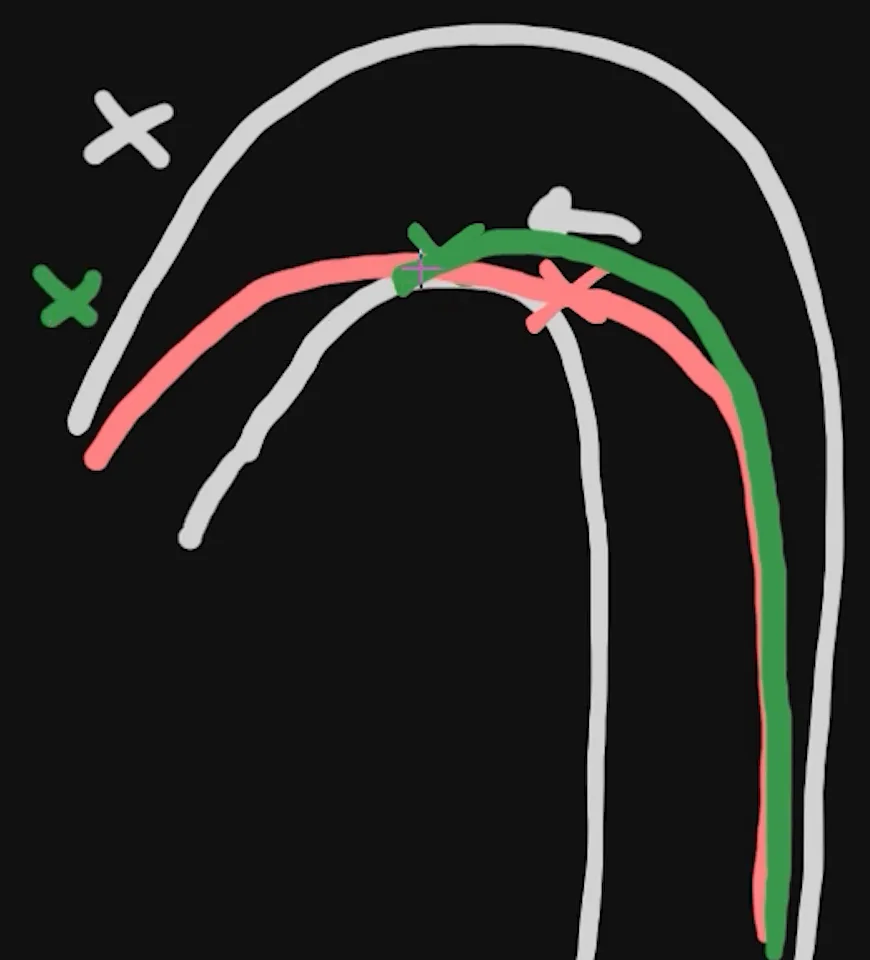
An overlay will happily tell you that you braked eight metres later than the reference. It will not tell you that you are looking at the wrong piece of track — and on Jason's lap, the racing line problem and the braking problem were feeding each other.
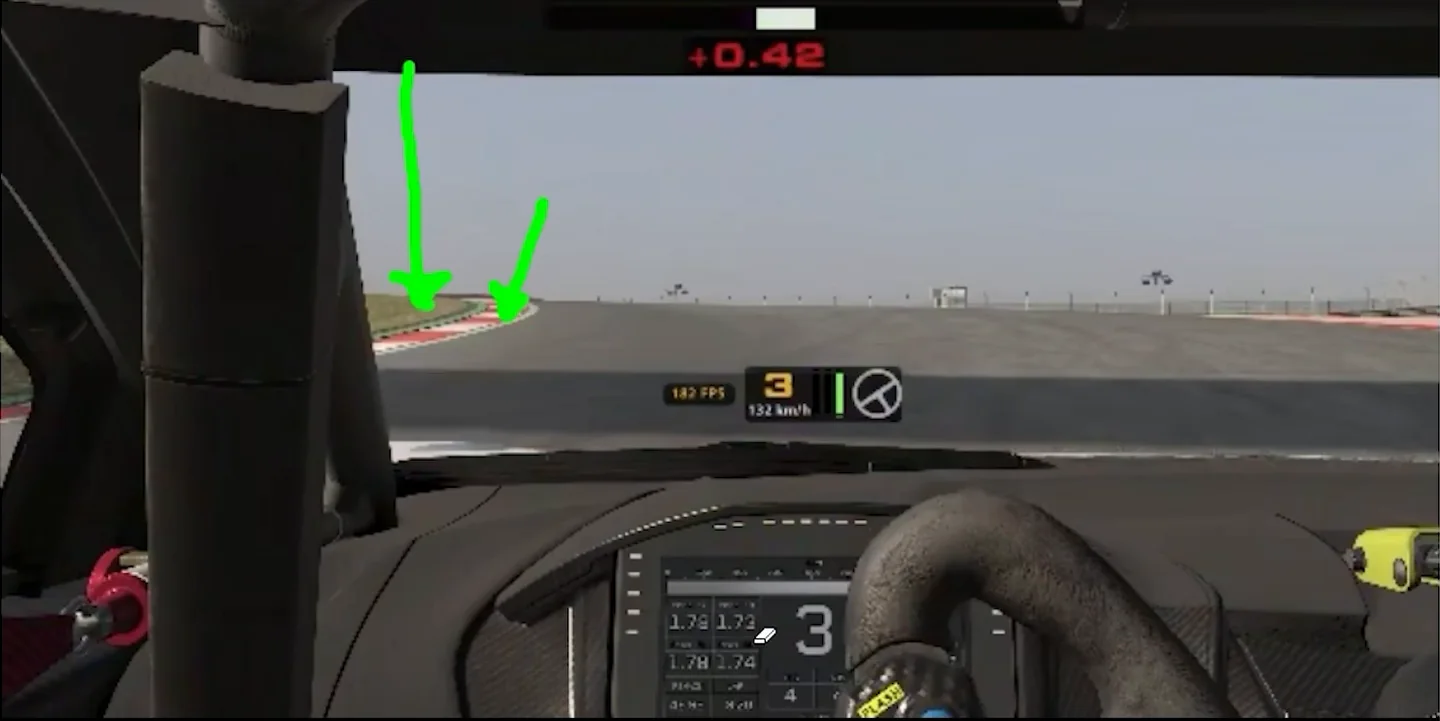
How to diagnose your own braking
An eight-step pass over one lap
- Record a lap you consider representative — not your best one.
- Pick your three heaviest braking zones.
- Compare the initial pressure in each.
- Mark where ABS activates.
- Look for pressure going back up after coming down.
- Overlay steering against brake pressure — where do they fight?
- Check how long after the apex the throttle arrives.
- Find the pattern that repeats, not the single worst corner.
That last step is the whole method. Do not fix seven corners. Fix the habit that is appearing in seven corners.
You probably have a Jason problem somewhere in your lap
His heavy braking looked like an ABS problem in one corner, an understeer problem in another and a racing-line problem in a third. Only across the whole lap did the pattern become obvious — and once it did, one change fixed several corners at once.
That is the part that is genuinely hard to do alone, because from the driver's seat the symptom and the cause feel like the same thing. It is also exactly what lap reviews inside the GitGud Racing Academy are for: you send a lap, a coach goes through it corner by corner, you get the biggest problem named first and something specific to drill next — and you can ask follow-up questions when something does not make sense.
One footnote worth having, because it is the same lesson from the opposite side: another student had precisely the inverse problem — his braking was fine and he was relying on it for too much of the corner. Getting the car to rotate earlier is that session, and the two together are the clearest answer to whether you should be braking harder or softer.
Braking mistakes FAQ
How do I know if I am braking too hard in sim racing?
The clearest signs are that rotation feels delayed after you turn the wheel, you find yourself adding more steering mid-corner, ABS is triggering just as you begin to steer, and the throttle always arrives later than you want. Corner entries feel tense, and you can nail a corner once without reproducing it. Three or more of those together mean the problem is happening before the apex rather than after it.
Why does my car not turn when I brake hard and steer?
Because while ABS is active the front tyres are micro-locking and releasing, so steering input produces very little response. The real rotation only arrives once you come off the ABS threshold, which makes the car feel like it turns late. Adding more steering makes it worse, since the front tyres are already saturated: the extra lock buys nothing and costs you understeer, a later apex and a delayed throttle.
What should a brake trace look like in sim racing?
One peak, then one direction of travel. Roughly, up to about eighty percent and then progressively down through sixty, forty, twenty and off as steering builds. Small corrections of a few percent are normal modulation. The fault worth hunting is pressure that comes back up repeatedly — ninety down to forty, back to seventy, down again — because on a flat, straight braking zone the grip is not changing, so nothing justifies the increase.
How should you brake downhill in sim racing?
Earlier and softer than you would on the flat. Gravity is already pulling weight onto the nose before you touch the pedal, so there is far more load on the front tyres at the initial hit and braking hard will trigger ABS and micro-lock the fronts almost every time. Braking earlier and more gently leaves the front tyres able to turn the car instead of arriving at turn-in already at the limit.
Is braking later always faster?
No, and it is one of the most expensive assumptions in sim racing. The goal is to arrive at turn-in with the car in the best state for the corner ahead, not to brake as late as possible. If a later braking point means you get there with the fronts saturated and the car refusing to rotate, you have gained two metres and paid for it with the whole corner. Plenty of drivers get faster by braking earlier and softer.
Is entry understeer a setup problem or a driving problem?
Usually driving, and the setup route is the expensive detour. The three natural self-diagnoses — needing more front grip, needing more steering, or the car simply understeering — all point away from the common cause, which is arriving at turn-in with too much brake pressure and asking more of the front tyres than they have left. Change the setup and the understeer moves somewhere else; add steering and it gets worse.
This guide is part of the free library at GitGud Racing Academy — an online sim racing academy built around weekly lap reviews, structured courses, drills and training tools.
Train this the right way
Reading is step one. Build it into muscle memory with structured, car-specific courses and personal lap reviews from a coach — inside the Academy.
Join the Academy · $39.99/mo incl. VATWatch the full video on YouTube