How to Get More Car Rotation in Sim Racing
Car rotation is how quickly and effectively the car changes the direction it is pointing, first toward the apex and then toward the exit. When a car will not rotate, the cause is usually one of five things: entry speed, line, braking, steering or setup. The quick check below helps you narrow it down. The coaching case after it examines one specific cause that is easy to miss because it looks like good driving: depending on trail braking for almost all of the rotation.
What car rotation actually means
The word gets used constantly and rarely defined. It is not a synonym for oversteer. You are not trying to spin the rear tyres. Deliberately adding a small amount of rear slip on entry is a separate, later technique, covered in how to induce oversteer, and it only works once ordinary rotation is repeatable. A well-rotated car:
- Points toward the exit earlier in the corner.
- Needs less steering later on.
- Can go to throttle sooner.
- Does not need constant manipulation deep into the corner to keep turning.
That last point matters most. If you are still actively working to make the car turn halfway through a corner, the rotation did not happen when it should have.
Why your car won't rotate: a quick check
Match what you feel to the likeliest cause. Often more than one is involved, and what counts as "too much" depends on the car and the corner. Rule out the driving causes before you reach for setup.
| Likely cause | What you notice | Where to look |
|---|---|---|
| Entry speed too high | Car pushes wide from turn-in | The grip limit |
| Line or turn-in point | Corner tightens; track runs out | Fixing one corner |
| Braking too hard at turn-in | ABS or a light wheel; no turn | Braking mistakes |
| Braking: trail held too long | Still braking late; throttle waits | The case below |
| Steering: too much lock | More lock, no more turn | Steering technique |
| Setup | Same push with clean inputs | Setup troubleshooter |
A real case: precise trail braking costing a second
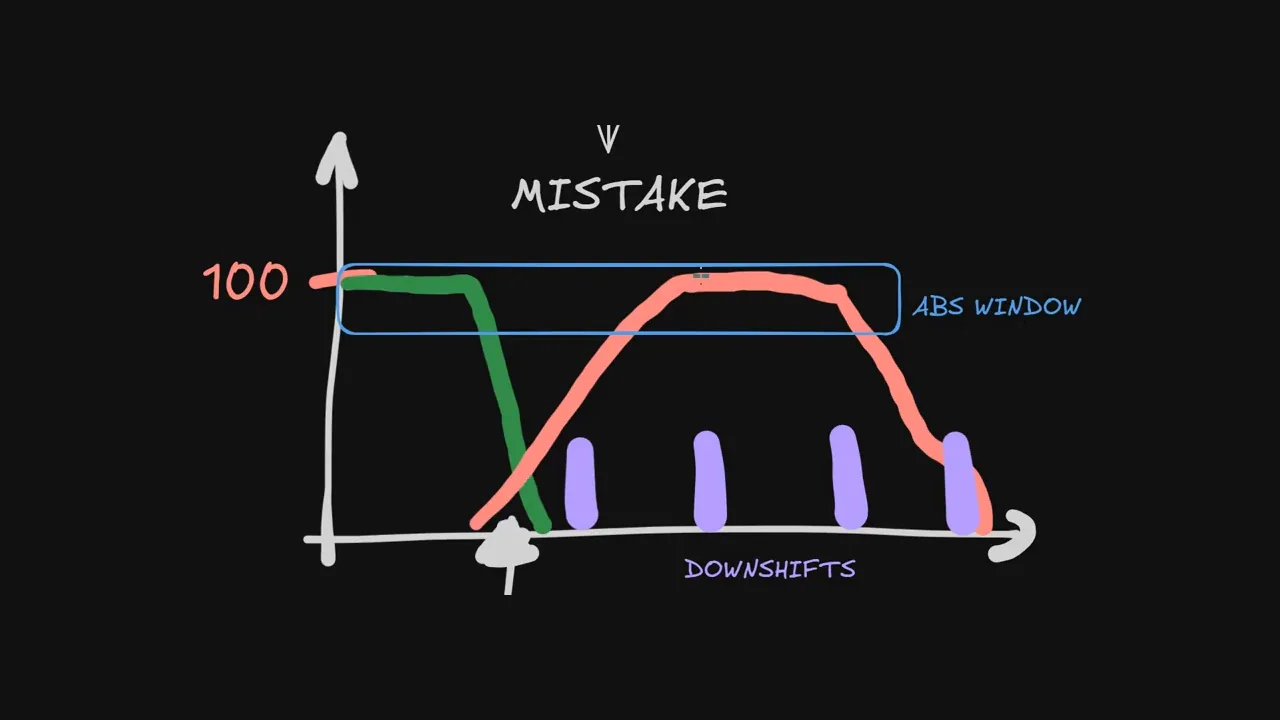
Yanik's brake traces looked better than most of what I see. He was in complete control of the car, his trail braking was precise, and he clearly knew what he was doing with it — he was deliberately holding brake pressure into the corner and using it to rotate the car. Textbook, on paper.
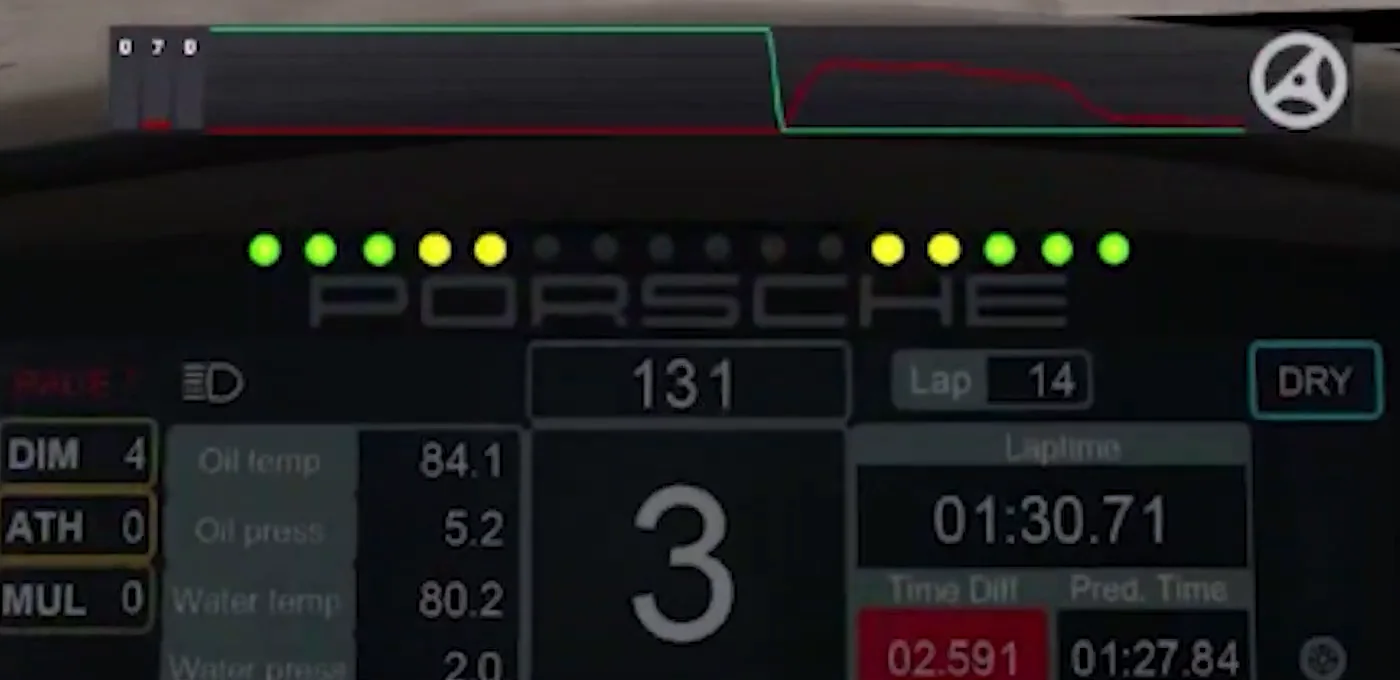
It was costing him close to a second a lap.
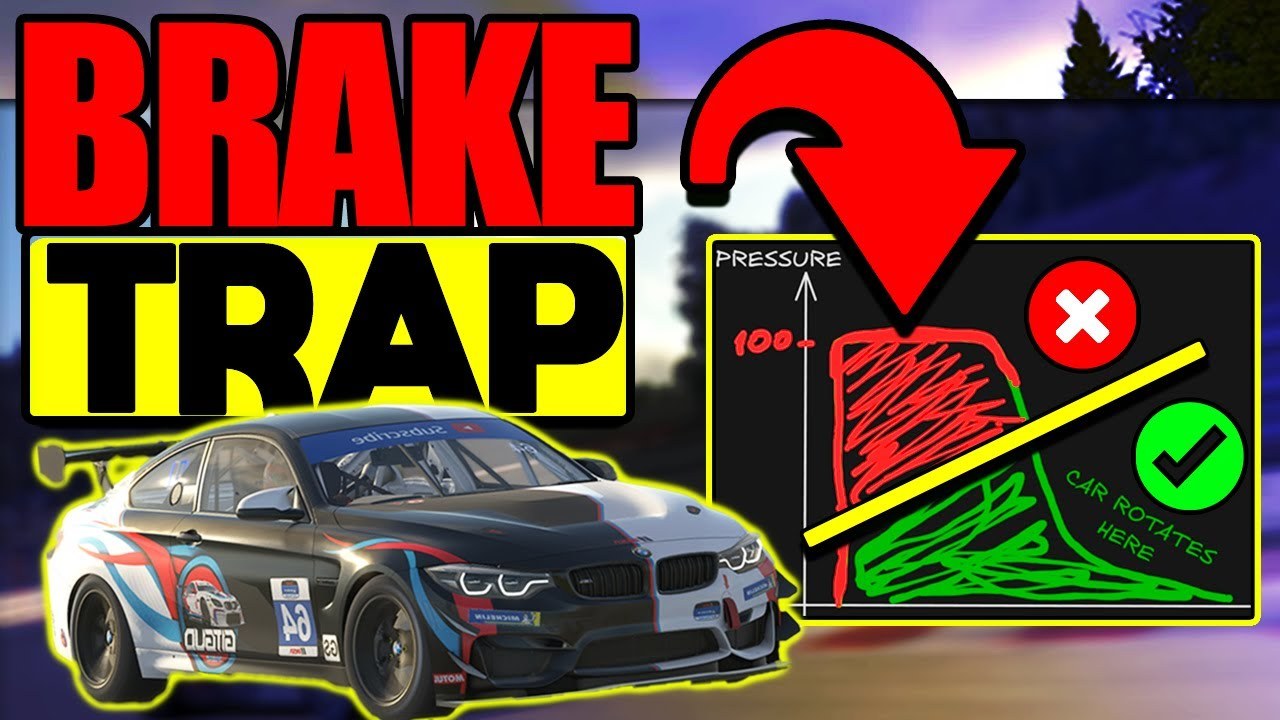
The problem was not that he could not trail brake. It was that he had become dependent on trail braking for almost all of his rotation — so he was holding the brakes far longer than the corner needed, and every corner ended with him waiting to get back to throttle. This is one of the few cases I have seen where trail braking, done well, made a driver slower.
Why earlier rotation makes you faster
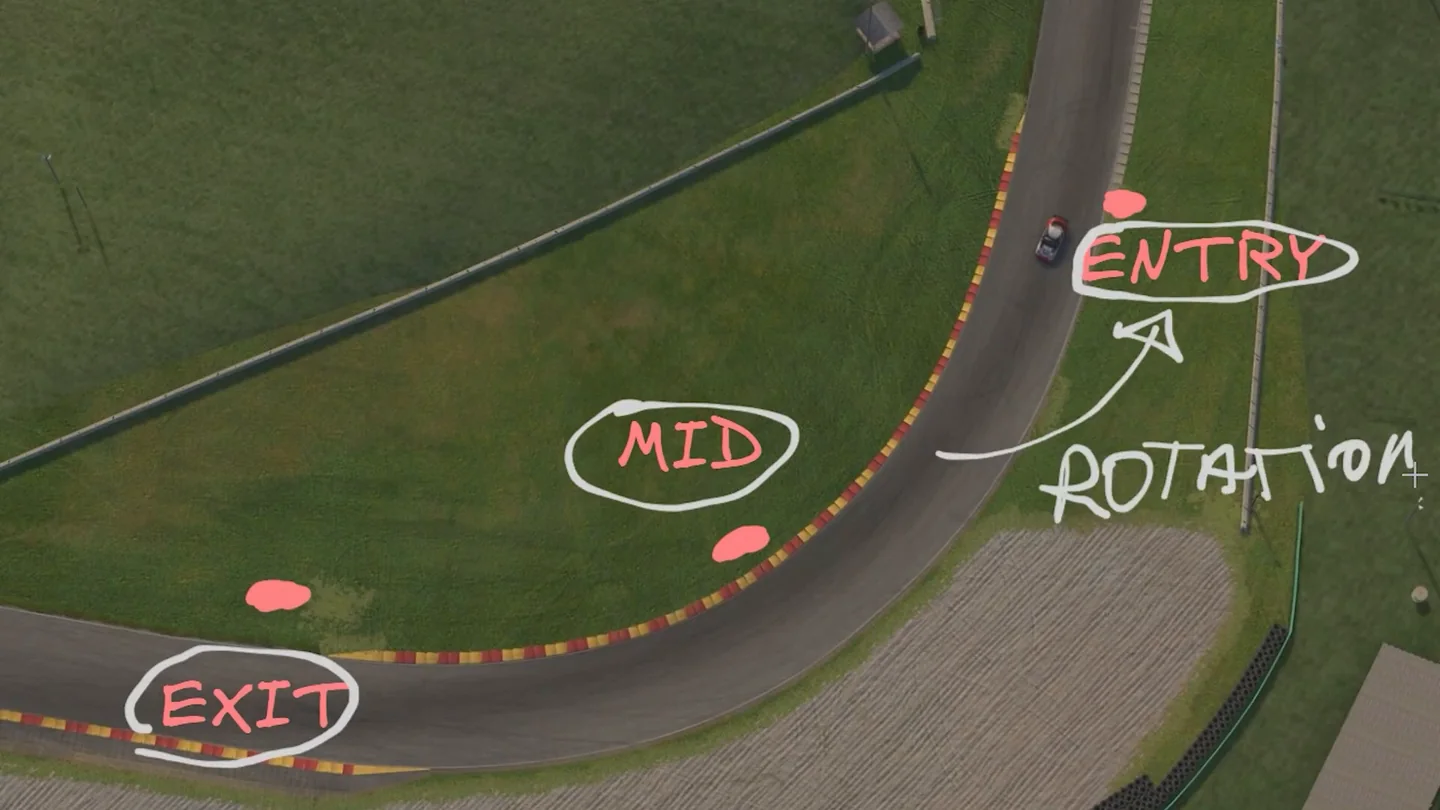
Think of a corner in three jobs. On entry you create rotation. Through the middle you manage it. On exit you settle the car and accelerate.
Yanik's corners were doing something else:
- Entry — not enough rotation created.
- Mid-corner — keep trailing the brake to manufacture the rotation that did not happen earlier.
- Exit — still on the brake, so the throttle arrives late.
Every corner inherited the previous phase's shortfall. The delayed throttle at the exit was not an exit problem at all — it was an entry problem showing up two phases later.
Why a long trail brake delays your throttle
The chain is short and mechanical. If the car has not rotated enough early, you need the brake to keep rotating it. While you still need the brake, you cannot commit to acceleration. So the throttle waits.
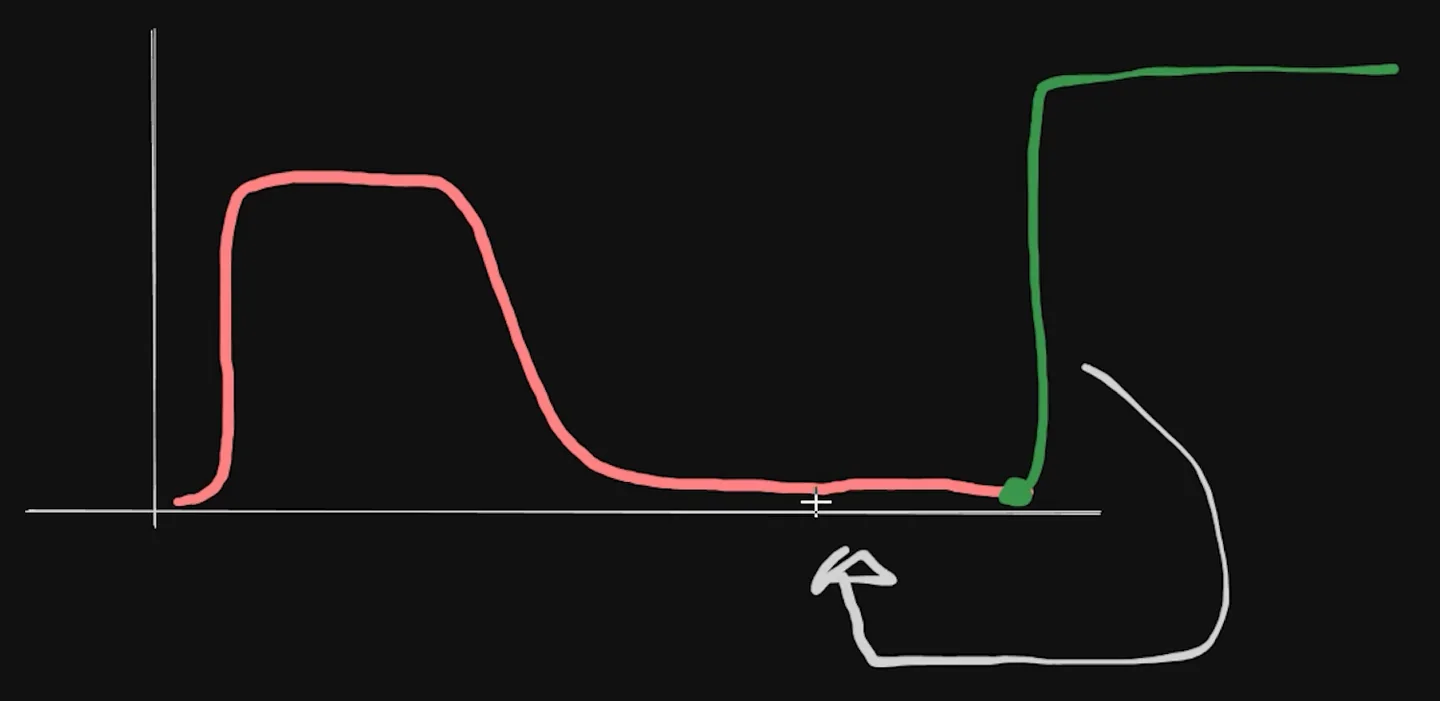
His braking was actually well structured — one big block to slow the car down, then a smaller phase for trailing. That shape is correct. He simply extended the second phase far past what the corner required, because it was doing a job the first phase should have done.
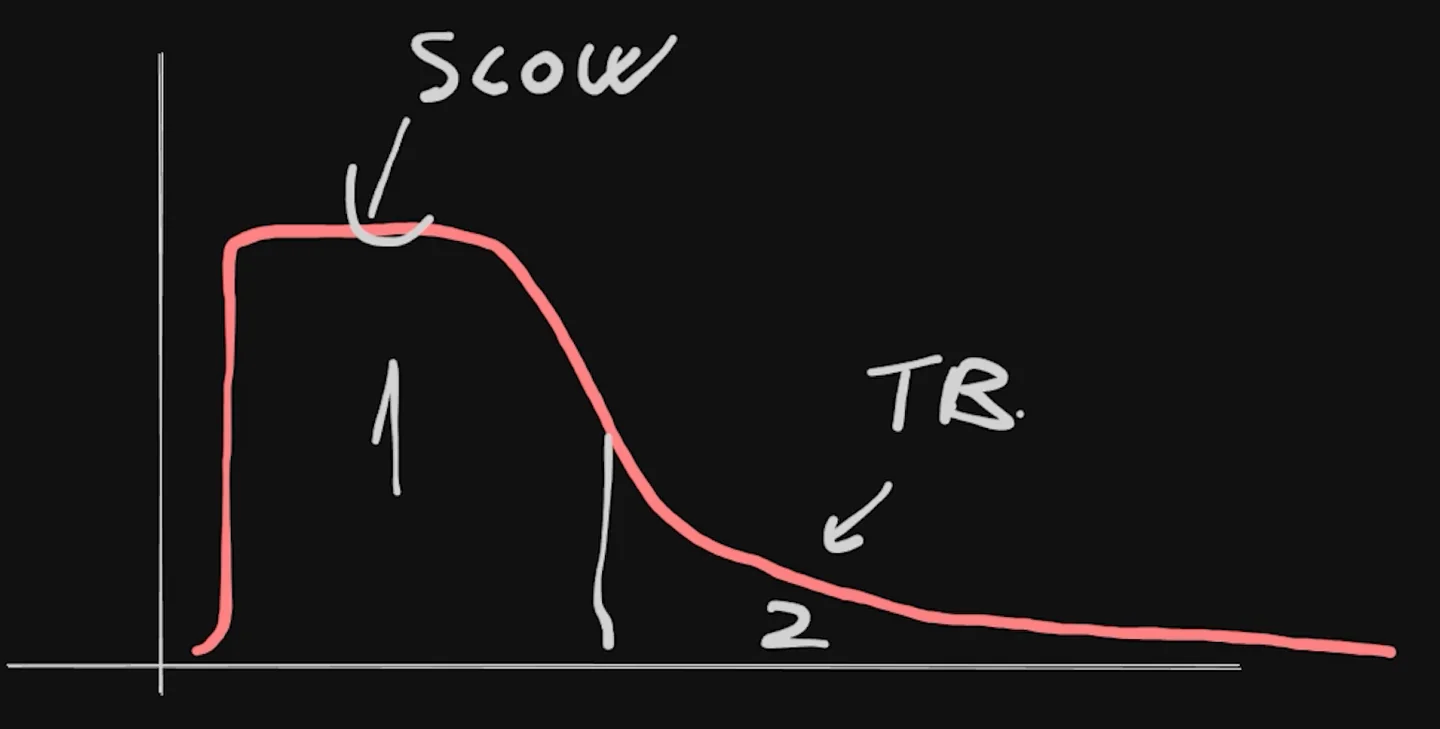
Trail braking is supposed to create the rotation you need. It is not something you maintain because the rotation never happened.
Why perfect-looking telemetry can still be slow
Looking only at Yanik's inputs, you would write down "smooth, progressive trail braking" and move on. Nothing in the trace is ragged. Nothing looks like a mistake.
The question that found the second was not about the shape of the trace. It was why do you still need that much brake, that late?
That is the difference between describing telemetry and diagnosing driving. An overlay can tell you that your throttle came 0.3s later than the reference. It cannot tell you that the reason is a rotation shortfall two phases earlier — which is why the fix is not "get on throttle sooner".
Your telemetry can look right and still be wrong for the corner
This is what a personal lap review is for: a coach looks at how your braking, steering, line, rotation and throttle work together, and names the habit costing the most time — rather than reporting which corners were slow, which you already know.
How we created rotation earlier
The plan for Yanik, in that car and that corner, was to move the rotation forward: brake later and with more aggression. That shifts weight onto the front quickly and lets the rear go light — a bigger initial shock to the car, so it starts turning during the first phase of braking rather than during the trail.
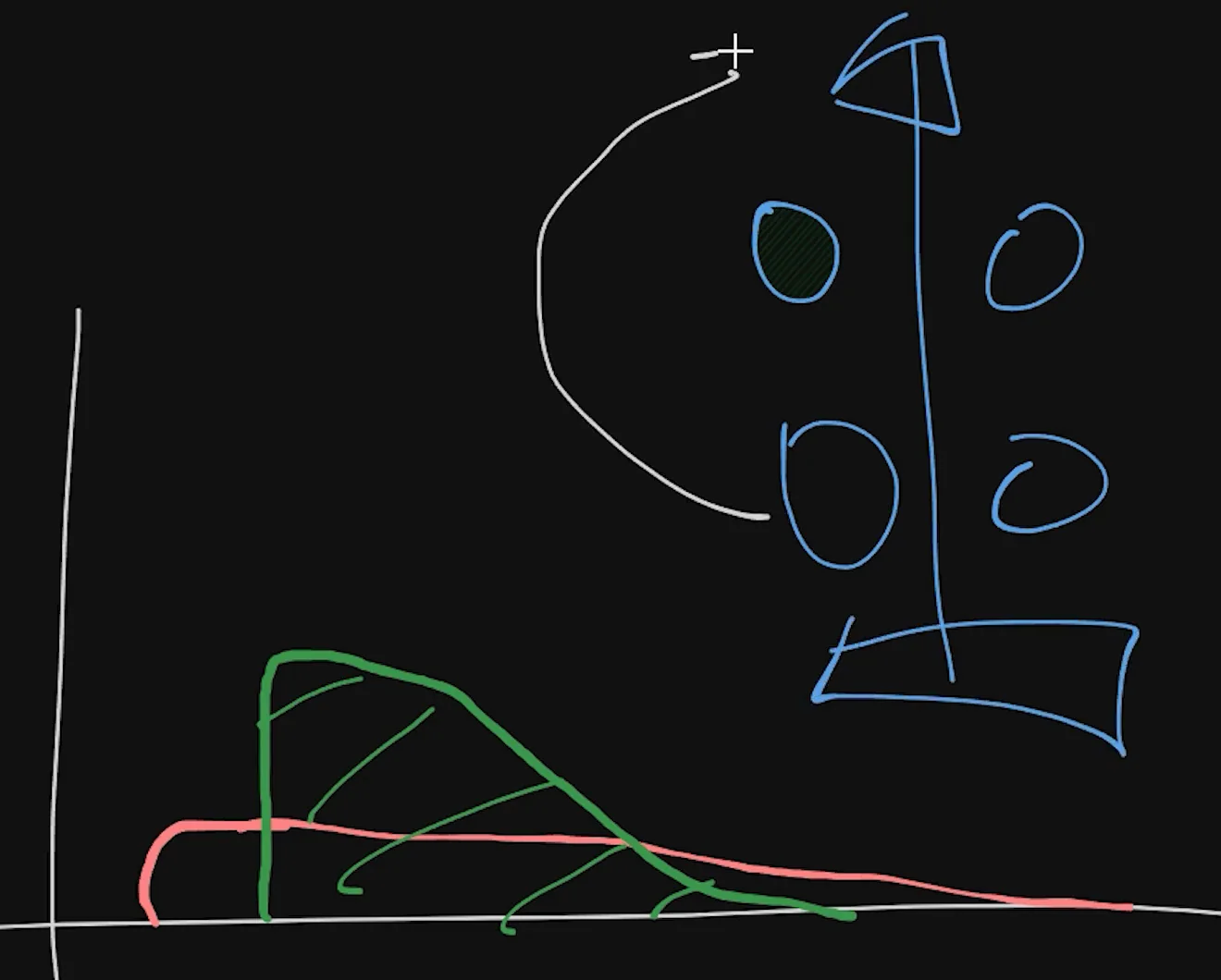
Alongside it, sharper downshift timing, a shorter trail phase, and an earlier throttle.
He sketched the trade-off honestly before trying it: possibly lose a fraction on entry from braking harder — though braking later offsets most of that — then gain through the middle from trailing less, and gain again on exit from an earlier throttle. One small minus, two pluses. Net gain.
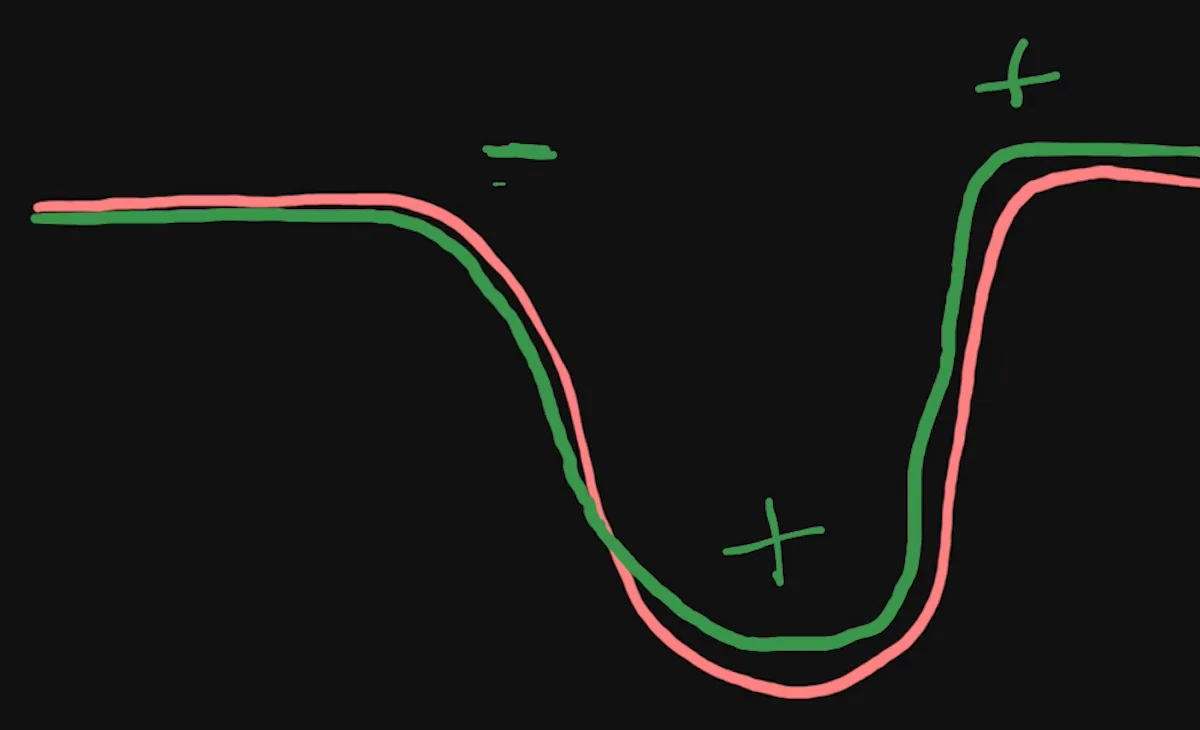
Before and after: the change and the outcome
| Before | After | |
|---|---|---|
| Initial braking | Big block, then a long trail | Later and harder, shorter trail |
| Downshifts | — | Sharper timing |
| Where rotation happens | Gradually, through the trail | Mostly created early |
| Mid-corner | Brake used to keep turning; car quiet | Rotation already done; tyres audible |
| Throttle | Late | Earlier |
| Result | Technically smooth | Faster |
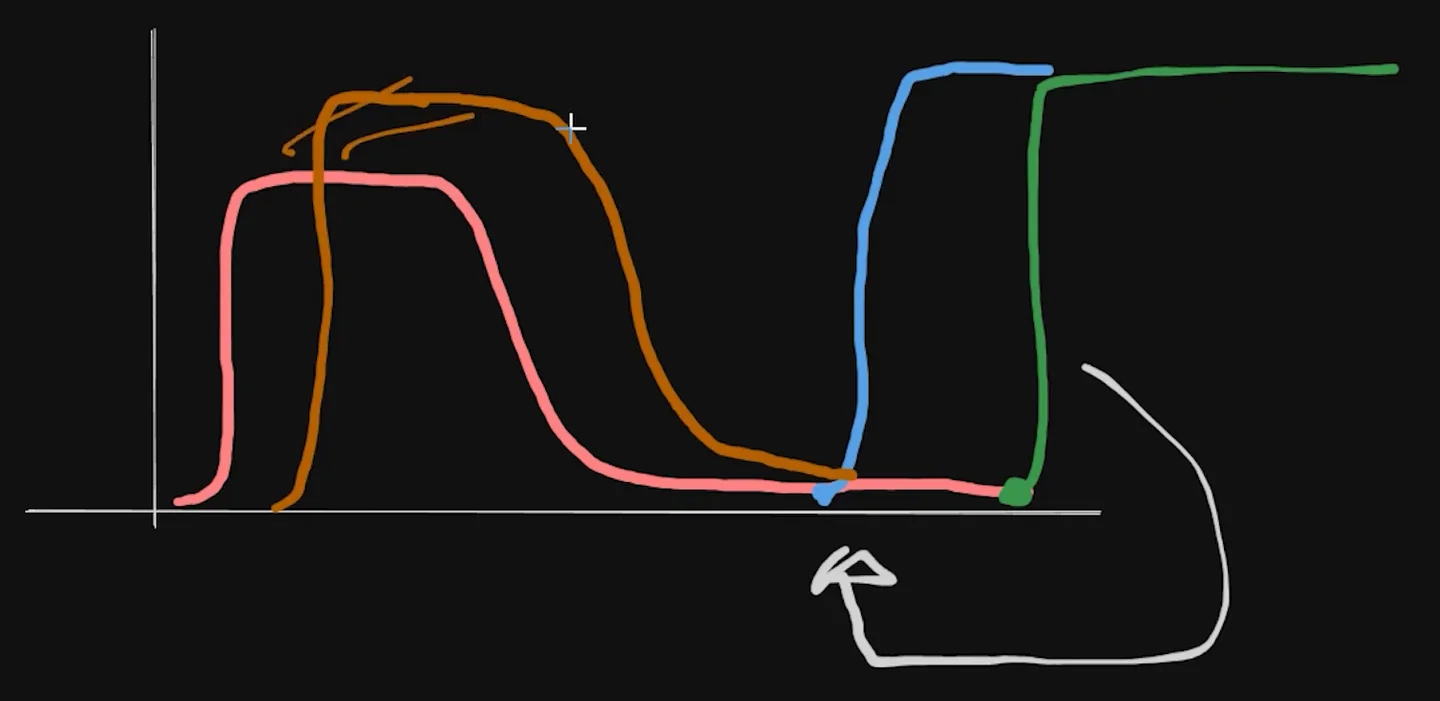
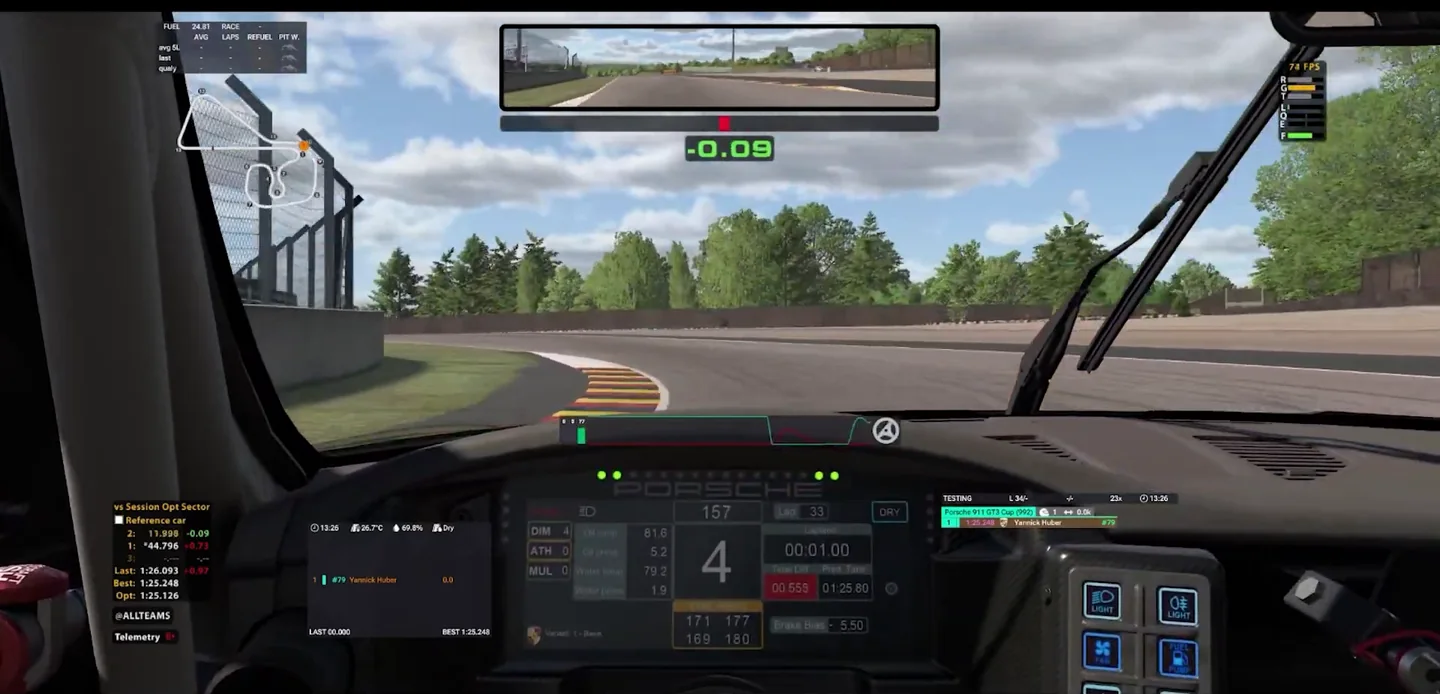
That bottom row is the lesson. Smooth is not the same as fast, and a driver who has learned to be smooth can plateau there for a long time without anything obviously wrong to point at.
Be careful about generalising the change. "Brake later and harder" is what this driver needed in this car at this corner. In plenty of GT3s, in low-grip conditions and in downhill braking zones it can be the wrong instruction, because a big initial hit is exactly what breaks the corner, and even in a rear-engined car like Yanik's it is a corner-by-corner call. The tools are the point; the specific combination is car- and corner-dependent. In a formula car the big initial hit is the norm rather than the exception — the Formula sim racing guide explains why the brake trace there is a decaying triangle.
So should you brake earlier or later?
I have coached the exact opposite correction.
Another student, Jason, was braking too hard on entry — deep into ABS, front tyres saturated, car refusing to rotate when he turned the wheel. His fix was to brake earlier and softer.
Yanik's fix was to brake later and harder. (Later and harder was the right prescription for him; how to move a braking point later in general, without losing the corner, is its own guide.)
Same coach, same technique, opposite instructions — because they had opposite problems. Jason was overloading the front and preventing rotation. Yanik was underloading it and never generating rotation in the first place.
This is why generic advice eventually stops working. One video says brake later, another says brake earlier. One says trail brake more, another says less. All four are correct for somebody. Technique advice is diagnosis-dependent, and without the diagnosis you are picking at random.
How braking creates rotation
Briefly, because the mechanics have their own guide. Braking transfers weight forward, which loads the front axle and lightens the rear. Steering turns that balance shift into a change of direction. How you release the brake governs whether that rotation continues or stops.
For the technique itself rather than the diagnosis, how to trail brake in sim racing covers the release, and trail braking explained covers why it works at all.
Downshifts as a rotation tool
Sharper downshift timing was part of Yanik's fix. Engine braking adds deceleration through the driven axle and shifts the balance, which can help the car turn.
How much it helps depends on the car and the corner. Drivetrain, gearbox, engine-braking setting and differential all change what a downshift does to the balance, and a slow corner with several downshifts in the braking zone gives you far more to work with than a fast one with a single shift or none. It can also unsettle the rear badly if the timing is wrong, and bumpy or downhill braking zones and low grip make that more likely. That is why this is a tool rather than a trick: use it deliberately, in a car you know, and back it out if the rear starts arriving before you asked it to.
Listen to the tyres
This is the diagnostic I like most from that session, and it needs no software at all.
We spent a lap with Yanik focused purely on the sound of the tyres, listening for interruptions — points where the car went quiet. If the tyres are silent through part of a corner, you are under the limit there.
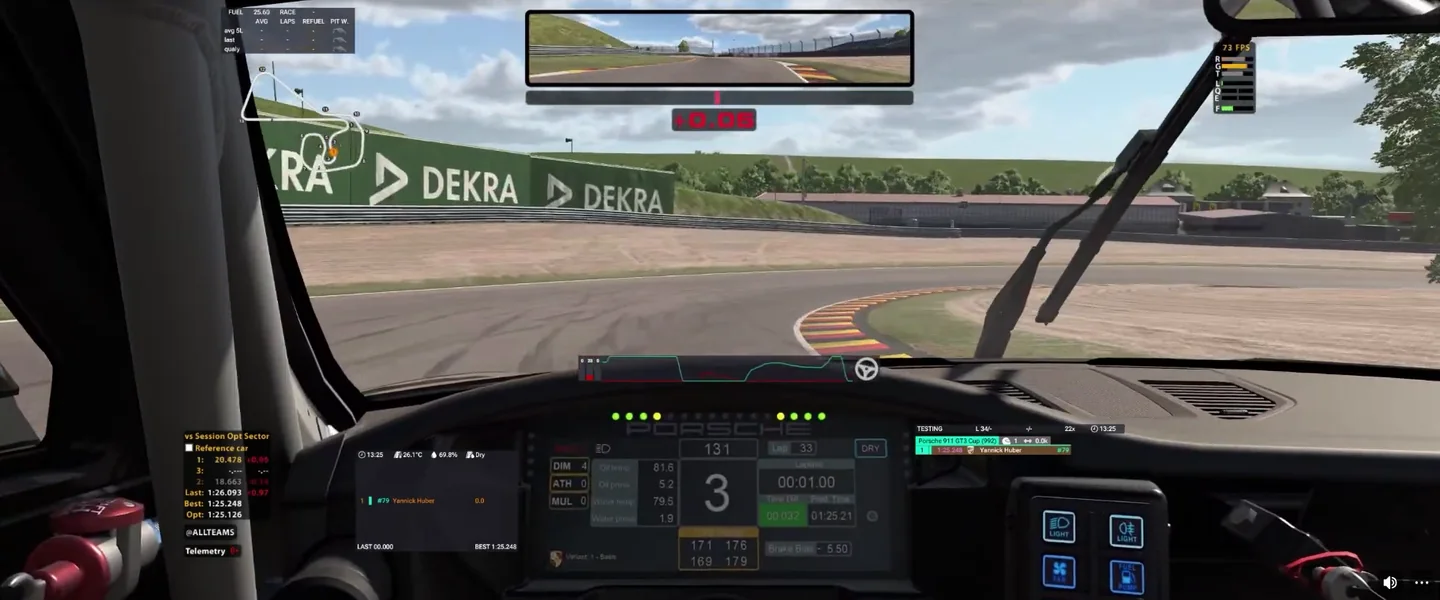
That is a genuinely useful signal because it is available in real time, while telemetry is something you look at afterwards. It also reframes what "smooth" means: silence is not automatically good driving. It can just mean unused grip.
The honest version of this is not that the tyres should scream everywhere. It is that you should learn what increasing slip sounds like in your sim, and use it alongside the wheel, the visual cues and the data rather than instead of them. More laps of that shape, one variable at a time: five sim racing drills.
Learning what the peak sounds like is really learning where it is, and how much more the tyres had to give is something you can bracket deliberately in one corner rather than infer over a stint.
Signs you are overusing trail braking
- You are still braking deep into almost every corner.
- Your throttle consistently arrives later than the reference.
- The car does not point at the exit until very late.
- Your brake trace looks smooth but your delta still goes the wrong way.
- You are relying on brake pressure to keep the car turning.
- There is a long, slow middle phase to your corners.
- You rarely feel real rotation during the initial braking.
- Every corner looks like the same trail-braking technique.
That last one is the tell. Corners differ — elevation, radius, what follows them — so if your approach to all of them is identical, you are applying a technique rather than reading a corner.
When the rotation is not in your technique
One setup lever changes entry rotation directly rather than through technique. Brake bias decides how much braking work each axle does, and a car that will not turn on the brakes is sometimes a car asking its front tyres to do all of it. When the rotation you need is not one technique can supply, the sim racing setup troubleshooter gives the ordered setup changes — anti-roll bar, springs, toe, differential — for entry, mid-corner and exit rotation on two real cars.
Rotation is one piece of car control, and it only behaves when your braking, steering and throttle are each doing their own job. The steering's own job, phase by phase — and the tell that it is being used to make up for rotation that should have come earlier — is in sim racing steering technique. The driver training courses take those three as one system, if what you are missing is the whole skill rather than one habit. In a GT3 specifically — where ABS, traction control and 1,300 kg change what each of those inputs does — the GT3 driving guide walks through rotation with the same three-input framing.
Yanik did not need another trail-braking tutorial
He already knew how to trail brake. He was better at it than most people reading this. What he needed was somebody to tell him he was doing too much of it.
That is where generic guides run out. Once you have the fundamentals, getting faster stops being about learning more techniques and starts being about working out which one you are misapplying in your own lap — and that is very hard to see from inside the car, because it feels like driving well. Those fundamentals are the twelve driving techniques, in the order they depend on each other; Yanik's lap is what misapplying one of them looks like once all twelve are in place.
It is exactly what the weekly lap reviews in the GitGud Racing Academy are for: send a lap, a coach goes through it corner by corner, and you get the one habit costing you most plus something specific to drill before the next one. Brake earlier or later, trail more or less — the answer depends on your lap, and that is the part nobody can hand you in a video.
Car rotation FAQ
What does car rotation mean in sim racing?
How quickly and effectively the car changes the direction it is pointing, toward the apex and then toward the exit. It is not a synonym for oversteer and does not mean sliding the rear. A well-rotated car points toward the exit earlier, needs less steering later in the corner, and can go to throttle sooner. If you are still actively working to make the car turn halfway through a corner, the rotation did not happen when it should have.
How do you get a car to rotate more?
First work out why it is not rotating: too much entry speed, the wrong line or turn-in point, too much brake at turn-in, too much steering lock, or setup — the quick check matches each to its symptom. If the cause is relying on a long trail brake to manufacture rotation, create the rotation during the first, heavier phase of braking instead. For one student in a Porsche 911 GT3 Cup that meant braking later and with more initial aggression, which shifts weight onto the front quickly and lets the rear go light, plus sharper downshift timing. That combination is car- and corner-dependent: a driver braking too hard on entry needs the opposite, earlier and softer. Either way, the aim is to arrive at the apex already pointing at the exit.
Can you trail brake too much?
Yes, and it is a mistake that only appears once your technique is already good. Trail braking is meant to create the rotation the corner needs, not to be maintained because the rotation never happened. A driver who depends on it for almost all of the rotation holds the brakes far longer than the corner requires, and every corner ends with him waiting to get back to throttle — worth close to a second a lap in one real case.
Why am I always late getting back to the throttle?
Often because it is not an exit problem at all. If the car has not rotated enough early, you need the brake to keep rotating it, and while you still need the brake you cannot commit to acceleration — so the throttle waits. The delayed throttle is an entry shortfall showing up two phases later, which is why the fix is rarely getting on the throttle sooner and usually creating the rotation earlier.
Can telemetry look perfect and still be slow?
Yes. Smooth, progressive, well-structured trail braking looks correct in an overlay and can still be wrong for the corner. The useful question is not what shape the trace has but why you still need that much brake, that late. An overlay can tell you the throttle came three tenths later than a reference lap; it cannot tell you the cause is a rotation shortfall two phases earlier.
How do I know if I am overusing trail braking?
The pattern is consistent: you are still on the brake well past the apex, the car needs constant manipulation to keep turning through the middle of the corner, the throttle always arrives later than you would like, and the trace itself looks smooth and controlled the whole time. Perfect-looking inputs plus a late throttle is the specific combination, because nothing in the data looks like a mistake.
This guide is part of the free library at GitGud Racing Academy — an online sim racing academy built around weekly lap reviews, structured courses, drills and training tools.
Train this the right way
Reading is step one. Build it into muscle memory with structured, car-specific courses and personal lap reviews from a coach — inside the Academy.
Join the Academy · $39.99/mo incl. VATWatch the full video on YouTube