Trail Braking Explained: You've Been Learning It Backwards
If you've been searching for trail braking explained and coming up empty, I'd bet the reason it hasn't clicked is that you've been copying other drivers' braking traces without understanding what actually produces them. I've worked with thousands of sim racers, and that single mistake — chasing the shape instead of the cause — is the most common reason good drivers plateau.
In this article I'm going to flip the whole learning sequence around. By the end you'll understand why exits are the only thing that matter when you brake, how to reverse-engineer a clean braking trace from the exit backwards, and a concrete two-drill process for locking in the technique yourself.
Why Copying Pro Braking Traces Doesn't Work
The next time you load up a reference lap, notice how much time that driver actually spends on the brakes versus how much time they spend flat on the throttle. The throttle phase is almost always longer. Exits are longer than entries — that's true for the vast majority of corners on any circuit.
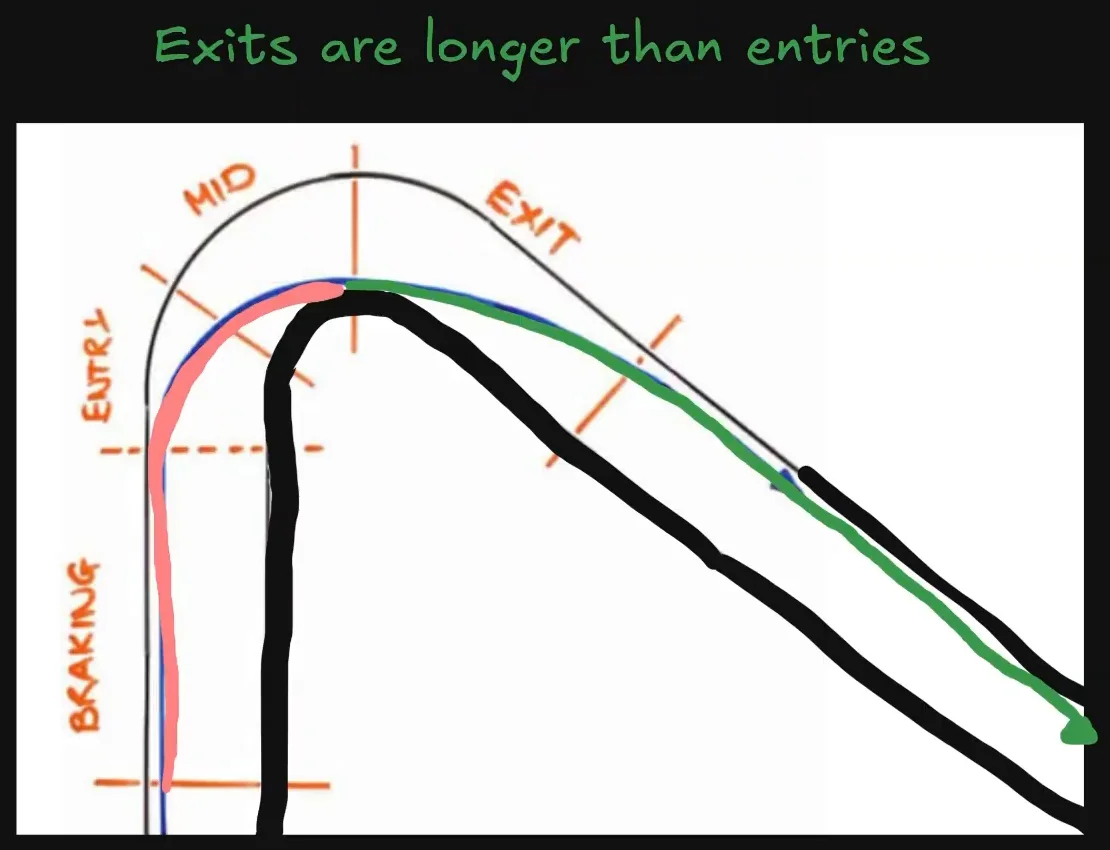
So why do we brake? The only reason we brake is to facilitate a good exit. Full stop.
When you copy a pro's braking point, peak pressure, and release ramp, you're copying every decision they made to produce their exit. They're driving at the absolute limit. One tiny error on your part and the whole chain collapses — you'll arrive at the exit phase carrying either too much or too little speed, and the corner falls apart. There are too many variables to copy it precisely, and you don't have their feel for when it's working.
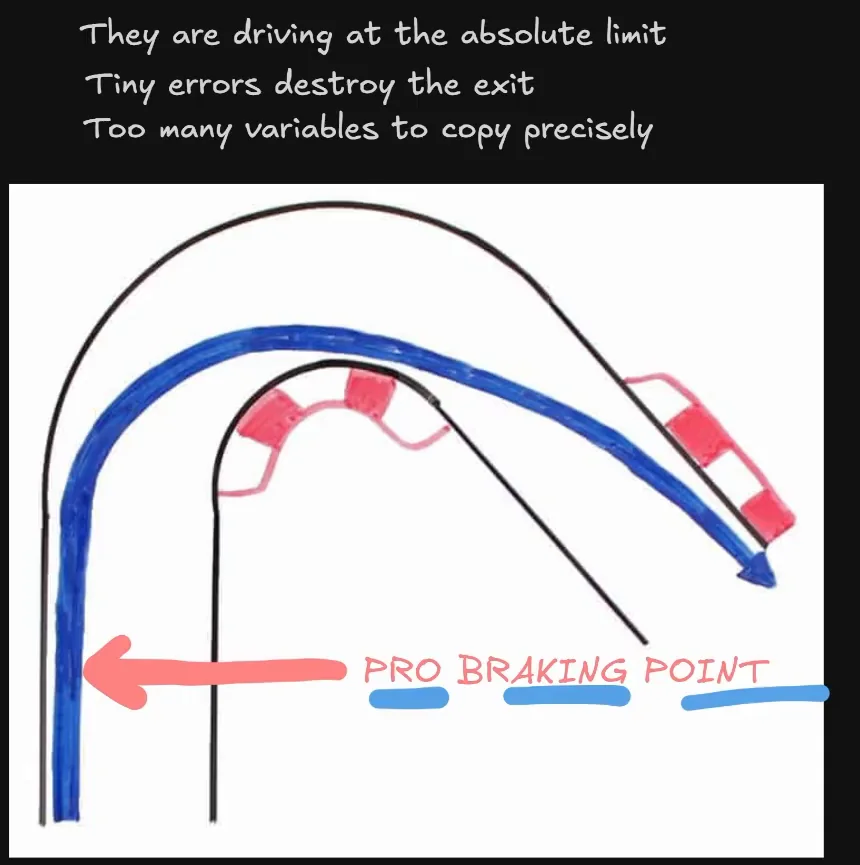
Treat braking as a black box, judge it entirely by the quality of the exit, and you'll learn to brake faster than any telemetry overlay will ever teach you.
This is a counterintuitive idea, but it's the foundation of everything I teach: to get better at braking, you need to temporarily stop thinking about braking at all.
What a Good Exit Actually Looks Like
Before you can reverse-engineer your braking, you need a precise definition of what you're trying to produce on the exit. There are three things that must happen at the same time:
- Single, committed throttle application. Press the throttle once. No dab-and-lift, no modulations at the bottom of the pedal, no second-guessing. If small adjustments happen, they should be at the top end of the pedal — near full throttle — not at the point of initial application.
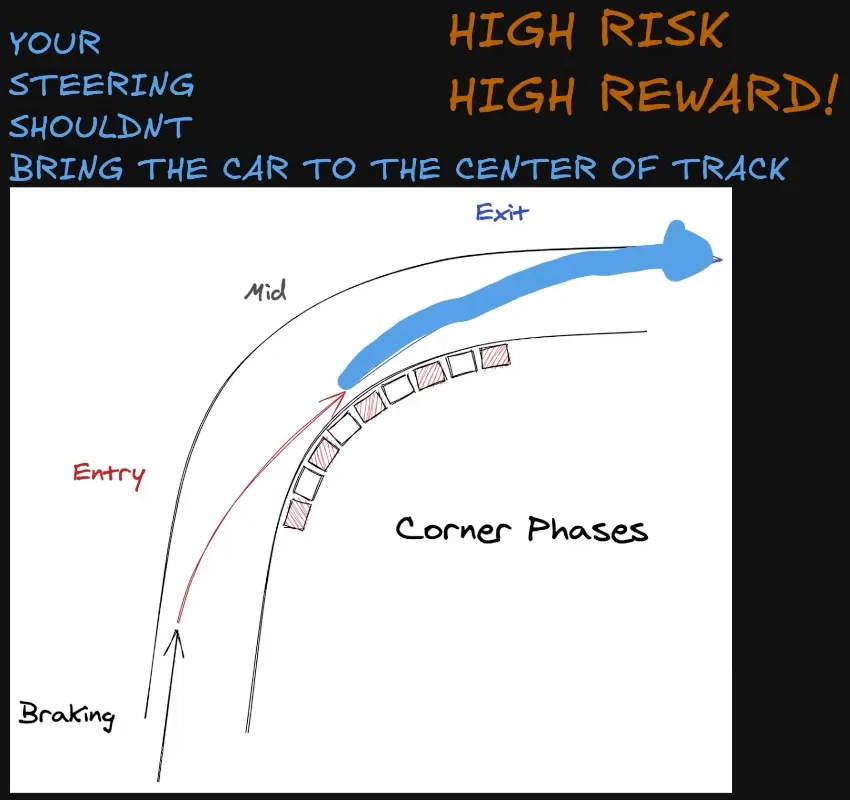
- Using all the track width on the exit. If you press the throttle and the car stays in the middle of the track rather than pushing all the way to the outside edge, you're not carrying enough speed. The car should naturally want to run wide — you shouldn't be able to steer it back to the center. Test this: if you deliberately try to steer toward the inside mid-exit and the car actually goes there, you're leaving time on the table.
- Unwinding steering angle from the apex. You want maximum steering angle at the apex and then a steady unwind as you open the car up. Do not add steering on the exit. If you're adding lock mid-exit, the car is scrubbing speed and you have a braking problem upstream of the apex.
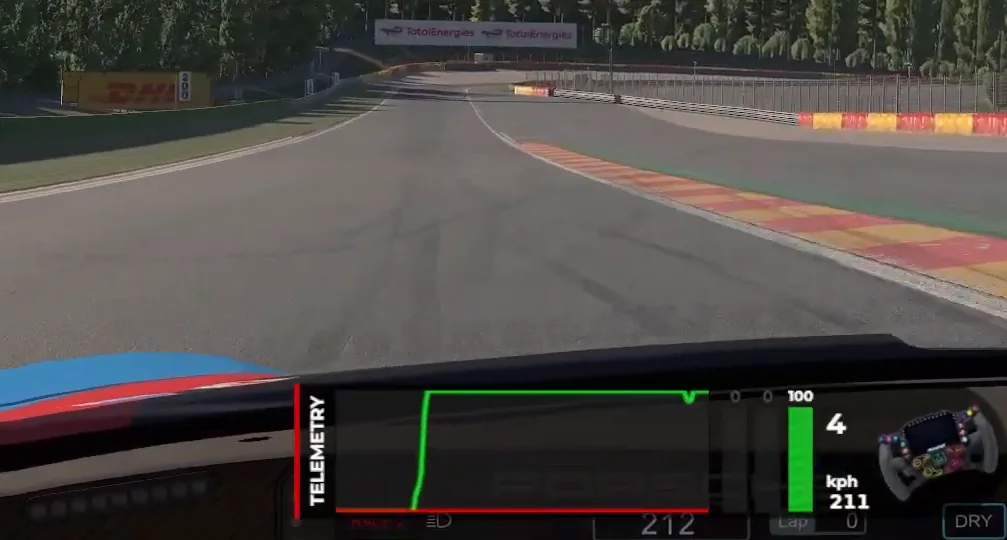
Get all three of those happening consistently and you will — automatically — end up with a clean braking trace. Not because you copied one, but because you earned it.
The Three-Phase Braking Framework
Once you have a clear picture of what a good exit looks like, here's how I structure the approach to any corner:
Phase 1: Brake Early, Treat It as a Black Box
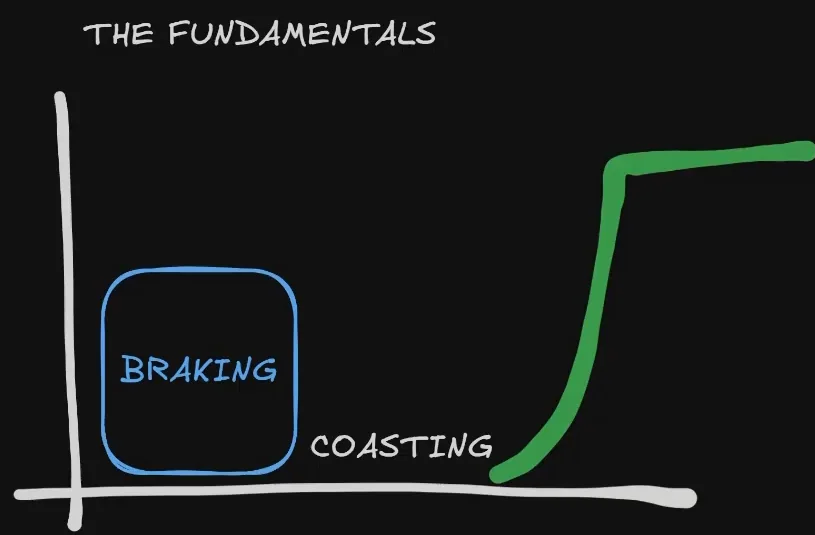
Move your braking point significantly earlier than you think it needs to be. The exact shape of the brake trace in this phase genuinely does not matter right now. You can even coast briefly toward the corner. The only requirement is that you don't miss the turn-in and that you arrive with enough composure to attack the exit. Don't obsess over peak pressure or how fast you hit it — that comes later.
Phase 2: Use Every Metre of Track Width
Through the corner, the car should consume all available road on the exit. If you can keep the car in the centre of the track while pressing the throttle, you are not driving the exit at the limit. Push until the car wants to go to the outside kerb. High risk, high reward — but the whole point of braking early in Phase 1 was to give yourself the margin to be aggressive here.
Phase 3: Press the Throttle a Blink Earlier Each Lap
Once you have a stable exit that satisfies Phase 2, bring the throttle application forward by the smallest increment you can manage — almost a blink of an eye earlier. Ask yourself: does the car still stick? Do I still use all the track? Do I still unwind the steering? If yes, you've just extended your effective straight. Do it again next lap. This is how lap time is actually gained: making straights longer, not making braking later.
Straight-Line Braking: The Efficiency That Earns a Later Braking Point
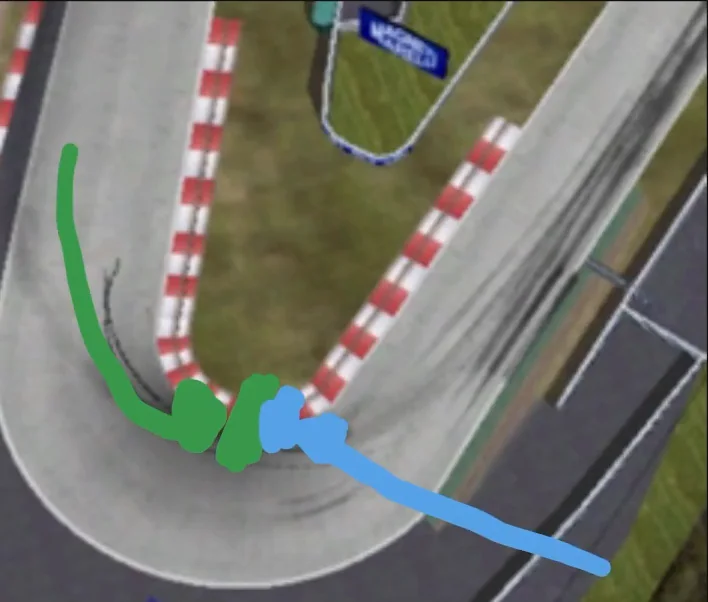
Once your exits are consistent, the next step is to close the gap between your braking point and a pro's. You won't do that by copying their reference — you'll do it by becoming more efficient at stopping the car in a straight line. Every mistake under straight-line braking costs you distance, which means you have to start braking earlier than you otherwise would.
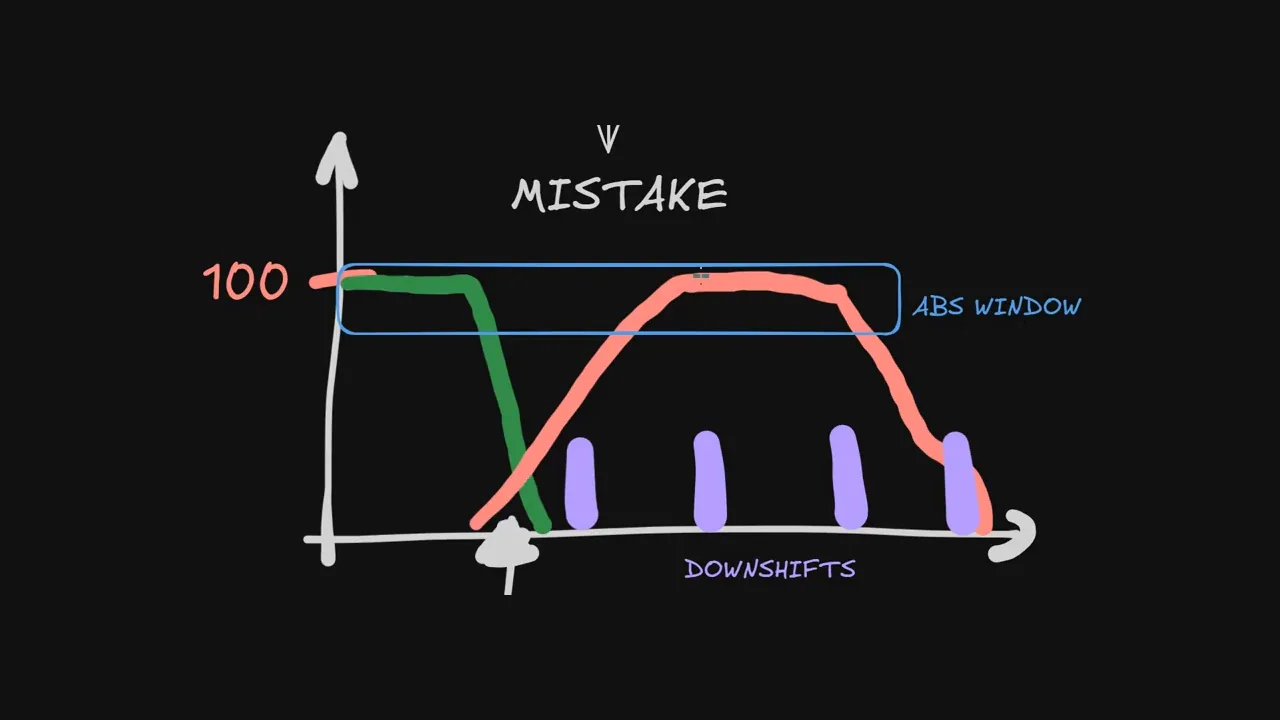
There are four of them, and they all show up in the same drawing: releasing the throttle and applying the brake at the same time, which fights the car's balance as well as overheating the tyre; a slow ramp to peak pressure, which wastes distance (and if hitting the same peak twice is the hard part, that is usually the pedal rather than you — the stiffest setting was not the fastest when I measured it); living in the upper end of the ABS window, which the GT3 sim racing guide shows is where the safety net starts costing you a lazy turn-in; and hesitant first downshifts, which leave engine braking on the table.
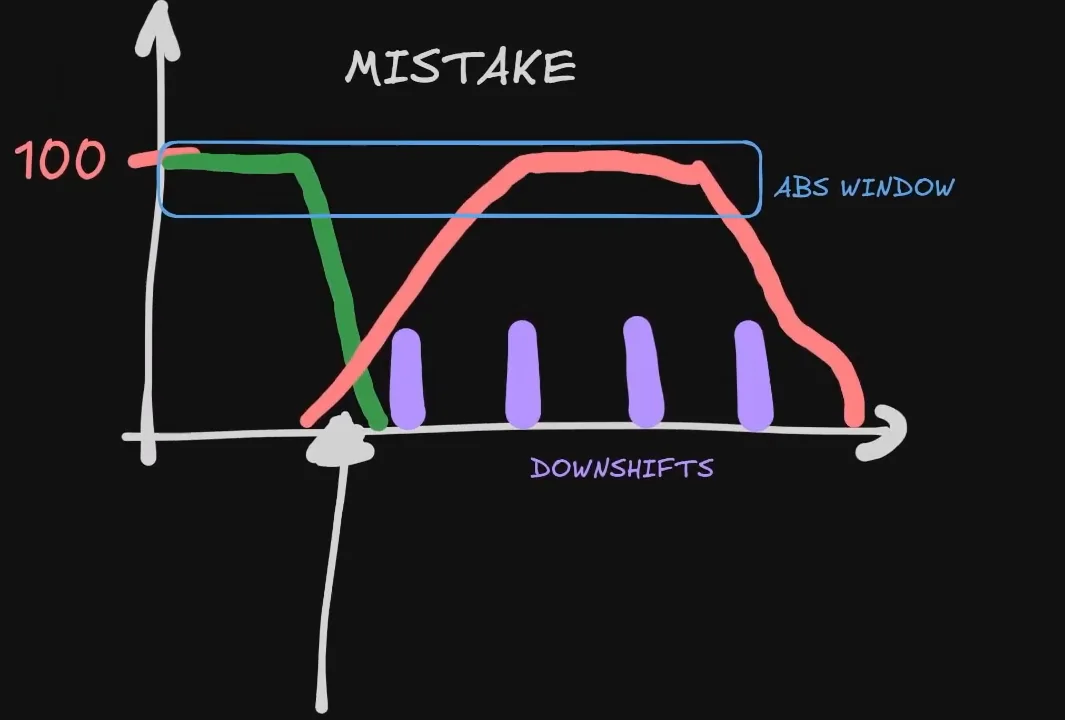
That is as far as this page takes it, because it is a different skill from the one this page is about. If the problem is that you simply cannot stop the car in the distance the reference driver does, see how to brake later in sim racing, which covers each of the four in depth — the ABS threshold, peak pressure, overlap, downshift timing — and the step-by-step way to move the marker once the braking zone is efficient. Efficiency under braking is what earns the right to brake later; you cannot buy distance with aggression alone. What happens after the peak, the release that produces rotation, is how to trail brake, and it is the rest of this page.
Sustained Rotation: The Feel You're Chasing
There's a physical sensation that ties the whole framework together, and I call it sustained rotation. From the moment you release significant brake pressure and begin to unwind the steering through to the point where you press the throttle aggressively, the car should feel like it is continuously rotating around its axis. A smooth, uninterrupted swing through the corner. The rotation ends naturally when the throttle goes in and car speed builds.
If the car is understeering — pushing wide, refusing to rotate — the fix is simple and most drivers get this backwards: brake earlier and softer. I know it feels counterintuitive. But if you're triggering ABS or pushing past the grip limit on entry, the front tyres are locked up intermittently and can't generate the cornering force needed to rotate the car. Backing off the entry preserves tyre grip and actually produces more rotation, not less.
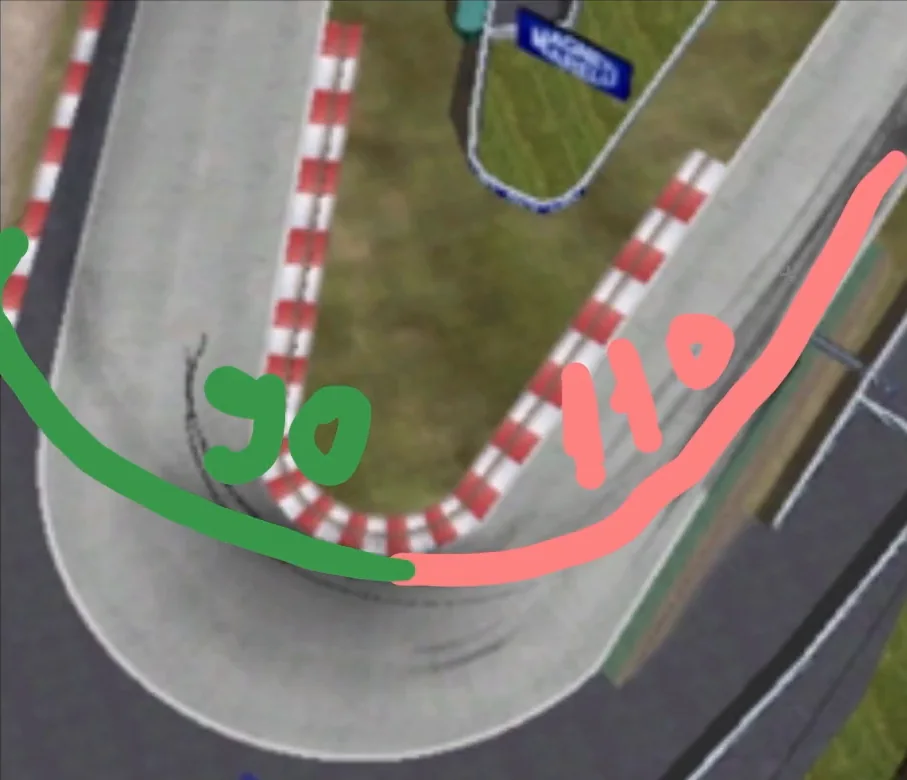
The feel you're looking for is a light steering wheel and a faint sense that the car is slightly prone to snap oversteer as you trail the brakes. If you have that feeling, you have sustained rotation. Your force feedback will tell you — the car feels alive and willing to turn rather than planted and pushing. If you can't tell which of the two it is, book a 1-on-1 session and let a coach watch your inputs.
If sustained rotation is absent, your number one tool before touching anything else in the setup or the technique is to brake earlier and softer. Get the rotation consistent first, then work Phase 3 — pushing the throttle earlier — to find lap time.
Putting It All Together
The sequence is: exits first, straight-line braking efficiency second, earlier throttle application third. Your braking trace is the output of that work, not the starting point. That sequence sits inside a longer one: in the twelve driving techniques the brake release is fourth, and it's not worth attacking until the three before it are repeatable.
Do not look at a pro's peak pressure and try to match it. Do not study their initial application ramp or their release modulations. All of that is the product of feel — feel that is calibrated to produce their specific exit at their specific level. Build your own exits, and your braking will organically converge toward something that looks a lot like theirs — because you'll have built it from the same underlying logic they use, not from copying the surface.
Once trail braking is consistent, the next question is how much of it each corner actually needs — it is possible to do it well and still do too much of it, which costs a driver rotation and delays the throttle.
Pick one corner this session. Brake early enough that the exit feels almost boring. Get the three exit criteria locked in: single throttle press, full track width, unwinding steering. Then start pushing the throttle earlier, one small increment at a time. That corner will be half a tenth faster by the end of the session, and you'll understand exactly why.
Trail braking FAQ
What is trail braking in sim racing?
Trail braking is the technique of carrying a little brake pressure past the corner entry and releasing it gradually as you turn in, rather than finishing all your braking in a straight line. That trailing pressure keeps weight over the front tyres, which sharpens turn-in and helps the car rotate toward the apex. Done well, it shortens the corner and lengthens the straight that follows.
Does trail braking make you faster?
Yes, when it serves the exit rather than being an excuse to brake later. Trailing the brakes keeps the front tyres loaded through entry so the car rotates and you reach throttle sooner, and the lap time comes from the longer straight after a good exit. Brake earlier and trail softly until your exits are repeatable, then start pushing the entry.
Why does trail braking cause oversteer?
Trailing the brakes shifts weight forward and lightens the rear tyres, so a touch of trail-brake oversteer is normal and actually helps rotation. It becomes a problem when you carry too much pressure too deep or release it too abruptly, which snaps the rear loose. The fix is a smoother, earlier release: bleed the brake off progressively as steering angle builds so the rear stays settled.
When should you not trail brake?
Ease off trail braking in long, fast, throttle-limited corners where you are barely braking, and in low grip such as rain or cold tyres where the rear snaps easily. If the car is understeering and pushing wide on entry, the answer is usually to brake earlier and softer, not to trail harder. Trail braking serves rotation, so where there is little to rotate it adds risk without reward.
What is the difference between trail braking and threshold braking?
Threshold braking is braking as hard as possible in a straight line, right at the edge of locking the tyres, to scrub speed in the shortest distance. Trail braking is what comes next: blending that pressure off as you turn in. A good corner uses both in sequence, threshold braking on the straight part then a smooth trail of pressure to the apex.
How do you practice trail braking?
Pick one corner and brake clearly earlier than feels necessary so the exit is almost easy, then focus only on a smooth, progressive brake release as you add steering. Once the exit is repeatable, bring your throttle application a fraction earlier each lap and shorten the braking zone gradually. Building the exit first and the brake trace second beats copying a pro driver's telemetry.
This guide is part of the free library at GitGud Racing Academy — an online sim racing academy built around weekly lap reviews, structured courses, drills and training tools.
Train this the right way
Reading is step one. Build it into muscle memory with structured, car-specific courses and personal lap reviews from a coach — inside the Academy.
Join the Academy · $39.99/mo incl. VATWatch the full video on YouTube