How to Trail Brake in Sim Racing: A Practical Guide
Trail braking is the technique that separates drivers who wash wide every lap from drivers who get the car to rotate and fire off the corner. If you want to learn how to trail brake in sim racing, this is the guide I wish I'd had when I started — not theory you've heard a hundred times, but exactly how to apply it. We'll start simple and build up, with drills you can run today.
What trail braking actually does
Picture a medium-speed corner. If you brake, fully release, then turn and get on the throttle, the car pushes straight on and you run wide. Braking harder won't save it — you'll still go wide.
The reason is weight transfer. When you brake, the nose dips and the front tyres load up with grip. Release the brake quickly and all that load snaps back onto the rears — leaving you with no front grip exactly when you're asking the car to turn. Trail braking keeps the front planted while the rear stays light, and that's what makes the car rotate into the corner.
Why "just brake harder" doesn't fix it
It's not about peak force — it's about how you release. Brake hard and dump the pedal and you'll still wash wide. Brake and bleed the pressure off slowly into the corner, and the car rotates so well you can almost over-rotate it. Same braking point; completely different corner. The magic is in the release, not the initial hit. (The peak-force half — how hard, how fast to peak, where the ABS threshold is — is a different skill, covered in how to brake later.)
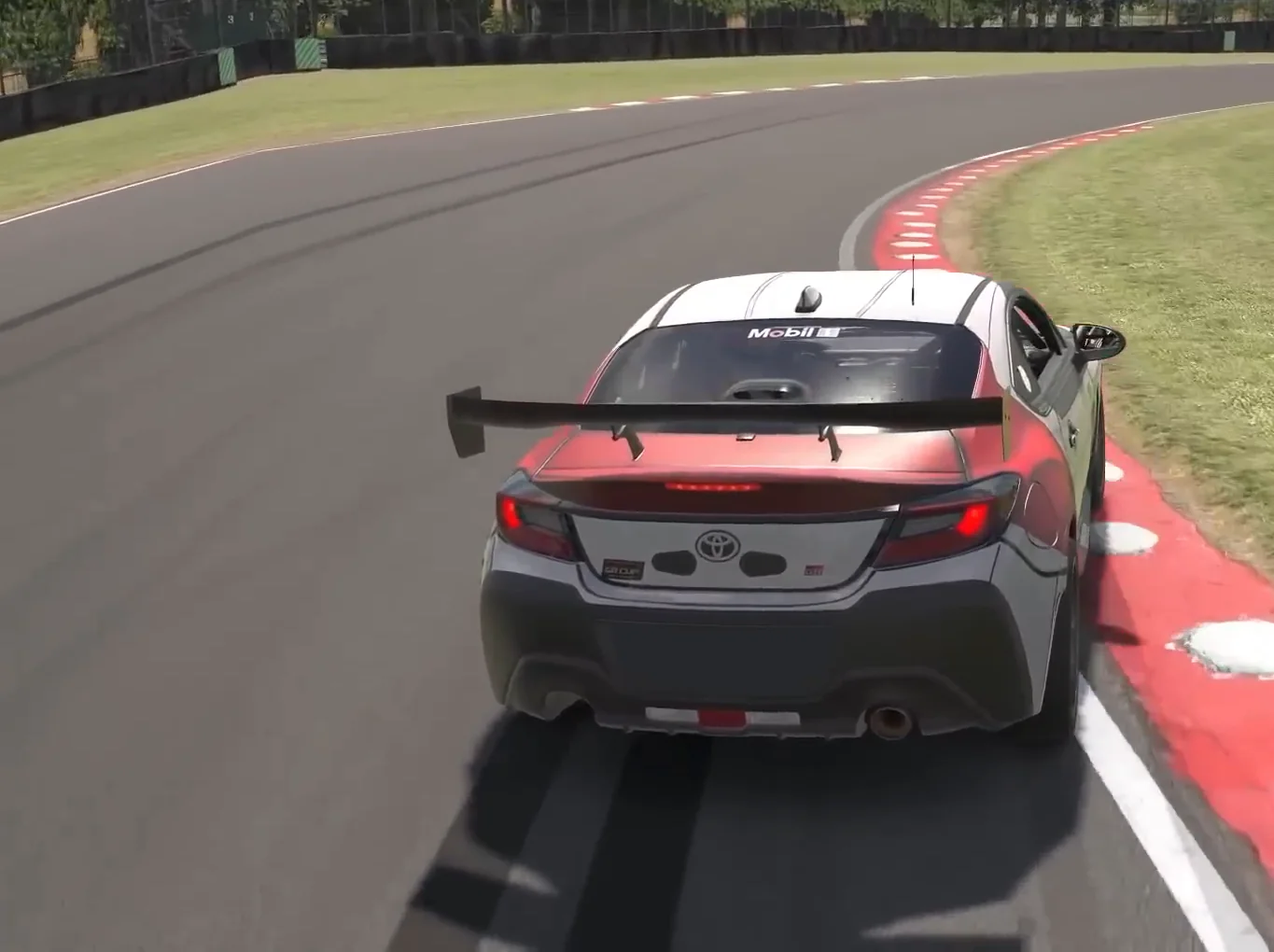
Underneath the technique is one fact about the tyre: braking and cornering spend the same budget, and the first part of the brake you give back buys the most steering — which is why a slow bleed rotates the car and a dump doesn't.
Drill 1: The steering-freeze drill
This is the fastest way to feel trail braking:
- Brake and steer once to point the car into the corner.
- Freeze your steering angle — don't add any more lock.
- Keep dragging the brake while you hold that frozen angle.
If you drop the brake, you'll run wide — which proves the brake was doing the turning. The rule: you're not allowed to add steering, because extra lock just masks the mistake and cooks your front tyres. (Where the steering should be through each phase, and how it shares the front tyres' grip with the brake, is the subject of sim racing steering technique.) Practise it on a longer, medium-speed corner (Oulton Park's Turn 1 is perfect — a chicane makes this impossible).
Drill 2: Brake–hold–go
The rhythm you're after: brake to the apex, hold to the apex, then throttle. The tell that you've nailed it — you can go to full throttle with zero corrections and still use all the track on exit. If your throttle foot is pumping up and down through the corner, you didn't get enough rotation from the brake and you're patching it with the throttle. The corner that asks for the longest release of all is a double apex, where holding the brake past the first apex is what buys you the second. Once the rhythm is repeatable, a slightly sharper, later peak in a fast corner can add a small amount of entry oversteer on purpose; that is the subject of inducing oversteer with the brakes.
You need a throttle reference, not just a braking point
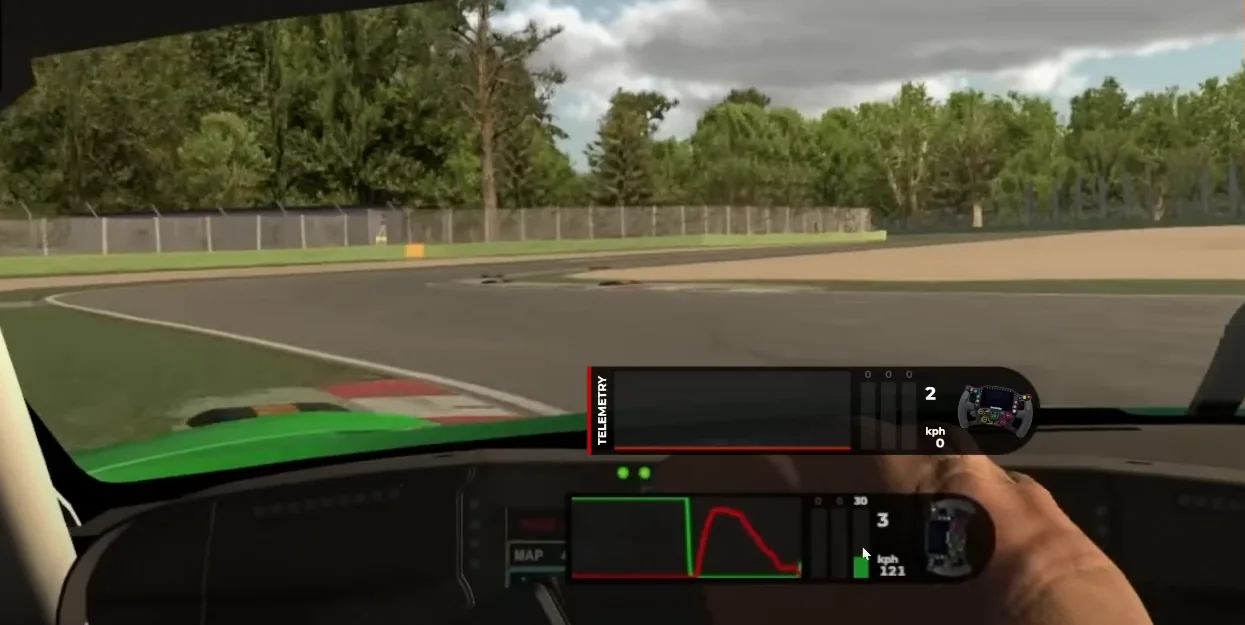
On a lot of corners the entry visibility is poor — you genuinely can't see where the corner goes. Knowing how to trail brake won't help if you release in the wrong spot. So steal a throttle reference from track guides: don't just note the braking point, note where the throttle goes down. At Imola's Turn 1, for example, the reference is the moment you reach the second black anti-curb — that's where it's 0→100 with only a tiny lift.
If it still feels wrong: earlier, softer, longer
Struggling to feel it? Exaggerate. Brake way earlier and softer, hold the brake far longer than feels natural, then go 0→100 on the throttle. You're not chasing lap time here — you're building the muscle memory so trail braking becomes automatic. Braking early buys you time to focus on the feeling of dragging the brake in. If it still feels wrong after that, you can work through it with a coach who watches you drive.
A stationary warm-up drill
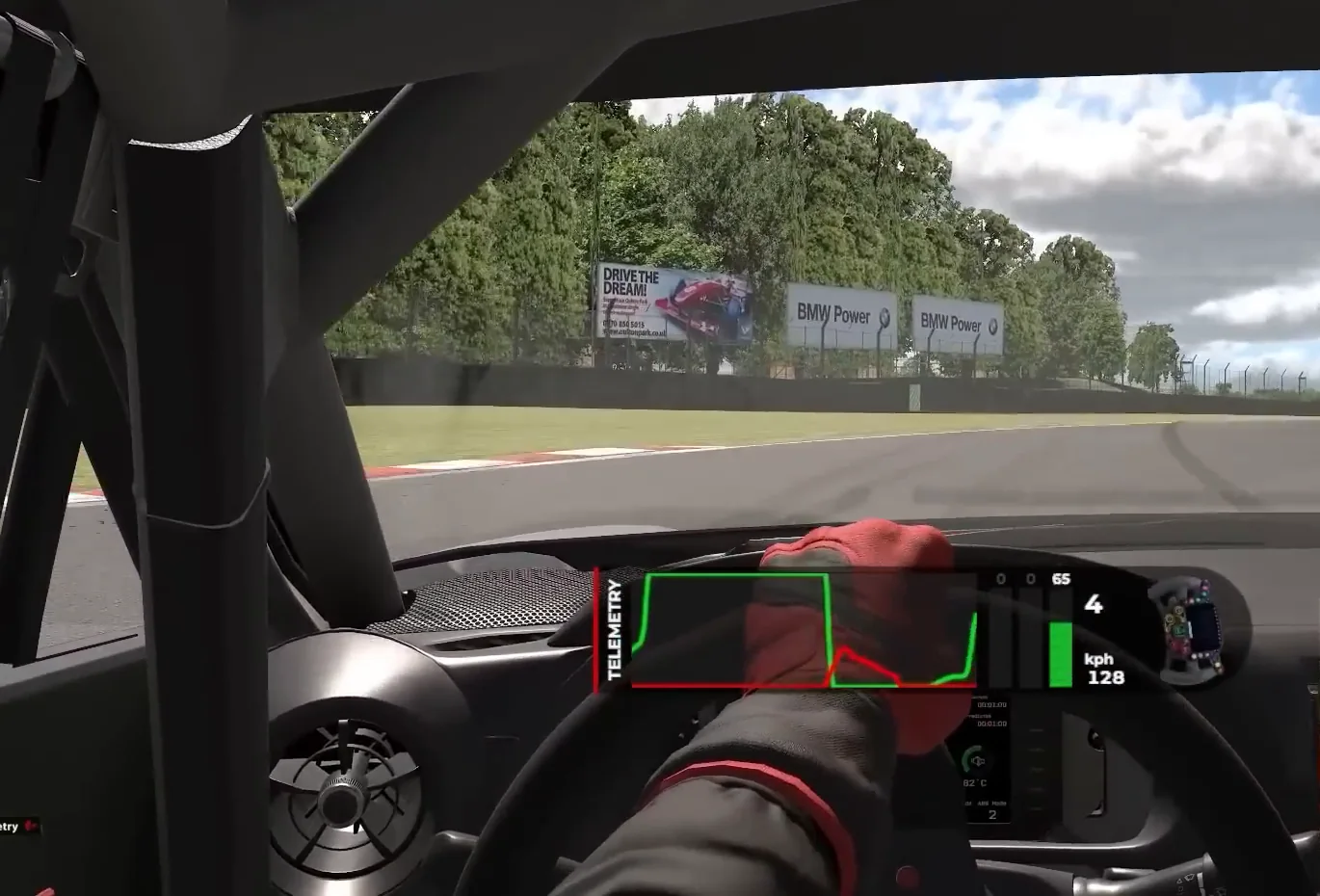
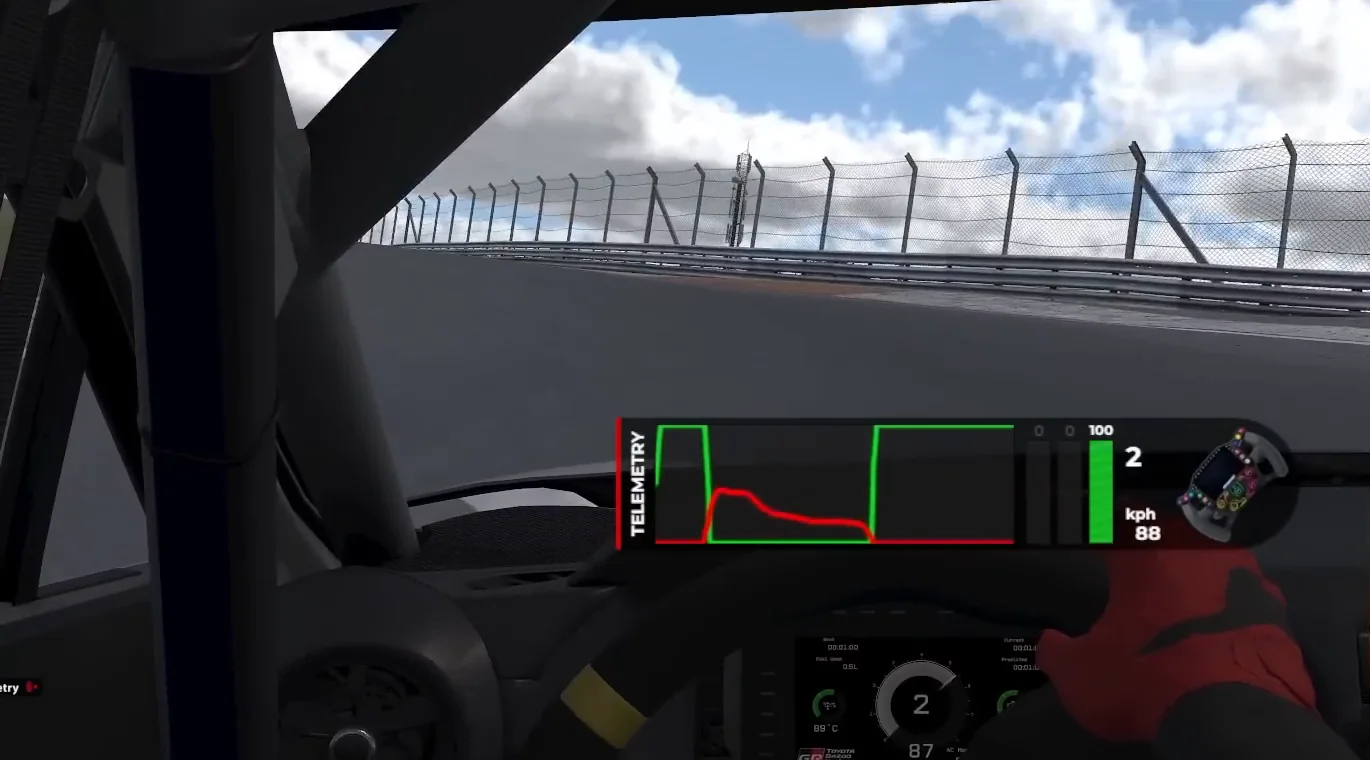
You can rehearse this parked on track with a telemetry overlay up. Mimic the brake shape: hit it hard initially, hold, then bleed it off — and practise holding the very bottom (1–3%) as an active press, not a resting foot. If you can't hold those low values smoothly, that's a sign your pedal setup is fighting you, not your technique. What trail braking looks like in a real two-lap comparison — including the ABS lines that appear when the trail is held too high — is in the telemetry guide.
When not to trail brake
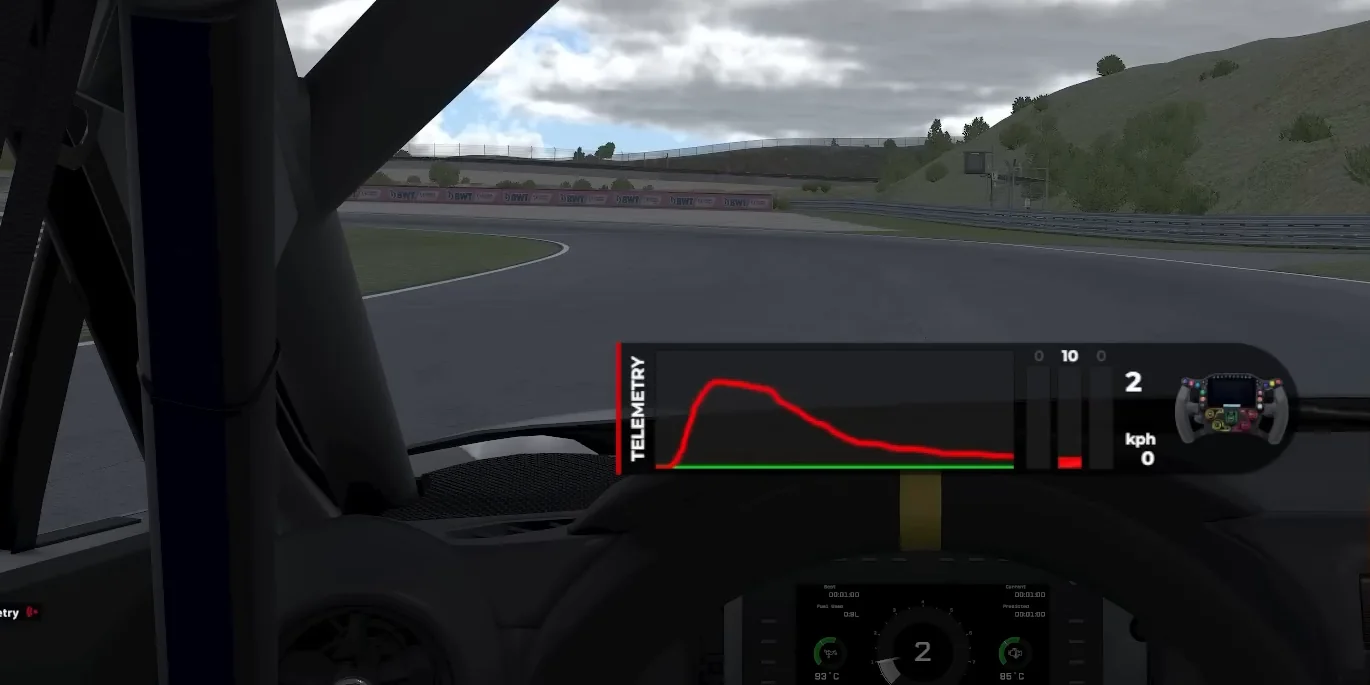
Knowing when to avoid it teaches you the technique faster. Some corners will over-rotate — keep trailing and the car spins. There, you brake, trail, release to kill the rotation, then reapply once you're past the point where the car wants to come around. In practice it's smooth: you don't drop fully to zero, just a dip in the brake trace. That's you inducing a touch of understeer on purpose to stop the rear stepping out.
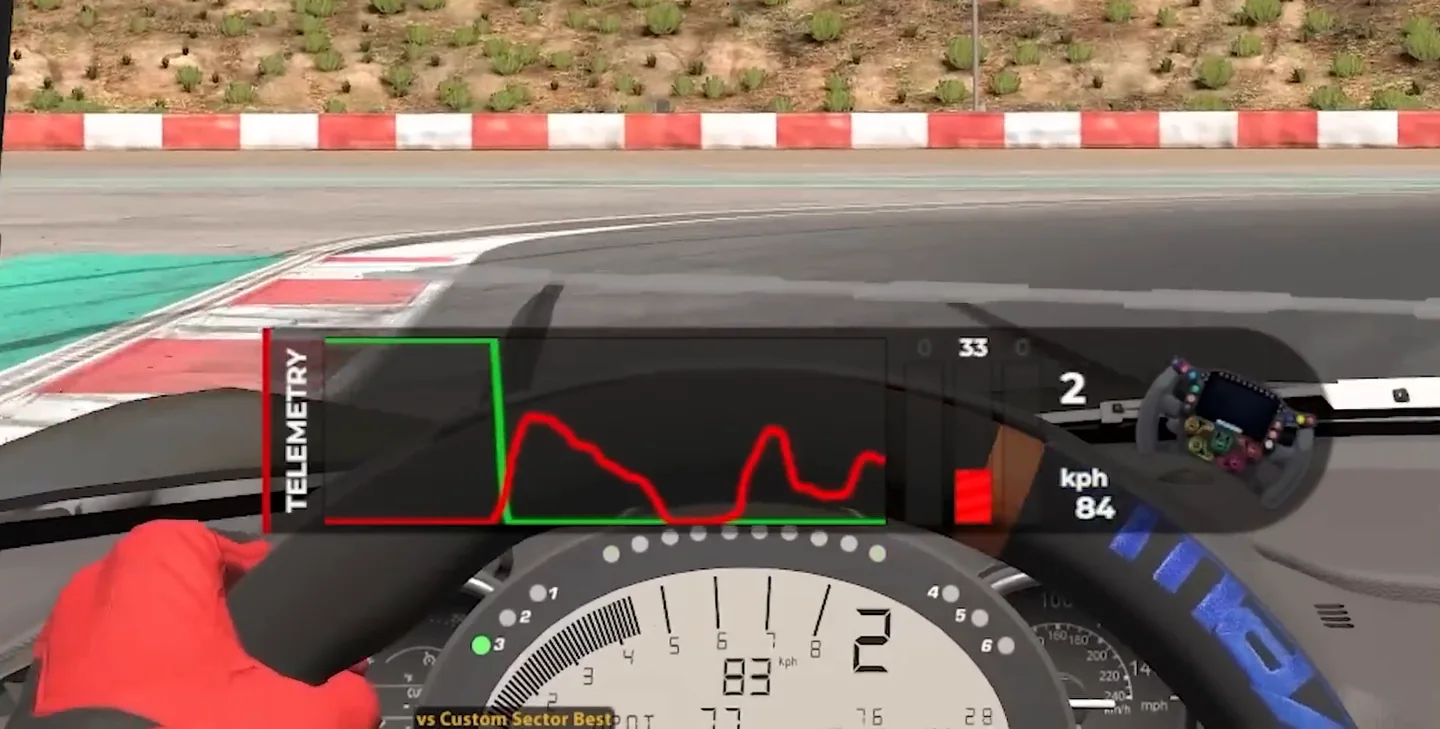
In a GT3 there is a second reason to be out of the deep part of the trail before you turn: ABS. If the pedal is still inside the ABS window at turn-in, the car answers the steering late — corner-entry understeer that feels like a setup problem and isn't. The GT3 sim racing guide draws exactly where that window sits in the brake trace.
Hard-and-drop vs. hold-and-release
Should you spike the pressure and drop into a long trail, or hold longer and release gently? It depends on the corner — don't lock yourself into one style:
- Fast corner: a sharp initial peak works well — you throw weight onto the front fast, the car rotates, and a little held pressure keeps the front engaged.
- Long corner: don't hammer the entry. You'll cook the front tyres early and then spend the whole long corner on overheated rubber.
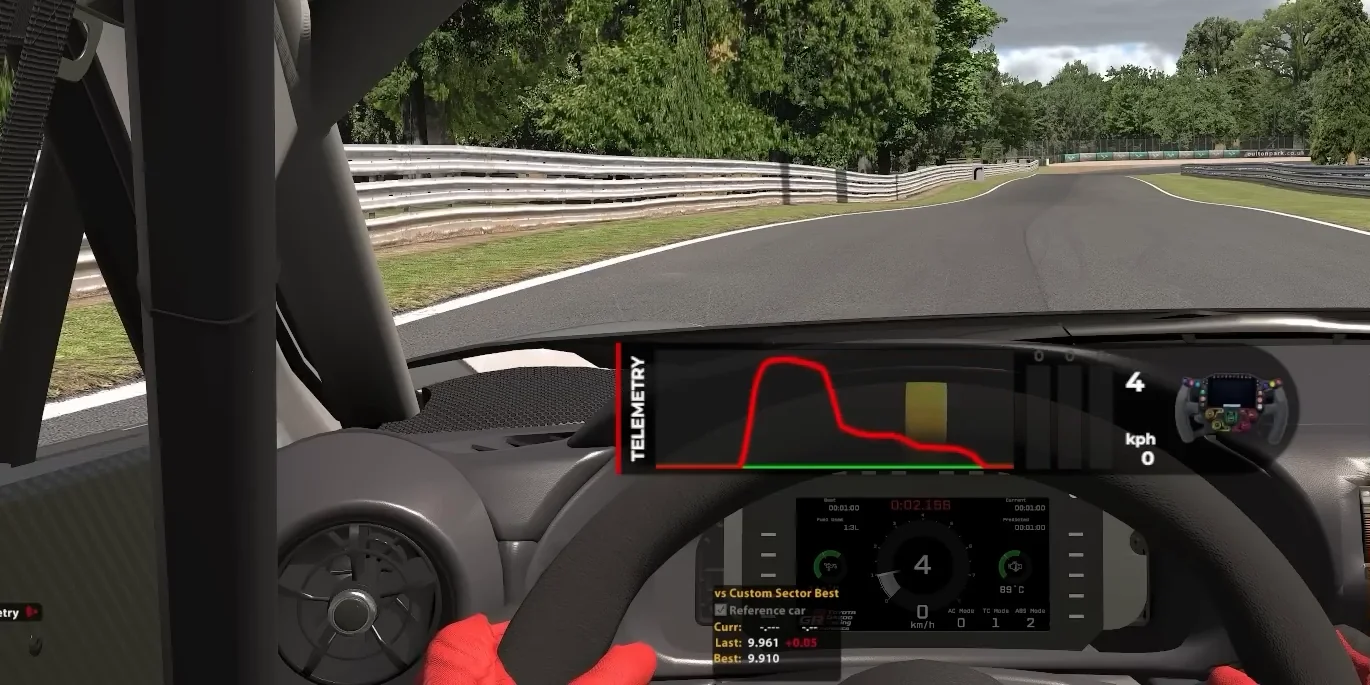
If your release is genuinely good and the car still refuses to rotate, the next thing to look at is not the technique but the split. Brake bias decides how much of the braking each axle is doing, and a strongly front-biased setup will resist you however well you trail.
Pedal setup and feel
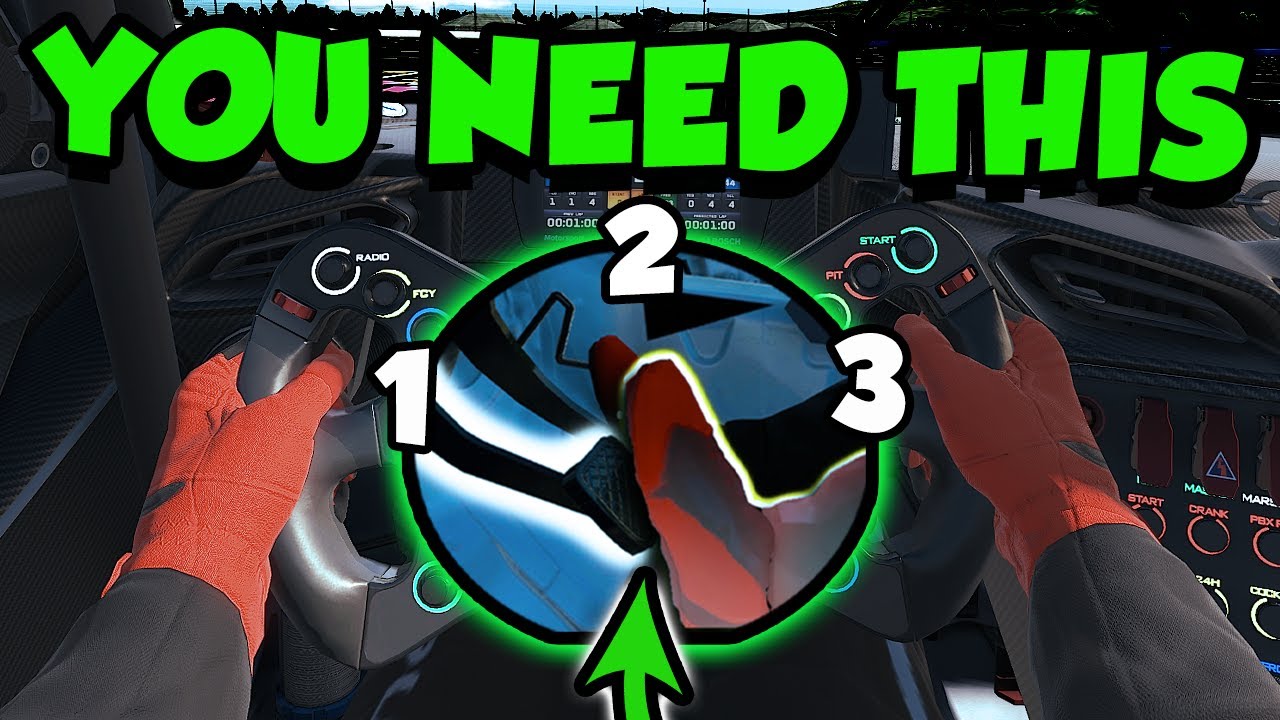
- Press with the ball of your foot, heel planted — don't lift the heel.
- The real trail braking lives in the ~20% range, so you need to feel it. A little pedal travel down low makes that intuitive — though zero-travel works for some top drivers too. It's personal preference; what matters is that you're actively engaging the pedal there.
- Fight the pedal back on release. Every percentage you give up is potential rotation you're leaving behind, so the release should be smooth and resisted — not a passive lift.
- If the pressure drops on its own when you mean to hold it, you're pushing too hard to control it — back off the force slightly so you can hold a steady value and release on your terms.
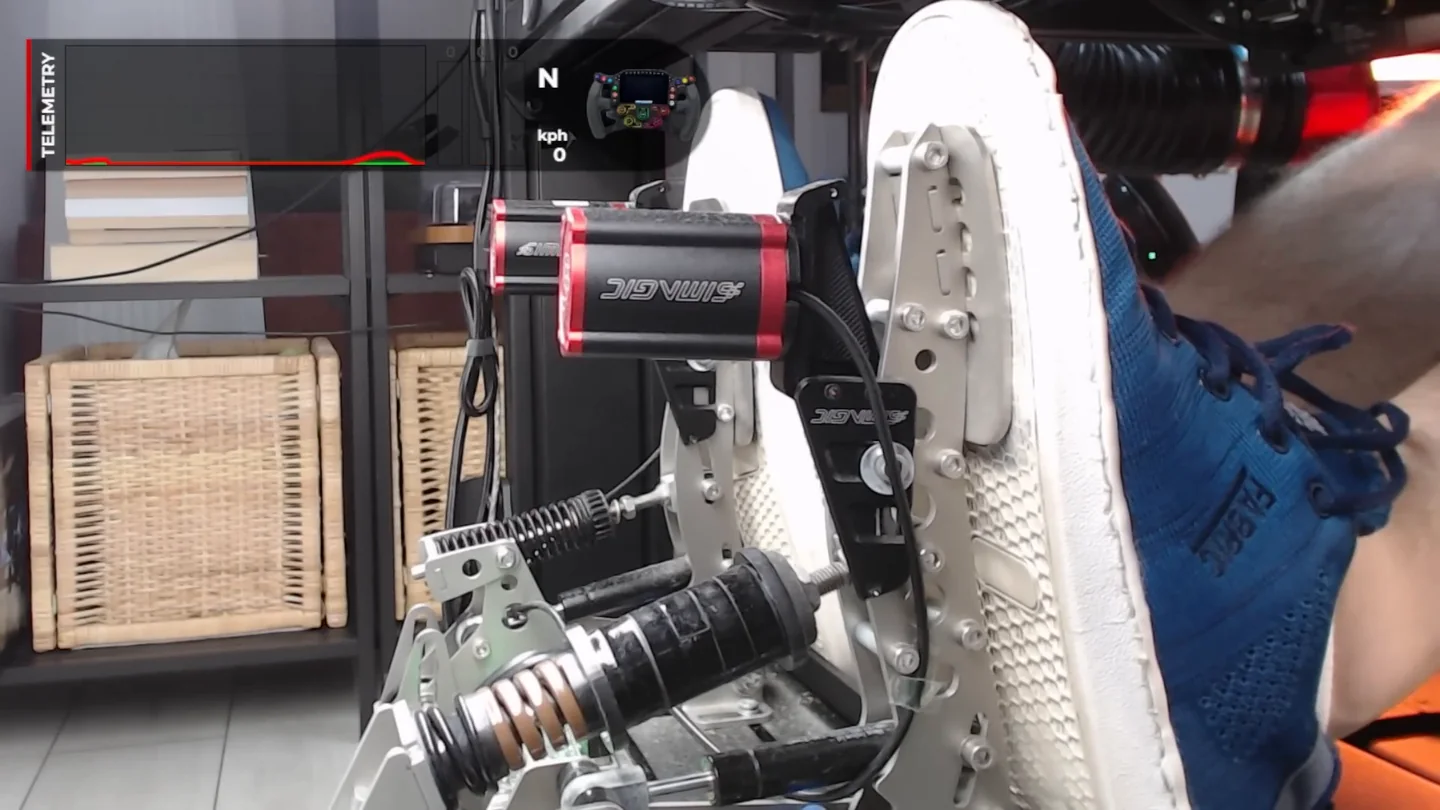
Fighting the pedal back on release assumes you have something to brace against. That bracing comes from the seat, not the wheel — if your backside lifts or your shoulders come off the backrest under load, the release is being shaped by your body moving rather than by your intent. Seat recline and pan tilt are what hold you still.
How to actually learn it: isolate, then layer
Think of a lap like a piece of music — beat, bass, guitar, all layered together. A beginner can't pick out one instrument because there's too much happening at once. Driving is the same. So strip it back: take away the steering, take away the throttle, and just focus on holding and releasing the brake. As you get comfortable, add the layers back in. The thing that makes advanced drivers advanced is that they can add everything — downshifts, aggressive steering, throttle — while still keeping focus on the one skill they're training. It's also why trail braking sits fourth in the twelve driving techniques — don't start it until your vision, line and straight-line braking are repeatable, or you're layering onto nothing.
Trail braking isn't one fixed motion you memorise — it's a feel you build. Isolate it, exaggerate it, then layer the rest of the lap back on top.
When it clicks, the next thing to watch is quantity rather than quality: leaning on the brake for too much of the rotation is a mistake that only appears once your technique is already good.
Run the two drills above for a few sessions and the feel starts to click — the car rotates on the brake instead of pushing wide, and your exits come alive. From there it's about reps: same corner, same references, until it's pure muscle memory. Once the brake foot is sorted and the question becomes where the car ends up, five sim racing drills takes over — same corner, different variable.
Trail braking is one technique inside a larger sequence — release shape, rotation, throttle timing and vision all decide whether it actually pays. The sim racing lessons cover that sequence in order, with a coach checking your execution rather than just your understanding.
How to trail brake FAQ
What is trail braking in sim racing?
Trail braking means carrying brake pressure past your turn-in point and bleeding it off gradually as you steer, instead of braking in a straight line and fully releasing before you turn. The light brake keeps weight on the nose, so the front tyres stay loaded with grip while the rear stays light, which makes the car rotate toward the apex instead of pushing wide. The skill is in a smooth, controlled release, not in how hard you hit the pedal.
How does trail braking fix understeer on corner entry?
Understeer on entry usually comes from your release, not your braking point. Brake hard then dump the pedal before turning and all the load snaps off the front tyres onto the rears exactly when you ask the car to turn, so the nose washes wide. Braking harder changes nothing. Keep a little brake pressure as you turn in and bleed it off slowly, so the front stays planted and the car rotates. Same braking point, completely different corner.
How do I trail brake in ACC (Assetto Corsa Competizione)?
The technique is identical to any sim, but ACC's GT3 cars rotate strongly on a trailing brake, so a clean release pays off. Point the car once on a longer medium-speed corner, freeze that steering angle, then bleed the brake off toward the apex. Watch the brake trace in ACC's telemetry and practise holding the bottom few percent as an active press. If the rear steps out on entry, dip the brake briefly to settle it, then reapply once the car has rotated.
Do I need a load cell brake pedal to trail brake, or will a Logitech G29 work?
You can learn trail braking on a G29 or any potentiometer pedal, because the skill is a smooth, controlled release rather than hardware. That said, trail braking lives in the low pressure range, around the bottom 20 percent, and a spring-based pedal makes those small, repeatable values harder to hold steady. A load cell reads by force, so it is easier to feel and hold the bottom few percent as an active press. The technique transfers; better pedals just make the feel clearer.
What is the difference between trail braking and threshold braking?
Threshold braking is the straight-line phase: pressing as close to maximum grip as possible without locking the tyres, to stop in the shortest distance. Trail braking is what happens next, as you ease off that pressure and carry the lighter brake into the corner to keep the front loaded and rotate the car. In practice they connect: you hit the brake hard at threshold, then smoothly bleed it off and trail the rest to the apex. One slows the car, the other steers it.
Should you trail brake in every corner?
No. Some corners over-rotate if you keep trailing the brake and the car spins, so you brake, trail in, then release to kill the rotation before reapplying once the car is past the point where it wants to come around, which shows up as a small dip in the brake trace rather than a full lift. Slow hairpins where you are stopped well before turn-in, or corners that simply do not rotate for you, need little or no trail.
This guide is part of the free library at GitGud Racing Academy — an online sim racing academy built around weekly lap reviews, structured courses, drills and training tools.
Train this the right way
Reading is step one. Build it into muscle memory with structured, car-specific courses and personal lap reviews from a coach — inside the Academy.
Join the Academy · $39.99/mo incl. VATWatch the full video on YouTube