5 Sim Racing Drills to Fix the Most Common Beginner Mistakes
Most beginner advice tells you what good driving looks like. Very little of it tells you what to load up tonight and actually do. These are five drills I give new drivers, in the order I give them, and they are deliberately narrow — each one trains a single thing, has a pass you can call from the cockpit, and runs on whatever car and track you already own.
They cover a surprisingly large share of the problems I see from beginner sim racers, because most of those problems are not exotic. They are the same four or five fundamentals, showing up in every corner of every lap. If you want the full set and the order to build them in, start with the twelve driving techniques; these drills are how you practise several of them.
One thing to say up front: none of these is a braking drill. That is deliberate. There is a lot to fix before you touch the brake trace, and trying to fix everything at once is how people spend a season getting nowhere. Braking comes after these.
How to run them
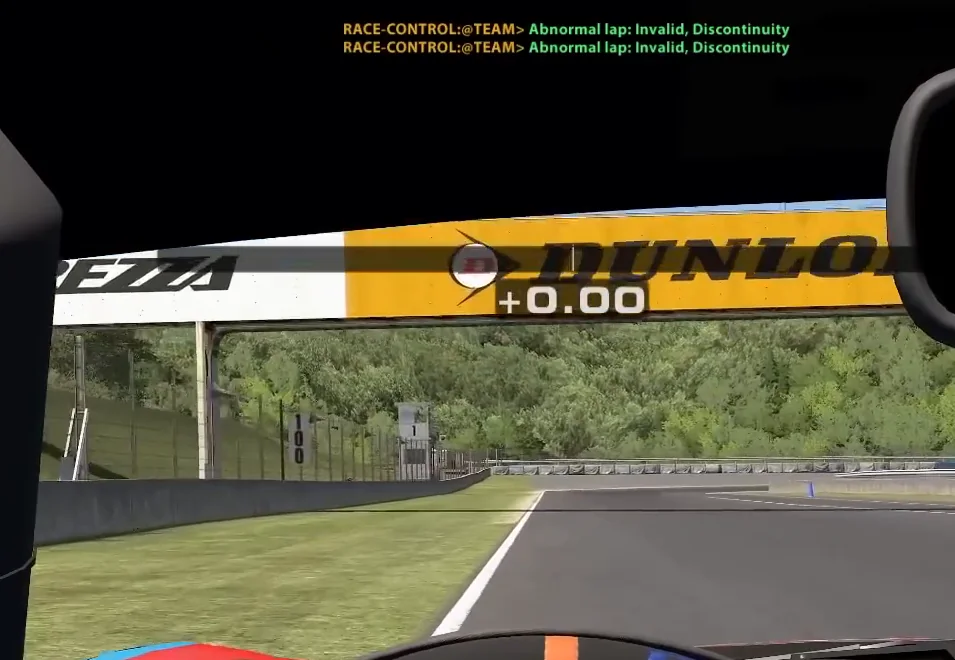
Pick one corner, not a lap. Preferably a medium-speed corner you can get back to quickly, with a decent braking zone and a clear exit. Use active resets if your sim has them, so you are not driving three minutes of track to practise ten seconds of it.
Run them in order — each drill assumes the one before it is roughly working, and drill four in particular will misbehave if drills one to three are not there yet. Score each attempt as a pass or a fail rather than by feel, and finish on a pass. For why that scoring works and how it fits into a session, how to practise sim racing effectively covers the methodology. This page is the exercises.
Which one do you need first?
- You are not sure you are using all the road, or you have never checked → drill 1.
- You line up wide and still end up mid-track by the apex → drill 2.
- You aim at the apex but could not say how much kerb is available → drill 3.
- Your throttle foot moves up and down on the way out → drill 4.
- You finish corners with road to spare → drill 5.
If more than one of those is true, still start at drill 1. They are cumulative, and the later ones fail in confusing ways when the earlier ones are missing.
One thing to settle before the first pass/fail: these drills assume you can physically produce the input being scored. A knee near lockout at full brake caps the pressure you can reach, and you will fail drill four for a rig reason while concluding it is a skill problem. Two minutes with the seating checker rules that out.
Drill 1: find the outside edge with your ears
What it fixes: believing you are using all the track while leaving a tyre's width unused, every lap, in every corner.
Almost every beginner is confident about this one, and most are wrong. The gap is small enough to be invisible from the cockpit and expensive enough to matter over a lap — which is exactly the combination that makes it worth drilling rather than reading about. The spatial awareness section here explains why knowing precisely where your tyres sit is a trainable skill and what it is worth. This is how you train it.
- Approach your corner and brake in a straight line without attempting the corner at all. Just brake, and run wide onto the exit road or the run-off. You are not driving a corner yet.
- Each attempt, place the car a little further out on the approach.
- Listen. When the outside tyre reaches the true edge you will hear it — grass, dirt, a change in surface. That sound is the boundary.
- Repeat until you can put the car on that edge on demand, without checking and without hesitating.
Pass: three attempts running where you hear the edge and needed no correction to find it.
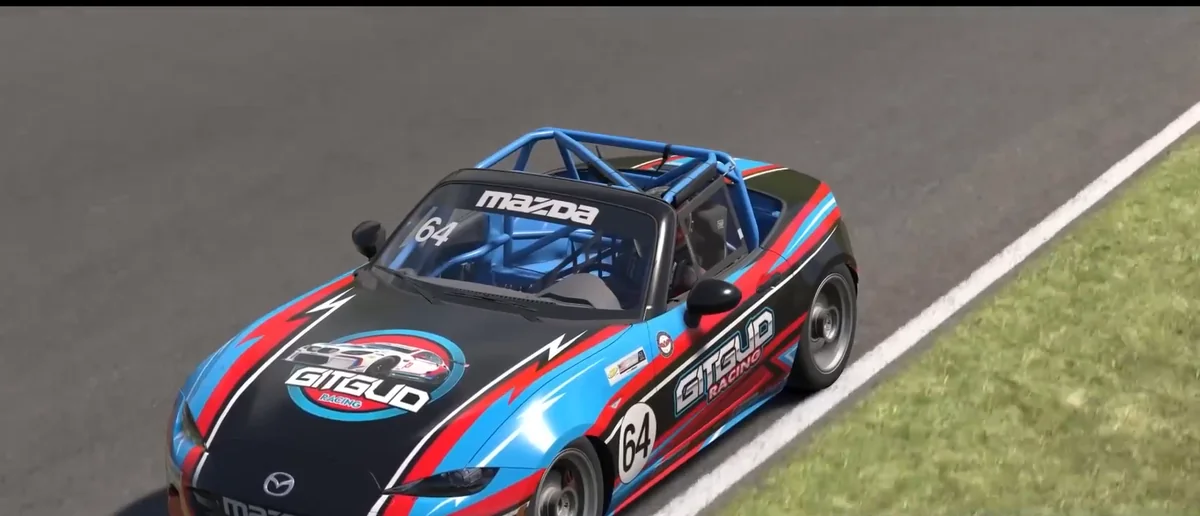
The mistake: using your eyes. From a normal cockpit view you cannot see your outside tyre, so visual judgement of the edge is a guess. Hearing is the accurate instrument, which is why the drill removes the corner entirely — with no braking point to hit and no apex to chase, the only thing left to attend to is where the car actually is.
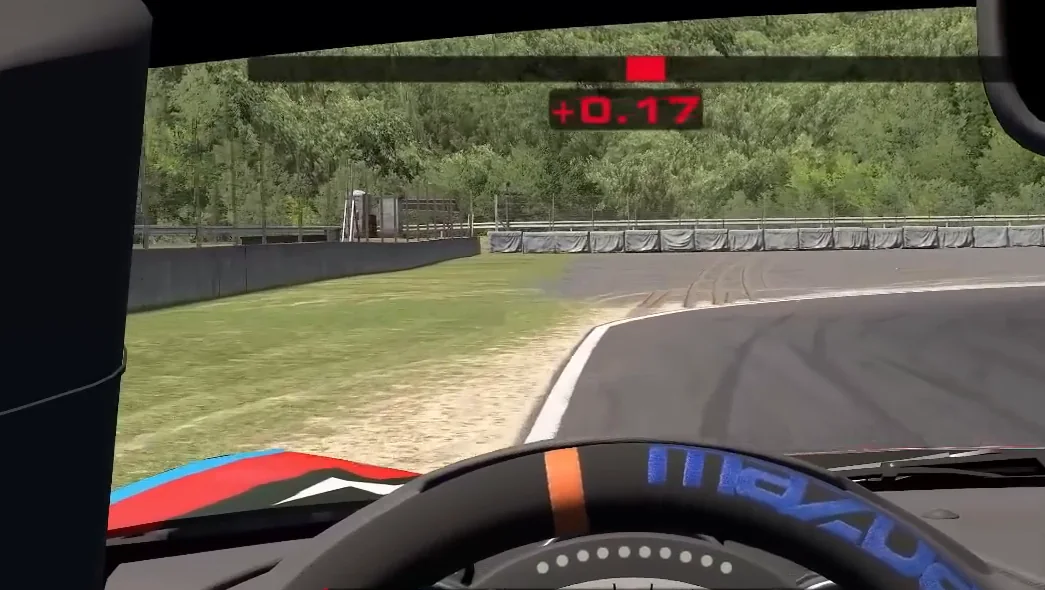
One scope note, because this drill is easy to over-generalise: braking dead straight here is a constraint that isolates the skill, not a claim about how corners should be driven. Trailing the brake into the corner is correct and is the next layer — how to trail brake takes it from there. For tonight, the straight line is what removes the variable.
Drill 2: turn in later than feels right
What it fixes: the most common beginner error I see, and the one that quietly wastes drill 1.
The pattern is this. The driver lines up perfectly on the outside, starts braking, and then — while still braking — begins drifting toward the apex. By the time they properly turn in they are a metre or more off the edge they just worked to find. All the width created on approach is given away before the corner has started.
It is hard to see from inside the car, because it feels like turning in. Switch to an external camera on the replay and the unused space on the outside is obvious.
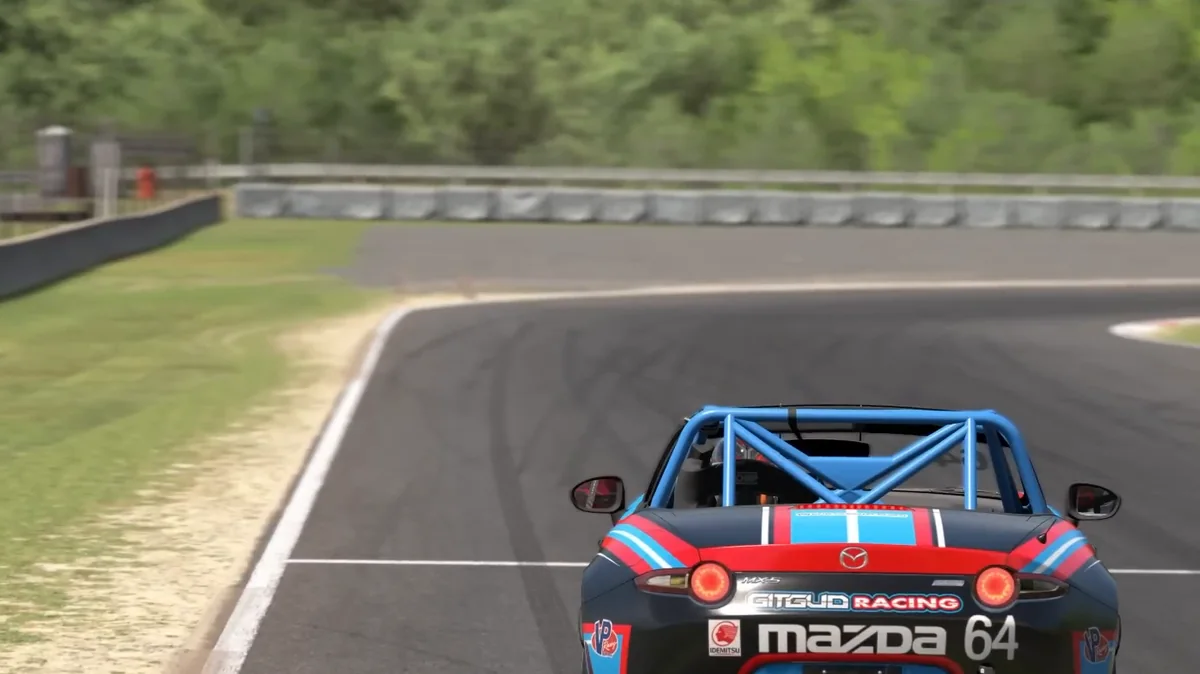
- Take the corner properly now, but fight the urge to brake and turn at the same time.
- Brake in a straight line, holding the car against the edge from drill 1, wheel straight.
- Turn in as late as you can — later than feels correct. You are hunting for the point where it is nearly too late.
- Stay well below race pace while you do it. You are training the input sequence, not the lap time.
Pass: on an external replay, the entry line stays pinned to the edge and then turns, instead of curving gently inward the whole way.
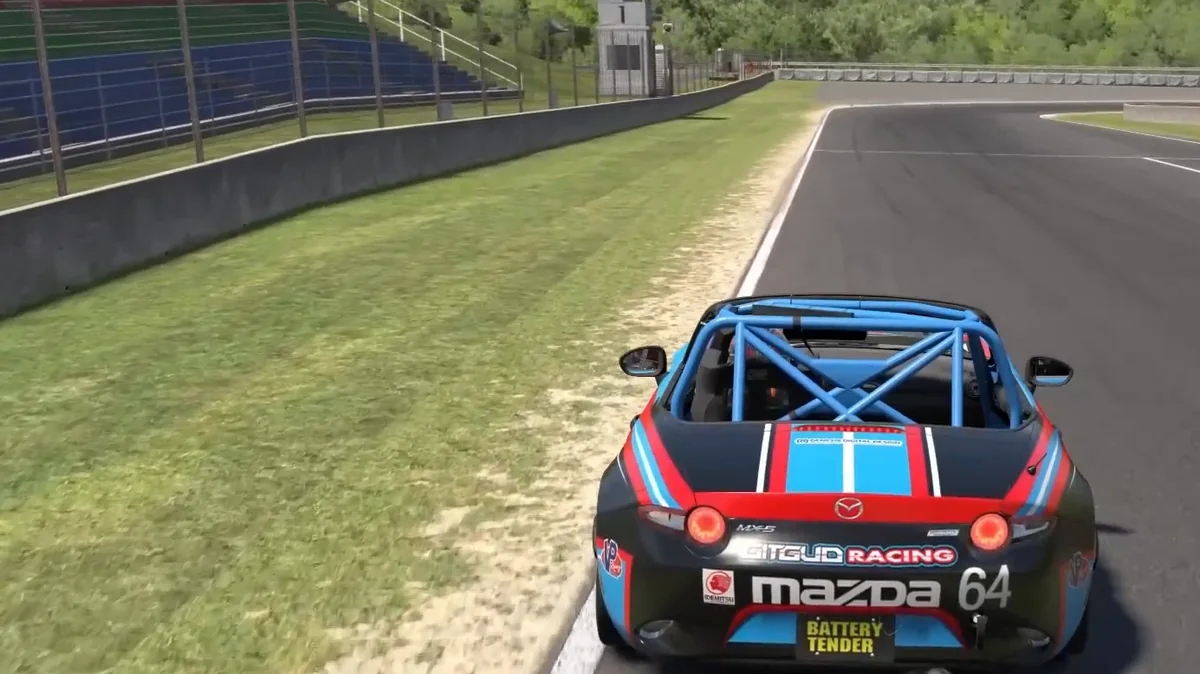
The mistake: overcorrecting into a turn-in so late you cannot make the apex at all. That is useful for a few attempts — going deliberately past the boundary is how you find it — but do not live there. You want the latest turn-in that still works, not the latest one possible.
Drill 3: find the real limit at the apex
What it fixes: vaguely aiming at an apex instead of knowing exactly how much track is available there.
This is drill 1 again, at the other end of the corner. You opened the entry by finding the outside edge; now you open the apex by finding the inside one. Both extend the radius of the arc you are driving, and a wider arc lets you carry more speed through the same corner.
The reframe that makes this work: do not practise hitting the apex — practise finding the track limit at the apex. Those sound similar and are not. The first is aiming at a point somebody told you about. The second is an experiment whose answer you do not yet know.
- Apply drills 1 and 2, still driving deliberately slowly.
- At the apex, go deeper than you think is allowed. Mount the kerb completely rather than brushing its edge.
- Keep going further in until you get the off-track warning or the car is genuinely unsettled. That is the information you came for.
- Dial back a few inches and repeat until you can place the car there on demand.
Pass: you can say specifically how much of that kerb you can use — not "most of it", but which part of the car ends up where — and reproduce it.
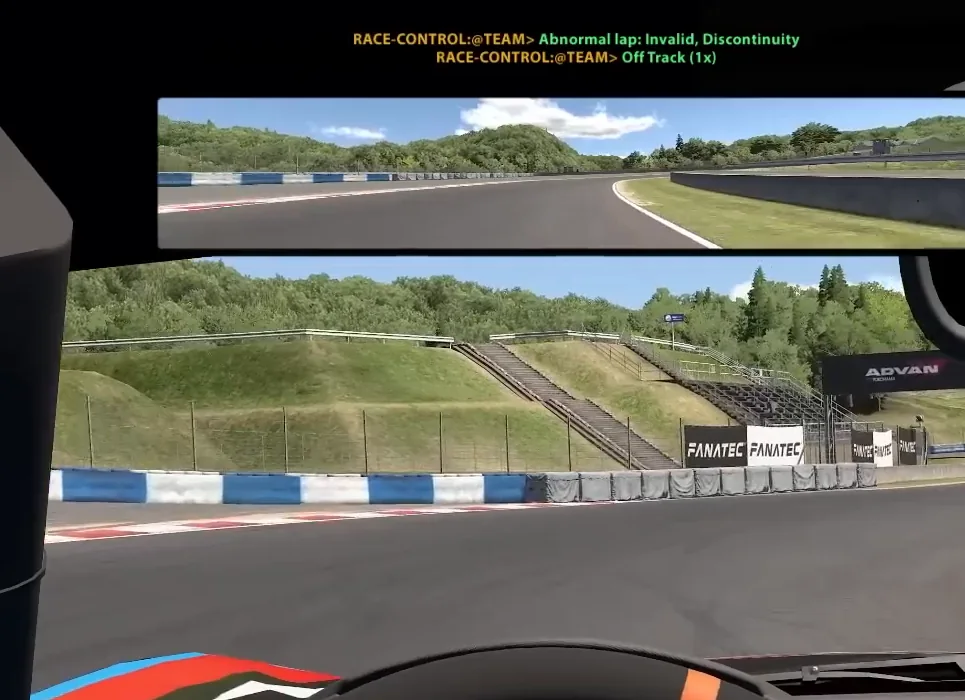
The mistake: treating the visible edge of the kerb as the limit. On many corners there is meaningful track beyond it, and the only way to know is to go past it once. Deliberately overshooting to locate a boundary is the same principle behind exaggerating an input during an isolation block, applied to position instead of pedal pressure.
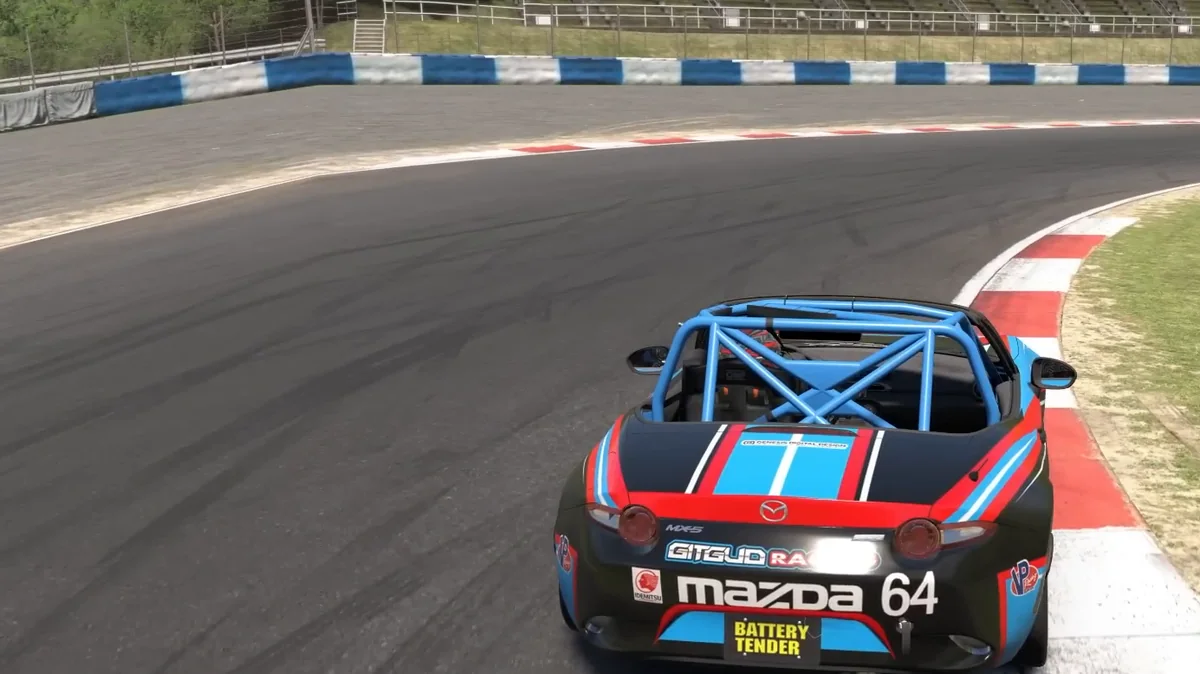
Drill 4: one press, and see what the car tells you
What it fixes: nothing, directly. This one is a test, and that distinction matters.
The other four drills change something. This one is a probe: you apply the throttle once, before the apex, and how the car responds tells you whether everything before it was right. A clean result means the entry worked. A bad result is not a throttle fault to correct — it is a message about the part of the corner you have already driven.
- Choose a throttle point clearly before the apex and commit to it in advance.
- Apply the throttle once, building to full as quickly as the car will take it. A small initial modulation for wheelspin is fine; a sequence of ups and downs is not.
- Do not move the throttle point to make the corner work. Change the braking and the turn-in instead.
- Repeat until the earlier throttle point is comfortable rather than brave.
Pass: one clean application, before the apex, with the car settled enough that you never want to lift.
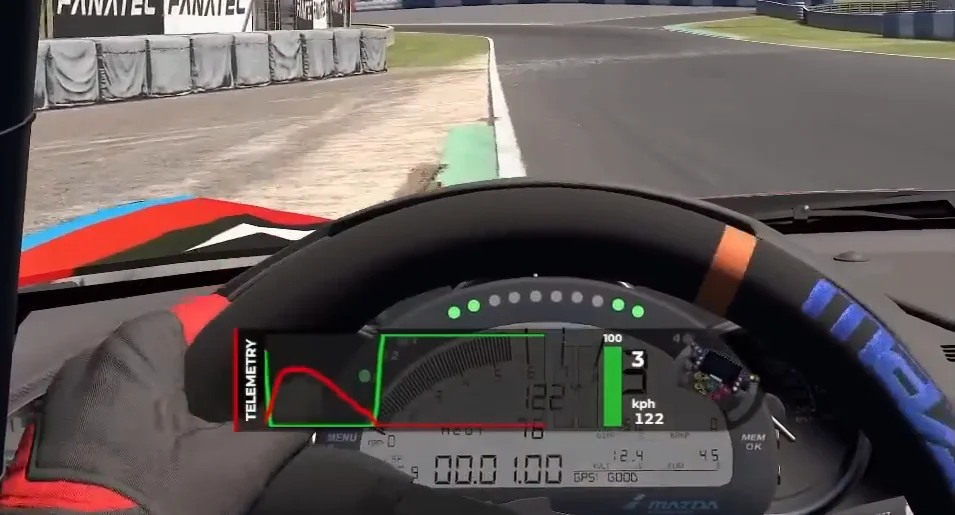
That third step is the whole drill, and it is the mental shift that makes the other four pay off: you build the corner backwards from the exit. Rather than braking, hoping, and finding out what the exit gives you, you decide what the exit needs and let it dictate everything before it.
Now the useful part — reading the failure, because each version points somewhere specific:
- Your foot pumps up and down on the way out. Almost always a rotation shortfall earlier in the corner, which you are patching with the throttle. The fix is not to get on the throttle sooner — getting the car to rotate earlier is the actual repair.
- You commit early and run wide. Usually you turned in too early, so the car is pointed at the wrong exit before the throttle arrives. Go back to drill 2.
- You run wide and it feels like the car will not slow down rather than will not rotate. That is entry speed, not line. Same symptom, different cause, and they are easy to tell apart from the seat.
- You cannot hold a smooth release into the corner at all. That is a braking problem and it is the next layer — how to trail brake deals with it.
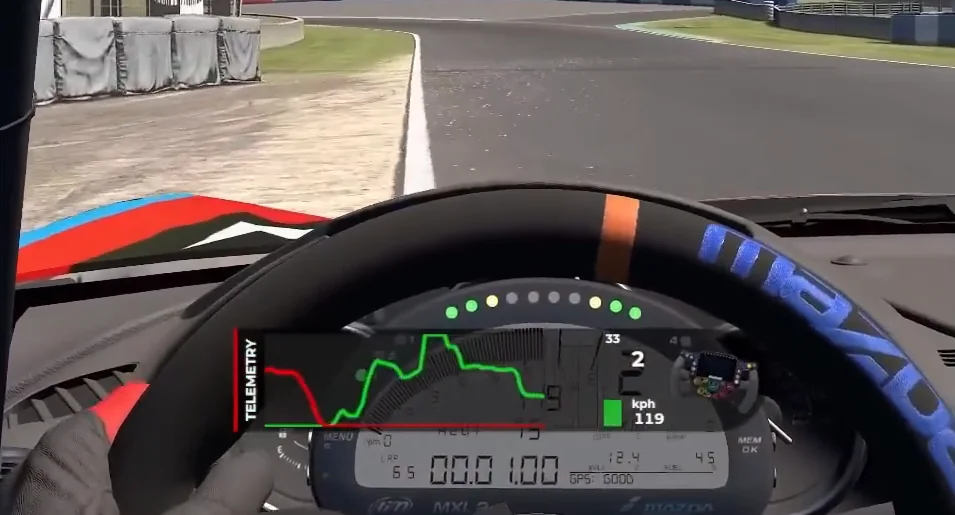
One honest caveat, because this is the drill people overapply: how early and how aggressively you can commit depends on the car, the corner and the grip you have. A powerful rear-drive car out of a slow hairpin will not take what a downforce car takes out of a fast sweeper. The principle holds everywhere — one movement, before the apex, and change the entry rather than the throttle point. The exact numbers do not.
Drill 5: make the car need all the road on exit
What it fixes: finishing corners with track to spare, which means speed was left on the table somewhere earlier.
Exit is where the lap time is actually paid out, and why that is worth more than an equivalent gain on entry is covered properly elsewhere. What this drill adds is the constraint that makes it testable — and it is unusually good, because it does not rely on your judgement at all.
The test is not whether you used all the track on exit. It is whether you had a choice.
- Run the corner with drills 1 to 4 applied.
- On the exit, actively try to keep the car in — hold it away from the outside edge.
- Note what happens.
Pass: you cannot. The combination of speed and acceleration takes the car to the edge whether you like it or not.
Fail: you hold it in comfortably with room left over. That spare track is time you gave away earlier in the corner.
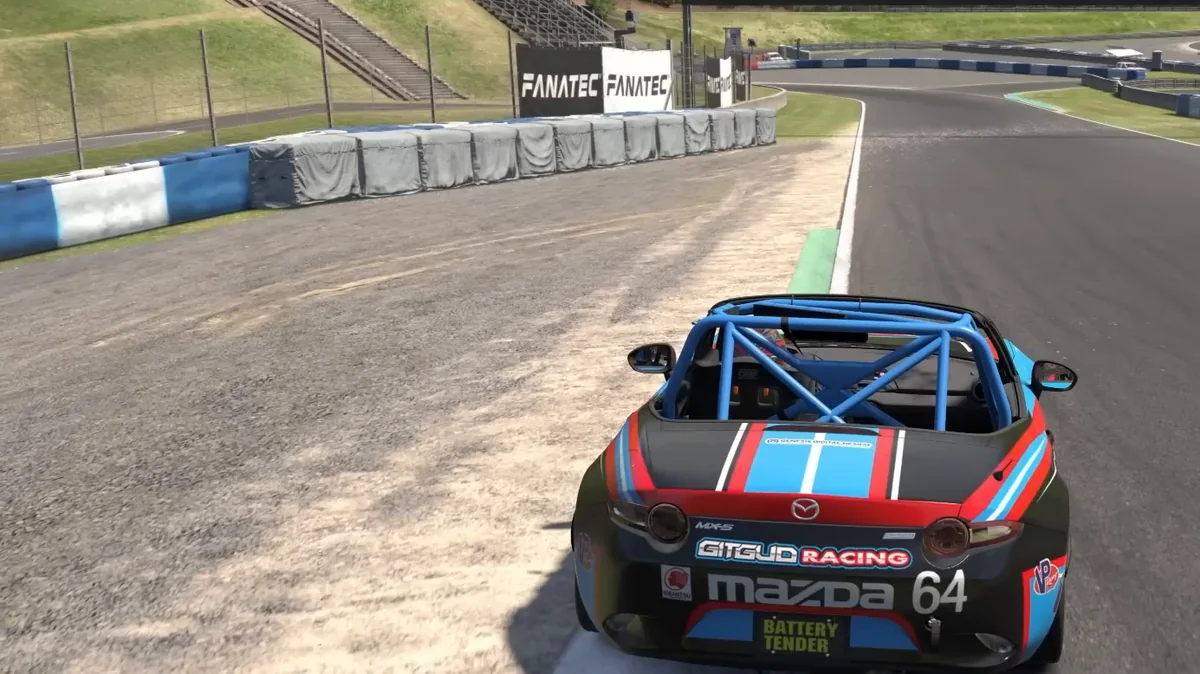
The mistake: steering out to the edge deliberately so it looks right. That converts a diagnostic into theatre. The car should need the road, not be dragged to it.
A 30-minute practice routine
One corner, one sitting, five drills, each with a mark you can call at the time. This is a running order rather than a training plan — where it fits in a week is a separate question.
| Minutes | Drill | Pass mark |
|---|---|---|
| 0–5 | 1. Outside edge | Hear the edge, three in a row, no correction |
| 5–10 | 2. Late turn-in | No drift toward the apex under braking |
| 10–15 | 3. Apex limit | Repeatable apex, kerb fully used |
| 15–20 | 4. One press | Before the apex, no lift, no correction |
| 20–25 | 5. Forced exit | You cannot hold the car in |
| 25–30 | All five | Three consecutive attempts with all five holding |
Roughly eight to twelve attempts per drill is enough at this stage — the point is honest scoring, not volume, and once the score stops improving the block is done. Finish on a pass, because whatever you did last is what you rehearsed most recently.
Where to go after these five
These stop short of braking on purpose. That is the right next layer: once your track usage, turn-in and throttle commitment are stable, braking is where the remaining time is.
- The corner still will not work, whatever you do. That is diagnosis rather than technique — how to take corners faster is a step-by-step method for one stubborn corner.
- You want to know why turn-in timing matters this much. Weight transfer is the mechanism underneath drills 2 and 4.
- You are ready for braking. Start with how to trail brake, then trail braking the right way.
- Your times swing lap to lap. Why your lap times are inconsistent finds the corner with the widest spread in your own data.
- You are not sure which of these you have outgrown. The five stages puts them in order.
These five are the ones you can run from a written description. The rest of the drills library sits alongside the lessons that teach each skill, so you can watch the exercise demonstrated before you try to score yourself on it.
Not sure which drill you actually need?
The self-check at the top gets most people to the right one. What it cannot do is spot the thing you are not aware of — and by definition, that is the one costing you the most. A personal lap review puts a coach through your lap corner by corner, with the biggest problem named first and something specific to drill next.
The hard part is not finding drills
It is knowing which one you need. Five exercises that fix beginner fundamentals are genuinely useful, and there will come a point — sooner than you expect — where the honest answer to "what should I practise tonight?" stops being obvious. Drilling the wrong thing well is a very efficient way to stand still.
Start with these five tonight: one corner, thirty minutes, honest scoring. When the answer stops being obvious, that is the moment lap reviews inside the GitGud Racing Academy are for — you send a lap, a coach tells you which weakness is costing the most, and you get a drill aimed at that instead of a list to work through.
Sim racing drills FAQ
What are the best sim racing drills for beginners?
Five, run in order on a single corner: find the outside edge of the track by ear while braking in a straight line, delay your turn-in until it nearly feels too late, go deliberately deeper at the apex to find the real kerb limit, apply the throttle once before the apex and read what the car does, and finally try to hold the car in on exit to prove it needs the full width. They work in that sequence because each assumes the previous one is roughly in place. If you are not sure drills are your priority at all, how to get better at sim racing covers what to work on first.
In what order should I run these five drills?
Strictly in order, because each one depends on the one before it. Track usage first, because everything downstream is measured from where the car starts. Then turn-in, which is what protects the width you just found. Then the apex limit, which opens the other end of the arc. Then the single throttle application, which only behaves sensibly once the first three are in place. Then the exit test, which is really a check on all four. Roughly five minutes each covers a first pass, with a final block putting them together.
How do I practice racing lines in sim racing?
Break the line into its parts and train them separately rather than driving whole laps and hoping. The entry width, the turn-in point, the apex placement and the exit width are four different skills, and driving a full lap trains all of them badly at once. Work on one corner, drive it deliberately slowly so the geometry is the only variable, and check yourself on a replay from an external camera — from the cockpit you cannot see your outside tyre, so your judgement of where the car actually is will be optimistic.
How do I stop turning into corners too early?
Practise it as its own exercise instead of trying to fix it mid-lap. Brake in a straight line with the car held against the outside edge and the wheel deliberately straight, then turn in as late as you can — later than feels correct — while driving well below race pace so you are training the sequence rather than chasing a time. Overshoot deliberately for a few attempts so you find where genuinely too late is, then settle on the latest turn-in that still works. A useful tell: if you commit to the throttle early and the car runs wide, you almost certainly turned in too early.
How do I know if I am using all the track?
Listen rather than look. From a normal cockpit view you cannot see your outside tyre, so judging the edge visually is a guess — but at the true edge you will hear the grass, the dirt or a change in surface, and that sound is precise. Back it up with a replay from an external camera, where unused space on the outside of the car is obvious in a way it never is from inside. Most drivers who are confident they use all the track are leaving roughly a tyre's width every lap, in every corner.
Do I need telemetry to run these drills?
No. Four of the five have a pass condition you can judge from the seat or from a replay — a sound, a line on an external camera, an off-track warning, or whether the car can be held away from the exit kerb. That is deliberate, because a drill you can only score with an overlay is a drill most people will not actually run. Telemetry becomes useful later, when you want to know why a corner is slow rather than whether you executed an exercise, and at that point it is genuinely worth learning.
This guide is part of the free library at GitGud Racing Academy — an online sim racing academy built around weekly lap reviews, structured courses, drills and training tools.
Train this the right way
Reading is step one. Build it into muscle memory with structured, car-specific courses and personal lap reviews from a coach — inside the Academy.
Join the Academy · $39.99/mo incl. VATWatch the full video on YouTube