Sim Racing Progression: The 5 Stages From Beginner to Alien
The honest answer to how long it takes to get good at sim racing is that nobody can hand you a number, and the people who try are guessing. What they can hand you is a map. Progress doesn't arrive as one long ramp — it comes in five distinct stages, each with its own bottleneck, and the reason you feel stuck is almost always that you're working on a different stage's problem than the one you're actually in.
This is that map: the five development stages every fast sim racer goes through, in the order they arrive. Most drivers skip one. We're all trying to drive like aliens while still braking like beginners, and that mismatch — not a lack of talent, hours or hardware — is what kills progress.
How long does it take to get good at sim racing?
With around one focused hour a day, expect meaningful progress within a few months and a serious climb over a year or two. That's the honest range. Here's the evidence behind it rather than a number invented to sound authoritative.
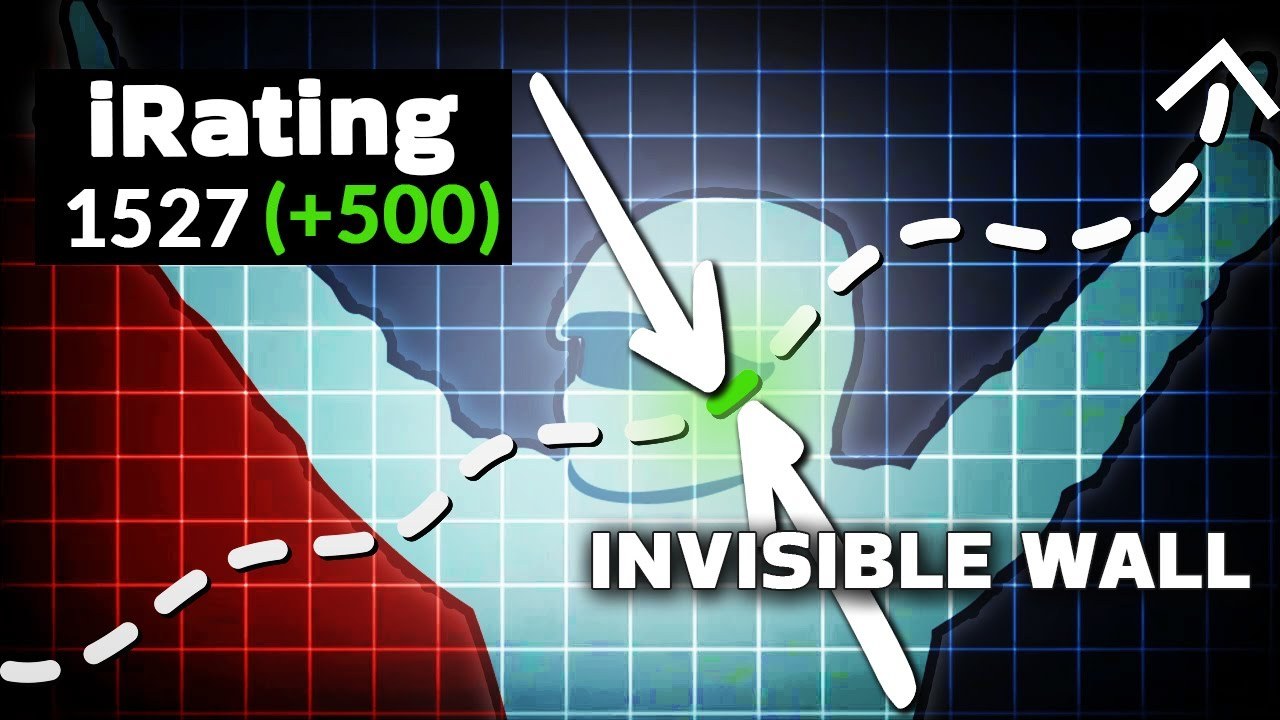
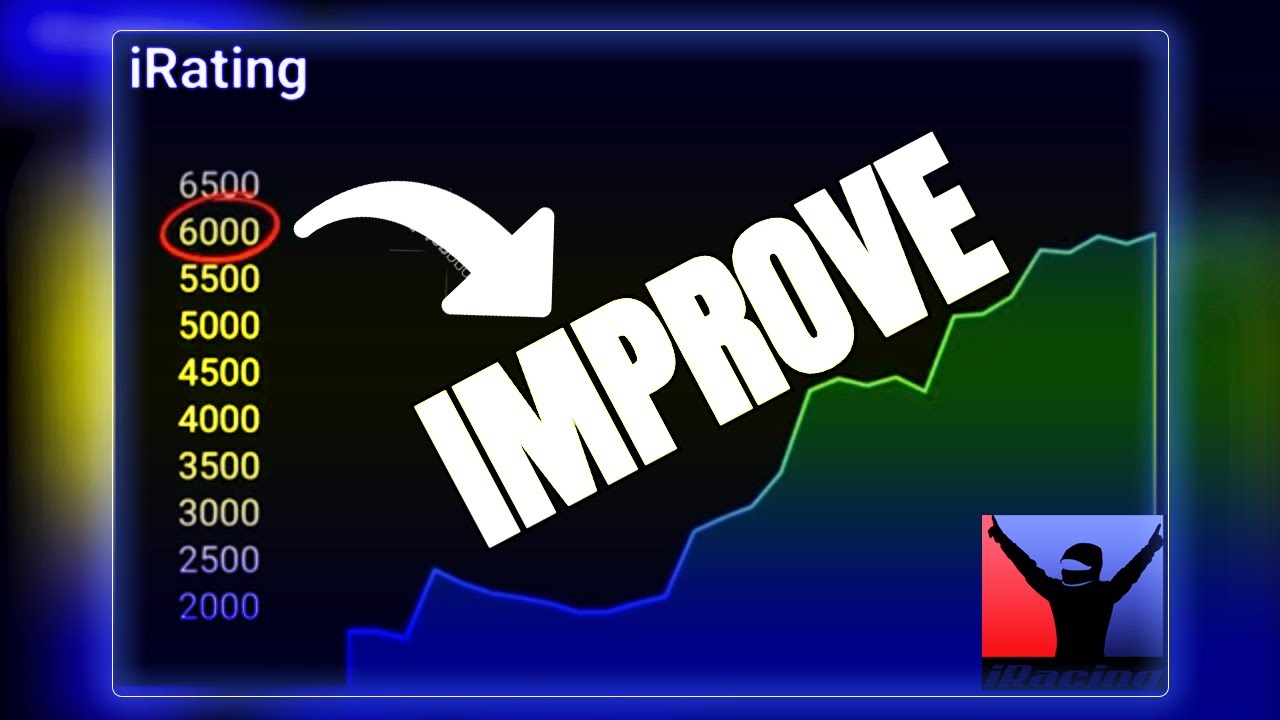
A driver I coached went from 1.5K to 6K iRating in a little over a year, on a Logitech G Pro wheelbase and a single screen. But he averaged more than seventy hours a month — roughly two and a half to three hours a day, every day — and nearly a third of that time went on telemetry and replay analysis rather than driving. That's the input that produced the output, and most people reading this don't have it.
My own road was slower and less flattering. I struggled for over two years before I made real progress. I eventually reached the top 1% in iRacing and now coach real-world racing drivers, but the first two years were mostly noise.
What those two stories have in common isn't talent, hardware or hours. It's that the rate of progress depended almost entirely on whether the effort was pointed at the right problem. Which is why everything below is organised by stage instead of by month.
Why the real answer is a stage, not a timetable
Two drivers with identical hours can end up a year apart, because one spent those hours building on a foundation and the other spent them decorating a broken one. Time only converts into pace when it's aimed correctly, and the thing that decides the aim is which stage you're in.
That's also why a stage-by-stage timetable would be dishonest. I could tell you stage two takes six weeks, and for some people it would, and for others it would be six months — not because they're worse, but because they're driving four hours a week instead of fourteen, or because they're busy fixing a stage-three problem while a stage-one problem quietly caps them.
So the stages below don't come with durations. Each one comes with something more useful: what it feels like from the inside, the single symptom that proves you're in it, and the one thing that ends it.
The five stages of sim racing progression
| Stage | What you're doing | The tell | It ends when |
|---|---|---|---|
| 1. Survival | Staying on the road | Spins, lockups, offs | You finish clean |
| 2. Control | Repeating one clean lap | Good laps, scattered pace | Ten laps land together |
| 3. Breadth | Collecting the core skills | You know terms you can't do | The skills start combining |
| 4. The black hole | Perfecting what you know | Effort up, lap time flat | Mostly, it doesn't |
| 5. Alien | Driving on feel | Chasing thousandths | Never |
Stage 1: Survival mode — you're fighting the car, not the track
Mistakes are everywhere and you're completely hooked. You're watching other drivers and genuinely wondering how they're doing that, because they make it look effortless while you're trying not to spin. Crashes, lockups and off-tracks are the whole experience. Your only real goal is to keep it on the road.
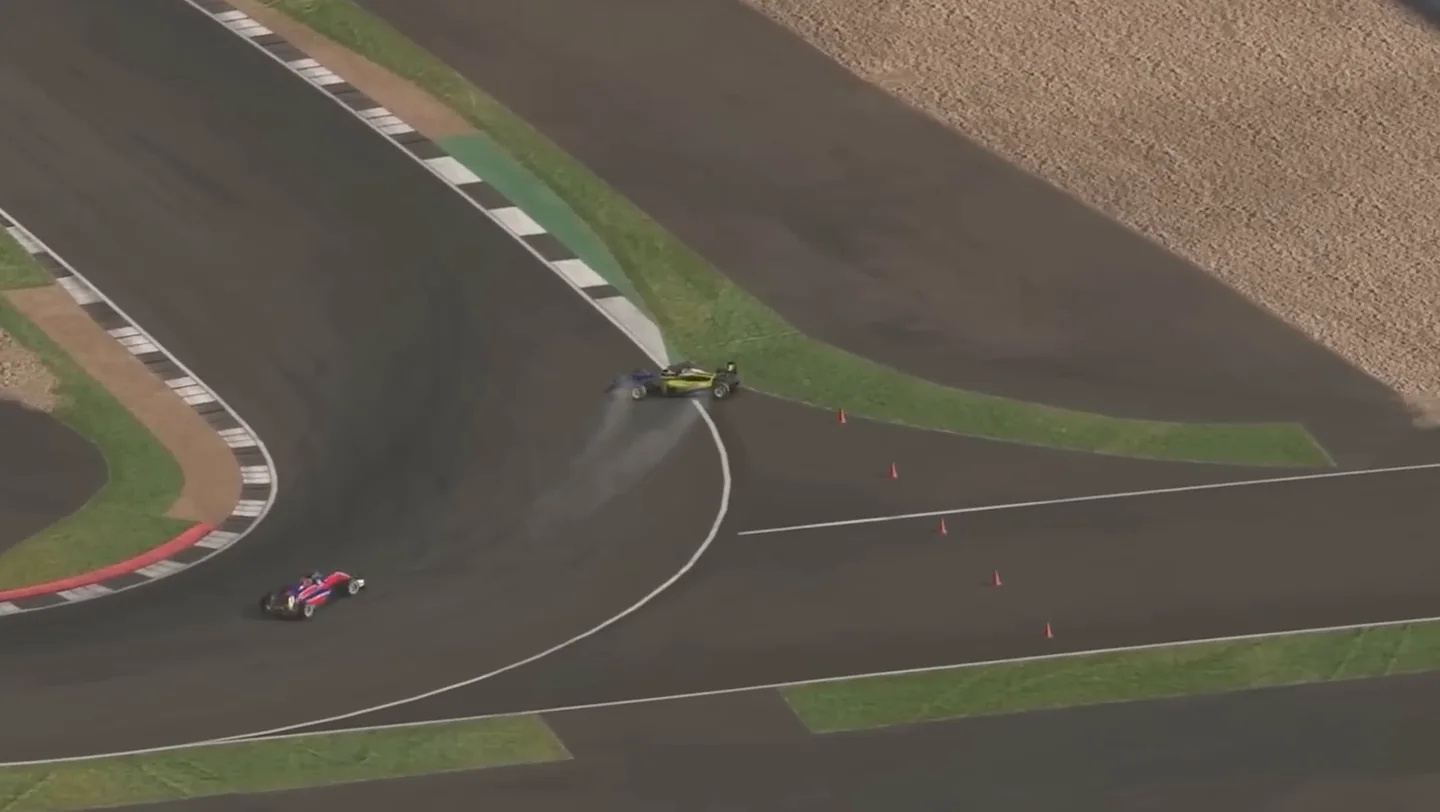
You're in this stage if a clean race feels like luck rather than a choice.
Three things get you through it faster, and none of them is driving more laps.
Fix your expectations first. It's easy to watch a fast driver two weeks in and conclude something is wrong with you. Some of those people have been doing this for a decade. It's no different from installing a shooter you've never played and being matched against people who've had it since they were twelve. You're not slow. You're new.
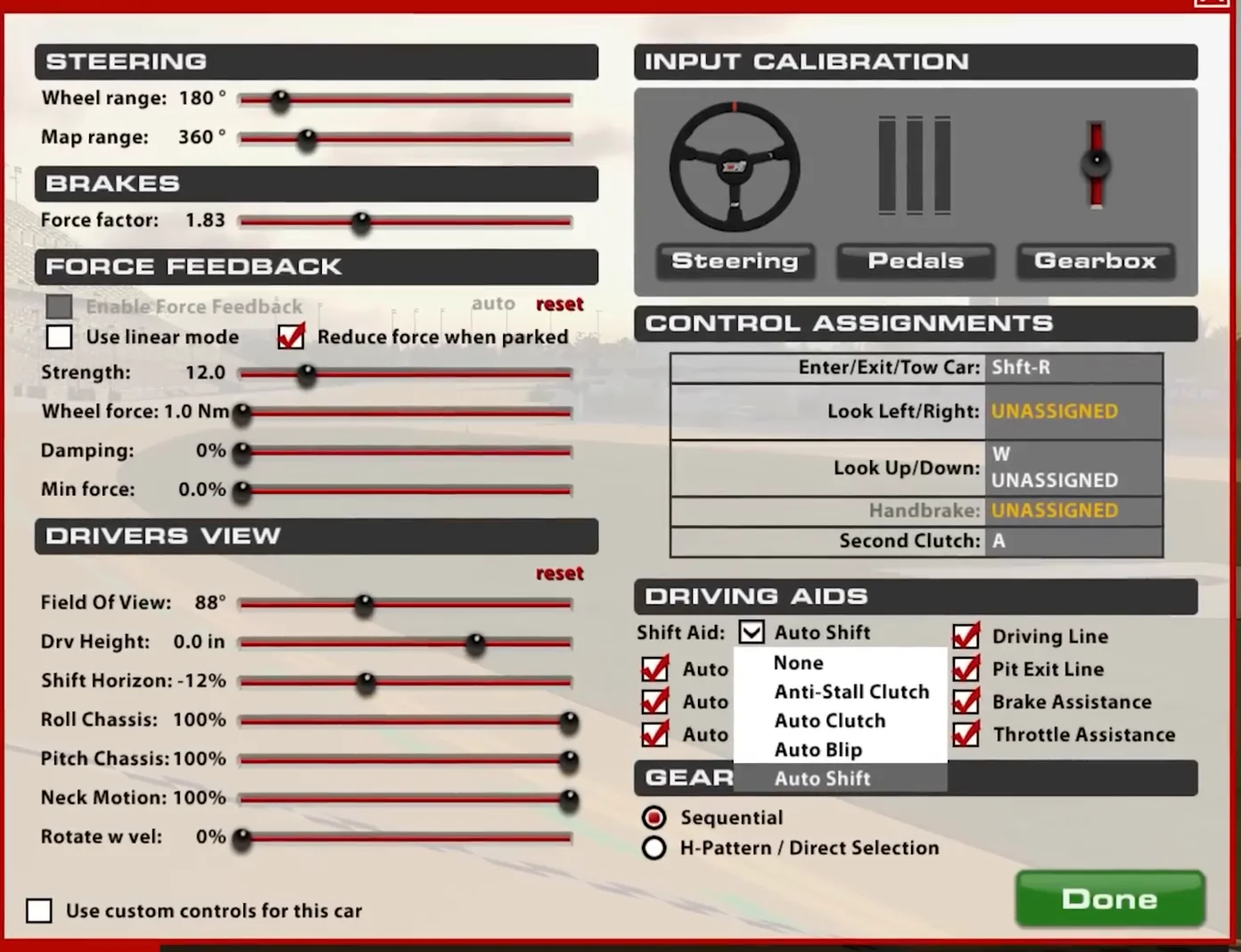
Then set the rig up properly, because this is the one stage where hardware genuinely limits you — not the quality of it, the configuration of it. Field of view, force feedback, seating position, pedal placement. They don't need to be perfect, they need to be good enough that you build habits worth keeping. Start with bad settings and you'll adapt to them, and unlearning that later costs far more than setting it up now. Field of view is the one people get wrong most and it's free to fix: run the numbers with the sim racing FOV calculator, and if you're weighing screens before you spend anything, the monitor setup comparison covers single versus ultrawide versus triples. For the wheel, the force feedback settings tool gives you a baseline for your specific wheelbase.
Then learn the racing line and nothing else. Start wide, turn toward the inside, unwind back out. The point is to make the corner as open and smooth as possible so you can carry speed without sliding. Forget trail braking. Forget rotation. If you can't drive a smooth line, none of the advanced material will help you anyway — it will just give you more sophisticated ways to be inconsistent.
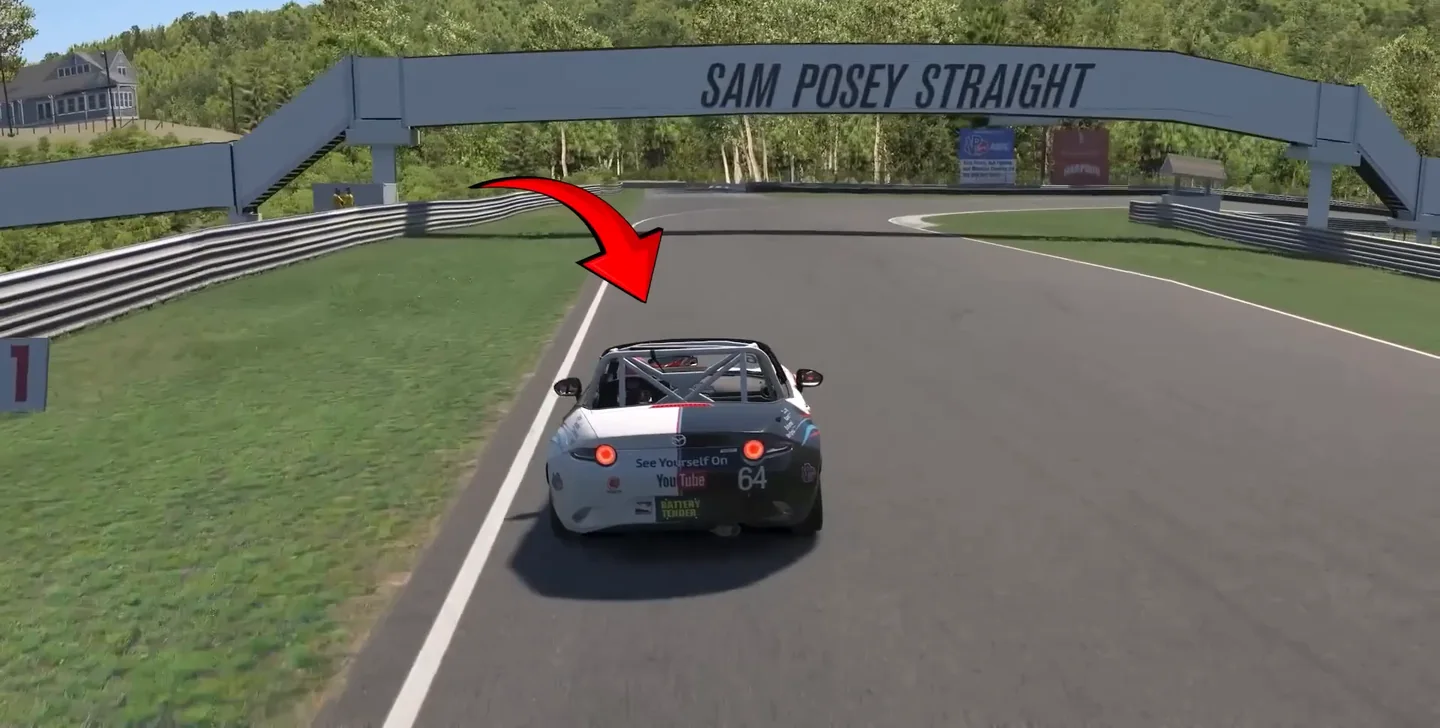
Stage 2: Control — where "consistently slow" is the goal
You've stopped crashing every other lap. The car mostly goes where you point it, and the job changes from surviving to repeating. This is where you start hearing slow in, fast out; be smooth with the throttle; don't overdrive the car; learn to trail brake.
And this is the trap. Drivers arrive here wanting speed now and jump straight to the advanced material, which is exactly the wrong move, because this stage isn't about lap time at all. It's about building repeatable habits: the same line, the same braking point, lap after lap. Watching your own replays not to judge them but to notice patterns.
Mastering this stage means becoming consistently slow, and that is genuinely what you want. A consistent slow lap is a foundation you can build on. A fast lap you can't repeat is an accident you got away with.
You're in this stage if your personal best is respectable and your other laps are scattered several tenths around it. If that's you, the diagnosis matters more than the advice — start with why your lap times are inconsistent, which works out where the variance is actually coming from before it suggests fixing anything.
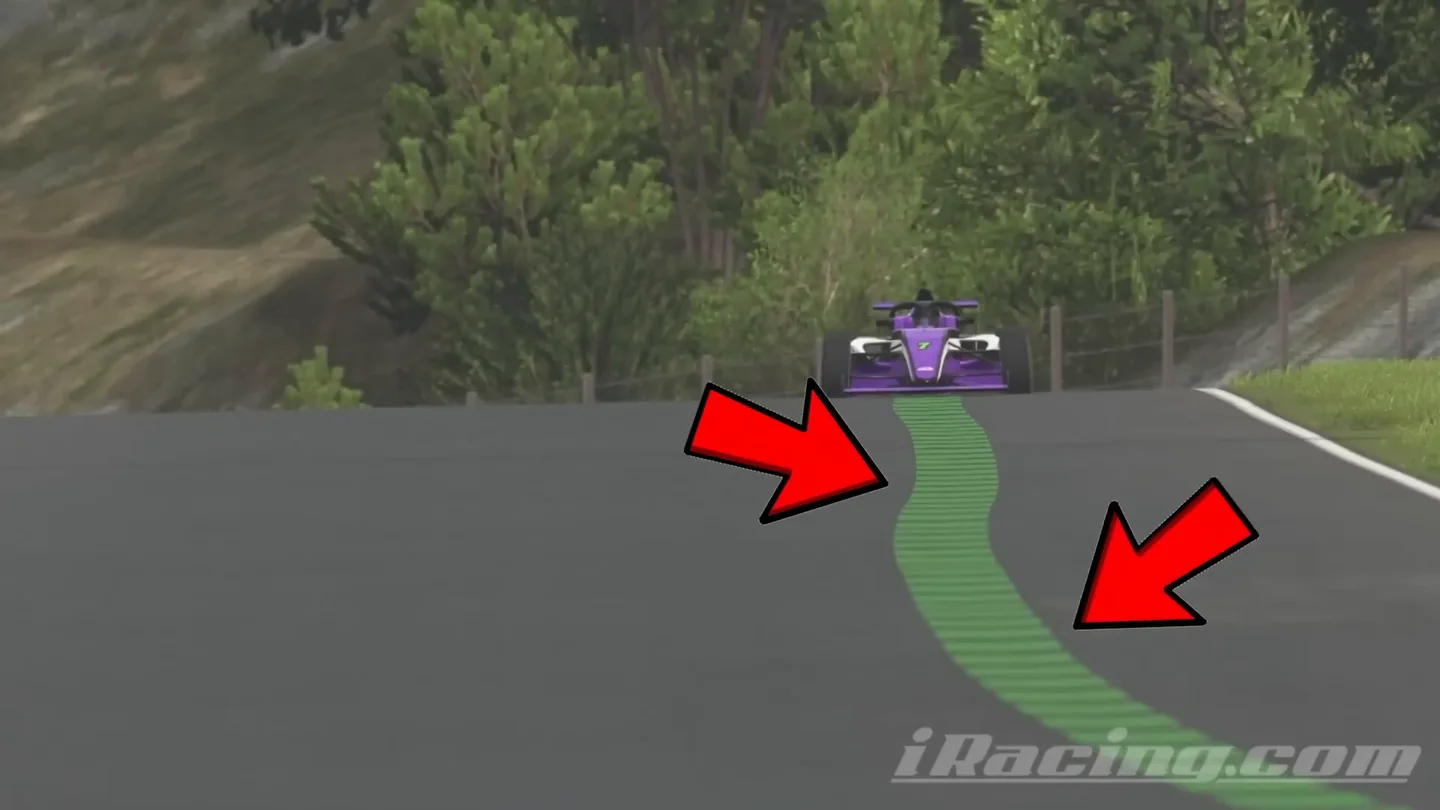
One more change, and it's the highest-value one most drivers at this stage can make: turn off the racing line assist. That glowing line on the track has to go. At first you'll feel lost, which is precisely the point — it forces you to look further ahead, find your own reference points and actually read the circuit. It also stops you blindly following a line into a crash, which happens far more often than people admit.
Stage 3: Breadth — where the vast majority of sim racers end up
You're not spinning, you're driving a clean and repeatable line, and the training wheels are off. Now the job is to collect the core skills — not to master them. To become aware of them and start putting them into practice. The twelve driving techniques are that collection, in the order they build on each other.
The list is longer than most people expect: stopping the car efficiently by maximising brake pressure in a straight line; trail braking, carrying the right amount of brake into the corner to keep weight on the front tyres and help the car rotate; downshift rhythm, timing shifts so you don't unsettle the car; early versus late apexes, and knowing which corners to prioritise; using every inch of the circuit, because the track is wider than you think; vision, hearing and feel; different corner types and elevation changes; throttle control; the tyre model; brake bias, TC and ABS.
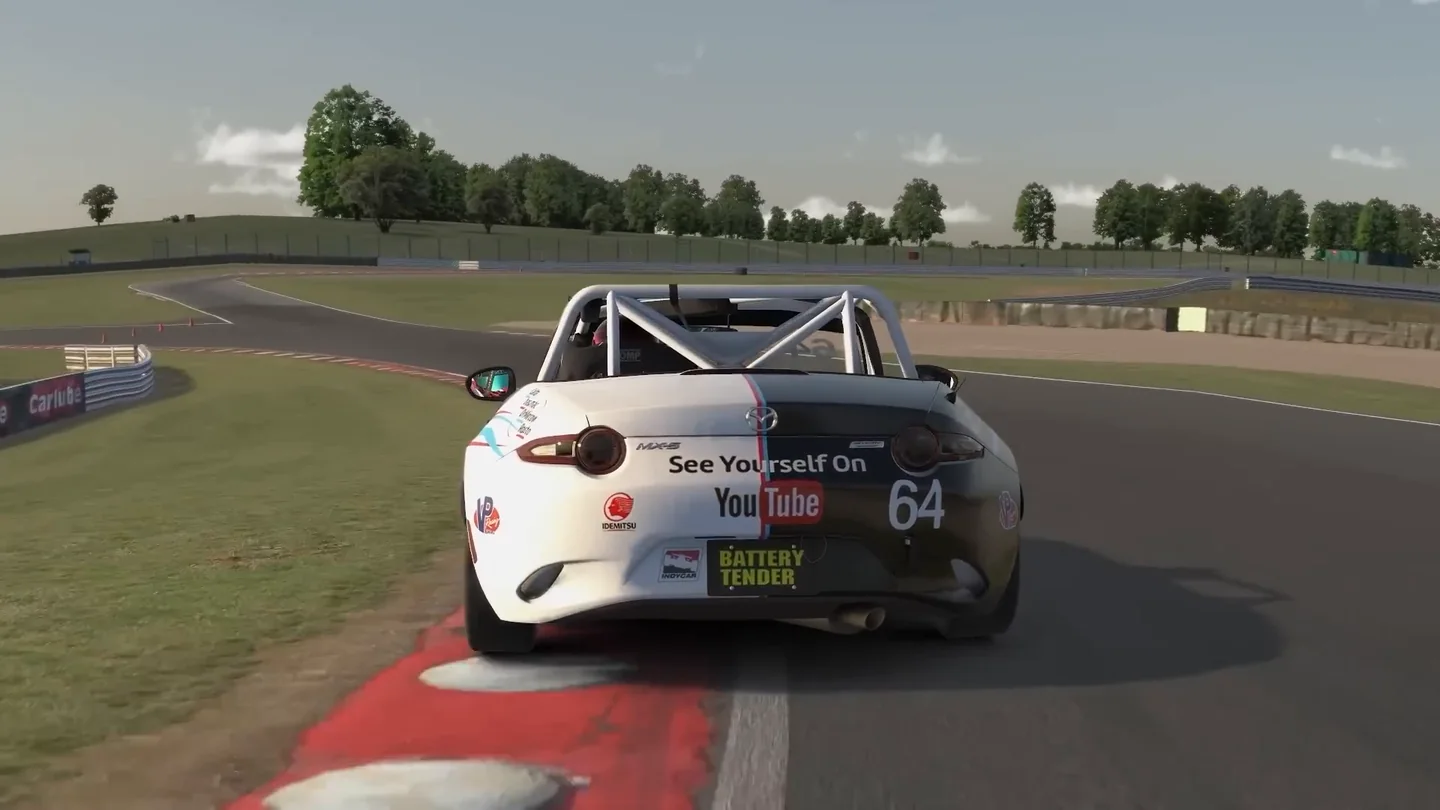
You're in this stage if you can name most of those and reliably execute perhaps two.
Here's the mistake almost everyone makes: going deep on one skill before the others exist. Don't try to master trail braking if you haven't got a downshift rhythm, or if early versus late apex is still theory. In motor racing nothing happens in isolation. Every input sets up the next one. If you're not braking at the limit in a straight line, or you're late with a downshift, you'll turn in later than you planned — and then even textbook trail braking can't save the corner, because the corner was lost before it started.
So the goal here is breadth, not depth. Get familiar enough with all of the core skills that they can start working together. Only then does going deep on any single one make sense. If you want the framework that ties them into one system rather than a list, that's how to be faster at sim racing; if trail braking specifically isn't clicking, fix your trail braking deals with the failure states.
Stage 4: The black hole — effort goes up and the lap time doesn't
Remember all those skills from stage three? This is where you spend months and years turning them into second nature, and it earns the name because it absorbs everything you throw at it.
You already know the basics. You take corners cleanly, you brake with confidence, you understand lines, apexes and balance. And you're still leaving time on the table. You can feel it. You can see it in the drivers ahead. Now it's about closing that gap, and the gap is made of details: your braking point is two metres off and there goes a tenth; you hesitate on the throttle, another tenth; you miss an apex by half a car width and the lap is gone.
You're in this stage if you know exactly what you're supposed to be doing and can't do it consistently enough for it to matter.
The only way forward is deliberate practice, and this is the stage where most sim racers quietly burn out — because progress becomes slower, less visible and far more frustrating than it was in stage two. You analyse your laps, compare your inputs against faster drivers, review telemetry, read, take a course, get coaching. You stop learning new things and start perfecting known ones.
The arithmetic is what makes it worth it. Most tracks have around twelve corners. Find a single tenth in each one, using nothing but better fundamentals, and that's 1.2 seconds — the difference between midfield and fighting at the front of a top split.
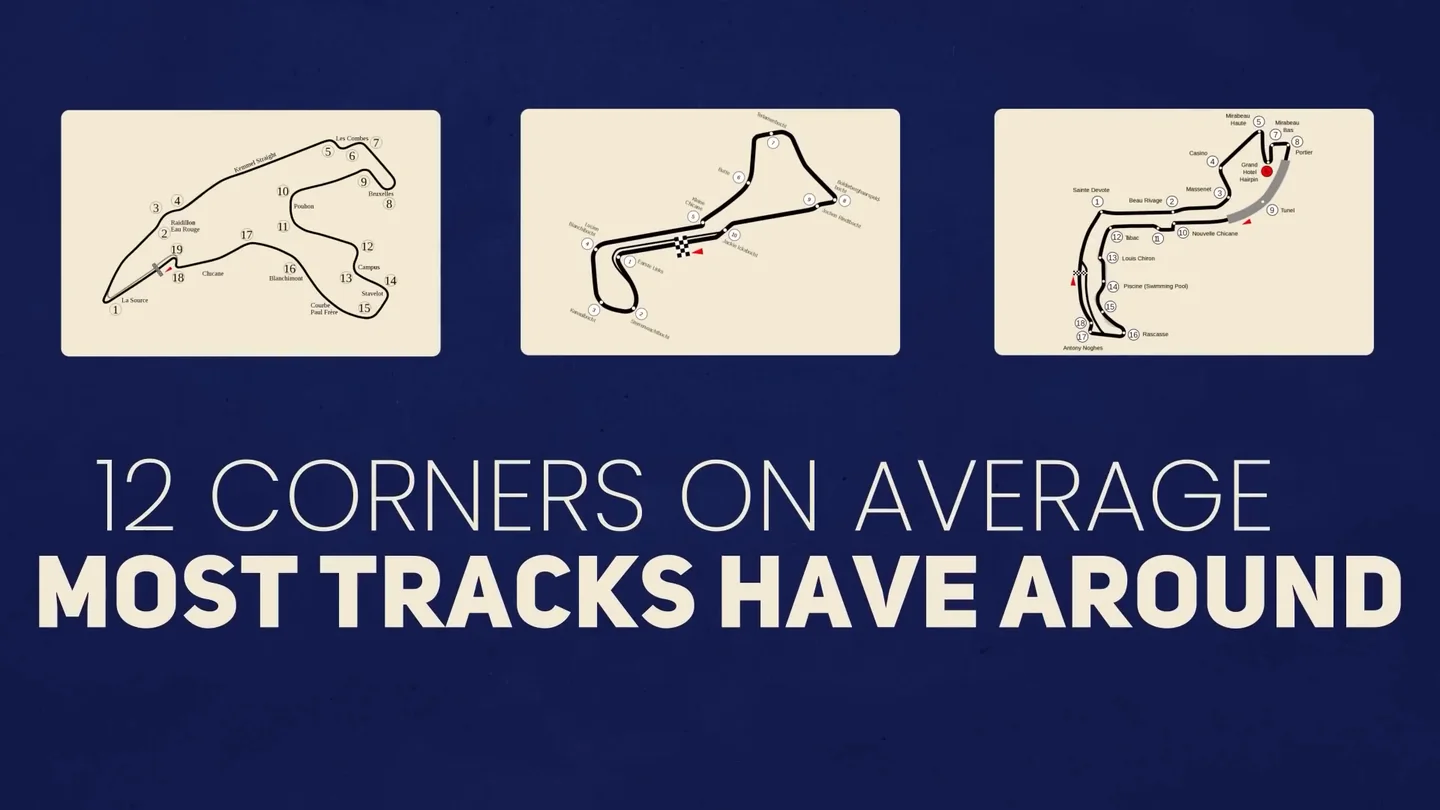
Stage four is where the gains get smaller and simultaneously far more valuable. It's also where "I've plateaued" gets said most, and it's almost never a ceiling — it's a signal that the limiting factor has changed while you're still working on the old one.
This is the stage with the most written about it, because it's where the most people are. For the structured version — how to build a week, what to review and in what order — read how to get better at sim racing, which follows one driver through exactly this stage for a year. For session design specifically, how to practise effectively. And when the frustration itself becomes the problem, the things nobody tells you about sim racing is about surviving that part. And for the single most common stage-four trap — matching a fast driver's apex speed and still losing the corner — start here.
Stage 5: Alien — the top 0.5%, and why you don't need to get here
Your brake traces are clean and you're winning most of what you enter, except against the very best, who still exist and whom you simply meet less often.
If stage four had you sweating over a tenth per corner, here you're chasing three thousandths — about four tenths a lap across twelve corners, measured against the absolute limit. Three thousandths of a second is invisible. You can't see it on screen. You can only feel it.
This is where the aliens live: maxed-out consistency, adaptability, racecraft, tyre management and mindset, all at once. Every input is intentional and every mistake is expensive.
For most people stage five isn't necessary, and saying otherwise would be selling something. You don't need to be here to be fast, competitive, or to thoroughly enjoy racing. But if you're obsessed and you've come this far, this is where sim racing stops being a skill and starts being an art. If you want the unsentimental version of what this level demands, the sim racing truths is that.
How to tell which stage you're actually in
Most drivers guess a stage too high, which is precisely why they're stuck — they're applying stage-four solutions to a stage-two problem. The check below takes one evening and settles it.
The one-evening stage check
Pick a track you know. Run ten laps and record every one of them. Then ask, in this order:
- Did you keep all ten on track? If no — stage one. Nothing else on this page applies yet.
- Are the ten laps within about half a second of each other? If no — stage two. Your problem is repeatability, not pace.
- Can you name what cost you time in each of the three worst laps? If no — stage three. You need breadth before depth.
- Can you name it and fix it on the next run? If no — stage four. Welcome to the black hole.
- Is your gap to the outright limit under half a second? If yes — stage five, and you already knew.
Answer honestly rather than optimistically. The whole value of this is finding the earliest question you failed, because that is the stage you're actually in. Then go and drill it — five sim racing drills covers those fundamentals one at a time.
Why you're not improving, by stage
"I'm not improving" means something completely different depending on where you are, and treating it as one problem is why so much effort gets wasted.
- Stage 1: you're not improving because the rig is fighting you. Wrong field of view, force feedback you can't read, a seating position that hides your references.
- Stage 2: you're chasing lap time when you should be chasing repeatability. The pace will not stick until the laps do.
- Stage 3: you went deep on one skill and left the others behind, so the corner falls apart before your good skill ever gets used.
- Stage 4: the limiting factor changed and you didn't notice. Whatever got you here has been fully exploited, and the next thing is something you're not currently measuring.
Notice that only one of those is fixed by driving more.
How many hours does progress actually take?
Fewer than the grinders think and more than the impatient hope. The driver who went from 1.5K to 6K in a year split his time roughly 20% learning tracks alone, 50% practising technique in actual races, and 30% on telemetry and replay analysis away from the car. That last figure is the one worth staring at: nearly a third of his improvement happened while he wasn't driving.
Most people invert it. They drive nearly all of their available hours, review almost nothing, and then conclude they've hit a ceiling — when what they've hit is the ceiling of unreviewed practice, which is much lower and arrives much sooner.
So the useful question isn't how many hours you have. It's what fraction of them are pointed at something you've identified. One deliberate hour beats three unstructured ones, and that ratio is what separates a driver who gains a year of experience from one who gains the same week fifty-two times.
You're not one stage — you're a different stage in every car
Personally I'm usually somewhere in stage four, but honestly it depends on the car. In some I can push closer to stage five; in others, nowhere near, and that's completely normal.
Driving race cars, even virtually, is close to impossible to fully master, because the better you get the more clearly you see how much is left — in consistency, in racecraft, in raw pace. So treat your stage as a property of you-in-this-car-right-now rather than as a rank. Dropping a stage when you switch discipline isn't regression. It's the map being accurate. The driving genuinely differs by class — the GT3 sim racing guide and the Formula sim racing guide cover what each one asks of you.
Find your stage, then pick one thing
The good news is that this is a skill anyone can improve, and talent is largely a myth. Someone who struggled for two years before anything moved eventually reached the top 1% and ended up coaching real racing drivers — so the ceiling is almost certainly further away than it currently looks.
Run the stage check tonight. Take the earliest question you failed, and work on that stage's bottleneck and nothing else for a month. Not the stage above it, however much more interesting the stage above it sounds. That single discipline — working on the problem you actually have rather than the one you'd prefer to have — is the whole difference between the drivers who keep climbing and the ones who decide they've found their limit.
And if you'd rather not diagnose yourself, that is exactly what a second pair of eyes is for: the GitGud Racing Academy exists to tell you which stage you're in and what the one thing is, so your hours go on the right problem instead of the interesting one.
The stages in this article are not a coincidence — the courses themselves are laid out on the same ladder: Starting Line, foundations, a discipline, then one car.
Sim racing progression FAQ
How long does it take to get good at sim racing?
With around one focused hour a day, expect meaningful progress within a few months and a serious climb over a year or two. There is no fixed number, because the rate depends far more on whether your effort is aimed at the right problem than on hours logged. A useful way to think about it is that progress arrives in five stages rather than on a timetable, and the drivers who stall are almost always working on a different stage's bottleneck than the one they are actually in.
What are the 5 stages of sim racing progression?
Survival, where you are fighting the car and just trying to stay on the road. Control, where the laps become repeatable and the goal is to be consistently slow. Breadth, where you collect the core skills such as threshold braking, trail braking, downshift rhythm and apex choice without mastering any of them yet. The black hole, where you spend months and years turning those skills into second nature for a tenth at a time. And alien, the top 0.5%, where the remaining gap is measured in thousandths per corner.
How do I know which stage of sim racing progression I am in?
Run ten laps on a track you know and ask four questions in order. Did all ten stay on track? Are they within about half a second of each other? Can you name what cost you time in the three worst ones? Can you name it and then fix it on the next run? The earliest question you answer no to is the stage you are in. Most drivers guess a stage too high, which is exactly why they feel stuck: they are applying stage-four solutions to a stage-two problem.
What is the black hole in sim racing?
It is the fourth stage of development, where you already understand lines, braking and car balance but are still leaving time on the table, and closing that gap absorbs months or years of effort for very small returns. Your braking point is two metres off and it costs a tenth; you hesitate on throttle and it costs another. It earns the name because progress becomes slow, invisible and frustrating, and it is the stage where most sim racers quietly burn out rather than the stage where they run out of talent.
What is an alien in sim racing?
An alien is a driver in roughly the top 0.5%, at the point where consistency, adaptability, racecraft, tyre management and mindset are all maxed out simultaneously and every input is deliberate. The practical difference is scale: where a strong driver is hunting a tenth per corner, an alien is hunting about three thousandths per corner, which is roughly four tenths a lap across a typical twelve-corner circuit. That margin cannot be seen on screen, only felt.
Can you be at different sim racing stages in different cars?
Yes, and it is normal rather than a sign of regression. Stage is a property of you in a specific car right now, not a rank you carry around. It is common to sit in the black hole in a car you have thousands of laps in while dropping back to the control stage in an unfamiliar discipline, because the skills are transferable but the references, the braking feel and the rotation are not. Judge your stage per car and pick the bottleneck that car is actually giving you.
This guide is part of the free library at GitGud Racing Academy — an online sim racing academy built around weekly lap reviews, structured courses, drills and training tools.
Train this the right way
Reading is step one. Build it into muscle memory with structured, car-specific courses and personal lap reviews from a coach — inside the Academy.
Join the Academy · $49.99/mo incl. VATWatch the full video on YouTube