The Things No One Tells You About Sim Racing
When you get into sim racing, nobody hands you a warning label. You find out the hard way — stuck lap times, races that end in a barrier after one corner, and a creeping feeling that maybe this hobby isn't for you after all. If you've searched for things no one tells you about sim racing, you've probably already hit one of these walls.
I've made every mistake in the book. I've been through the lowest lows: frustrated with slow progress, constant crashes, and even losing the will to race entirely. What pulled me through was figuring out a few mindset shifts that completely changed how I approach the sim. Here's what I wish someone had told me from day one.
Progress in Sim Racing Is Not a Straight Line — And That's Normal
When you first start, improvement feels magical. Lap times drop quickly. Your confidence builds. Everything seems to click. So naturally, you assume that's how it always works: put in effort, get faster. Simple.
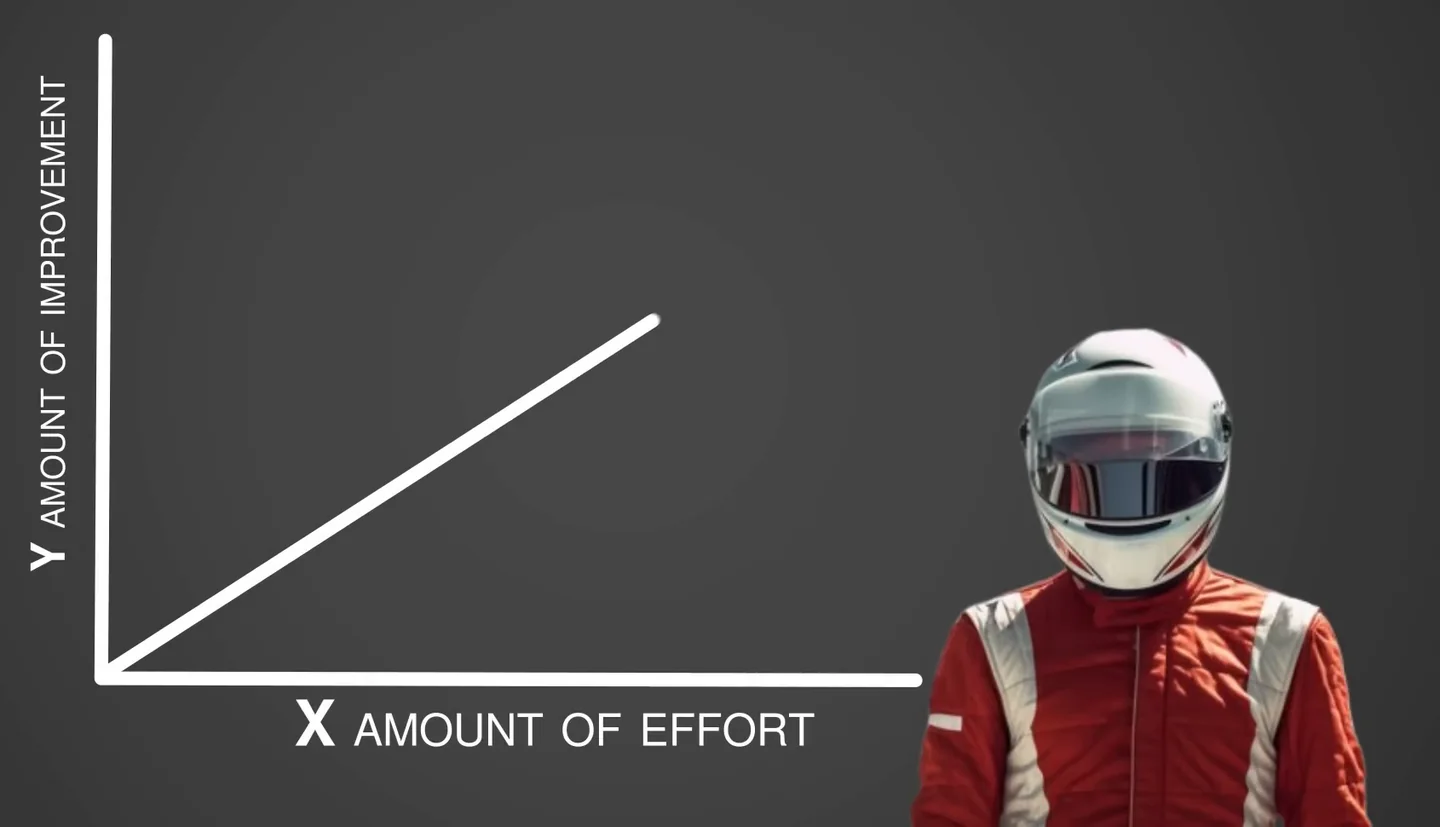
Then it stops. You put in the same work — or even more — and you go nowhere. Worse, sometimes you get slower. I don't know if there's a more demoralising feeling in this hobby than watching your lap times go backwards after a full week of practice.
Real progress isn't a straight line. It backtracks quite a lot. Sometimes your brain needs time to process things before it shows up on the track — and while that's happening, you're more prone to errors. It looks like you're going backwards. It's very sneaky.
Learning to accept this — and actually expect it — changed everything for me. Once I stopped treating a plateau as a sign of failure and started treating it as part of the process, I started improving again. The setbacks didn't disappear, but they stopped making me want to quit.
How to Handle a Progress Plateau
- Don't add more volume. Grinding more laps when you're stuck often just reinforces bad habits. Back off and let things settle.
- Review one thing at a time. Pick a single corner or technique — braking point, trail braking, exit throttle — and focus only on that for a session. If you're not sure which one is holding you back, 1-on-1 sim racing coaching is one way to find out.
- Give it time. Your brain processes new skills offline. A few days away from the sim sometimes produces a breakthrough you couldn't force by staying in it.
- Keep a record. Short notes after each session ("felt good on T3, still losing time at the hairpin") make it easier to spot actual regression versus normal variance.
Judging Every Race by the Result Is a Fast Track to Misery
For a long time, I'd come out of races that should have made me feel proud — tight battles, clean overtakes, moments that were genuinely exciting — and feel terrible because I didn't finish where I thought I should. The result didn't match my expectation, so the entire race was a write-off in my head.
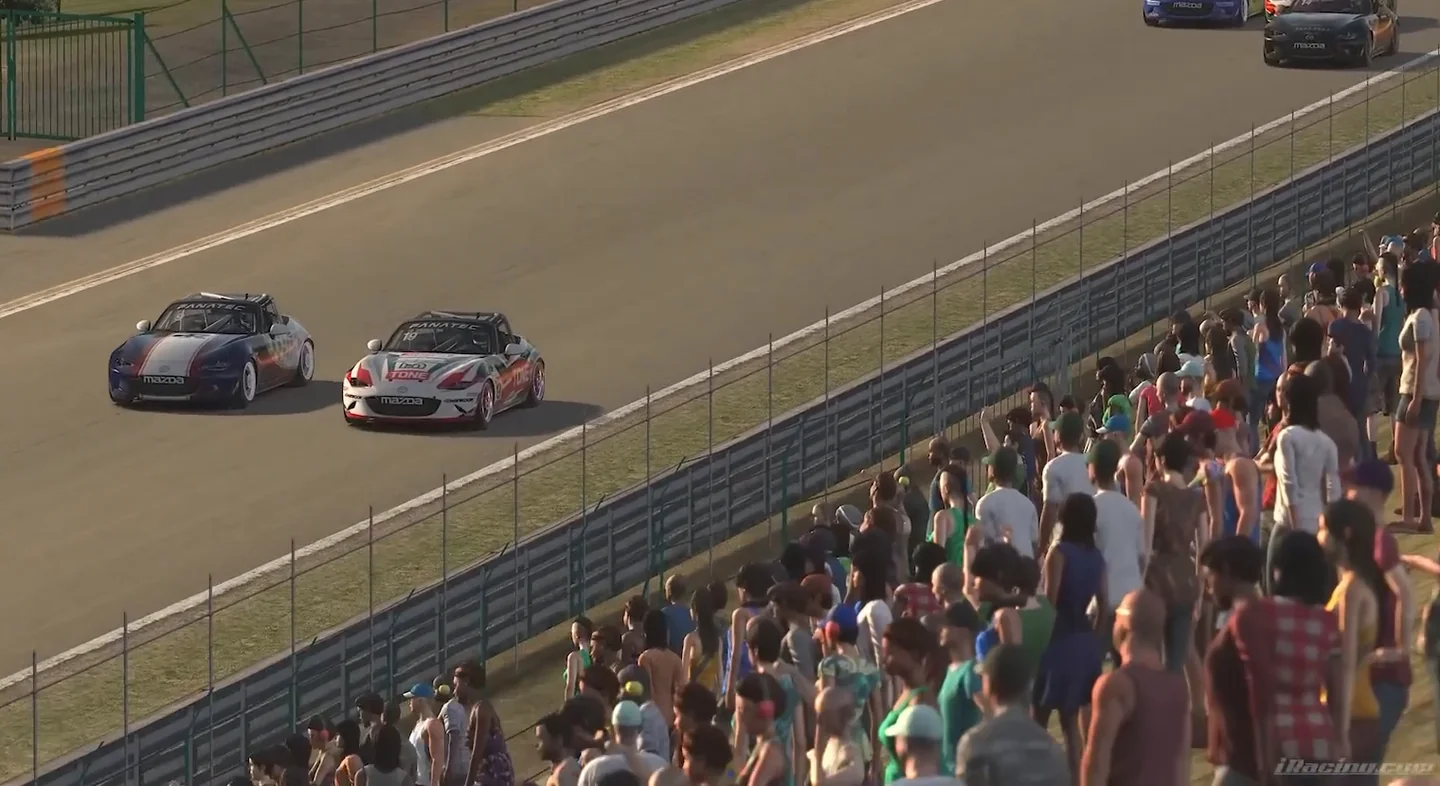
Have you ever driven your heart out, had a race full of good moments, and still walked away frustrated? That mindset robbed me of so many great experiences. When you only judge a race by where you finished, you're setting yourself up for disappointment almost every time — because only one person wins.
What helped me was shifting the measuring stick. Did I execute my braking better than last week? Did I hold my line through a tricky sequence without lifting? Did I have a real fight for position that I actually enjoyed in the moment? Those things matter. The final position is just one data point, and often not the most useful one at your current stage of development.
Comparing Yourself to the Fastest Drivers Will Hollow You Out
Sim racing has a way of putting the very best pace right in front of your face, constantly. Leaderboards, server lobbies, split times — the fastest driver in the room is always visible. And it's natural to look at that gap and think: I should be able to close that.
But what you don't see is what's behind their pace. You don't know if they've been racing sims for ten years. You don't know if they have five hours a day to practice while you're squeezing in an hour after work. You only see the end result. And measuring yourself purely against that, without any context, makes it very easy to feel like you're not enough.
I had stretches where I'd skip signing up for races because I knew I wasn't close to the top drivers. What's the point? I'm too slow. But that's not why I got into sim racing. I got into it because I loved the feeling of racing — close battles, good fights on track, win or lose.
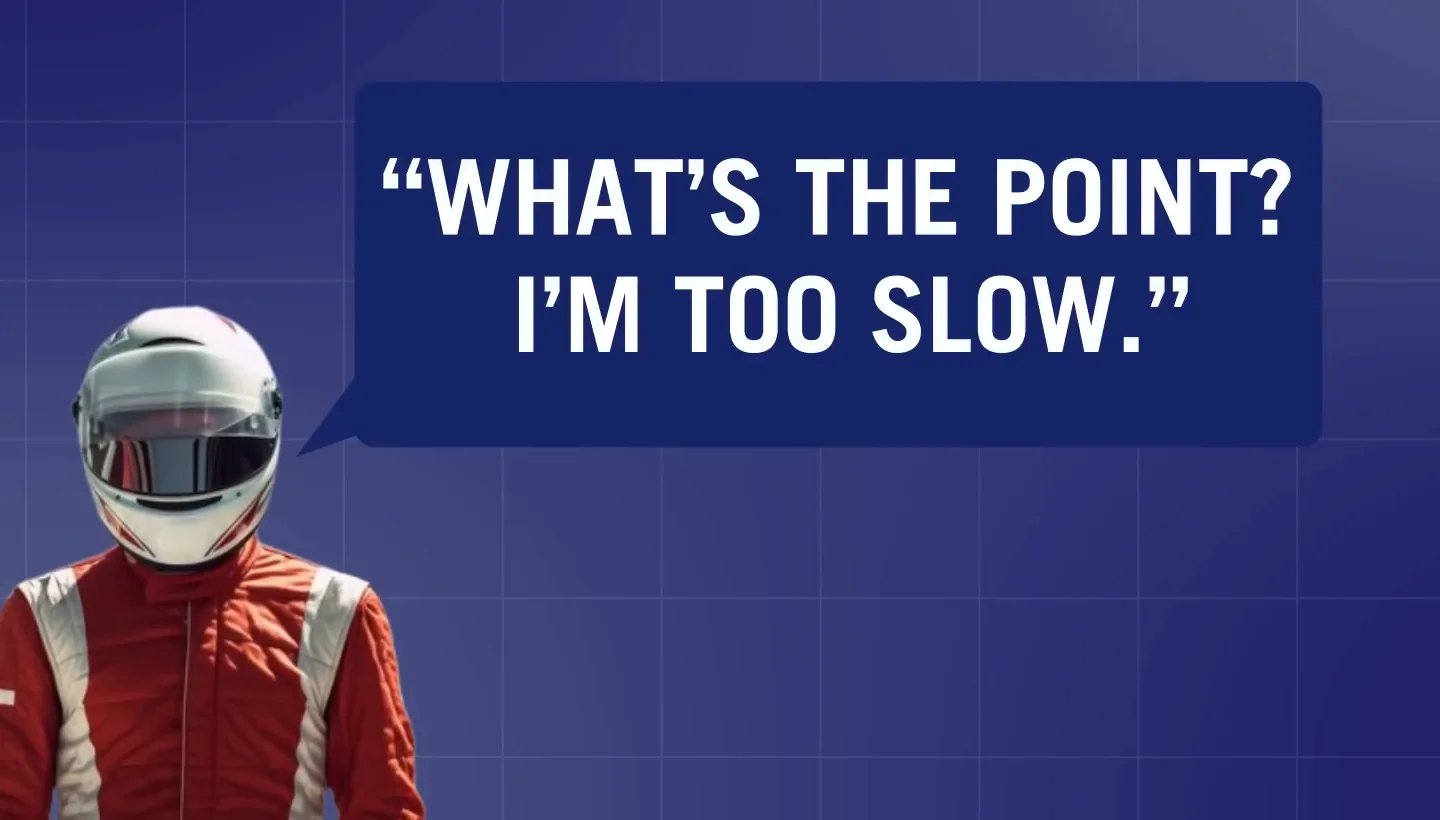
Now I look at top drivers with a grain of salt. I appreciate what they've achieved. I want to beat them eventually. But I don't let the gap make me feel worthless, and I actively look for reasons to have fun while I'm working toward it. That's a much more sustainable way to stay in this hobby long-term.
Getting Crashed: Stop Blaming Everyone Else
This one's uncomfortable to admit, but it's one of the most important things no one tells you about sim racing: your crash analysis is almost certainly biased.
For a while, I had a kind of superiority complex on track. Someone wrecked me? They didn't know how to drive. Got collected in a pileup? Just unlucky, wrong place at the wrong time. Everyone else was the problem.
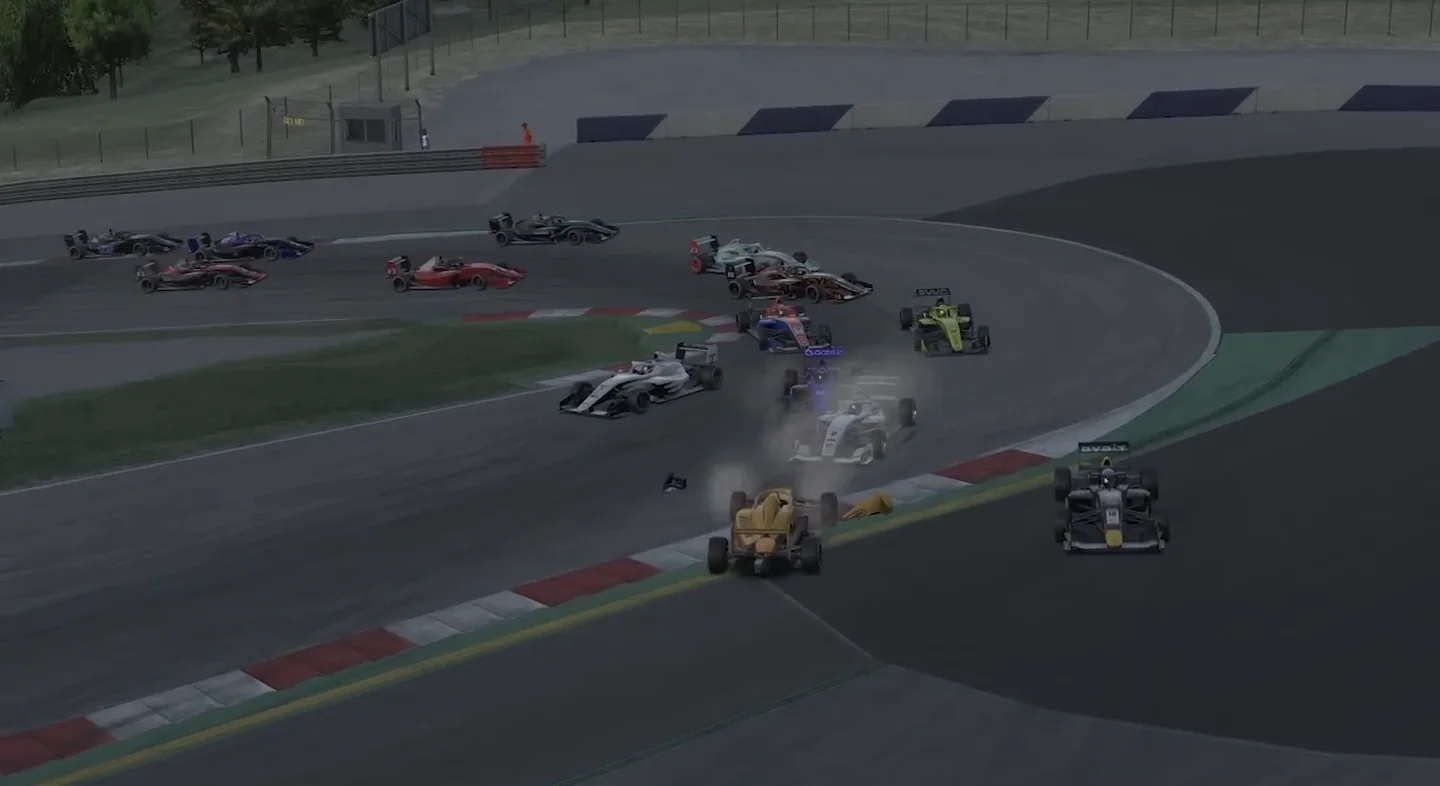
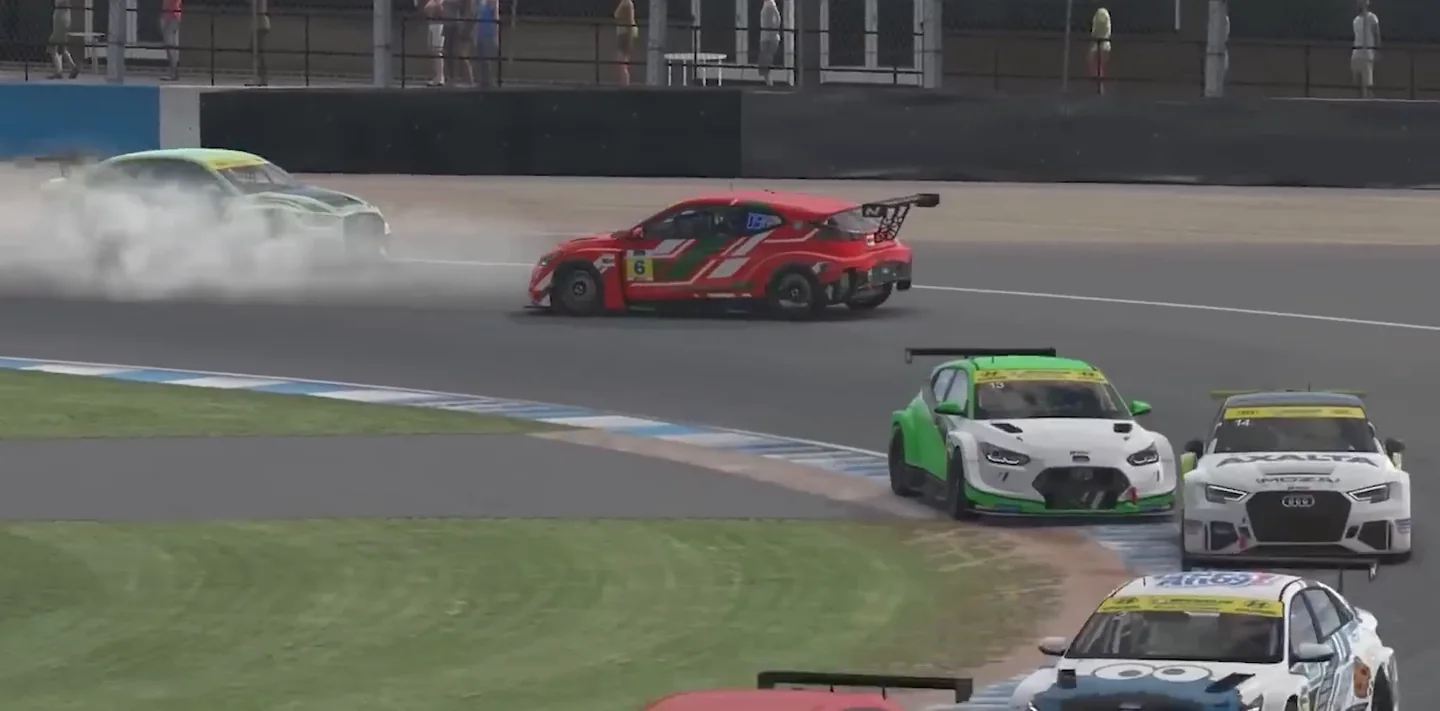
Crashes do happen constantly in sim racing — just like in real motorsport. But if you keep attributing every incident to someone else, it starts to make you toxic. You stop trusting anyone on track. You assume everyone is out to ruin your race. And the bitterness compounds over time.
I know the feeling of practicing all week, getting hyped for a race, and having it end in two minutes because someone turned in on you. It's genuinely gutting. But what actually helped me was learning to laugh it off a little — to remind myself this is a game, no one got hurt, and mistakes happen, including mine.
The Post-Crash Review Habit
- Save the replay. Every platform has one. Watch the incident from a neutral camera angle, not your own cockpit.
- Find your part. Even in crashes where you weren't the primary cause, ask honestly: was there something I could have done differently to avoid this? A wider line, a later commitment, giving more room?
- One action item. Come away with one concrete thing to do differently — not "avoid getting hit", but something specific about your positioning or approach.
- Let the rest go. If the other driver genuinely had a moment of madness, note it and move on. Carrying that anger into the next race hurts your performance more than theirs.
That shift — from feeling defeated and angry after a crash to treating it as a learning moment — is what stopped me from avoiding races out of fear of getting taken out again. You start seeing every incident as data rather than injustice.
The Common Thread: Your Mindset Is the Variable You Control
Everything above comes back to the same idea. The hardware matters. The setup matters. Practice time matters. But none of it compounds properly if the mental side is working against you. Non-linear progress, result fixation, unfair comparisons, blame after crashes — these four things, left unchecked, will quietly drain the joy out of sim racing until you stop showing up.
I know, because I nearly stopped. What brought me back — and what's kept me going since — is being honest about which of these traps I was falling into, and making a deliberate effort to change one thing at a time.
If any of this landed for you, pick the one that hit closest to home and work on it this week. Not all four at once — just one. That's usually where the biggest gains are hiding.
And if the non-linear part is what's grinding you down, it helps enormously to see the shape of it laid out. Improvement comes in five distinct stages, each with its own bottleneck, and the flat spells almost always fall in the same predictable places rather than landing on you at random.
Sim racing things no one tells you FAQ
What are the hidden costs of sim racing no one tells you about?
The wheelbase and pedals are only the start. People rarely warn you about the upgrade ladder: a sturdy rig or cockpit so the wheel doesn't flex, a dedicated PC strong enough for triples or VR, online subscriptions, and the slow creep of buying load-cell pedals, a shifter, or a handbrake later. The bigger hidden cost is time and patience. Budget realistically, buy once where you can, and don't assume better gear alone will make you fast.
How do I stop getting frustrated and wanting to quit sim racing?
Almost everyone hits a point where slow progress, repeated crashes, or losing to faster drivers drains the fun and tempts them to walk away. The fix is rarely more grinding. Reconnect with why you started: close battles and the feeling of racing, win or lose. Judge sessions on execution rather than results, work on one weakness at a time, and take real breaks. Frustration usually signals you are learning, not that you should stop.
Why do my lap times get slower the more I practice in sim racing?
Going backwards after a hard week is one of the cruellest things no one warns you about, but it is normal. When you are actively rewiring a technique, your driving gets temporarily less consistent and more error-prone before the new habit settles in. Grinding extra laps usually just bakes in the bad version. Back off the volume, isolate one thing like your braking point or trail braking, and give your brain time. The pace tends to return higher than where it stalled.
How do I stop getting tilted after being crashed out in iRacing or ACC?
Crashes happen constantly online, just like real motorsport, and carrying the anger into the next race hurts your pace more than the other driver's. Build a post-crash habit: save the replay, watch the incident from a neutral camera, and honestly find your part, even a wider line or later commitment that could have left more room. Take one concrete action item, then let the rest go. Reminding yourself it is a game where no one got hurt makes it far easier to laugh off and move on.
Is comparing yourself to the fastest drivers actually bad for sim racing improvement?
Yes, when you do it without any context. Leaderboards and split times put the quickest pace in your face constantly, but you never see what is behind it: years of experience or hours of daily practice you may not have. Measuring yourself purely against that gap makes it easy to feel like you are not enough and to skip races entirely. Respect what top drivers achieve and aim to beat them eventually, but judge progress against your own previous self, not theirs.
How should I judge a sim race if not by where I finish?
Finishing position is just one data point, and often not the most useful one early on, because only one person can win each race. Judge yourself on execution instead: did you brake better than last week, hold a tricky sequence without lifting, or have a genuine fight for position you enjoyed in the moment? Those are the things you actually control and the ones that compound into real pace. Chasing only the result is a fast track to walking away from good races feeling miserable.
This guide is part of the free library at GitGud Racing Academy — an online sim racing academy built around weekly lap reviews, structured courses, drills and training tools.
Train this the right way
Reading is step one. Build it into muscle memory with structured, car-specific courses and personal lap reviews from a coach — inside the Academy.
Join the Academy · $39.99/mo incl. VATWatch the full video on YouTube