How to Get Better at Sim Racing
Most drivers who want to get better at sim racing do the same thing: run more laps. More laps, same result, and after a few months the conclusion is that they've found their ceiling. They haven't. They've found the ceiling of unstructured practice, which is a much lower and much more common place to be stuck.
This guide is the alternative, and it isn't theory. It's built on a driver I coached who went from 1.5K to 6K iRating in a little over a year — on a Logitech G Pro wheelbase, pedals and a single screen. Not on hardware, not on talent, and not on a secret setup. On a method, applied for twelve months.
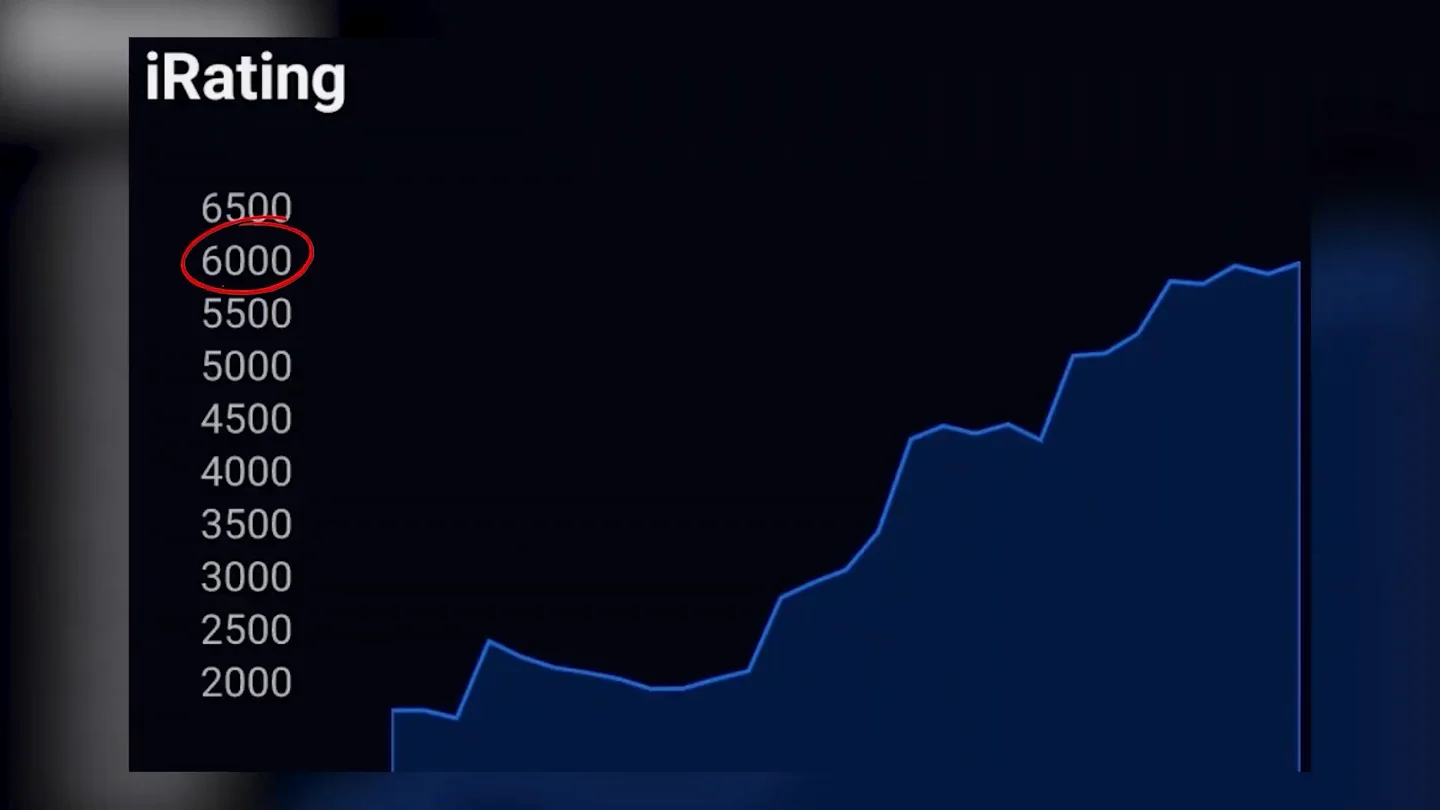
His name is Adrien. What follows is what he actually did, in the order it mattered, with the parts I'd change for someone who doesn't have three hours a day.
1. Why just driving more laps doesn't work
Laps are not practice. Laps are repetition, and repetition trains whatever you happen to be doing — including the mistake. Drive four hundred laps with a brake release that's too abrupt and you don't have four hundred laps of experience; you have one lap of experience four hundred times, and a very well-rehearsed habit of pushing the car into understeer on entry.
The reason this is so easy to miss is that unstructured practice does produce improvement at first. Track knowledge alone is worth seconds when you're new. So the feedback loop confirms the method right up until the day it stops working — usually somewhere between 1.5K and 2.5K iRating, where track knowledge has been exhausted and technique hasn't started.
Adrien's practice looked nothing like grinding. Across a full year, his time split like this:
- 20% — learning the track alone
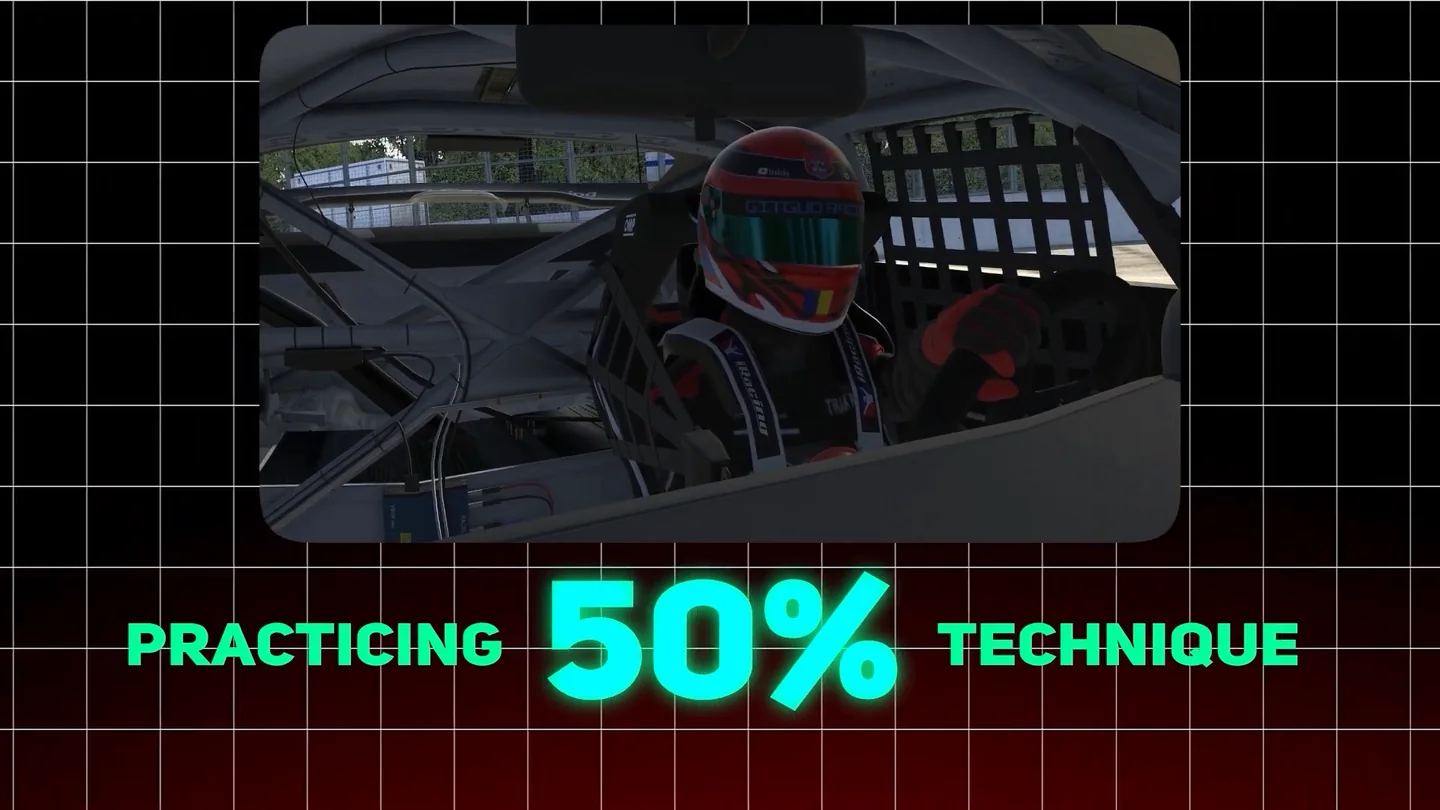
- 50% — practising technique in actual races
- 30% — telemetry and replay analysis, off the track entirely
Read that again: nearly a third of his improvement happened while he wasn't driving. And of the time he was driving, most of it was in races, not alone on an empty track. That single distinction is the biggest difference between his practice and almost everyone else's. Racing is also the only place to learn the one thing hotlapping cannot teach: reaching the pace you already have on lap one rather than lap four, which is sim racing race pace.
2. Learn to identify what's actually costing you time
Before you fix anything, you have to know what's broken — and "I'm slow in sector two" is not a diagnosis, it's a symptom. Most drivers work on whatever they most recently read about, which is why so much effort goes into corners that were never the problem. If you are not sure which skill is the weak one, the twelve driving techniques are listed there in dependency order with a symptom-to-technique table.
There are two questions, and they're different: where am I losing time, and why. Skip the first and you'll spend a week on the second in the wrong corner.
The chopper line check
A method I use constantly, because it finds a category of loss that is genuinely invisible from the cockpit: driving further than you need to.
- Save a replay of a representative lap — not your best one, an ordinary one.
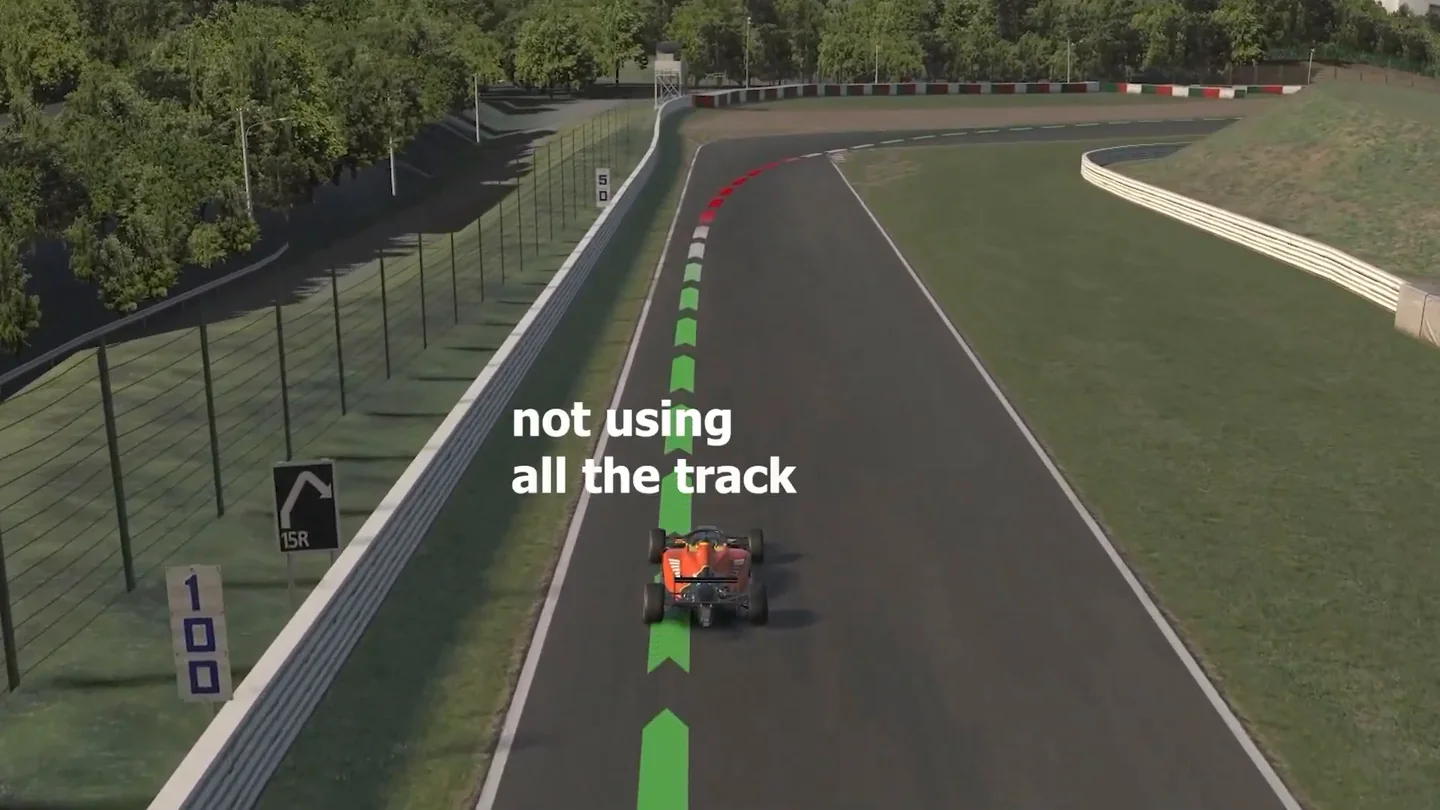
- Watch it back from the chopper camera or far chase, so you're looking straight down at the track.
- Turn on the racing line assist and compare your actual path against it.
- Look for corners where your line travels a visibly longer distance — early apexes you then have to correct, entries that start too far from the kerb, exits that don't use the road.
If your line is travelling further, you are losing time regardless of how good your inputs are. You cannot fix this with more commitment; you fix it by driving somewhere else. From inside the car this is almost impossible to see, which is exactly why it survives so long.
The cockpit view lies to you about geometry. The bird's-eye view doesn't.
3. Fix braking first
If you only work on one thing, work on the brake. It's the input with the widest gap between "acceptable" and "good", it sets up everything that happens afterwards in the corner, and it's where most mid-pack drivers are losing the most.
The specific fault I see most, and the one Adrien had, is too much pressure held too long. Not braking too late — braking too hard, too deep into the corner, and releasing it like a switch. The car understeers on entry, the driver reads that as "the car won't turn", and starts fighting the front end for the rest of the stint.
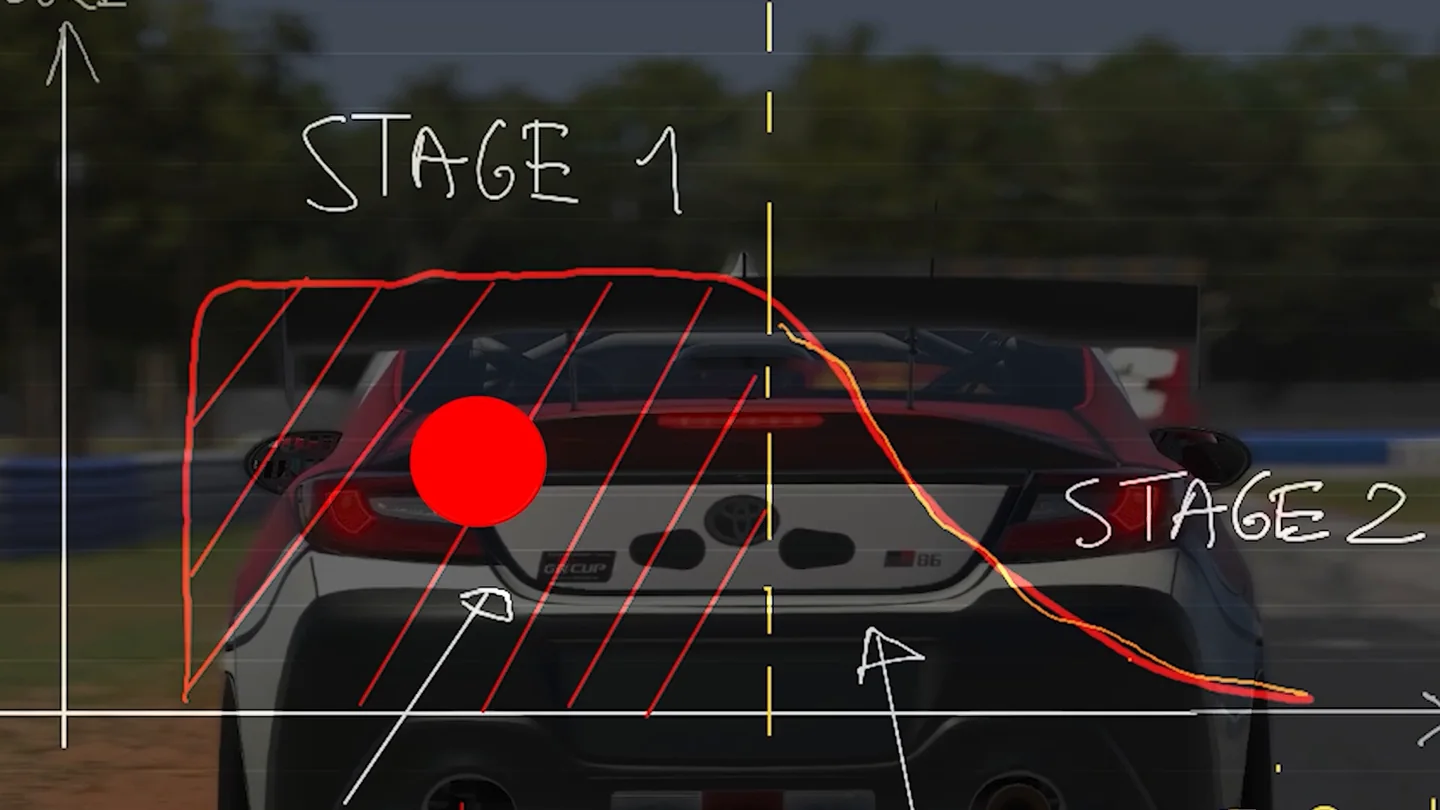
The fix is the release, not the application. A controlled, progressive release of the brake as you turn in keeps load on the front axle while the steering does its work — the car rotates instead of pushing. Same brake point, same peak pressure, completely different corner.
Ghost lap comparison for brake release
- Set a lap you're happy with and save it as a ghost.
- Run against it and watch two things only: how quickly you're decelerating, and how much the car rotates as you come off the pedal.
- Deliberately release more slowly than feels right on one lap. Note what the front end does.
- Repeat until the slower release is the one that feels normal.
Following a ghost works because it connects the theory to the road. Reading "release the brake progressively" changes nothing; watching a car that does it pull away from you through the middle of the corner changes everything.
If braking is your limiting factor, we've written this up in far more depth: trail braking explained and three steps to fix your trail braking.
4. Learn rotation
Rotation is what the brake release buys you, and it's the concept that separates drivers who are quick from drivers who are merely tidy. A tidy driver slows the car, turns the wheel, and waits for the car to come round. A quick driver uses the deceleration to bring the nose round, so the car is already pointing where it needs to go before the corner has finished.
The tell that you're not rotating: you're adding steering angle in the middle of the corner. If you turn in, then have to turn in more, the car didn't rotate on entry and you're now asking the front tyres to do it on their own, at a point in the corner where they have the least help.
The other tell is your hands. Lots of correction, lots of small adjustments mid-corner — that's a car that arrived at the apex pointing the wrong way and is being argued into position.
Rotation is not aggression. It's timing. The car turns best while it's still transferring load forward, and that window closes the moment you're fully off the brake.
5. Work on exits
Exit is where lap time is actually paid out, because every mistake on exit is multiplied by the length of the straight that follows. Two tenths lost at the exit of a corner onto a long straight is worth far more than two tenths lost in a tight sequence — and drivers routinely spend their practice time on the tight sequence because it feels harder.
The exit rule that matters most: you cannot fix an exit on the exit. If you're picking up the throttle late, the cause is almost always upstream — you arrived at the apex too fast, or pointing the wrong way, and the exit is where you pay for it. Work backwards from the problem, not on it.
A practical priority order when you're deciding what to work on: corners leading onto long straights first, then anything you're losing more than a tenth in, then everything else. Most drivers do this in exactly the opposite order.
6. Stop chasing lap time every lap
This is the hardest one to accept and it's the one that unlocked Adrien's first real jump.
Here's a fact about iRacing that most drivers under 2.5K don't know: up to around 2.5K iRating, you will almost always gain rating simply by finishing every race without a spin or a crash. Not by being fast. By surviving, driving your own pace, and crossing the line. The rating you're chasing with heroics is sitting there waiting for you to stop having incidents.
So the first thing Adrien changed wasn't his pace. It was his incident count.
The five-race challenge
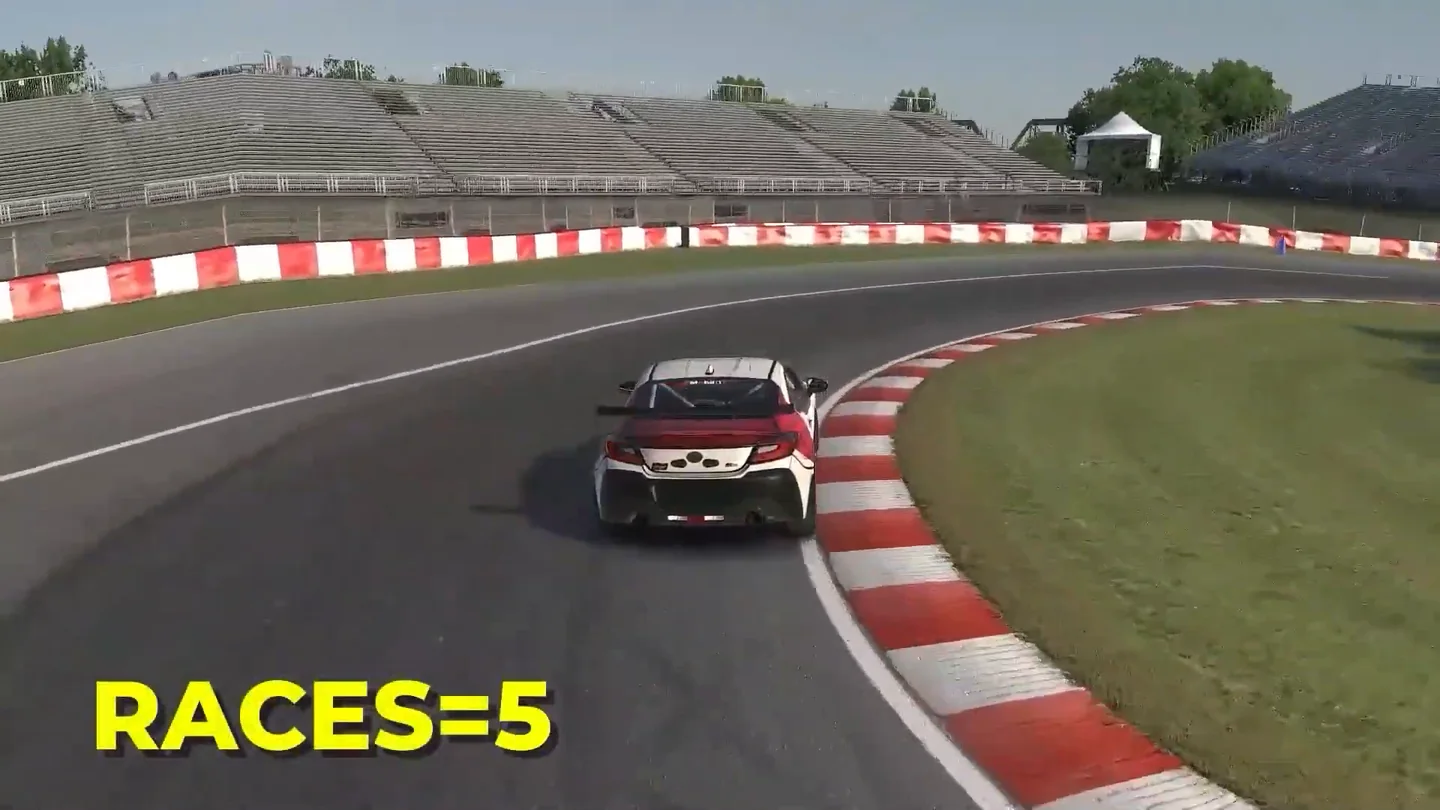
For your next five races, don't focus on pace at all. Aim for zero incidents, even if you finish lower than you think you should. Then review every incident that does happen with the triple check below.
Most drivers who try this gain rating during the five races they were deliberately not trying to be fast in. That result is the lesson.
The same logic applies within a race. There's no need to defend hard against a driver who is three or four tenths a lap quicker when there are twenty minutes left — he is going past, and the only question is whether it costs you anything. There's no need to be aggressive on lap one. Pick the battles that are actually available.
And a note on rating itself: it exists to match you with drivers of similar skill so the racing is competitive. It is not a measure of your ability as a person, and it is never static. Drivers who treat it as a scoreboard make worse decisions in exactly the moments that decide races.
7. Practice one skill at a time
A session with three goals has no goals. If you go out intending to work on braking, and your line, and your consistency, what you will actually do is drive normally and notice nothing.
One skill per session. Name it before you leave the garage, and accept that your lap times during that session may get worse — because they will, and that's the correct sign. A driver deliberately releasing the brake more slowly than feels natural is temporarily slower. That's what learning looks like from the inside.
The vision drill Adrien used is a good example of a single-skill session, and it's deceptively hard:
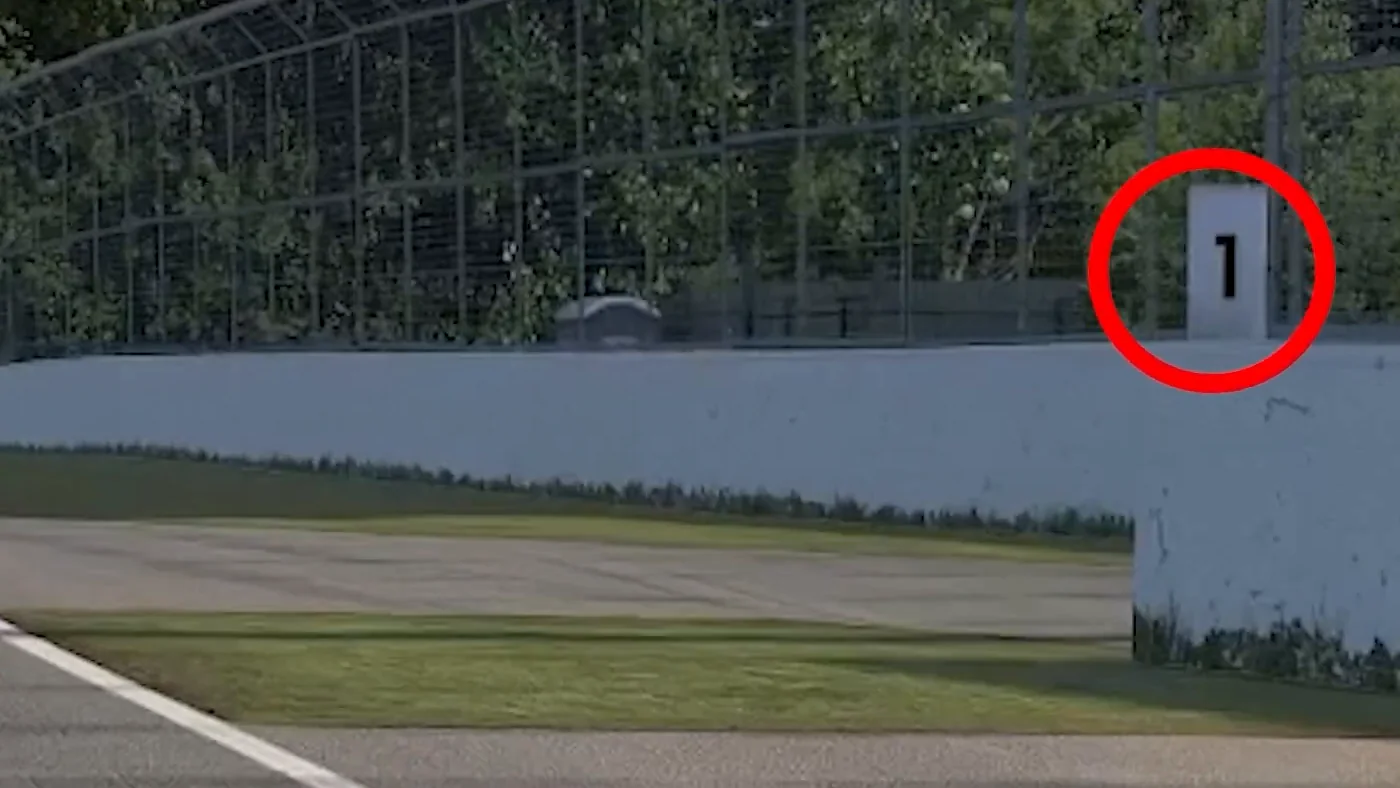
Call your markers out loud
While driving, say your braking markers out loud as you reach them. Out loud, actually speaking.
It works because it forces you to track the marker with peripheral vision instead of staring directly at it. Most drivers' eyes are far too close to the car — they look at the marker, then the apex, then the kerb, each in turn, always a beat behind the car. Naming things forces your eyes further up the road and keeps them there.
Expect this to feel ridiculous and to cost you a few tenths for the first session. It's the fastest fix for late, reactive driving I know.
While you're on vision: if your field of view is wrong, none of this works properly. A too-wide FOV shrinks the world and makes every distance judgement approximate, which is a problem no amount of practice fixes.
8. Compare yourself to faster drivers
Comparison is the fastest diagnostic you have, and most drivers use it wrong — they look at a faster lap, see that it's faster, and take away nothing except that they're slower.
The useful version is narrow. Take one corner. Take a driver a realistic step ahead of you, not an alien three seconds a lap quicker, because the gap between you and an alien contains too many differences to learn from. Then compare in this order: brake point → brake release shape → minimum speed → throttle point → line. The first thing that differs is your lesson. Everything after it is a consequence of that difference, not a separate problem.
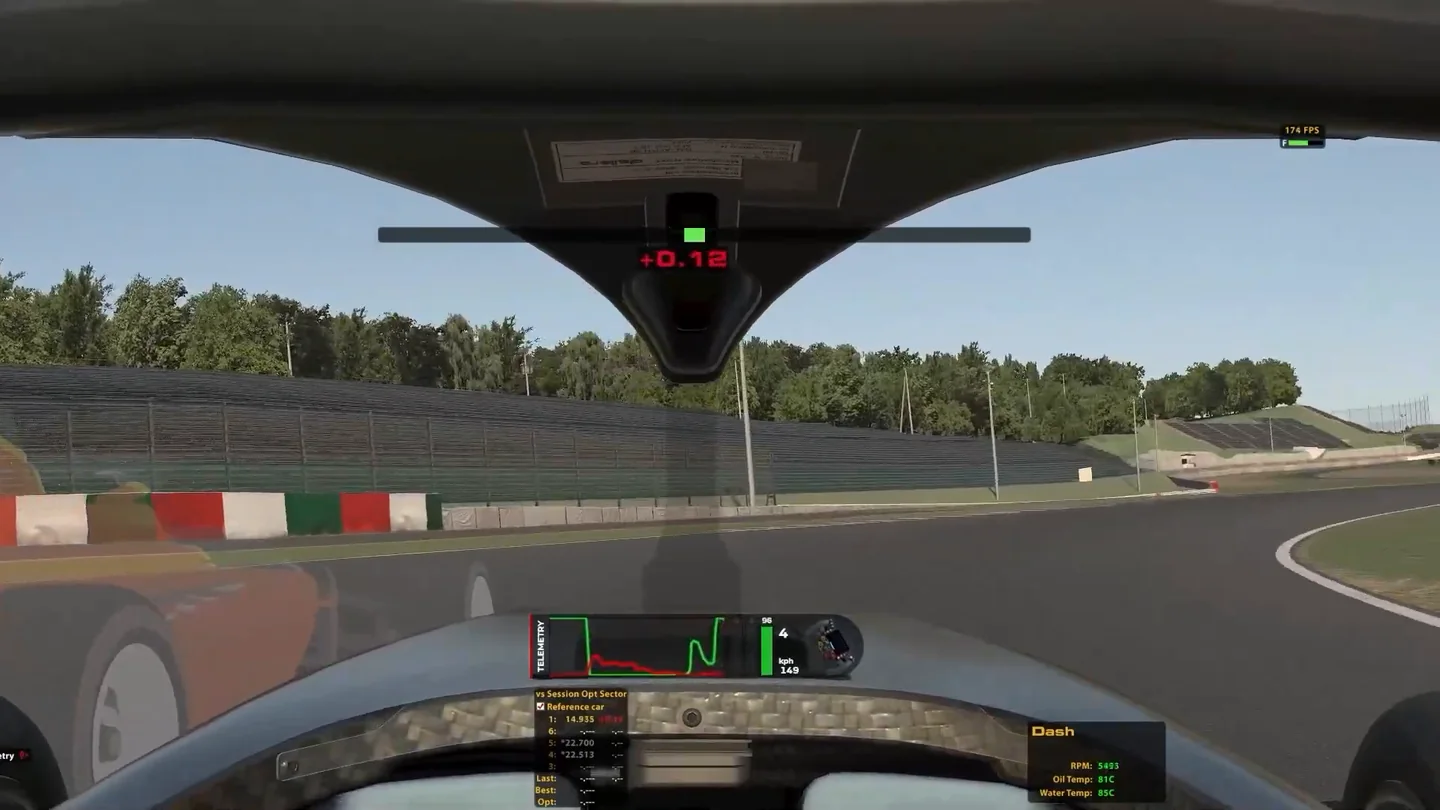
Adrien did something else that matters more than it sounds: he surrounded himself with quick drivers. Not to copy their setups — to normalise a higher standard. When the people you race with every week are quicker than you, the pace you consider acceptable moves without you deciding to move it.
9. Use telemetry correctly
Telemetry is where a lot of drivers waste time, because they open it without a question. A trace will happily show you forty differences between two laps, thirty-nine of which are noise. The full process — which graph to open first, and how to stop at the cause instead of the consequence — is how to read sim racing telemetry.
Go in with one question. "Why am I slower through turn four" is a question. "Let's look at the data" is not.
Then read the traces in causal order — brake application, brake release, minimum speed, throttle application, steering angle. Stop at the first meaningful difference. That's your cause. A different minimum speed is usually not the problem; it's usually the arithmetic of a brake point ten metres earlier playing out.
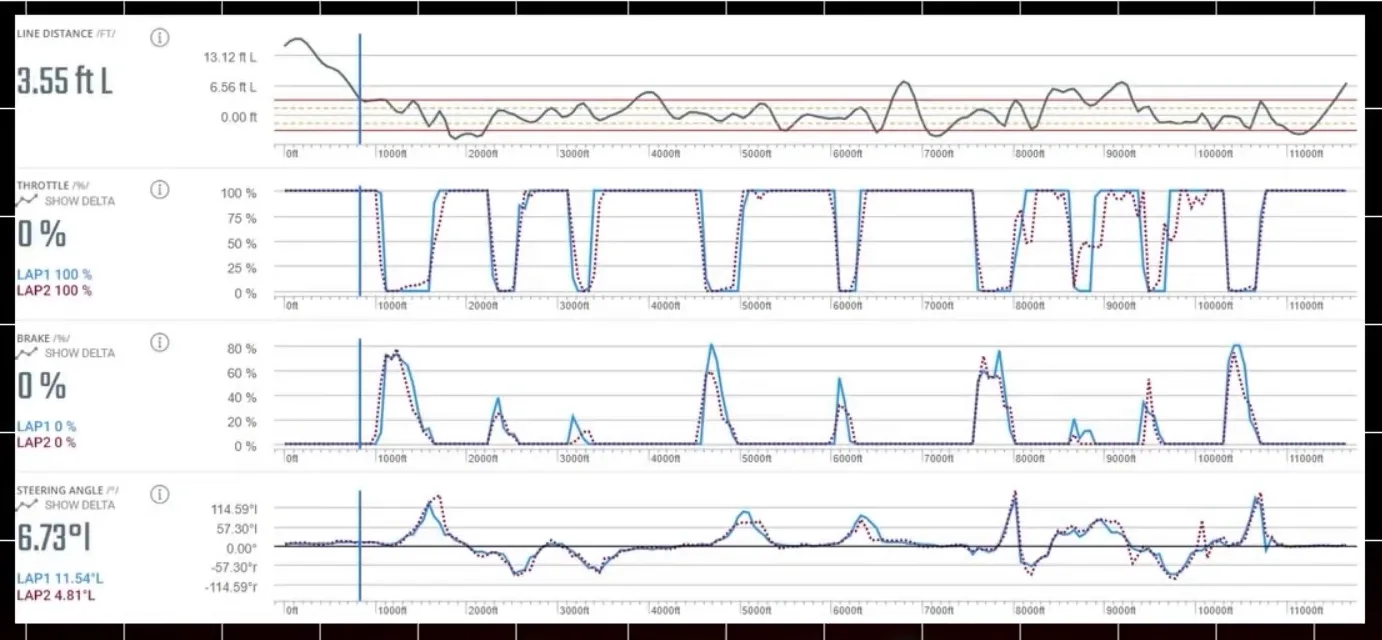
The thing that makes telemetry work is that Adrien spent 30% of his total time here — off the track, doing the unglamorous part. Everyone wants the driving hours. Almost nobody wants the analysis hours, which is precisely why the analysis hours are where the advantage is.
10. Review your own laps and your own incidents
Replay analysis was the first thing Adrien changed and the thing he never stopped doing. He reviewed nearly all of his incidents — including the ones where he was clearly not at fault, which is the part almost everyone skips.
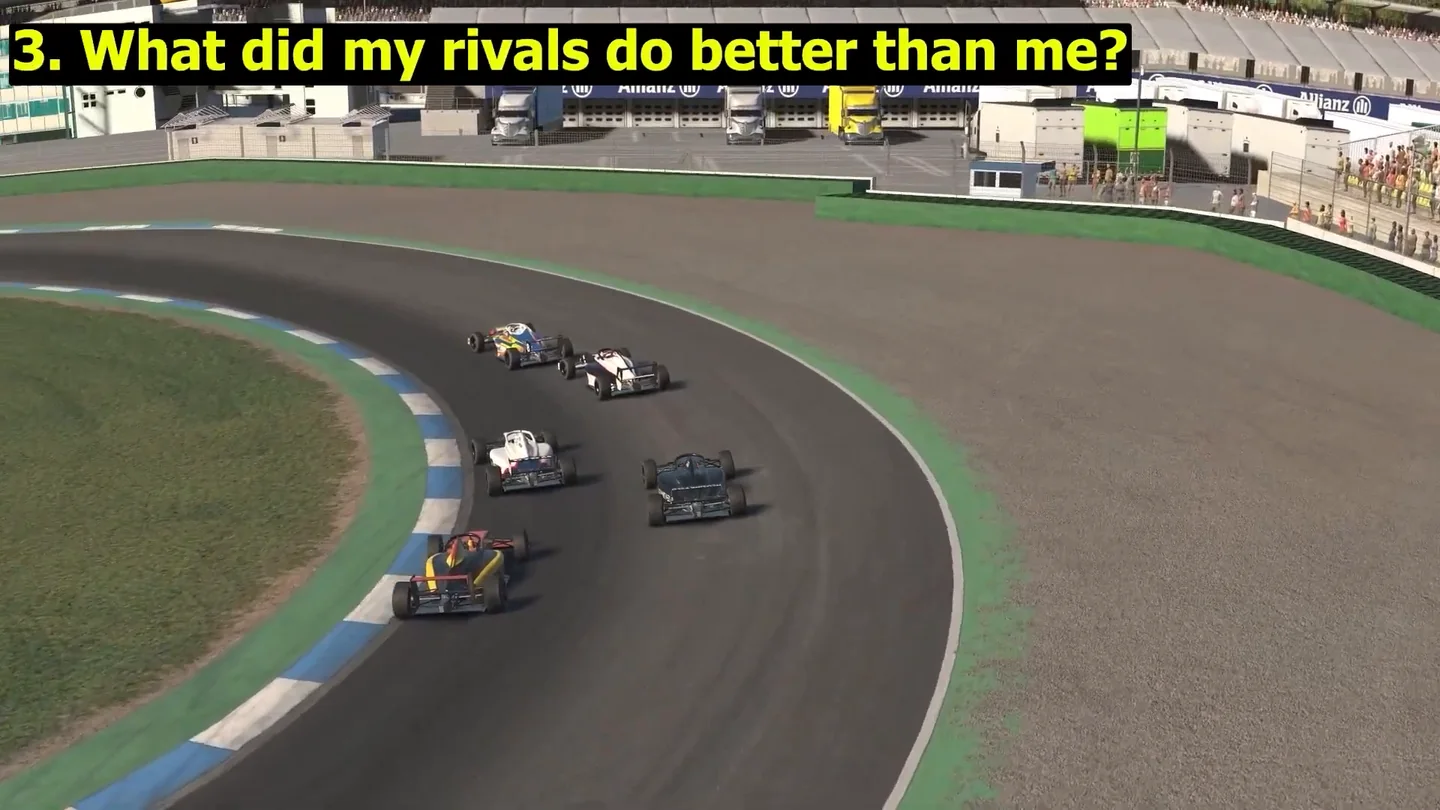
The triple check framework
Three questions, asked of every incident:
- Was I in the right position to attack or defend? Did I have space, or was I committing to a move that was never really available?
- Did I put myself in a tough spot on entry, mid-corner or exit? Most contact is set up a corner earlier than it happens.
- What did my rival do better than me? Not "what did he do wrong" — what did he do better.
And when you go through all three and conclude you did everything right and still got hit, add a fourth:
What could I have done differently to avoid this crash, even though it wasn't my fault?
That last question is the one that separates drivers who stop having incidents from drivers who keep having them and keep being right about it. Fault is a matter for the stewards. Avoidance is a skill, and it's trainable.
Adrien also edited together his good and bad laps to watch later. It sounds like a small thing. It kept him engaged for a year, which turned out to matter more than any individual technique.
11. Work on consistency
Consistency isn't a personality trait and it isn't something that arrives once you're fast enough. It's a separate skill with its own practice, and it's worth more rating than pace at every level below the very top.
The goal Adrien used, and I use it with drivers constantly: ten clean laps in a row. Not ten fast laps. Ten consecutive laps with no lockups, no offs, no moments. If you can't do ten, you don't have a pace problem, you have a repeatability problem, and racing at your limit is going to keep ending the same way.
The number is deliberately annoying. Most drivers discover they can do six or seven comfortably and that the eighth is where concentration goes — which is useful information, because a 20-minute race is a lot more than ten laps.
If your times scatter rather than drift, that's an input problem and it has a short list of causes: why your lap times are inconsistent walks through the diagnosis.
12. Learn racecraft separately from hotlapping
These are two different sports that happen to share a car. Being quick alone on an empty track teaches you nothing about where to be on lap one, how to lose a position cheaply, or when a gap is real. The skill itself, how to defend, overtake and think a corner ahead of the other driver, is sim racing racecraft.
This is why Adrien used races as his practice sessions — and it's the single most counter-intuitive thing in his method. Of roughly three hours a day, he spent less than one practising alone. Everything else was applied in live races.
He told me his lap times were actually slower when practising alone than when racing. The reason is simple: a race gives you a goal. Finish ahead of that car. Defend this position. Take the fastest lap. Alone on an empty track, the goal is abstract, and abstract goals produce abstract effort.
The obvious objection is incidents — surely racing while you're still learning costs you safety rating. It does, if you race the way you were racing before. It doesn't if you've done step 6 and your goal for the race is zero incidents rather than a heroic result.
13. Build a weekly training routine
Adrien averaged more than 70 hours a month — around two and a half to three hours a day, every day, for a year. That is a lot of seat time, and most people reading this don't have it. So here's the version I'd give someone with one hour a day, which is the plan I actually recommend:
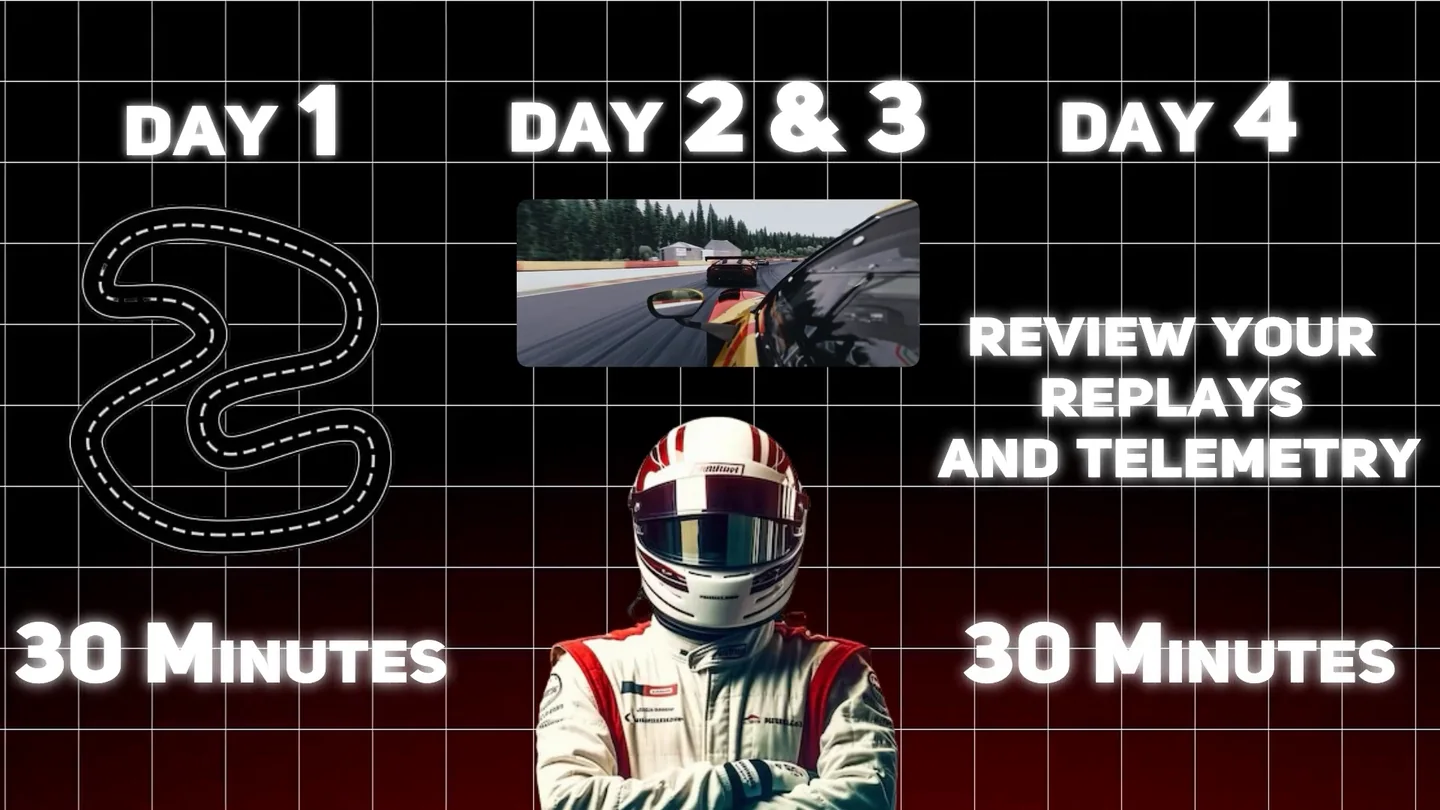
The one-hour-a-day week
- Day 1 — learn the track. 30 minutes on the layout, then 30 minutes of hotlaps. No pressure on time; you're building references.
- Day 2 — race. Apply what you worked on. One skill, named before you start.
- Day 3 — race. Same skill again. Twice is where it starts sticking.
- Day 4 — review. At least 30 minutes on replays and telemetry. Every incident through the triple check. Find the one thing to work on next.
Repeat weekly. Note the shape: one day learning, two days applying under pressure, one day analysing. Most drivers' weeks are seven days of the first item.
If you want the longer version of session structure, how to practice sim racing effectively goes deeper on planning individual sessions. For the exercises that fill those sessions, five sim racing drills gives you a corner-by-corner running order.
Expect plateaus, and know what they mean
Adrien's climb was not a straight line. It stalled, more than once, and you should expect yours to.
The notable one came after 4K, where the competition sharpens and the things that got you there stop being enough. What broke that plateau was tyre management — keeping the tyres in their operating window across a stint, avoiding micro-lockups, cutting out unnecessary inputs that generate heat for nothing. At that level, everyone is fast for five laps. The separation is who is still fast on lap twenty.
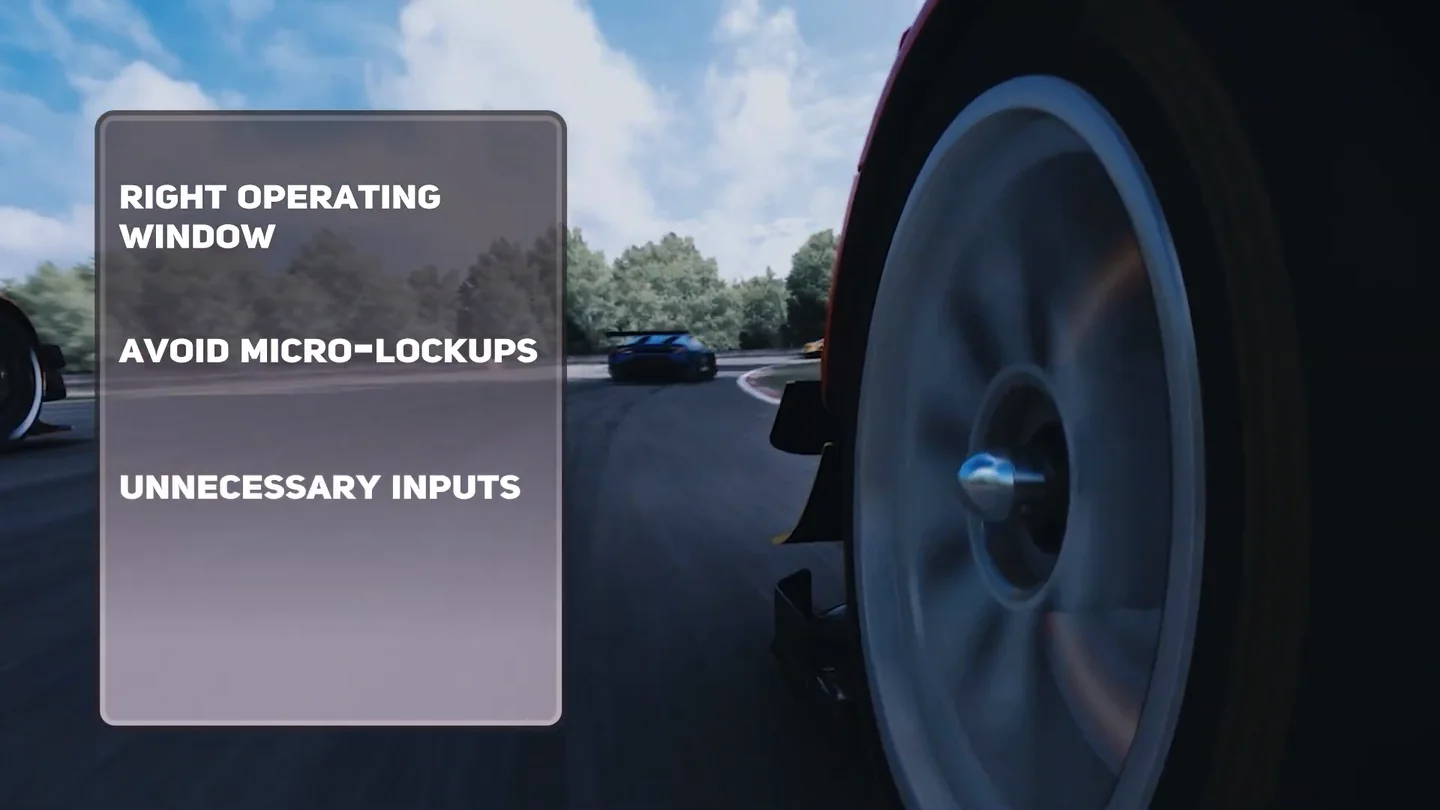
A plateau is not a ceiling. It's a signal that the current limiting factor has changed and you're still working on the old one.
The honest part: it's about priorities
Everything above is method, and method works. But the reason Adrien got to 6K and most passionate drivers don't isn't method, and it isn't talent. It's that he prioritised it.
Passion alone isn't enough — if it were, far more people would be quick, because sim racing has no shortage of passionate people. Adrien had the time, and more importantly he made the decision to use that time deliberately rather than pleasantly. Prioritising one thing means sacrificing others. Time, money and energy are finite, and committing to getting good at racing means saying no to something else. That's just true, and I'd rather say it than sell you a shortcut.
So set a realistic timeframe. If reaching the top 1% takes you five years instead of one, is it still worth it? Almost certainly — and framing it that way is what stops you quitting in month four. There will be periods in your life where the priorities are different, and that's fine. Don't beat yourself up because this month you don't have three hours a day. Set a long-term goal and enjoy the progress.
Can anyone actually do this? Yes. You might never reach alien level — most of us won't — but the top 1% is genuinely reachable with persistence and the right tools, if it's something you want enough to work for. It isn't easy, and anyone telling you otherwise is selling something.
Software will offer to take this off your hands, and it is worth knowing the shape of what it does first: an AI sim racing coach is genuinely good at telling you where you differ from a faster lap, and much weaker at telling you why — which is the half that changes how you drive.
Where to start tomorrow
Pick one thing. Not all thirteen.
- If you have frequent incidents — the five-race challenge and the triple check. Nothing else matters until this is fixed.
- If you're clean but slow — the chopper line check, then brake release.
- If you're fast for five laps and then not — ten clean laps in a row, then tyre management.
- If you don't know which of those you are — that's the actual problem, and it's the one worth solving first.
That last case is more common than the others combined. Knowing what to work on next is a genuinely hard problem to solve alone, because the thing costing you time is usually invisible from inside your own car — that's the whole reason the chopper camera works. If you're struggling to identify what you should be working on, that's exactly the problem the GitGud Racing Academy's lap-review and coaching system is built to solve: you send a lap, and a coach tells you which one thing to change next.
Either way — pick one thing from this guide and apply it in your next session. Don't just read it. That's how you improve.
If the missing piece is a path rather than more information, that is what the sim racing courses are for — the same techniques in the order they build on each other, with a drill after each one so you can tell whether it landed.
Getting better at sim racing FAQ
How much practice does it take to go from 1.5K to 6K iRating?
There is no fixed answer, and the honest version is that it depends far more on how you practise than on how long. The driver this guide is built around went from 1.5K to 6K iRating in a little over a year, but he averaged more than 70 hours a month and spent nearly a third of that time on telemetry and replay analysis rather than driving. With one focused hour a day, expect meaningful progress in months and a serious climb over a year or two. Set a long-term goal rather than a deadline: if reaching the top 1% takes five years instead of one, it is still worth it.
Why am I not getting faster in sim racing even though I practise a lot?
Because laps are repetition, not practice, and repetition trains whatever you are already doing, including the mistake. Unstructured driving does improve you at first, since track knowledge alone is worth seconds, which is why the method seems to work right up until it stops, usually between 1.5K and 2.5K iRating. The fix is to know what you are working on before you leave the garage, work on one thing per session, and spend real time reviewing replays and telemetry off the track. Improvement does not only happen while driving.
What should I work on first to improve at sim racing?
If you have frequent incidents, fix that before anything else, because up to around 2.5K iRating you will usually gain rating simply by finishing races without a spin or crash. Try five races where you ignore pace entirely and aim for zero incidents, then review every incident you do have. If you are already clean but slow, start with your racing line seen from the chopper camera, then your brake release. Too much brake pressure held too long is the most common cause of entry understeer at mid-pack level.
Is it better to practise alone or to race in sim racing?
Both, but most drivers get the ratio badly wrong. The driver in this guide spent under a third of his driving time practising alone and used live races as his main practice, because a race gives you a concrete goal such as finishing ahead of a specific car or defending a position, and abstract goals produce abstract effort. He was actually quicker in races than alone on an empty track. Practise alone to learn a layout and to drill one specific technique, then apply it under pressure in races.
How do I stop crashing so much in sim racing?
Review every incident, including the ones that were not your fault, using three questions: was I in the right position to attack or defend, did I put myself in a tough spot on entry, mid-corner or exit, and what did my rival do better than me. If you conclude you did everything right and still got hit, ask what you could have done differently to avoid it anyway. Fault is a matter for the stewards, but avoidance is a trainable skill, and drivers who only review incidents they caused keep having the other kind.
Do I need expensive hardware to get better at sim racing?
No. The driver this guide follows reached 6K iRating on a Logitech G Pro wheelbase and pedals with a single screen. Hardware raises the ceiling eventually and better pedals in particular help you brake consistently, but nothing on the list of things holding a mid-pack driver back is solved by spending money. Wrong field of view costs more time than most hardware upgrades save, and it is free to fix.
Why have I stopped improving at sim racing?
A plateau usually means the thing limiting you has changed while you are still working on the old one. The driver in this guide stalled after 4K iRating, where everyone is fast over five laps and the separation comes from who is still fast on lap twenty; what broke it was tyre management, keeping the tyres in their operating window and cutting out micro-lockups and unnecessary inputs. Diagnose the new limiting factor rather than doing more of what worked last time.
This guide is part of the free library at GitGud Racing Academy — an online sim racing academy built around weekly lap reviews, structured courses, drills and training tools.
Train this the right way
Reading is step one. Build it into muscle memory with structured, car-specific courses and personal lap reviews from a coach — inside the Academy.
Join the Academy · $49.99/mo incl. VATWatch the full video on YouTube