iRacing Qualifying Guide: How to Qualify Faster & Nail Your Out Lap
Most qualifying advice teaches you how to drive the flying lap. This one is about the lap before it. On the same track, in the same car, with the same setup and the same conditions, I ran a 1:39.30 and then a 1:38.5 — over half a second, without pushing harder or feeling like I was trying more. The second lap felt easier and more in control than the first. Nothing about my driving on the timed lap changed. What changed was the out lap.
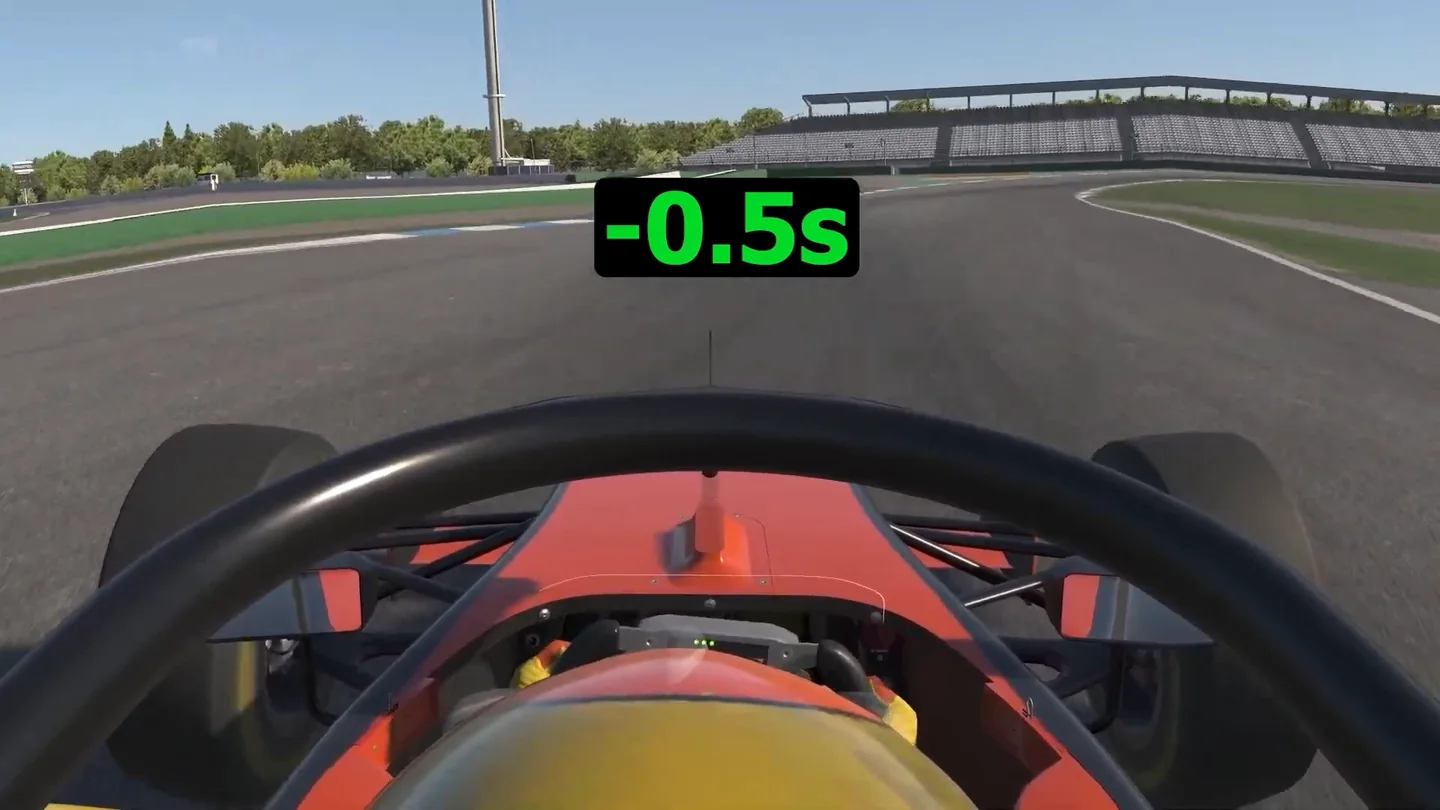
That is the whole idea here. Your qualifying lap starts before your qualifying lap, and if you arrive at the line with the tyres in the wrong state you will drive a good lap and still be half a second down. Below is what actually happens to the tyre, and the out-lap procedure that fixes it.
Why qualifying is worth more than the lap time
A strong grid slot does not just move you up the order — it changes the race you are about to have. Fewer cars around you means fewer battles, fewer incidents, and a much better chance of finishing where your pace says you should. Qualifying well is the cheapest way to make a race easier, and it is a skill you can practise on its own. It is also a late one: race pace versus qualifying pace is the eleventh of the twelve driving techniques, and it leans on everything before it. Qualifying well does not guarantee you will access that pace once the lights go out, though: with cold tyres and cars around you, most drivers take three laps to reach a speed they proved in one, and race pace is about closing that gap.
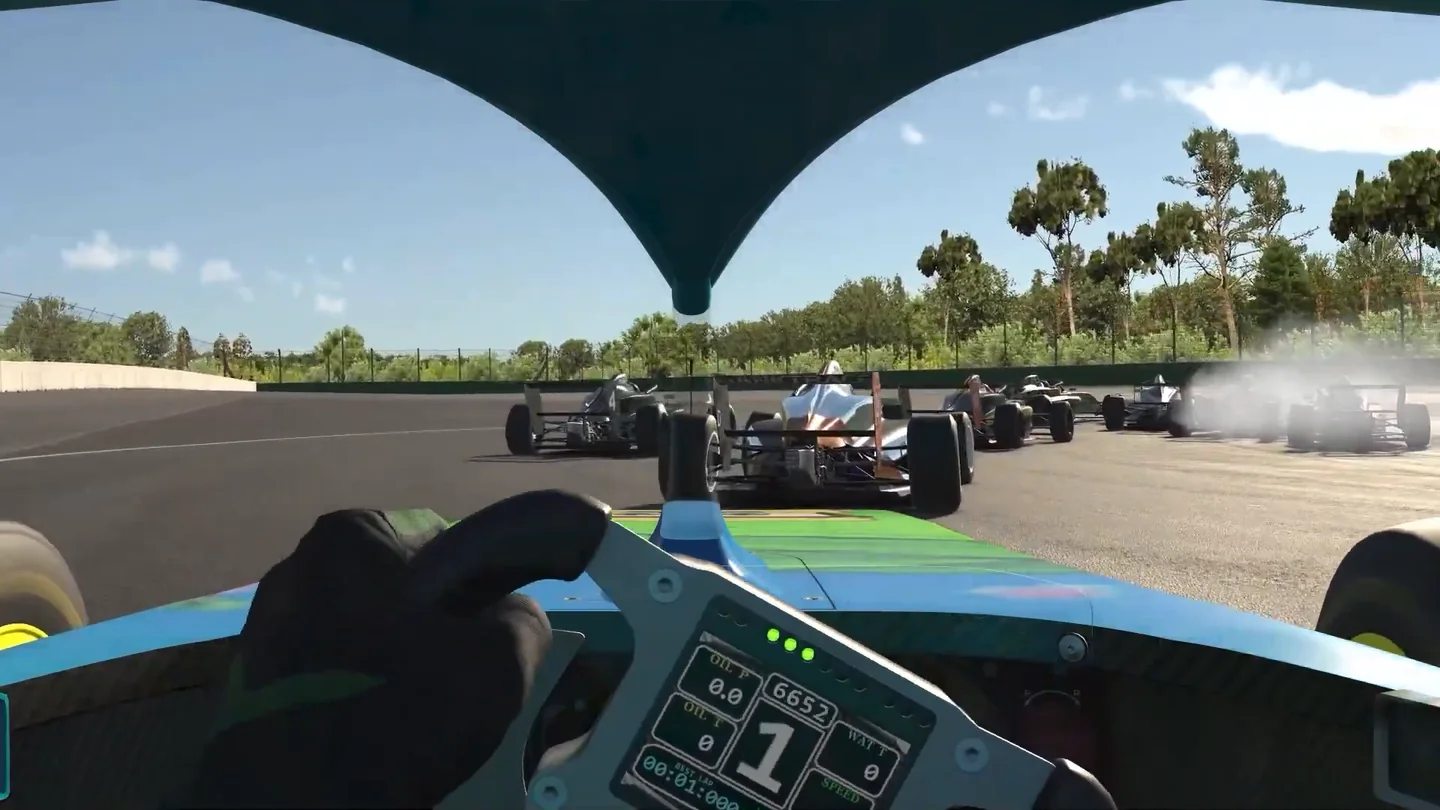
It is also the part of a race weekend most people never train. Drivers who will happily run two hundred laps of race practice treat the out lap as dead time — the bit you get through before the session really starts.
Your qualifying lap starts on the out lap
The two runs behind that half a second looked completely different, and not in the way people expect. The slow one was the aggressive one:
- The 1:39.30 out lap — braking late and hard, steering aggressively, turning in early. Driving the out lap like a hot lap.
- The 1:38.5 out lap — braking earlier and softer, modulating the inputs, keeping the car settled.
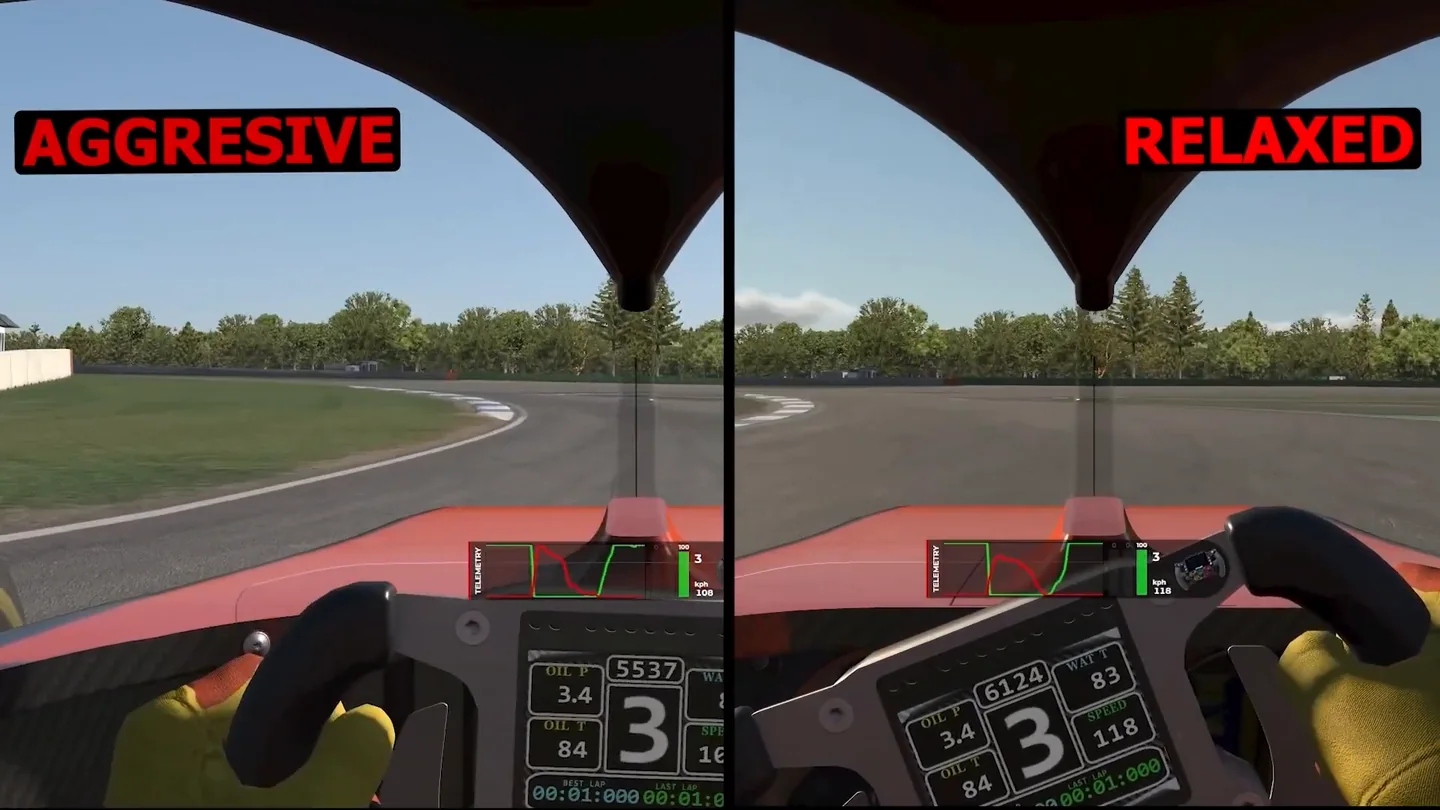
The relaxed out lap produced the faster qualifying lap by a comfortable margin. That is not because going slowly is magic. It is because of what each one did to the tyre.
Core versus surface temperature, and why sliding costs you grip
A tyre has a core temperature and a surface temperature, and at the start of an out lap they are roughly equal. The problem starts when you make what I would call mistakes — braking too hard, sliding, understeer, oversteer, wheelspin, anything that pushes the tyre past its limit.
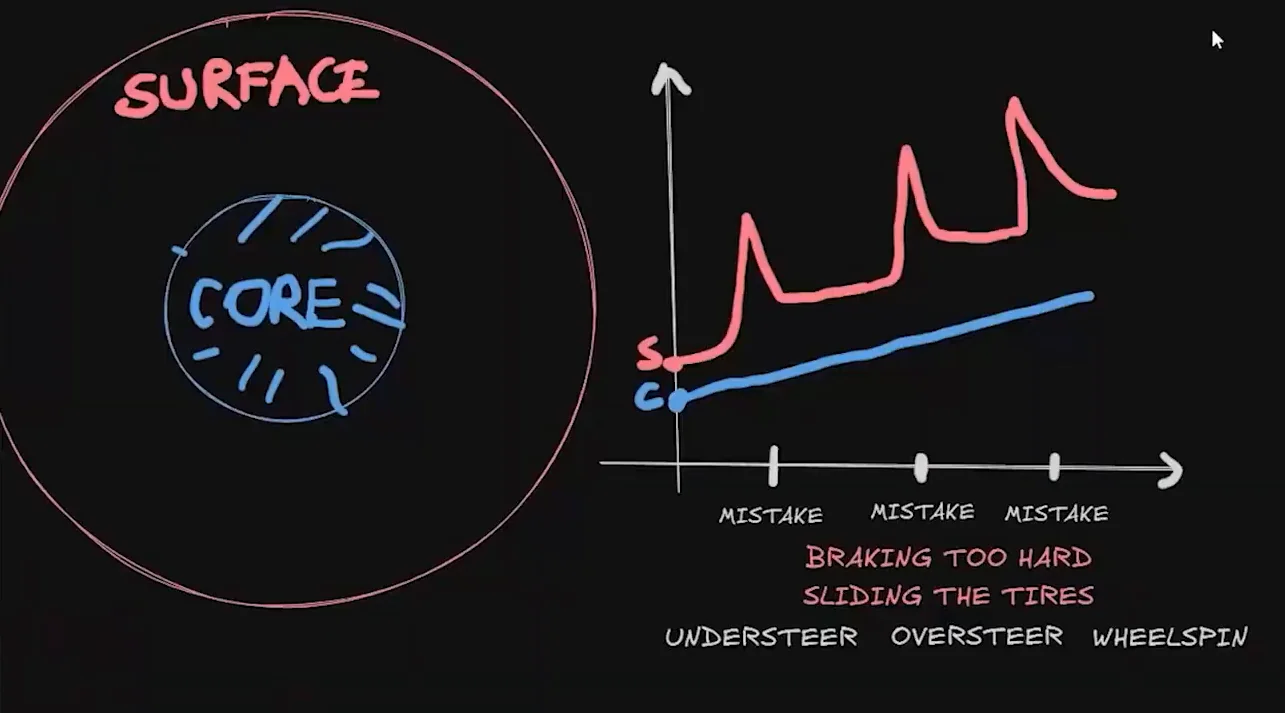
When that happens the surface temperature spikes, but the core cannot heat up nearly as fast. Every mistake widens the gap between the two, and it keeps widening — and the bigger that gap, the less grip you have. Across a whole race stint the same mechanism plays out more slowly, which managing tyres over a run deals with separately.
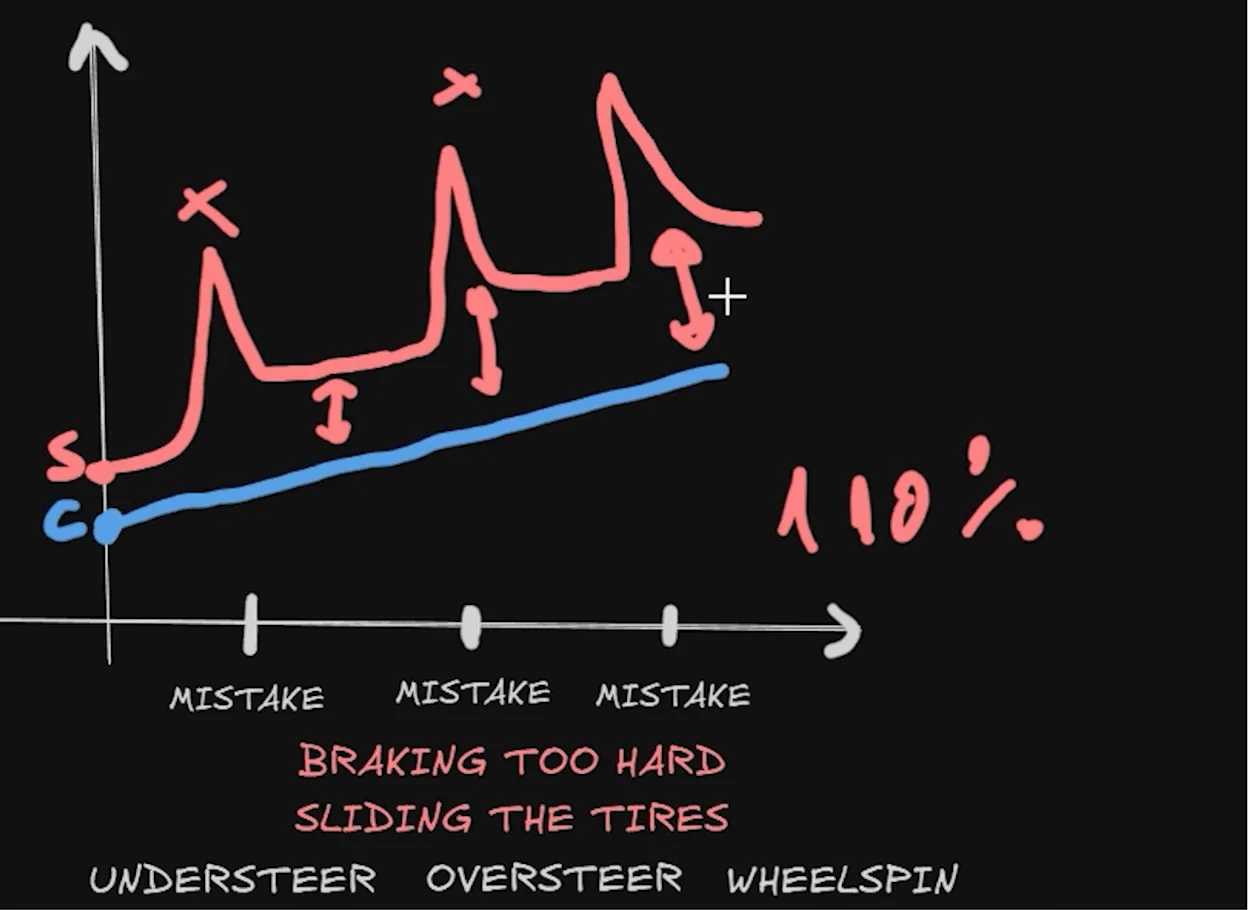
The way I picture it
Make a fist and rest your other palm flat on top of it. The fist is the core, the palm is the surface.
- Heat only the surface — hard braking, early throttle, sliding — and the palm slides around on top of a cold fist that is not supporting it. The tyre cannot grip the tarmac because the inside is not backing up the contact patch.
- Bring both up at a similar rate and the palm sits solid on the fist. Now the tyre grips, because the inside is supporting the contact patch.
Everything below is just ways of heating the fist without cooking the palm.
Worth saying plainly: different cars respond differently and the tyre models get revised, so treat this as the principle rather than a physics constant. The practical version holds everywhere — build useful temperature without creating unnecessary sliding and slip before the flying lap. It matters most in a formula car, with no ABS to cover a cold front and aero grip that only arrives with speed — the Formula sim racing guide covers both.

How to warm your tyres for a qualifying lap
So for a good qualifying session, the out lap is about avoiding excess rather than generating heat at any cost. Concretely, you are trying to minimise three things:
- Slip angle, on both the front and rear axle.
- Braking pressure — you still brake, just not at the limit.
- Steering angle — big lock is what cooks the front surface.
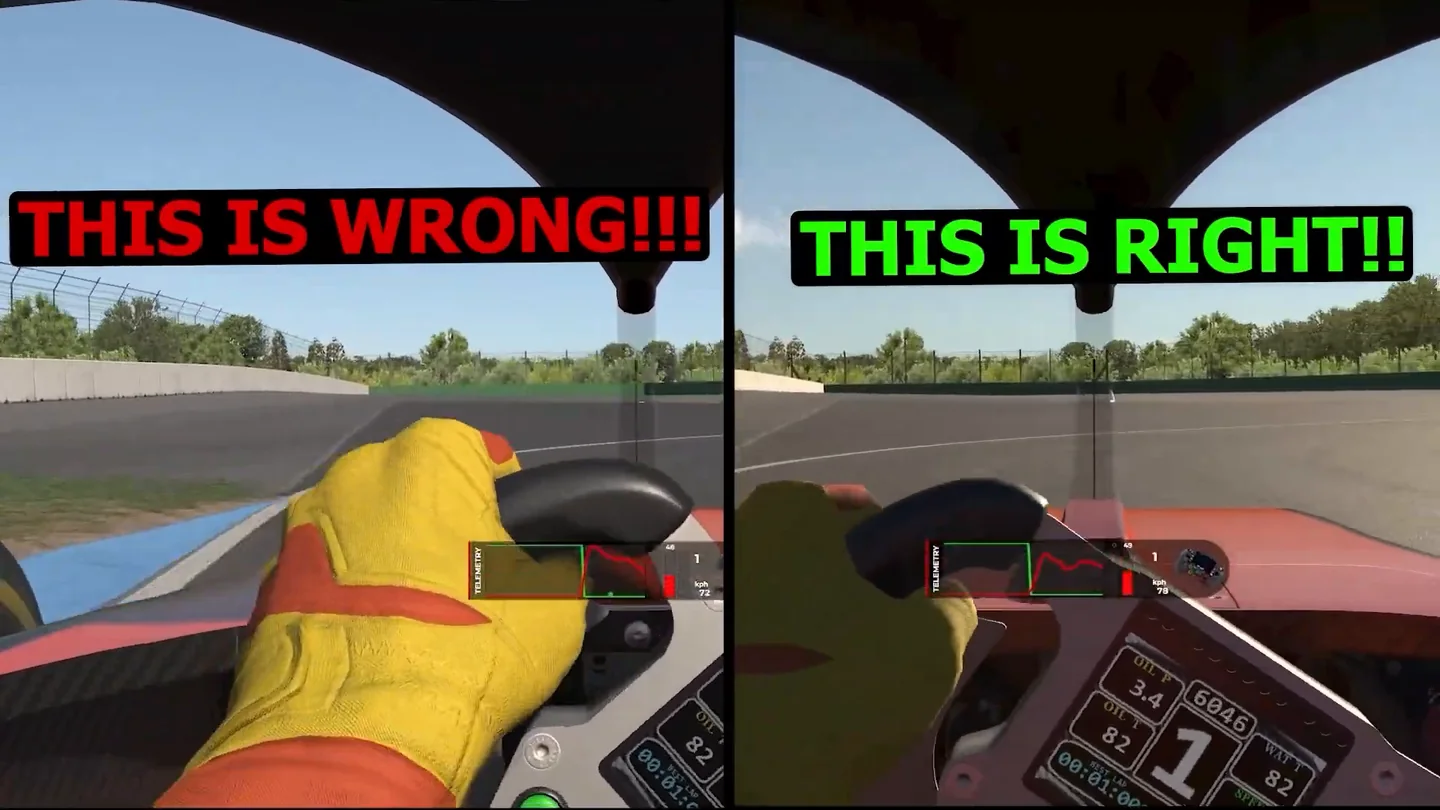
The opposite mistake is just as real, and it is the one people make after reading advice like this. Driving the out lap very slowly and very carefully does not warm the tyre at all, and you will be slow for a different reason. You are not trying to nurse the car round. You are trying to load it without breaking traction.
Should you weave to warm the tyres?
Sometimes, and less often than people think. Weaving can help on a very short circuit — somewhere like Tsukuba, where there simply is not enough lap to build temperature any other way. On a normal-length track it is not worth it, and most of the time you are just losing time and adding steering angle for very little.
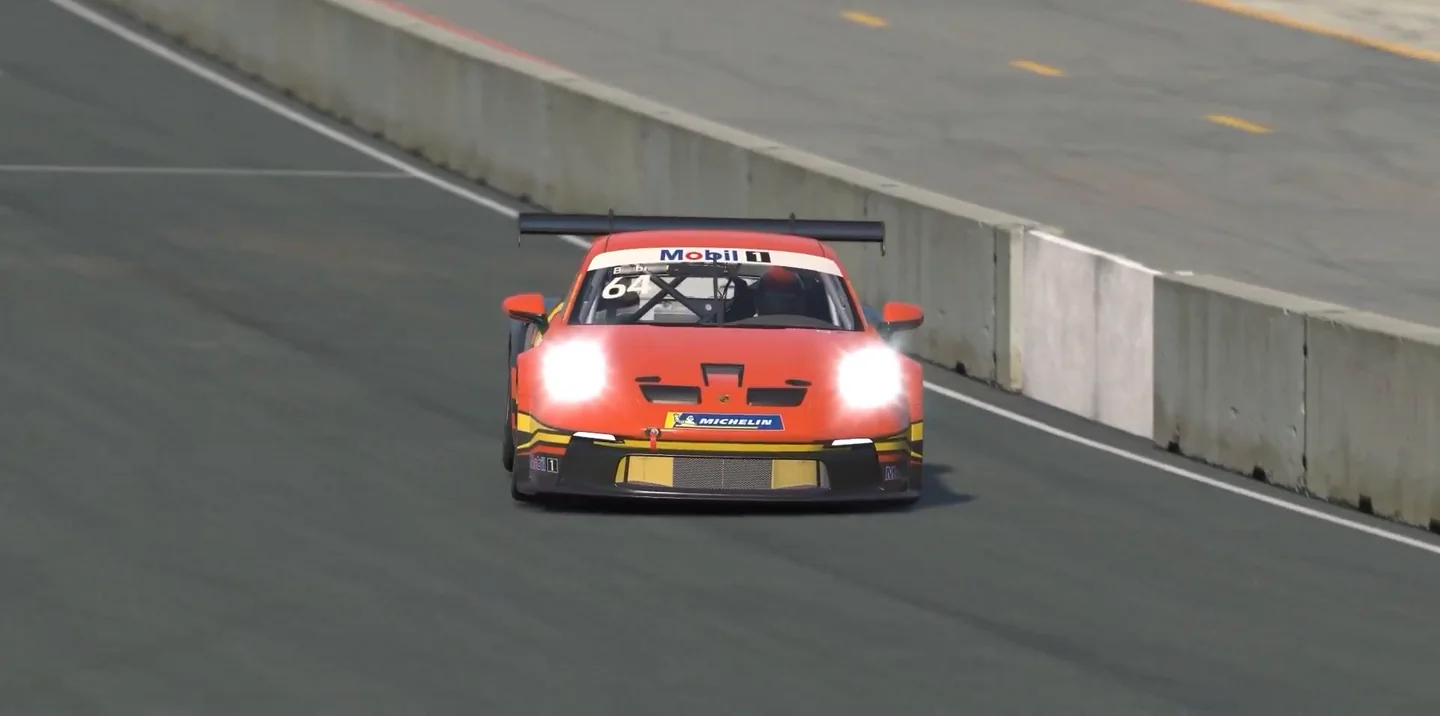
Braking and traction do far more of the work than weaving does. If you only change one habit, change how you brake on the out lap rather than how much you wiggle.
The brake bias trick
Shifting brake bias forward for the first part of the out lap puts more of the braking workload through the front axle, which brings the front core temperature up more quickly. Then put it back to your normal setting before you start the flying lap — you do not want a nose-heavy brake balance on the lap that counts.
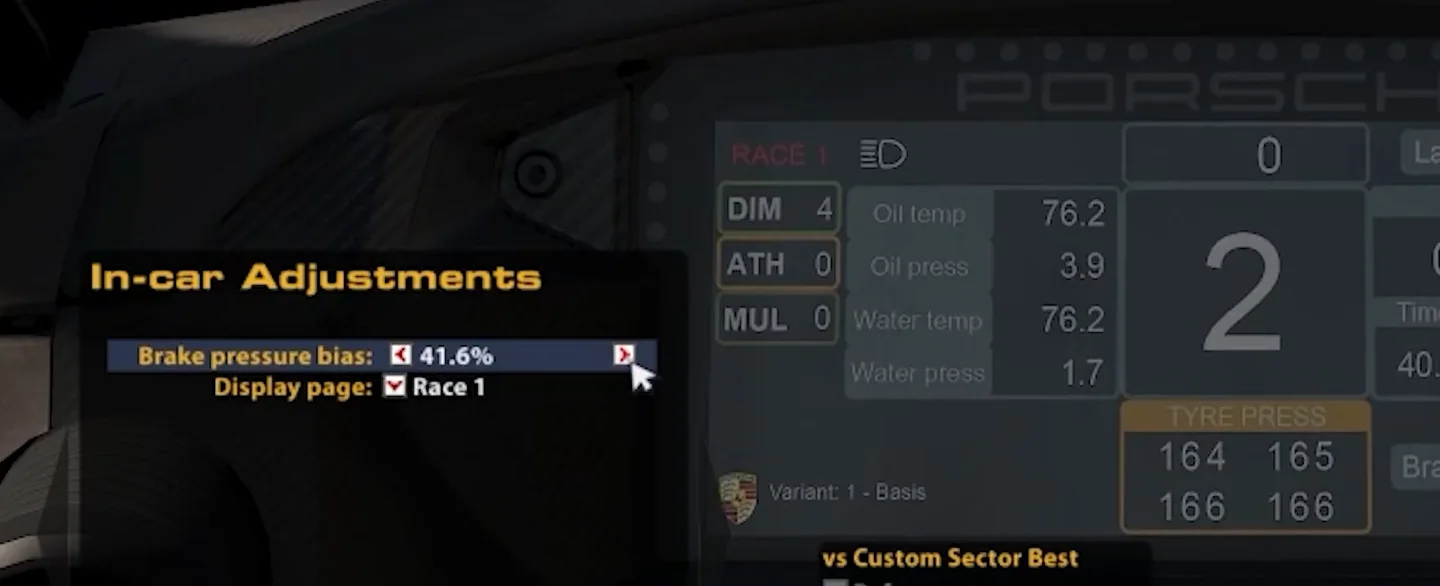
How much it helps depends on the car, the setup and how you brake, so test it rather than adopting it blind. If you are not confident changing bias on the move, that is its own skill and it is worth building first — brake pedal tips covers the hardware side, and braking technique covers what the pedal should actually be doing.
The last corner of your out lap is not a normal corner
This is the one that surprises people most, and it is free. Do not drive the final corner of your out lap the way you drive it on a normal lap. Sacrifice the entry for the exit. Take a wide, slow line in, even if it feels absurdly slow, so that you can get on the throttle much earlier and carry that speed onto the straight.
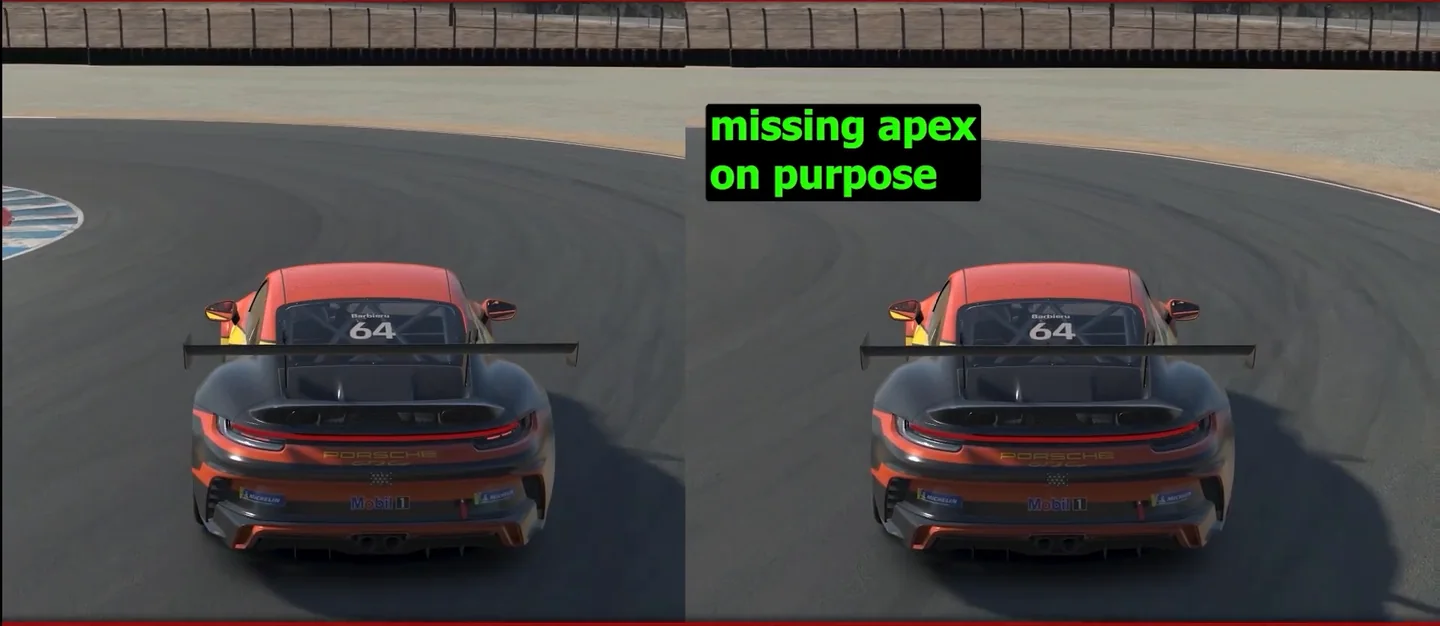
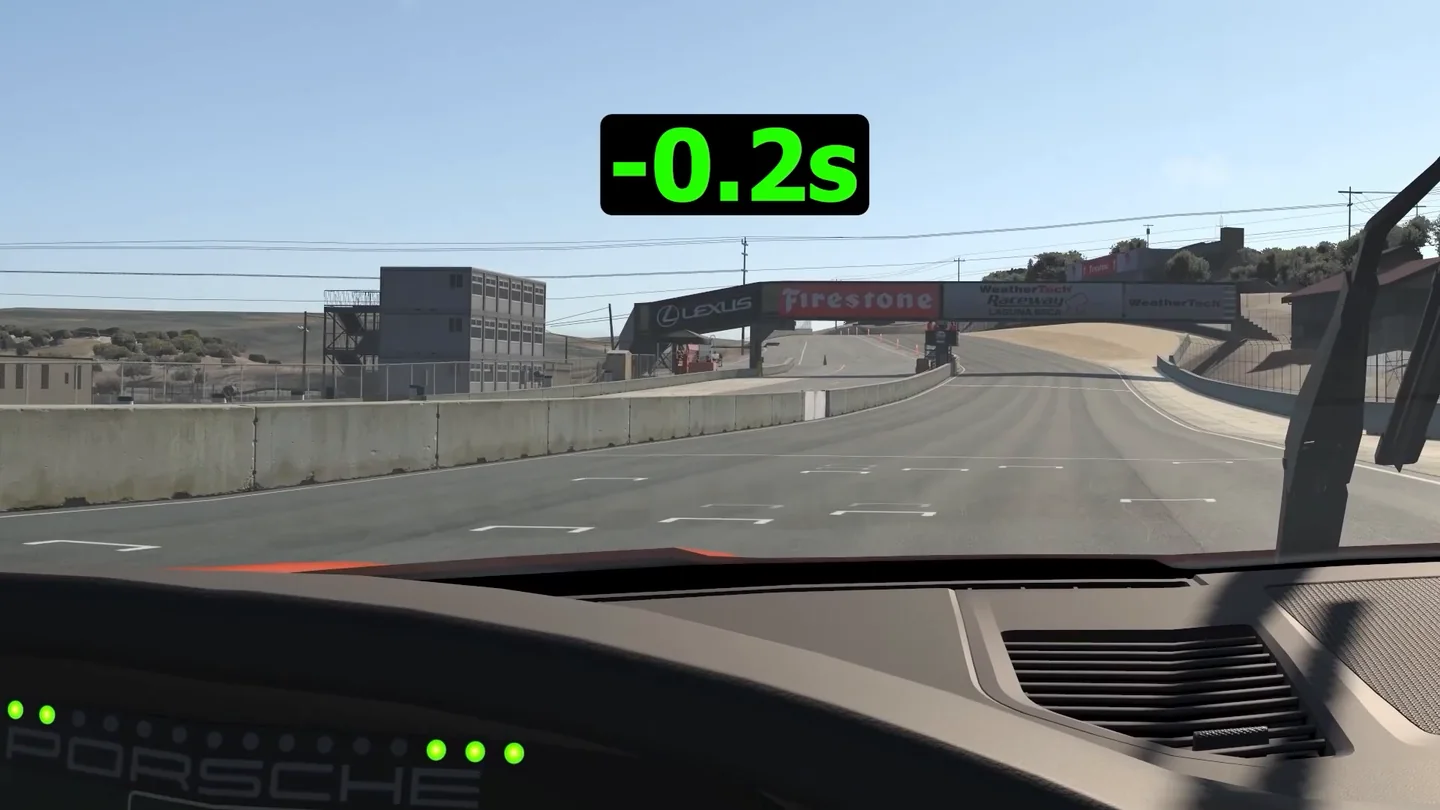
Nothing about your entry to that corner is being timed. The only thing that matters is how fast you cross the line and how fast you arrive at turn one. Depending on how long the run to the line is, this alone can be worth a couple of tenths before your lap has even started.
How hard should you push on your first qualifying lap?
Not 100%. On your first timed lap you are still finishing the job the out lap started, so drive at something that feels like 80 to 90% — quick, committed, but not hunting the limit. Bank a representative lap, keep the tyre in a good place, and save the maximum attack for the second run when you have temperature, references and a completed lap behind you. That assumes you brought references with you — on a circuit that only appeared on the schedule this week, build them in practice rather than during qualifying.
And the rule that saves more time than any of this: if you go off and invalidate your first lap, stop pushing it. There is no reason to keep overheating the tyres on a lap that no longer counts. The moment it is gone, that lap's only job is to prepare the car for the next one.
The qualifying procedure, start to finish
Out lap
- Leave the pits normally — no crawling, no trying to game the tyre model.
- Build speed progressively rather than attacking immediately.
- Load the car without sliding it: controlled braking, controlled steering, controlled throttle.
- No wheelspin, especially on cold rears.
- Keep steering lock modest so you are not cooking the front surface.
- Take the final corner wide and slow on entry for the best possible exit.
First timed lap
- Push, but at 80–90%. Bank the lap.
- If you invalidate it, stop pushing and use what is left to prepare the tyres.
Second timed lap
- Now commit. You have temperature, references, and a lap already in the bank.
Seven qualifying mistakes that cost you time
- Driving the out lap like a hot lap. The single most expensive one, and the one that cost me half a second.
- Driving the out lap too slowly. The overcorrection — no temperature at all.
- Weaving on a long track, where it buys almost nothing.
- Sliding the tyres anywhere on the out lap.
- Going flat out on lap one instead of banking it.
- Continuing to push after invalidating a lap.
- Taking the final out-lap corner normally.
Before you experiment: check the weekend rules
iRacing scrutinises conduct during qualifying to stop unrealistic tyre-preparation exploits, and it can penalise behaviour it considers inappropriate — which means an over-enthusiastic warm-up routine can cost you the session rather than win it. How strict that is varies by category and session, and the rules for a given week are shown in the weekend rules panel.
Nothing in this guide is exotic — it is all just driving the out lap deliberately rather than accidentally — but if you plan to experiment beyond it, read the rules for that week first.
Why you are faster in practice than in qualifying
If your qualifying times never match your practice pace, this is usually why. In practice you do lap after lap, and by the time you set a good one the tyres have long since settled into a happy state. In qualifying you get one out lap to reproduce that, and if you spend it sliding around you have thrown the session before it started.
The fix is to practise the out lap itself, not just the flying lap. Run the procedure above, look at what the tyres are doing, and repeat it until it is automatic — which is exactly the sort of isolated, single-objective work that practising effectively is built around. If the gap is raw pace rather than preparation, that is a different problem and how to be faster in iRacing is the better starting point.
Drive the out lap differently
If you take one thing from this, take that. The out lap is not a slower version of your qualifying lap — it is a different job with a different goal, and treating it as warm-up mileage is what leaves half a second on the table for drivers who already have the pace.
And a good grid slot is worth more than the lap time it saves: fewer cars around you means fewer incidents and a better finish, which is what actually moves your iRating.
Run the procedure at your next race. Then, if you want someone to look at what your out lap and your flying lap are actually doing rather than guessing, that is what the GitGud Racing Academy is for — send a lap and a coach tells you where the time is going.
iRacing qualifying FAQ
How do you qualify faster in iRacing?
Mostly by changing the out lap rather than the flying lap. Arrive at the line with the tyre core warmed and the surface not overheated, take the final corner of the out lap wide and slow so you can accelerate early onto the straight, then run your first timed lap at around 80 to 90 percent to bank it before attacking on the second. On the same car, track and setup, that sequence has been worth over half a second against an aggressive out lap.
How do you warm up tyres on an out lap?
By loading the car without sliding it. A tyre has a core and a surface temperature, and braking too hard, wheelspin, understeer or oversteer spikes the surface while the core lags behind — the wider that gap grows, the less grip you have. So build speed progressively, brake firmly but short of the limit, keep steering lock modest and avoid wheelspin on cold rears. Crawling round is the opposite mistake and generates no temperature at all.
Should you weave to warm your tyres in sim racing?
Rarely, and less often than people do it. Weaving can help on a very short circuit where there simply is not enough lap to build temperature any other way, but on a normal-length track you are mostly losing time and adding steering angle for very little return. Braking and traction do far more of the warming work, so if you change one out-lap habit, change how you brake rather than how much you wiggle.
Should you move brake bias forward on the out lap?
It is worth testing. Shifting bias forward for the first part of the out lap puts more of the braking workload through the front axle and brings the front core temperature up more quickly. The essential half is putting it back to your normal setting before the flying lap starts, because a nose-heavy balance on the lap that counts will cost you more than the warm-up gained. How much it helps depends on the car, the setup and how you brake.
How hard should you push on your first qualifying lap?
Around 80 to 90 percent. The first timed lap is still finishing the job the out lap started, so drive it quickly and committedly without hunting the limit, and bank a representative time. Save maximum attack for the second run when you have temperature, references and a completed lap behind you. If you go off and invalidate the first lap, stop pushing it immediately — its only remaining job is to prepare the tyres for the next one.
Why am I faster in practice than in qualifying?
Usually because practice hides the out lap. Over a long run the tyres settle into a good state on their own, and by the time you set a quick lap the preparation has happened without you noticing. Qualifying gives you one out lap to reproduce that, and spending it sliding around throws the session before the timed lap begins. The fix is to practise the out lap itself as a separate exercise, not just the flying lap.
This guide is part of the free library at GitGud Racing Academy — an online sim racing academy built around weekly lap reviews, structured courses, drills and training tools.
Train this the right way
Reading is step one. Build it into muscle memory with structured, car-specific courses and personal lap reviews from a coach — inside the Academy.
Join the Academy · $39.99/mo incl. VATWatch the full video on YouTube