Best Sim Racing Game 2026: iRacing vs ACC vs Assetto Corsa
Every "best sim racing game" list has the same problem: it answers a question nobody asked. You are not trying to find out which sim a stranger enjoys most. You are trying to decide where to put the next few hundred hours of your life, and that has a different answer for almost every person who asks it.
So this is not a ranking. There is no best sim. There is a best sim for what you want to do, and the work is figuring out which of those you actually are.
It matters more than it sounds. Getting comfortable in a sim takes months — the cars, the circuits, the way that physics engine talks to you through the wheel. So choosing wrong is not a refund problem, it is a time problem. And people rarely choose wrong because they misjudged the physics. They choose wrong because they chose for the driver they were on day one instead of the one they turned into by month six.
Start with what you want to do
Find the row that sounds like you. That is a starting point, not a life sentence — most people move at least once, and the section further down explains when moving is worth what it costs.
| What you actually want | Start with | Why |
|---|---|---|
| Drive any car, anywhere, alone | Assetto Corsa | Mods make the content endless |
| Ranked racing against real people | iRacing | The structure is the product |
| Become a genuinely good GT3 driver | ACC | One discipline, modelled deeply |
| Endurance, multiclass, traffic | Le Mans Ultimate | Traffic is the whole skill |
| Pure driving feel and variety, offline | Automobilista 2 | Huge range, low friction |
| Good racing without the pressure | AMS2 or iRacing | Both have AI worth racing |
| You honestly do not know yet | iRacing or AMS2 | They support every mode later |
| The Assetto Corsa successor | Assetto Corsa EVO | Check its current state first |
The things that actually decide it
Almost every comparison argues about physics fidelity. That is the least useful criterion available to you, because every established sim here is good enough to punish your real mistakes — none of your current problems are caused by a tyre model. These are the things that decide whether you are still enjoying the sim in six months.
Does it feel good to drive on your own?
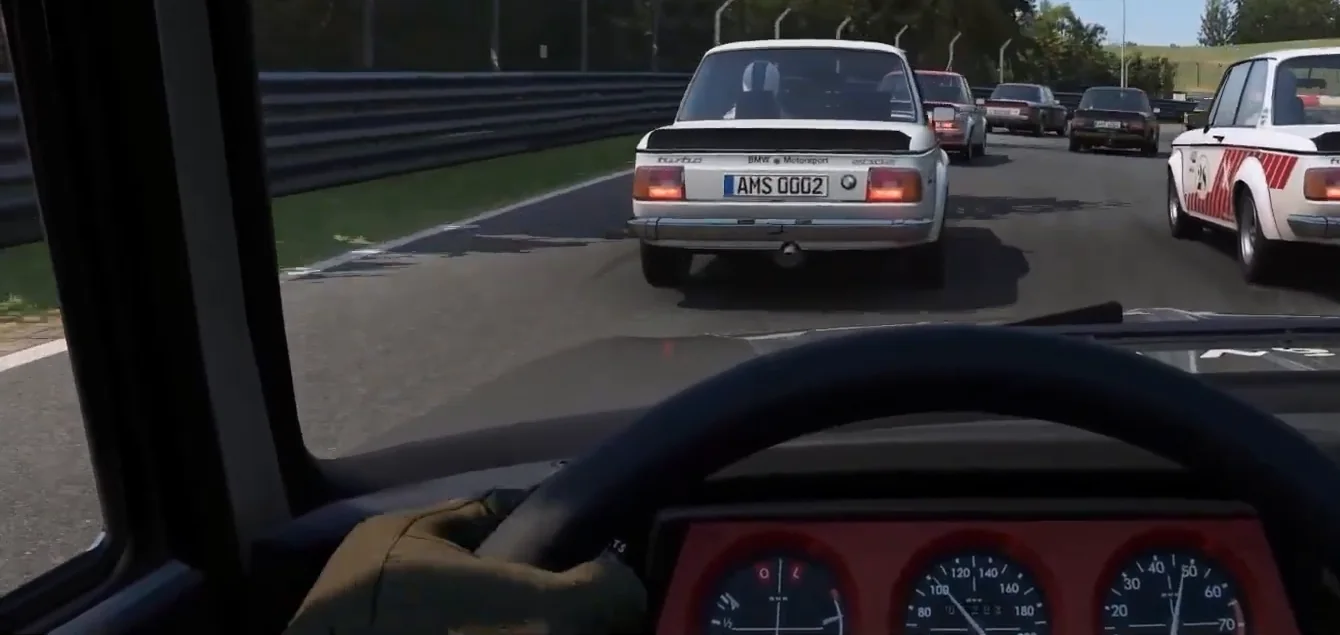
You should not have to fight a sim to enjoy it. Driving well takes years, but in a good sim that gap does not matter on day one — throwing the car into a corner is fun before you are any good at it. If your first evening is frustrating rather than absorbing, that is information: the sim will not carry you through the months where you are slow, and everybody has those.
Is the force feedback clear?
Force feedback does not need to be strong or full of road texture. It needs to be believable. Good force feedback gives you the confidence to commit — you feel what the car is doing and you stop second-guessing every slide. When it is done well it disappears, not because it is weak, but because it stops being something you notice and becomes something you use.
The honest position, which will annoy people: none of the established sims here has bad force feedback, and every one is better after ten minutes in the settings menu. The differences forums obsess over are smaller than the difference between a tuned wheel and an untuned one. If yours has never been set up properly, start with the force feedback settings for your wheelbase before you conclude a sim feels wrong.
How much friction is there before you drive?
A sim that recognises your wheel and hands you a sensible baseline has saved you an evening and possibly a wrong conclusion. It is common to install something, find the car feels awful, and blame the game — when the real problem is a wheel connected but configured for someone else's hardware. That matters most for exactly the people least equipped to diagnose it. It is also worth knowing that the hardware question has its own order of operations, and it is not the one most people follow — what to upgrade first starts from whatever is currently stopping the rest of your setup working.
Do the skills travel?
Every sim has its own character, even the ones aiming squarely at realism. Some teach habits that carry across everything you will ever drive. Others are specific enough that you get very good at that one environment and find everything else falls apart when you try it — fine if you intend to stay forever, expensive if you do not.
The universal parts — braking in a straight line then releasing progressively, using weight transfer to rotate, being early rather than aggressive with throttle — travel everywhere. What does not travel is the muscle memory: the exact brake pressure, the exact point the rear starts to go, the way that tyre model signals the limit. Expect to lose two weeks to that every time you move. The full list of what travels is the twelve driving techniques every driver should master, and none of them is specific to one sim.
What do you want to do in six months?
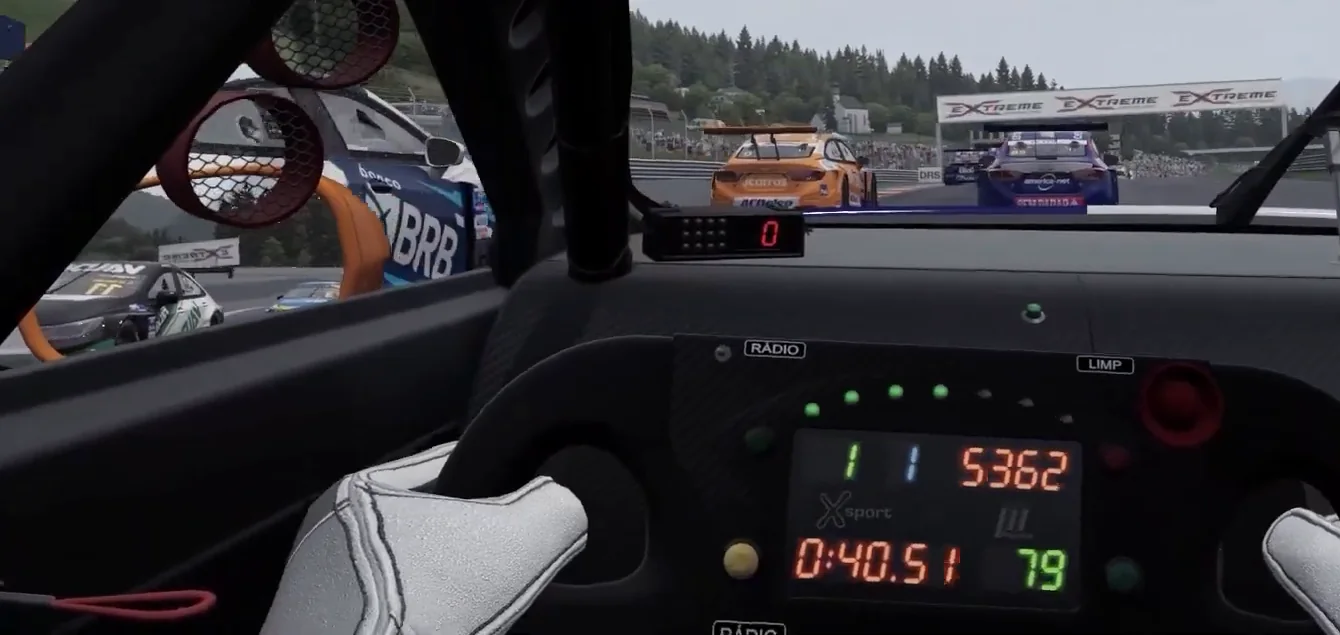
This is the criterion people skip, and it is the one that hurts. Some drivers want to be alone on track chasing a perfect lap. Some want wheel-to-wheel racing, the strategy, the pressure of somebody being genuinely faster than them. Some want a clean race against AI with no consequences and no stewards.
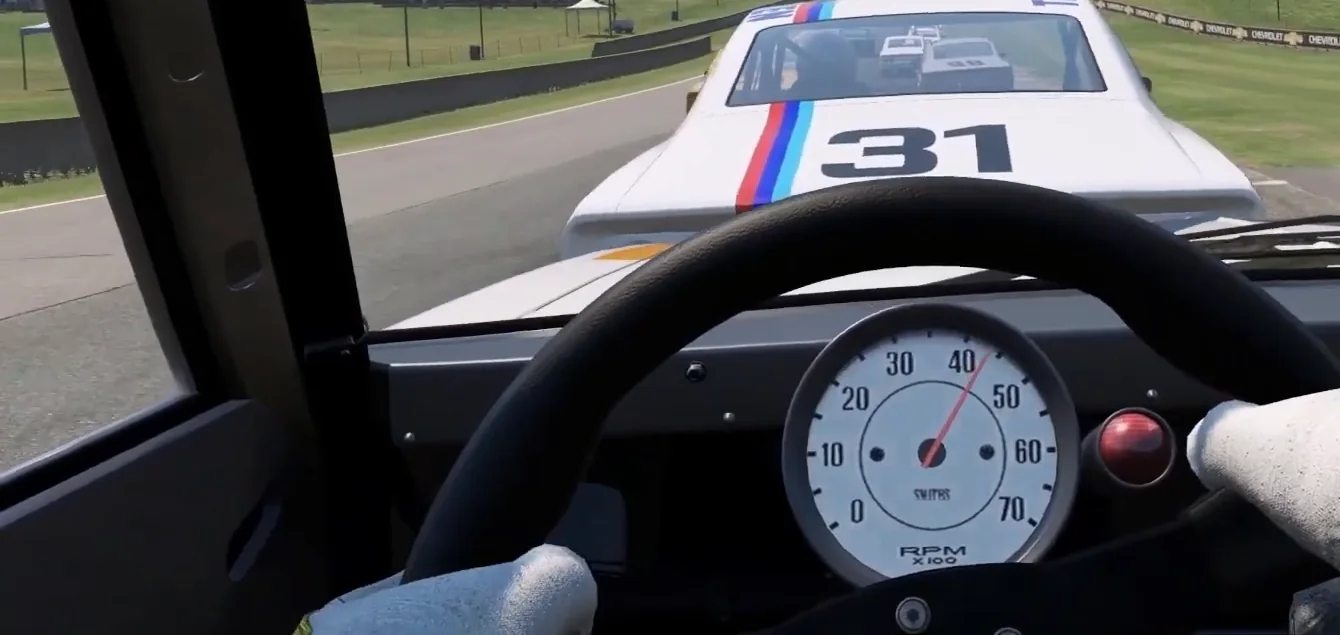
All three are legitimate. The trap is that people change categories. A friend started out hot lapping casually, decided a year later he wanted to race online, and found the sim he had chosen had too few active drivers to fill a decent grid at his level. By then he had a year of learning invested, and moving was far harder than it would have been at the start.
So if you cannot answer the six-month question — and most people genuinely cannot — the safe play is a sim that supports all three modes, even if you only plan to use one.
iRacing: for structured competition
iRacing's product is not really its physics. It is the organisation around the physics. There is a schedule, a matchmaker, a rating system that sorts drivers into races against people of a comparable standard, and an incident-counting system that makes contact cost you something. That combination is why people put up with the rest of it.
In practice that means you can sit down on a Tuesday evening, click once, and be in a race that starts in eleven minutes with a full grid of people trying to finish. No server browsing, no league applications, no organising. If wheel-to-wheel racing is what you actually want, that reliability is worth more than any physics argument you will read about it.
The cost model is the honest downside: a subscription plus buying cars and tracks individually, and the expense continues. Whether it is worth it depends entirely on how much you race — the same spend by someone who races twice a week and someone who races twice a year buys two very different things.
Two things to know first. The schedule decides what you drive — you can race anything, but you race what is running this week. And the rating system is as good at motivating people as it is at making them miserable, which is why what chasing iRating does to your driving is worth reading before you have any. How to be faster in iRacing covers the specifics, and fixed versus open setups covers a first-week decision.
Assetto Corsa Competizione: for GT3
ACC is built around one real GT championship, and its narrowness is the entire point. It is not trying to be a platform. It models a small family of cars and the circuits they race on, and it models them harder than a broad sim can afford to.
The focus buys depth where it matters for those cars: tyre temperature and pressure you have to actually manage, brake temperatures, a day-to-night transition, and wet weather among the most convincing anywhere. Driving ACC in the rain is a genuinely different skill from driving it dry, and few sims can say that honestly.
The trade is obvious. You are learning GT3. If you want a Formula car, a kart, a historic touring car or a hillclimb, this is not the sim and never will be. The counter-argument is a good one: GT3 is a superb teaching class. Enough downforce to reward precision, enough weight to punish clumsiness, and driver aids real enough that you learn to work with ABS and traction control rather than pretending they do not exist.
Skills built here travel well, with one caveat — you learn a very specific relationship with ABS, and the first time you drive something without it you will lock a wheel immediately. How to be faster in ACC goes into the tyre and temperature work, which is where most of the time hides.
Assetto Corsa: for driving everything
The original Assetto Corsa is open in a way nothing else here attempts. Between the community tooling and the modding scene, you can drive almost any car ever built on almost any road ever mapped — not just circuits, but mountain passes, city loops, whole regions. If your idea of a good evening is a car you have never tried on a road you have never seen, nothing else comes close.
It is a one-off purchase with no subscription, which changes the risk entirely. There is no ongoing commitment, so there is no wrong answer if you try it and it is not for you.
Two honest limitations. Its online racing is fragmented public servers with no matchmaker sorting you into a fair grid, so if structured competition is what you want, this is the wrong tool. The second is subtler: mod quality is wildly variable, and a badly made car teaches you a fiction. The official content and the well-regarded mods are excellent; the rest can model something that behaves like no real vehicle, and you cannot tell from screenshots. Learn car control on content with a reputation, then explore for fun.
Setting it up is also more of a project than the others — the community layers that make it modern are not installed by default, so getting there means following a guide rather than clicking play.
Assetto Corsa EVO: what it is, and what to check
EVO is the successor to Assetto Corsa from the same studio, and the ambition is the one the original earned its reputation for: breadth, road cars alongside racing cars, and eventually an ecosystem around it.
Here is the honest version. What makes the original Assetto Corsa worth your time is not the base game — it is the years of community content and tooling built on top of it. A successor cannot inherit that; it has to grow its own. So the only question that matters is where EVO is in that process right now, and that is something to check today rather than something an article can tell you.
If you are considering it, check three things before buying: what content is actually in it, what the modding and tooling situation looks like, and what the development pace has been recently. Those answers change. Anyone confidently telling you what EVO is without checking them is describing a version that may no longer exist, in either direction.
Le Mans Ultimate: for endurance and traffic
Le Mans Ultimate is the endurance sim, built on the rFactor 2 physics lineage and focused on prototype and GT machinery racing together. Like ACC it is narrow on purpose, but it is narrow along a completely different axis.
The skill it teaches that nothing else teaches as centrally is traffic. In a multiclass field you spend much of every stint managing closing speeds — where to pass, where to lift, how to be predictable to a car that is ten seconds a lap quicker or slower than you. That is a real racing skill, genuinely hard, and most sim racers never practise it because most sim racing is single class.
Alongside that: long stints, fuel management, tyre life across a run, and the discipline of being fast on lap forty rather than lap two. The physics carry the rFactor 2 reputation for detail, which mostly means the car tells you a lot and expects you to listen.
The trade is scope. This is one championship's worth of cars and circuits. If that championship is what you love, that is a feature; if you want variety, it is a limit you will hit. How to be faster in Le Mans Ultimate covers the stint and compound decisions.
Automobilista 2: for feel and variety
AMS2 is the one that most often surprises people who have written it off. The content range is genuinely unusual — historic single-seaters, modern prototypes, touring cars, karts, and a set of circuits you will not find properly modelled elsewhere. It is a one-off purchase with optional content packs, so the commitment is small.
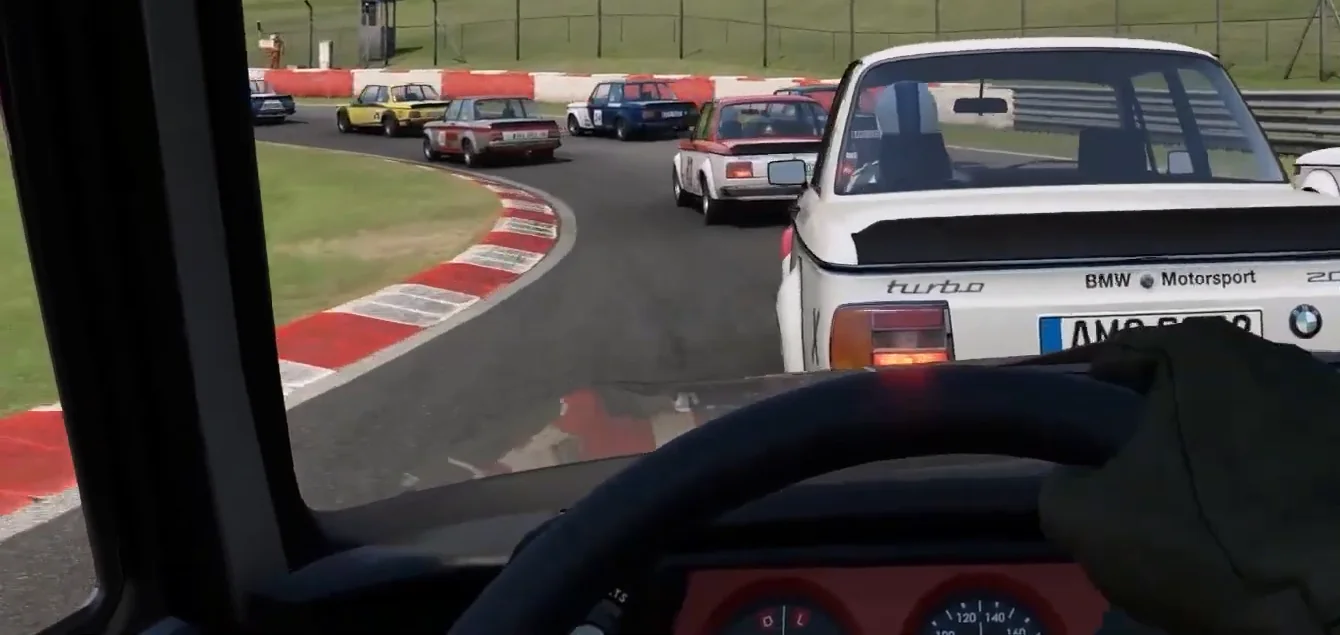
What people who love it talk about is the feel. Pushing a car to the edge lap after lap here is, for a lot of drivers, simply more enjoyable than doing the same thing elsewhere — a subjective claim, worth treating as one, but a common enough report to weigh. Combined with strong AI and a proper offline championship structure, it is a serious answer for anyone whose racing happens alone.
The limitation mirrors iRacing's strength: organised online racing is not the centre of what it does. There is multiplayer and there are leagues, but you will not click once on a Tuesday evening and land in a full ranked grid. If offline is where you spend your time, that costs you nothing.
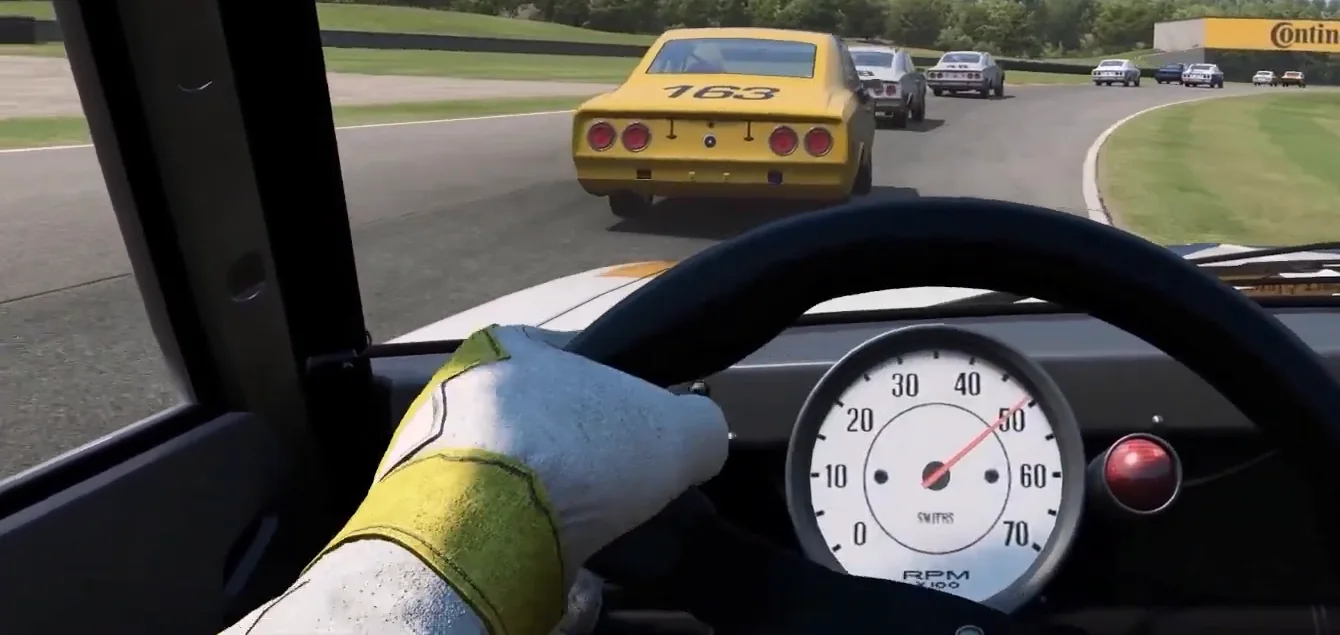
The physics have their own character too — the way the rear behaves and the way the tyres build temperature differ enough that transferring in either direction takes an adjustment. How to be faster in Automobilista 2 covers what changes.
The expensive mistake: choosing for who you are now
Everything above assumes you know what you want. Most people do not, and the standard advice for that case — start with the cheap one and move up later — is worse than it sounds.
It is fine when the cost you care about is money. It is bad when the cost is time, because that is the one you actually pay. Every month of muscle memory built in one sim is a month you partly re-pay when you move, and the further in you are, the harder the sunk investment argues against moving even when moving is right.
So the useful question is not "which is cheapest to try". It is "which am I least likely to outgrow". If there is any real chance you will want organised racing eventually, the sims that can give you that later are worth choosing now, even if you spend your first three months alone on track.
Owning two is a perfectly reasonable answer — one for exploring, one for racing, which covers most people. Owning four is not an answer, it is a hobby of installing sims. Two is roughly the ceiling before practice gets diluted enough to slow you down, which is really a question about how to practise effectively rather than about sims.
Deciding in one evening
- Answer one question honestly: in six months, do you want to be alone on track, racing AI, or racing people?
- If the answer is people → iRacing, or ACC if it is specifically GT3, or Le Mans Ultimate if it is specifically endurance.
- If the answer is alone or AI → Assetto Corsa for exploring, Automobilista 2 for racing.
- If you genuinely do not know → pick one that supports all three, so the question stays open.
- Then set up your wheel properly before you judge how it feels. An untuned wheel makes every sim feel wrong in the same way.
- Give it two weeks before deciding. The first evening in an unfamiliar physics model tells you almost nothing.
If two options survive that, buy the cheaper one first. The decision only gets easier once you have driven something.
What none of these will do for you
One last thing worth saying plainly, because it undercuts the premise of every comparison including this one.
Changing sims will not make you faster. Every established sim here can expose every mistake you currently make, and none is holding you back. If your lap times swing around, if you cannot get the car to rotate, if you brake too early into every heavy stop — that follows you across the install. The gap between you and a quick driver in your chosen sim is bigger than the gap between any two of these sims.
Which is the useful version of "there is no best sim". The choice decides whether you enjoy your hours and whether the thing you want to do exists where you chose. It does not decide whether you get good. That part is the same work in all six, and worth starting in whichever one made you smile the first evening.
These are starting points rather than verdicts. If a sim not on this list has done the job for you, it did the job — and the fact that this many credible answers exist to one question is the whole argument against ranking them.
Choosing a sim racing game FAQ
What is the best sim racing game for beginners?
There is no single best one, and beginners get the worst advice on this because the honest answer depends on what you want to do in six months rather than what you want tonight. If you want organised racing against real people, start with iRacing, because the schedule and rating system mean races actually happen. If you want to explore cars and roads on your own, start with Assetto Corsa. If you are not sure, pick something that supports solo driving, AI racing and online racing, so the question stays open while you find out.
iRacing vs ACC: which one should I choose?
They answer different questions. iRacing sells organisation: a schedule, a matchmaker, a rating system and a full grid available most evenings across many disciplines. ACC sells depth in one discipline, with tyre and brake temperatures you have to manage and wet weather that is genuinely different to drive. Choose iRacing if the racing itself is the point and you want variety and structure. Choose ACC if GT3 is specifically what you love and you would rather learn one class properly. Cost model also differs: iRacing runs on a subscription plus content purchases, ACC is a one-off purchase.
Is Assetto Corsa still worth playing?
Yes, for a specific use. Its value is not the base game but the community tooling and modding scene built on top of it, which lets you drive almost any car on almost any road, including mountain passes and city loops rather than only race circuits. It is a one-off purchase with no subscription, so the risk of trying it is small. Two caveats: online racing is fragmented public servers rather than anything organised, and mod quality varies enormously, so learn car control on official or well-regarded content before you trust an unknown mod's physics.
Should I buy Assetto Corsa EVO?
Check its current state before you decide, because that is the only thing that determines the answer. EVO is the successor to Assetto Corsa from the same studio, aiming at the same breadth. But what makes the original worth your time is the years of community content and tooling built on top of it, and a successor has to grow its own rather than inherit it. So look at what content is actually in it, what the modding and tooling situation is, and what the development pace has been recently. Anyone stating those confidently without checking is describing a version that may not exist any more.
Do sim racing skills transfer between different sims?
The technique transfers, the muscle memory does not. Braking in a straight line then releasing progressively, using weight transfer to rotate the car, being early rather than aggressive on throttle — those work in every sim and in a real car. What does not travel is the calibration: the exact brake pressure, the point where the rear starts to go, the way that particular tyre model signals the limit. Expect roughly two weeks of feeling clumsy every time you switch. That cost is why choosing for the driver you will be in six months matters more than choosing for tonight.
Which sim racing game has the best force feedback out of the box?
This is the wrong question to choose on. None of the major sims has bad force feedback, and every one of them feels substantially better after ten minutes in the settings menu — the gap between a tuned wheel and an untuned one is far larger than the gap between any two sims. What actually matters is whether the sim recognises your wheelbase and gives you a sensible baseline, because a wheel that is connected but configured for someone else's hardware makes a good sim feel broken. Set your wheel up properly before you judge how any sim feels.
Which sim racing game is best for racing against AI?
Automobilista 2 and iRacing are the two strongest answers, for different reasons. AMS2 pairs good AI with proper offline championship structure and an unusually broad range of cars and circuits, and it is a one-off purchase, so an offline-only driver pays nothing ongoing. iRacing also has AI racing and is worth considering if you expect to move to online racing later, since it means you will not have to switch. ACC and Le Mans Ultimate both have AI too, but their value is concentrated in their single discipline rather than in offline variety.
Should I get Le Mans Ultimate or Assetto Corsa Competizione?
Both are deliberately narrow, but along different axes. Le Mans Ultimate is endurance and multiclass: long stints, fuel and tyre management, and above all traffic — judging closing speeds against cars far quicker or slower than you, which is a real racing skill most sim racers never practise. ACC is sprint GT racing with deep tyre and brake temperature modelling and outstanding wet weather. Pick LMU if prototypes, endurance and traffic management are what you want to spend hours on. Pick ACC if GT3 is the thing itself and you want to master one class.
This guide is part of the free library at GitGud Racing Academy — an online sim racing academy built around weekly lap reviews, structured courses, drills and training tools.
Train this the right way
Reading is step one. Build it into muscle memory with structured, car-specific courses and personal lap reviews from a coach — inside the Academy.
Join the Academy · $35.99/mo incl. VATWatch the full video on YouTube