The iRating Trap: Why Chasing iRating Makes You Lose More
You know the move. Final laps, you are behind where you think you should be, and a gap appears that you would not have looked at twice an hour ago. You go anyway. It ends the way those usually end.
The interesting question is not whether that was a bad move. You knew it was a bad move while you were making it. The question is why a driver who understands the odds perfectly well takes it anyway — and the answer is that by that point you had stopped racing this race and started trying to repair the last one.
This page is about the decision-making, not the maths. If what you want is how the number is calculated and what actually moves it, that is a different subject and we have a separate guide to what iRating is scoring.
The iRating trap, defined
Here is the whole thing in one sentence:
The iRating trap is when protecting or recovering your rating becomes more important to you than making the best racing decision available.
Those are not the same question, and the difference shows up in the split second before a move. One driver is asking is this overtake worth attempting? The other is asking how do I get that position back? Only one of those questions has the word "risk" anywhere in it.
The trap is not caring about your rating. It is letting the rating make corner-by-corner decisions on your behalf.
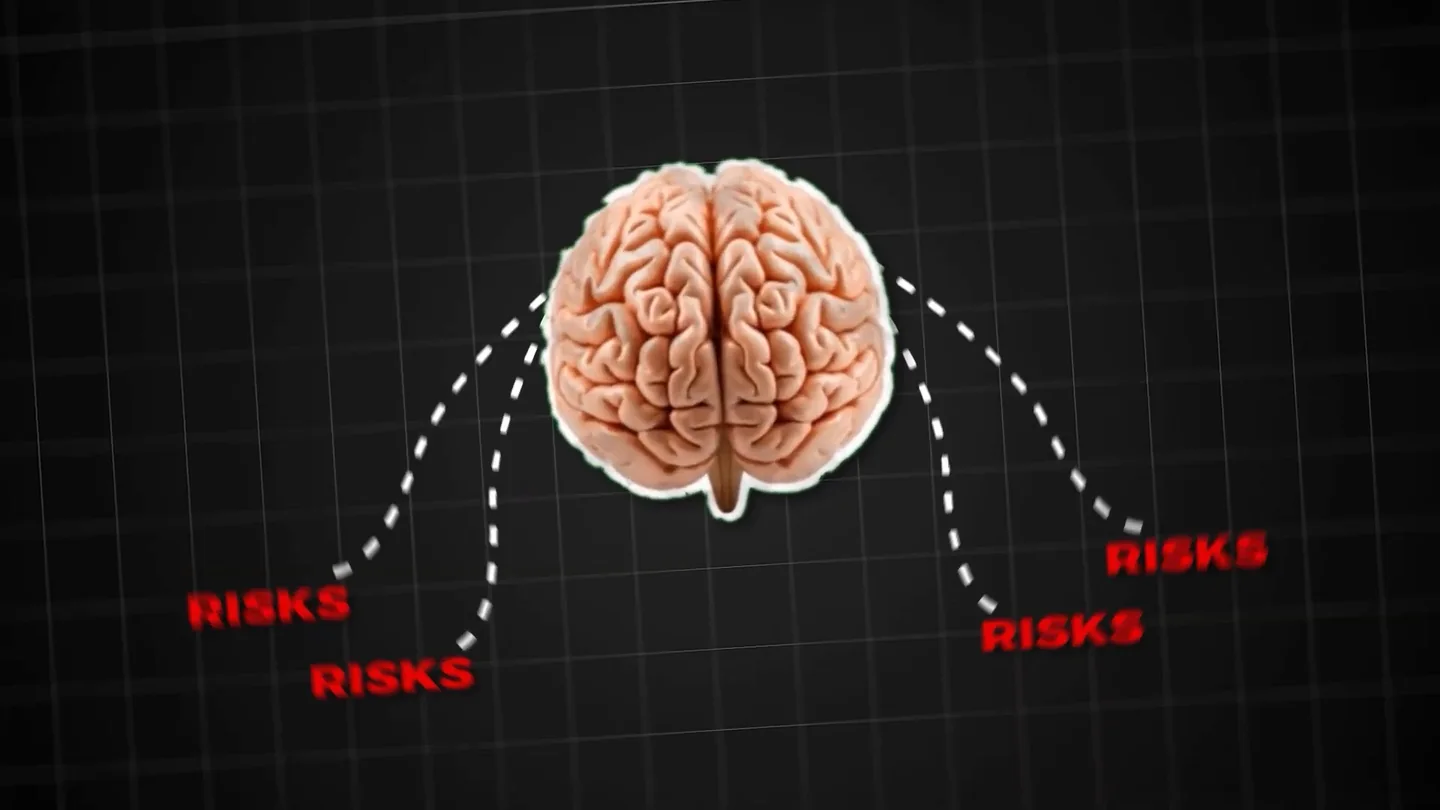
Why losing rating hurts more than gaining it feels good
There is a well-established reason for this, and it is not specific to racing.
Daniel Kahneman and Amos Tversky developed prospect theory to describe how people actually make decisions under risk, as opposed to how economic models assumed they did. One of its central findings is that people weigh losses more heavily than equivalent gains — the pain of losing something is not balanced by the pleasure of gaining the same thing. Kahneman received the Nobel Memorial Prize in Economic Sciences in 2002 for this body of work; Tversky had died in 1996 and the prize is not awarded posthumously.
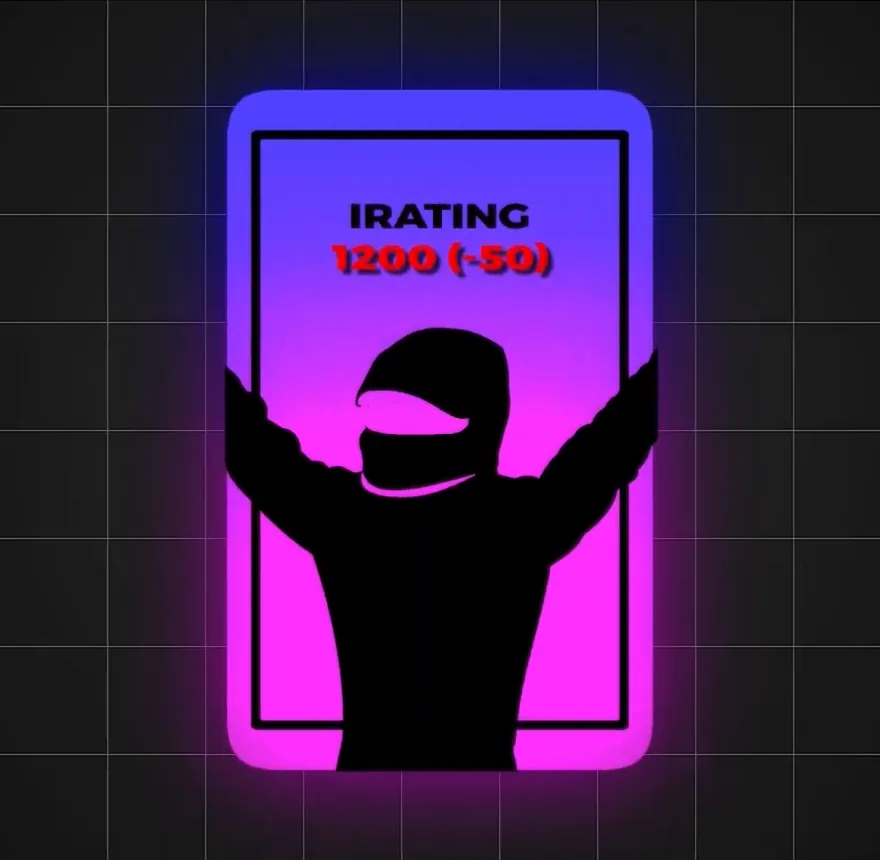
The everyday version: finding a hundred euros on the street is a good day. Losing a hundred euros out of your wallet ruins a week. Same amount, nothing like the same weight.
Racing gives you an unusually clean demonstration. Think about how long a genuinely good result stays with you — an evening, perhaps a day. Now think about the last time you were taken out of a strong finish by somebody else. That one probably has a date attached, and you may still be able to name the corner.
The part that makes it stick: sometimes it works
If desperate moves always ended in a wall, nobody would keep making them. The reason this behaviour survives is that the reward schedule is intermittent.
Occasionally you send something you had no business sending, and it sticks. You get the position, and it feels extraordinary — better than a clean pass, because it came with relief attached. And your brain draws exactly the wrong conclusion from it: that was worth it. Do that again.
So it becomes a habit that feels earned rather than reckless. You start describing it as your racing style. And that is the mechanism by which one bad race becomes a bad week — not because you are unlucky, but because a rare success taught you to keep buying a losing ticket.
What it sounds like from the inside
The thoughts are specific, and recognising them is most of the work:
- I lost P3, I need to get it back.
- I dropped rating in the last race, I have to win this one.
- I am down two hundred this week — time to grind until it comes back.
- I should be ahead of this driver.
- I cannot finish tenth after starting fourth.
Notice what every one of those has in common. None of them is about the car, the tyres, the gap, or the laps remaining. They are all about a comparison to something that is no longer available.
And the reach is longer than the current race. When you lose positions you are rarely reacting only to what just happened — you are reacting to a running total, every previous mistake included, and trying to settle all of it with one move. That is a great deal of weight to hang on a corner-entry decision.
You are not panicking because you are losing
Worth separating these, because they feel identical from the driver's seat.
Picture yourself fifth, chasing fourth, feeling good. You have told yourself you will not do anything stupid, and you mean it. Then you make a small mistake — a missed apex, a touch of wheelspin — and drop a couple of places.
The panic that follows is not about being seventh. Seventh is fine. It is about the sense that the race is slipping away from the version of it you had in your head. That is the moment the calculation changes: you stop playing to win and start playing not to lose, and playing not to lose systematically makes you overestimate your chances on a marginal move.
This happens at every split and every skill level. It is not a rookie problem.
The same move can be brilliant or idiotic
This is the part that makes the trap hard to legislate against, and it is why "stop taking risks" is useless advice.
The identical overtake — same corner, same gap, same closing speed — can be the move that wins you the race or the one that ends it, and the difference is often not the move at all. It is when you made it, what it was worth, and what you would have had if you had waited.
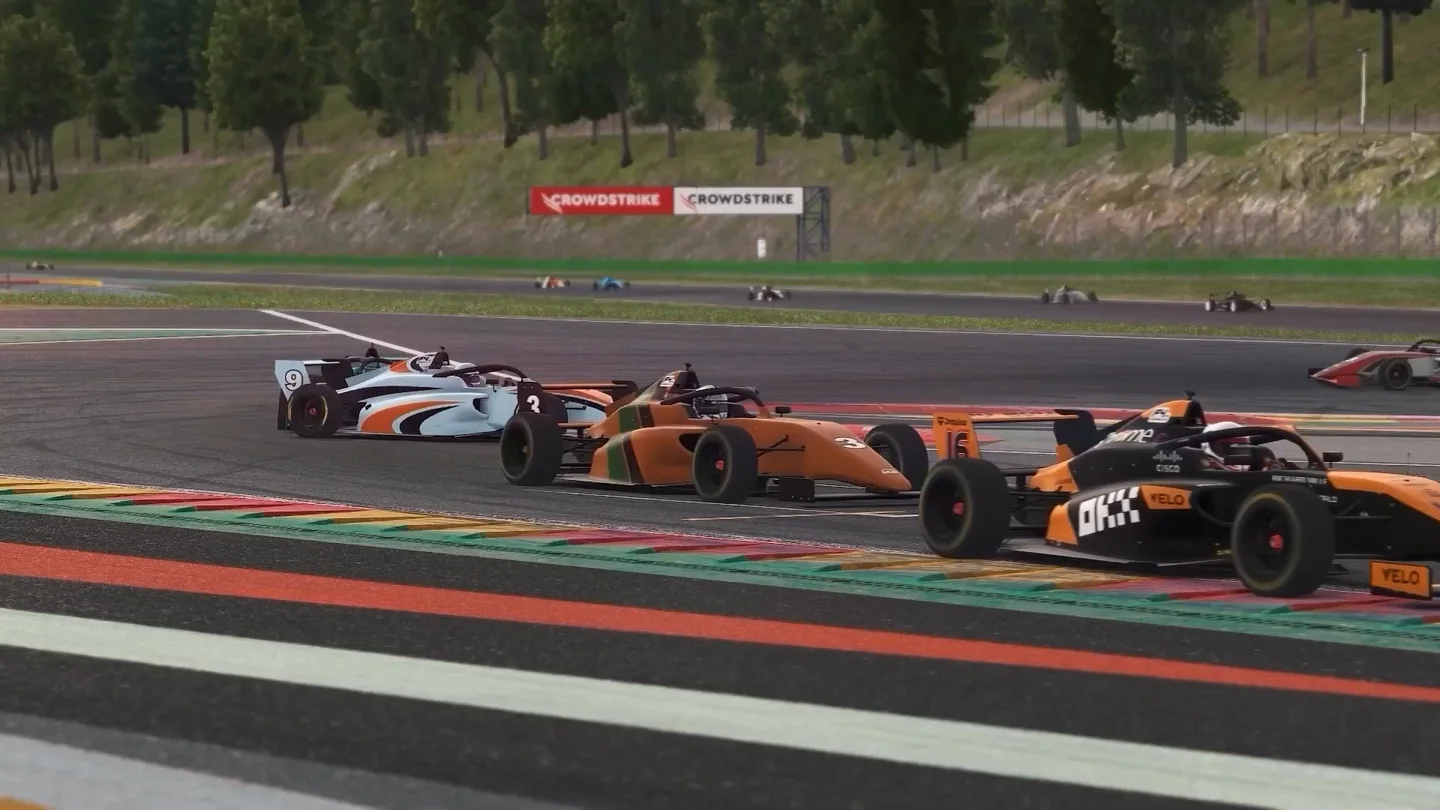
Which means you cannot judge these decisions by their outcome, and this is exactly what tilt exploits. A desperate lunge that comes off is still a bad decision that happened to pay. A patient wait that ends with you stuck behind the same car for ten laps can still have been correct. If you review your racing by results alone, you will systematically learn the wrong lessons — because the reckless version wins often enough to look like a strategy.
There is also an asymmetry in how we behave depending on which side of the ledger we are on. When we are ahead we protect: we drive conservatively, we take the safe line, we settle. When we are behind, the same driver becomes willing to accept odds they would have laughed at twenty minutes earlier. Nothing about the car has changed. Only the reference point has. It shows most clearly in the opening laps, where the fear of losing points keeps a driver in survival mode long after the danger has passed — race pace is the framework for deciding that on purpose instead.
Signs you are already in it
Tilt is not usually dramatic. It rarely announces itself. The signs are small:
- You are overdriving. Braking later than your normal reference — not as a plan, just because. (The planned version of a later braking point, the one that is earned, is a different thing entirely.)
- You feel you have to pass immediately. The move must happen this lap, not when it is available.
- You feel entitled to the position. A sense that you belong ahead of this particular driver.
- You are thinking about a previous race. During this one.
- You are entering races to recover rating rather than because you wanted to race.
- You are avoiding races because of what they might cost you.
That last one is the same problem wearing the opposite coat, and it is more common than people admit — drivers who stop entering official races entirely because the downside has become more vivid than the upside. Loss aversion does not only make you reckless. Sometimes it just makes you stop.
The two races in your head
This is the most useful reframe in the whole subject.
You started third. You made a mistake. You are now eighth with fifteen laps to go. There are now two races running simultaneously:
- The real one: you are eighth, with fifteen laps, and a set of tyres.
- The imaginary one: you are third, and something has been stolen from you.
Every bad decision from here comes from driving the second one. The move you would never make from eighth becomes reasonable if you believe you are really third and simply misplaced.
Race from where you are, not from where you think you should be.
Three ways out
1. Reset the goal after every mistake
Not get P3 back. Instead: what is the best result actually available from here?
If the honest answer is sixth, take sixth. Sixth is enormously better than a DNF, and the drivers who cannot accept that are the ones who routinely convert a mediocre result into no result at all. The goal changed the moment the car did; the only question is whether you noticed.
2. Treat losses like a fuel strategy
You would not burn an entire stint's fuel trying to make up one bad lap. Apply the same accounting to risk.
Your tyres, your concentration and your margin for error are all finite, and spending them all in one corner to repair one mistake is the worst available trade. Manage the damage instead: accept the loss, reset, and make the gains incrementally. Rather than a fifty-fifty move now, wait two or three laps and build one that is closer to certain. Your brain will be shouting that you have to act immediately. It is wrong about that, and the drivers who beat you regularly are the ones who have learned to ignore it.
3. Check the lap counter, not just your feelings
A mechanical check that works because it replaces an emotional read with a factual one. When the urge to send it arrives, look at how many laps remain.
Ten laps left? There is time — a great deal of it. Five? Still time. And on the last lap, finishing still beats crashing while trying not to. The urgency you are feeling is almost never supported by the number on the screen, and looking at that number is usually enough to break the spell.
None of this means never attacking. Risk is not the enemy; unpriced risk is. Take the move because the reward justifies it, not because losing has made you emotional.
Should you care about iRating at all?
Yes — but as a measurement, not an objective.
The number exists to group you with drivers of similar ability, and over a large enough sample it does that job well. Watching it trend upward across months is a legitimate way to confirm you are improving.
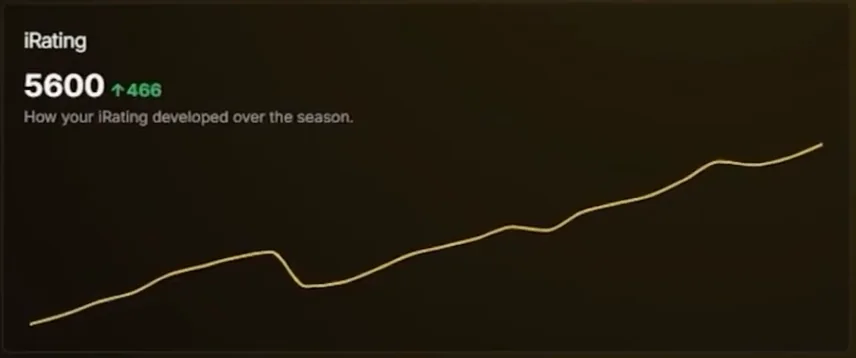
What it is not built for is decision-making inside a single race. The sample is far too small at that scale, and the emotional weight is far too large. So:
Use iRating to measure progress. Do not use it to make racing decisions.
Notice that this cuts both ways. The driver grinding at midnight to claw back two hundred points and the driver who has not entered a race in three weeks are making the same error about the same number.
The part this page cannot fix
Worth being straight about the limits of everything above.
Better decisions will stop you converting bad races into disastrous ones, and for a lot of drivers that alone changes the trend. But decision-making is not pace. Where your rating eventually settles is decided by how quick and how consistent you are, and if that is your actual constraint then no amount of composure will move it — you will simply lose rating more calmly.
If that sounds like your situation, start with the pace side instead, and treat this page as the thing that protects the results your pace has already earned.
The thing worth taking away is smaller than a technique. It is a question, asked at the moment the gap appears: am I playing to win, or am I just playing not to lose? You will not always like the answer, but noticing that you asked it is most of the way to a better decision.
iRating and racing decisions FAQ
What is the iRating trap?
It is when protecting or recovering your rating becomes more important than making the best racing decision available. The tell is the question you ask before a move: is this overtake worth attempting? is racing, while how do I get that position back? is the trap, and only one of those has risk anywhere in it. The problem is not caring about your rating — it is letting the rating make corner-by-corner decisions for you.
Why do I take bad risks when I am losing positions?
Because losses weigh more heavily than equivalent gains, a finding from Kahneman and Tversky's prospect theory that holds well outside racing. Losing a position hurts more than gaining one feels good, so once you are behind you start playing not to lose rather than playing to win — and that systematically makes you overestimate your chances on a marginal move. It is made worse by intermittent reward: occasionally a desperate move sticks, and your brain draws exactly the wrong lesson.
Why am I scared of losing iRating?
The same loss aversion that makes other drivers reckless. Some people respond to a threatened loss by gambling to avoid it; others respond by declining to play, which is why drivers stop entering official races altogether after a bad run. Both are the same error about the same number. If the fear is stopping you racing, the useful reframe is that the rating is a measurement over a large sample and a single race barely moves it — the sample is far too small to justify the weight you are giving it.
Should I care about my iRating?
Yes, as a measurement rather than an objective. Over months, a rising rating is a legitimate confirmation that you are improving. What it is not built for is decision-making inside a single race, where the sample is tiny and the emotional weight is large. Use it to measure progress; do not use it to choose whether to attempt an overtake.
How do I stop tilting in iRacing?
Three things that work. Reset the goal after every mistake — ask what the best result available from here is, rather than trying to recover the one you lost, because a solid finish is worth far more than a DNF chasing it. Treat risk like a fuel strategy and manage the damage incrementally instead of spending everything in one corner. And check the lap counter rather than your feelings: with ten laps left there is time, with five there is still time, and on the last lap finishing beats crashing while trying not to.
This guide is part of the free library at GitGud Racing Academy — an online sim racing academy built around weekly lap reviews, structured courses, drills and training tools.
Train this the right way
Reading is step one. Build it into muscle memory with structured, car-specific courses and personal lap reviews from a coach — inside the Academy.
Join the Academy · $39.99/mo incl. VATWatch the full video on YouTube