Conspit CHS Review: Best Value Dual Shifter of 2026?
The Conspit CHS is a dual-mode shifter: one unit that does both H-pattern and sequential. The short answer to the question everyone asks about shifters like this is that the H-pattern is excellent, among the most car-like I have used, and the sequential mode is very good for a dual shifter. It only falls a step behind when you line it up against a dedicated sequential that does nothing else. Below is what I like, what I don't, and the one small design change I would make.
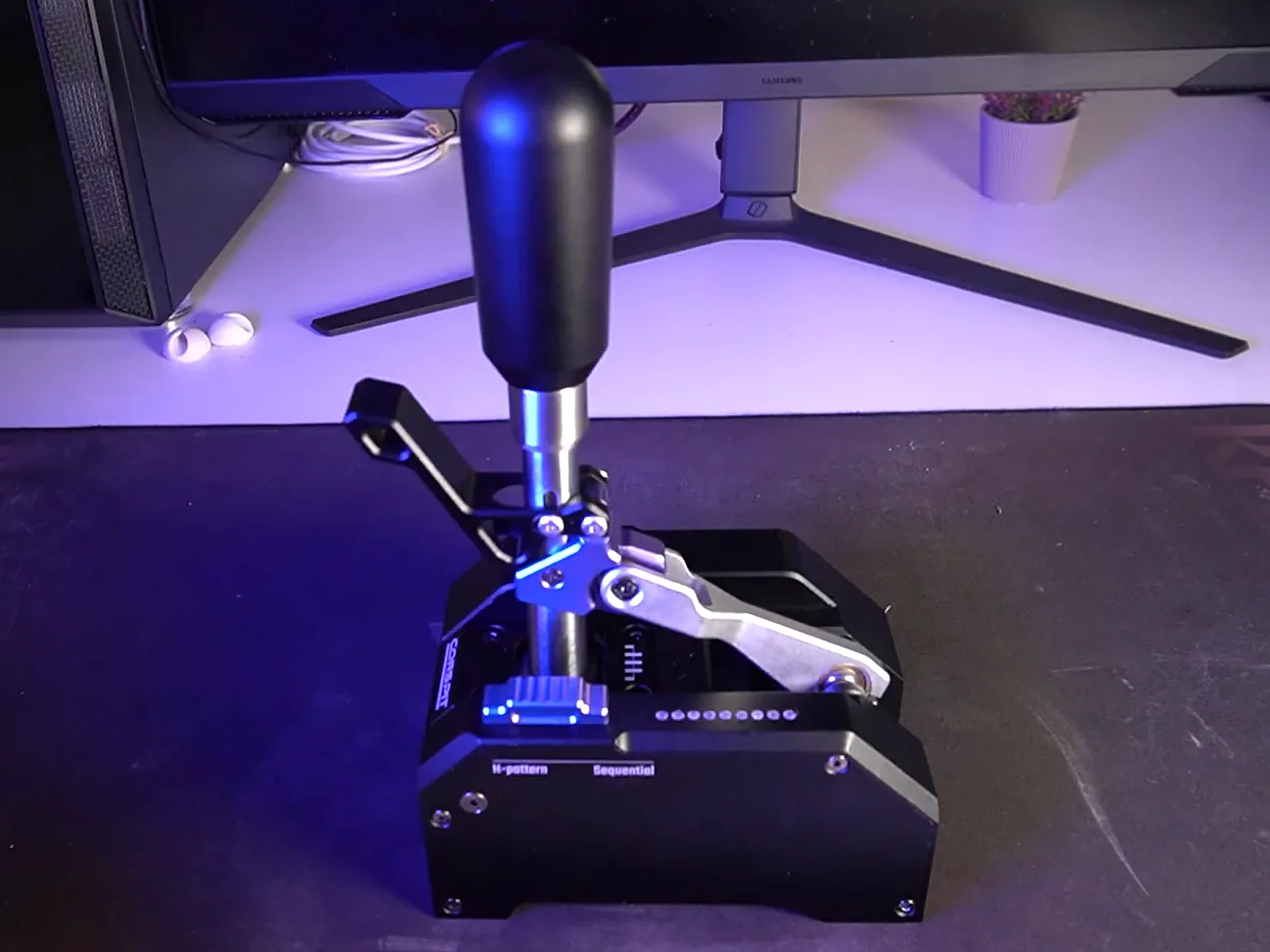
This isn't a sponsored review. Conspit did supply the shifter, along with the rest of their hardware, so I could run it the way they intended. Everything here is from driving it on my own rig. We also have a discount code with Conspit: GITGUD takes 5% off, and I earn a commission when you use it, at no extra cost to you.
The verdict first
Based on our tests, the Conspit CHS is the best dual shifter on the market. In short:
- H-pattern: the standout. Proper resistance through the lever, a satisfying mechanical engagement, and the closest thing to a real gearbox I have felt in a sim shifter.
- Sequential: very good for a dual-mode unit, and clearly more than the usual "H-pattern with the sides blocked off". Against a dedicated sequential it gives a little ground in crispness.
- Build: solid, heavy, full metal. The base is wider than a single-mode shifter, which is worth measuring for before you buy.
- What I'd change: a way to lock the knob so it can't unscrew, and a couple of assignable buttons instead of, or as well as, the LEDs.
- Price: $369 on Conspit's official store (September 2026, before tax, with shipping calculated at checkout). Code GITGUD takes 5% off, and I earn a commission when you use it.
The value case is simple: $369 buys one unit that does the job of two, instead of a dedicated H-pattern plus a dedicated sequential. If you race both kinds of car and don't want two shifters on your rig, this is the one I would point you to. It is now the shifter I use every day.
Build quality: solid, and wider than you expect
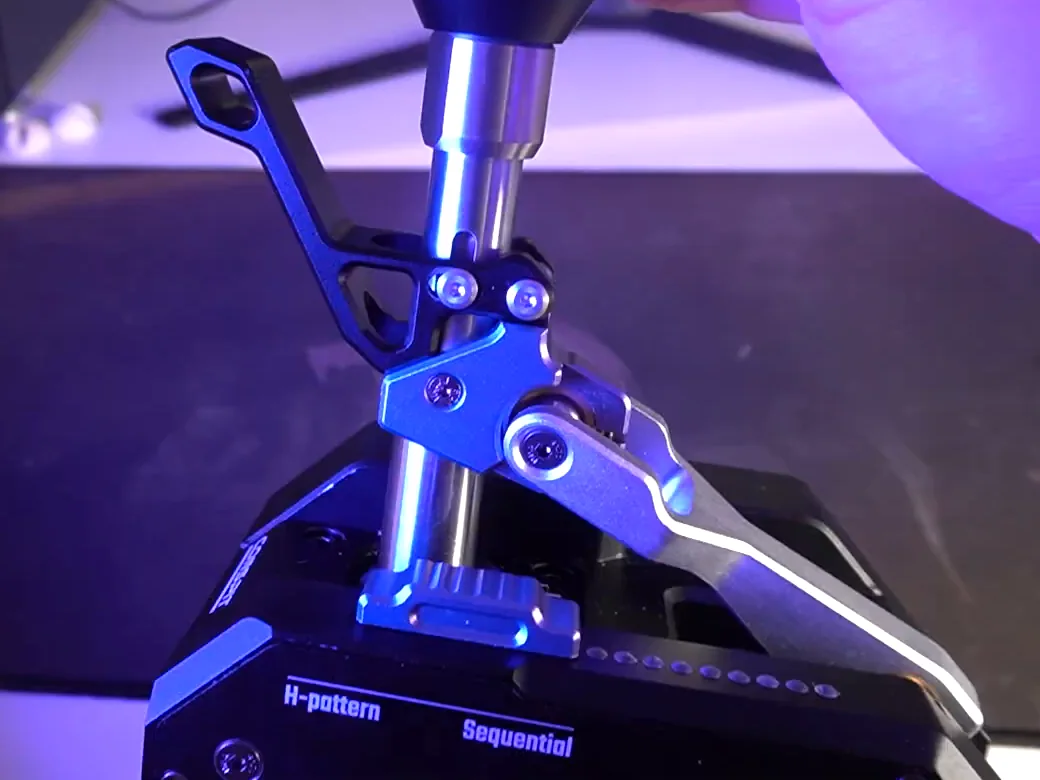
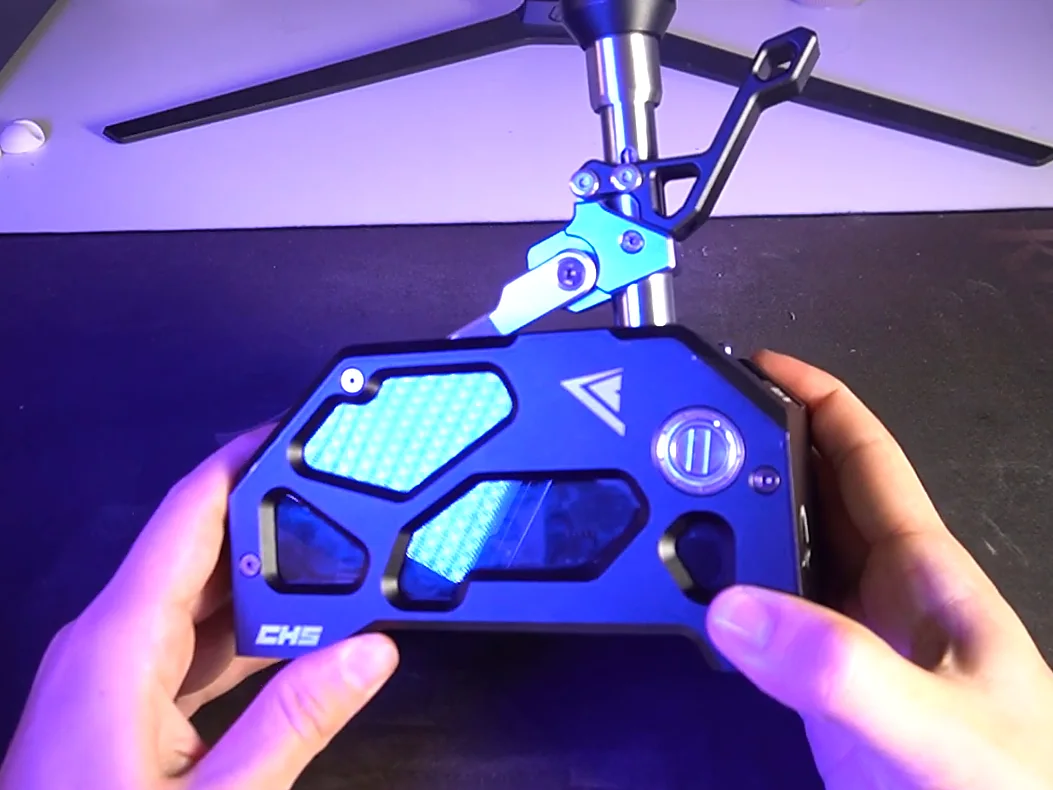
The first thing you notice is the weight. It is a full metal unit built around a one-piece aluminium chassis, which forms the main structure, and it looks and feels like a premium product rather than a plastic housing with a metal lever.
The base is wider than a regular single-mode shifter. On my rig that made fitting the shifter and a handbrake side by side a bit of a challenge, so if you already run a handbrake next to your shifter position, measure the space before you order. The width is not wasted space, though. It exists because of how this shifter works inside.
Why it is two shifters in one body
Most shifters that claim to do both are really an H-pattern with a lock: you block the lateral movement, the lever can now only go forward and back, and that is called sequential. It works, but it is still an H-pattern mechanism pretending.
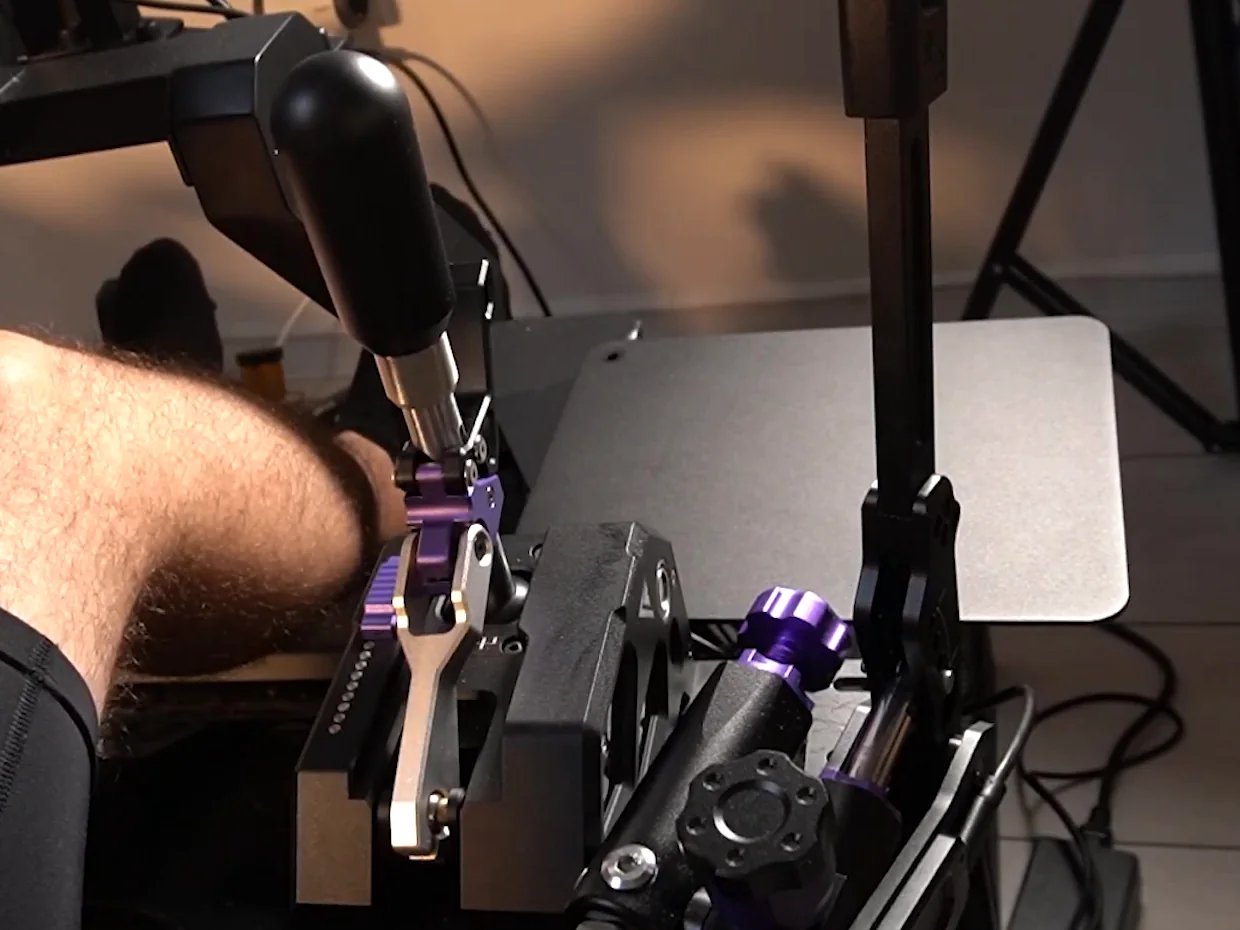
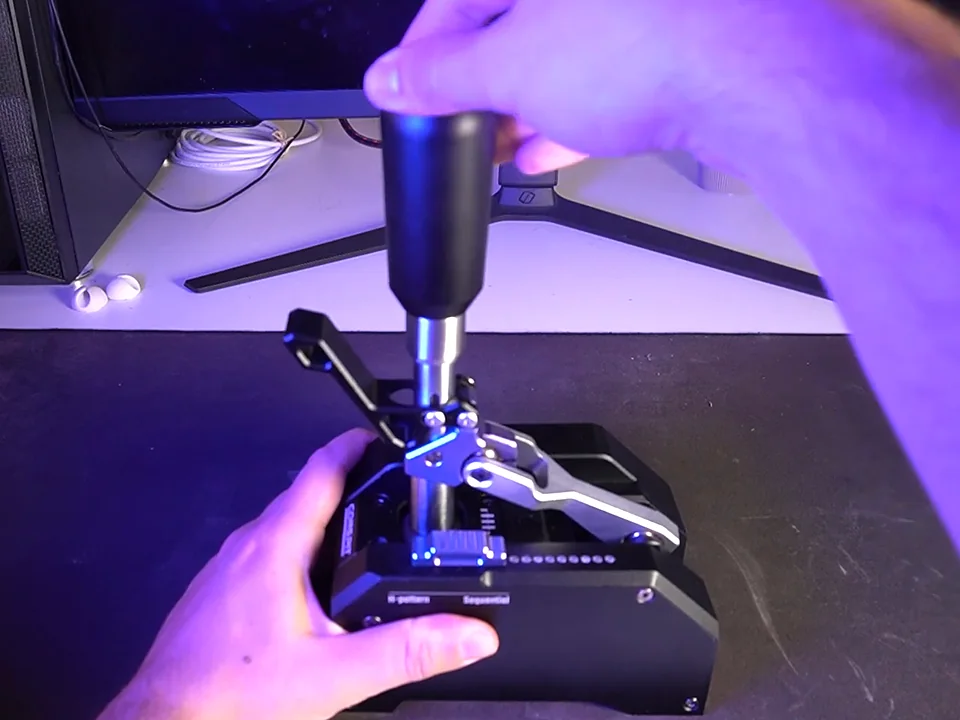
The CHS takes a different approach. Inside there are two dedicated shifting mechanisms, one for H-pattern and one for sequential. When you slide the selector over to sequential, you are not just blocking a gate, you are engaging a different mechanical path. That is the reason the base is wider, and it is also the reason the sequential mode feels like a sequential rather than a compromise.
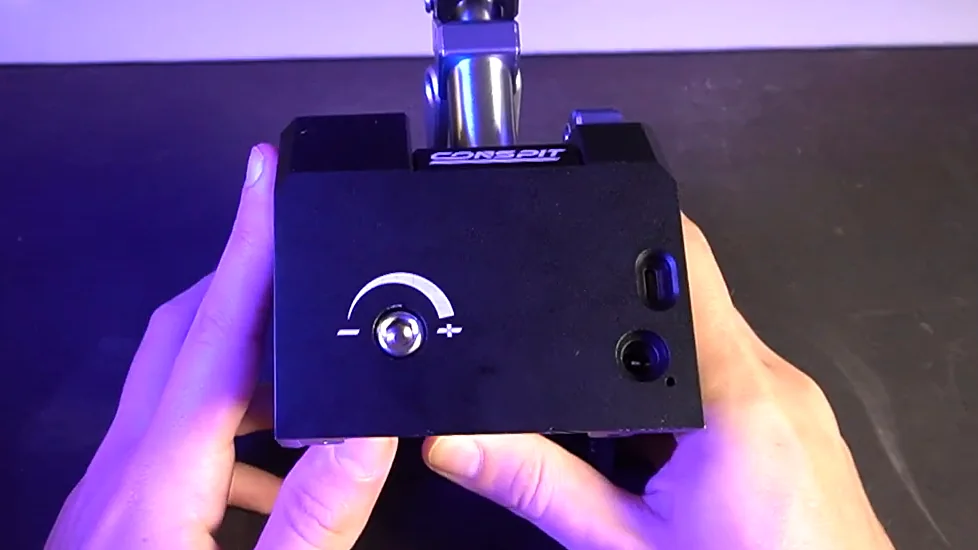
There is a small transparent window on the side where you can watch the mechanism move as you shift. It is a nice detail, and it tells you the design was thought through rather than adapted from an existing unit.
The LEDs, and the buttons I'd rather have
The side of the shifter carries LEDs you can configure to show things like engine RPM or the gear you are in. They look good from outside the rig. From the driver's seat, though, you don't really see them while you are driving, because your eyes are on the road and the shifter sits below your line of sight.
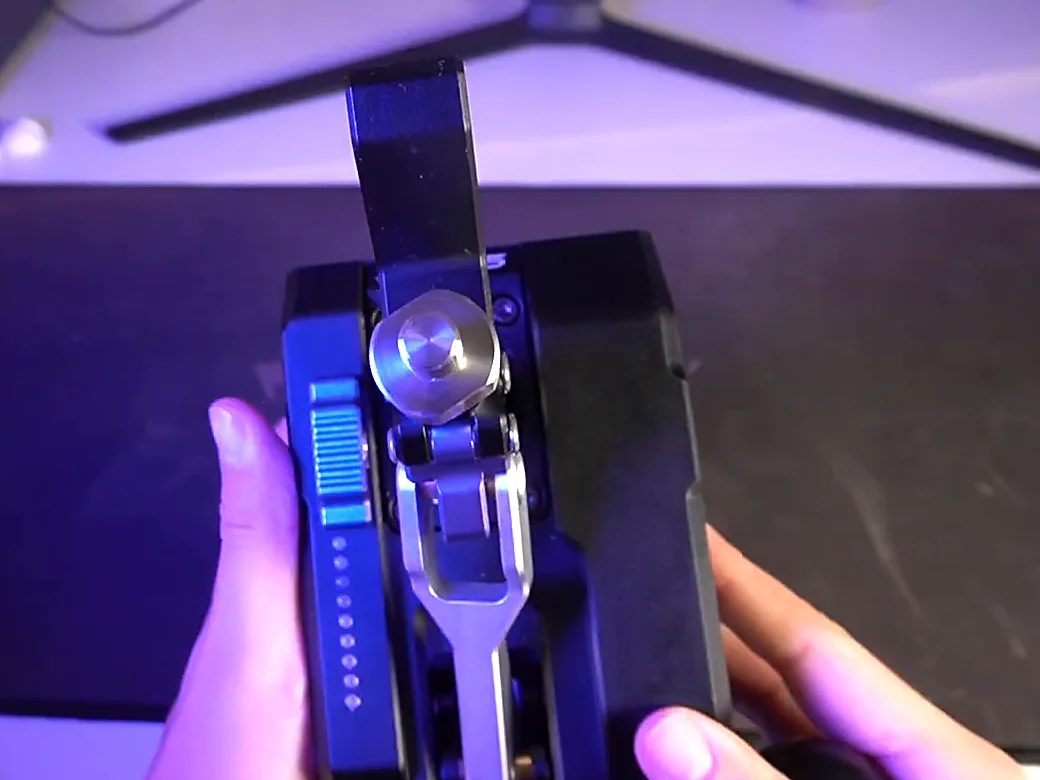
What I would have preferred is two or three assignable buttons on the body, for example on the right-hand side of the shifter. The LEDs fit the design and they are a nice touch, but buttons are something you would use every single session. If it were a choice between the two, I would take the buttons.
The one design change I'd make: lock the knob
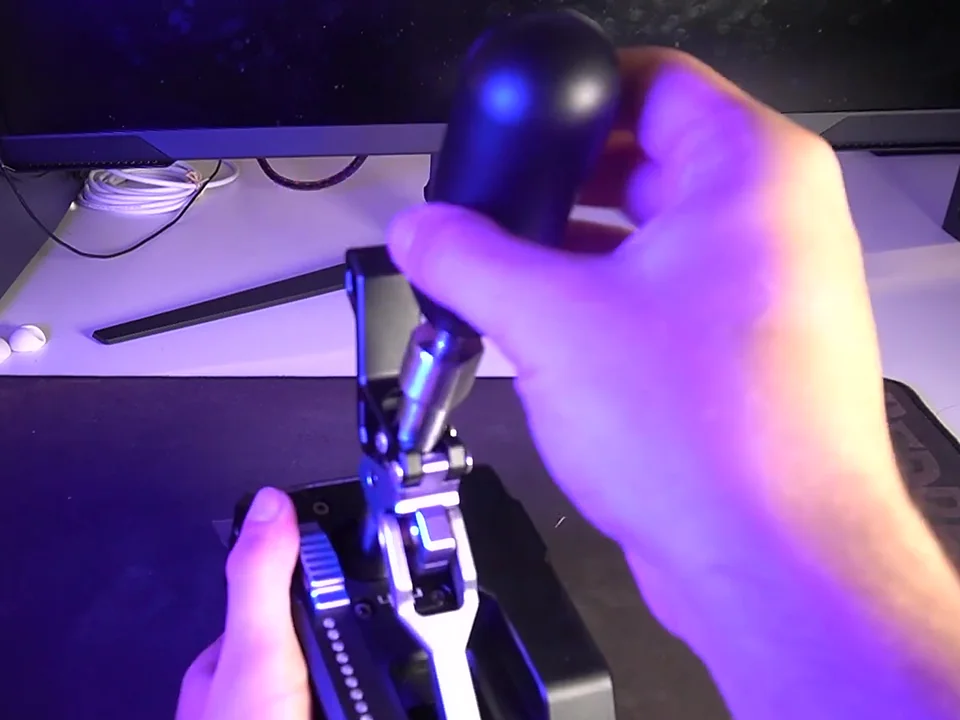
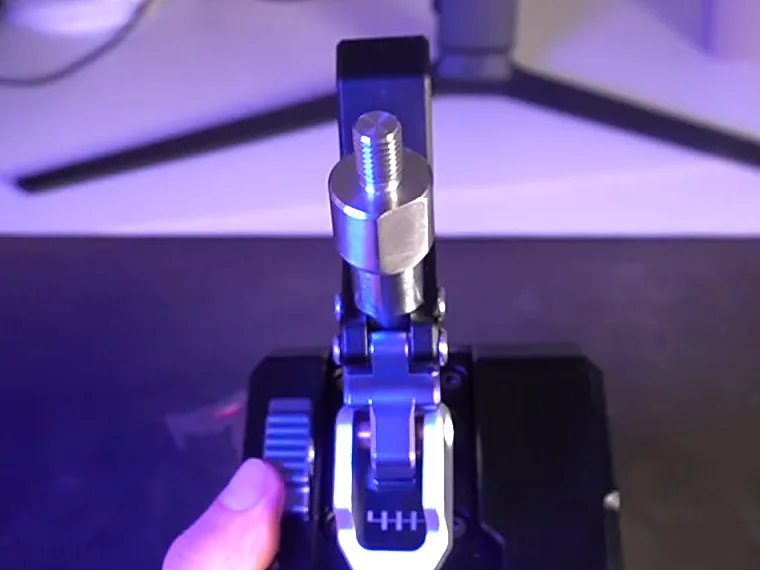
The shift knob simply screws onto the shaft, and that is the one physical detail I think can be improved.
With the shifter mounted on my right, I noticed that in H-pattern mode, when I pulled back into second gear and my wrist naturally rolled a little to the left, I could start to unscrew the knob. That wrist roll is something that happens quite naturally with a right-hand mounting position.
It is not a deal breaker. Once you know about it, you stop twisting your wrist as you pull the lever back, and the problem goes away. But it feels like an easy fix for Conspit: a small locking nut under the knob, or some kind of locking collar, would stop it rotating without making the design meaningfully more complicated.
Driving it: the H-pattern
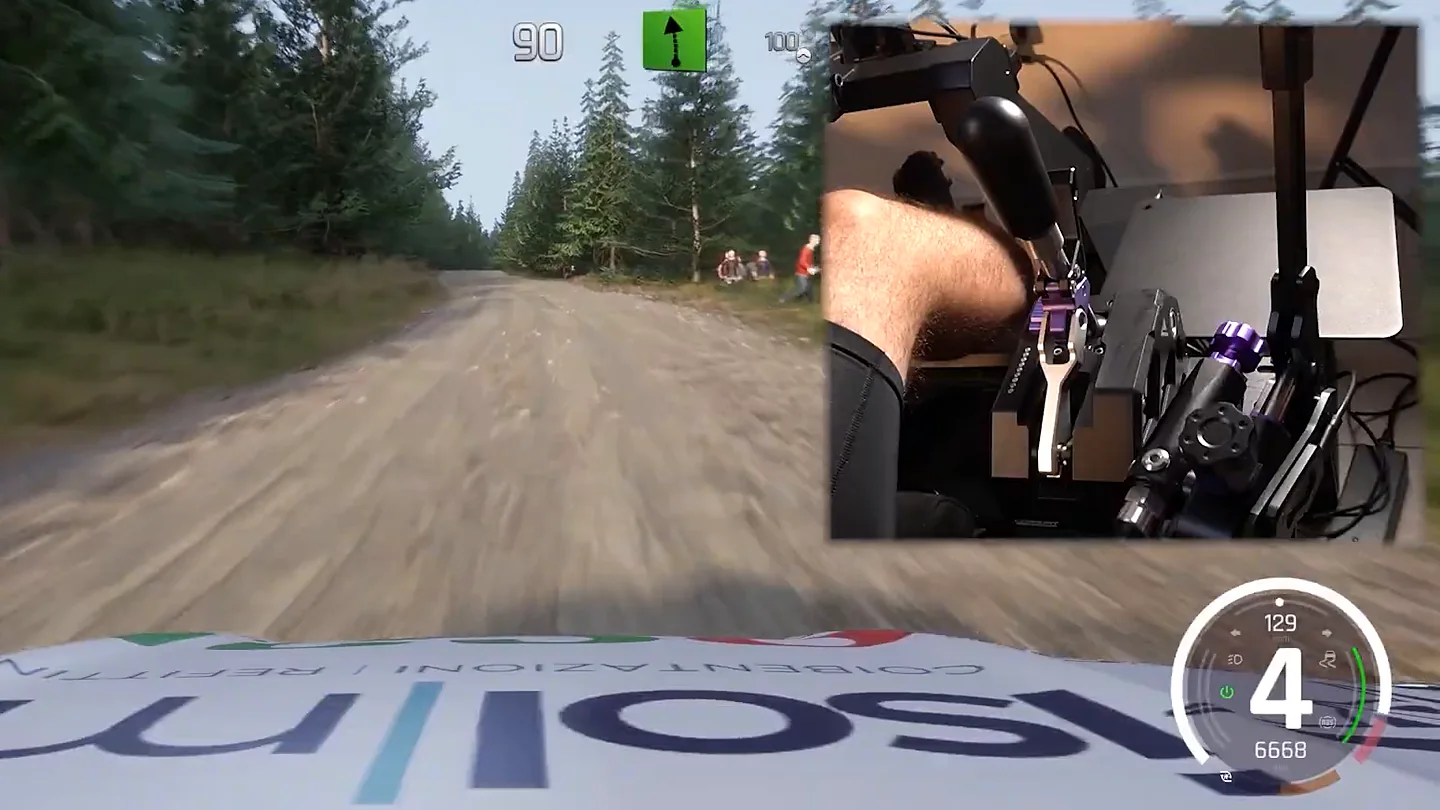
This is where the Conspit shifter impressed me most. The feel is very close to what you would expect from a real car, because there is proper resistance through the lever, and that resistance is adjustable, so you can set it heavier or lighter to taste. Every shift gives you a clear, mechanical engagement rather than a vague click.
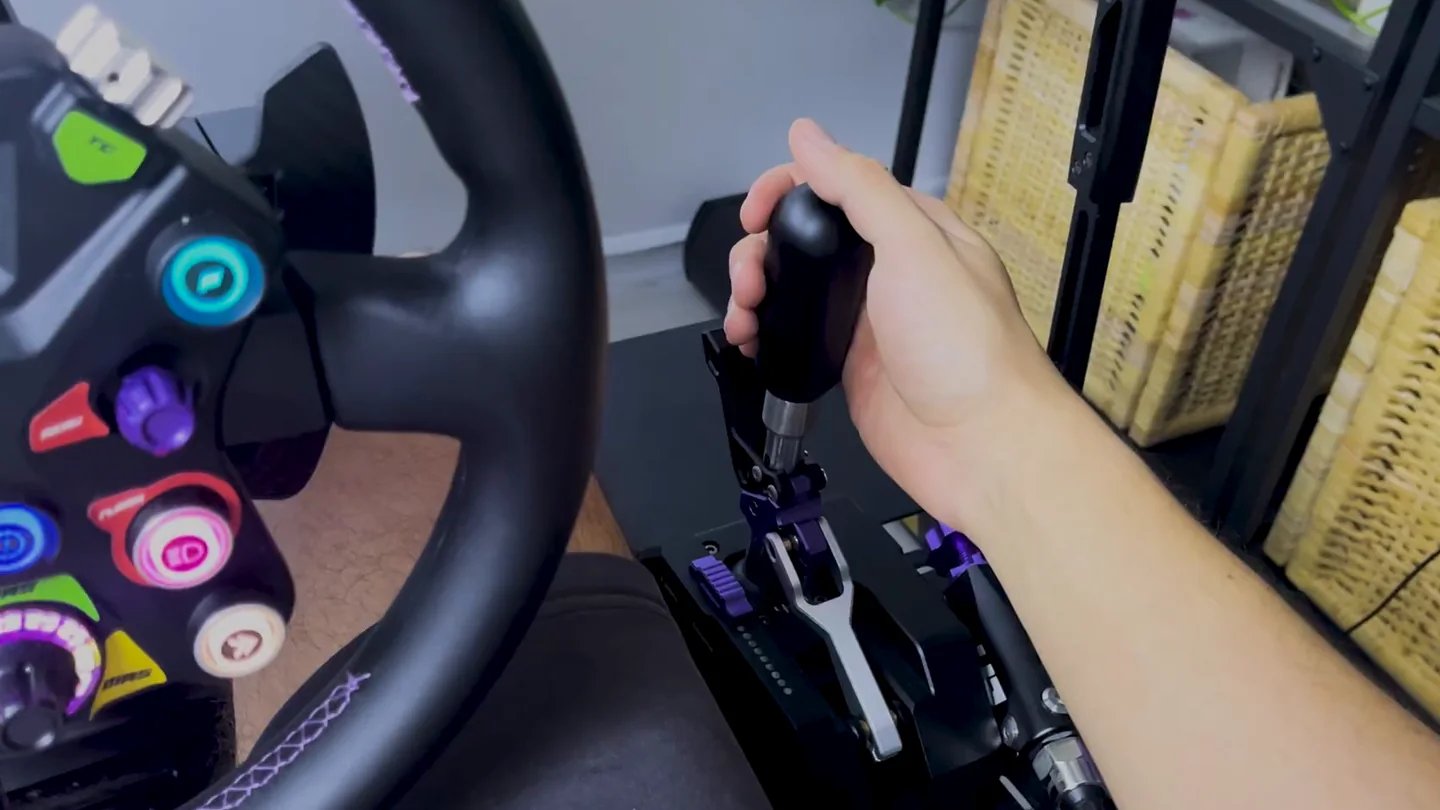
Reverse and seventh gear are engaged with the black lever underneath the knob, so you cannot find them by accident. You can also see exactly how the shifter is behaving, gear by gear, in Conspit's software, which is useful when you are setting it up.
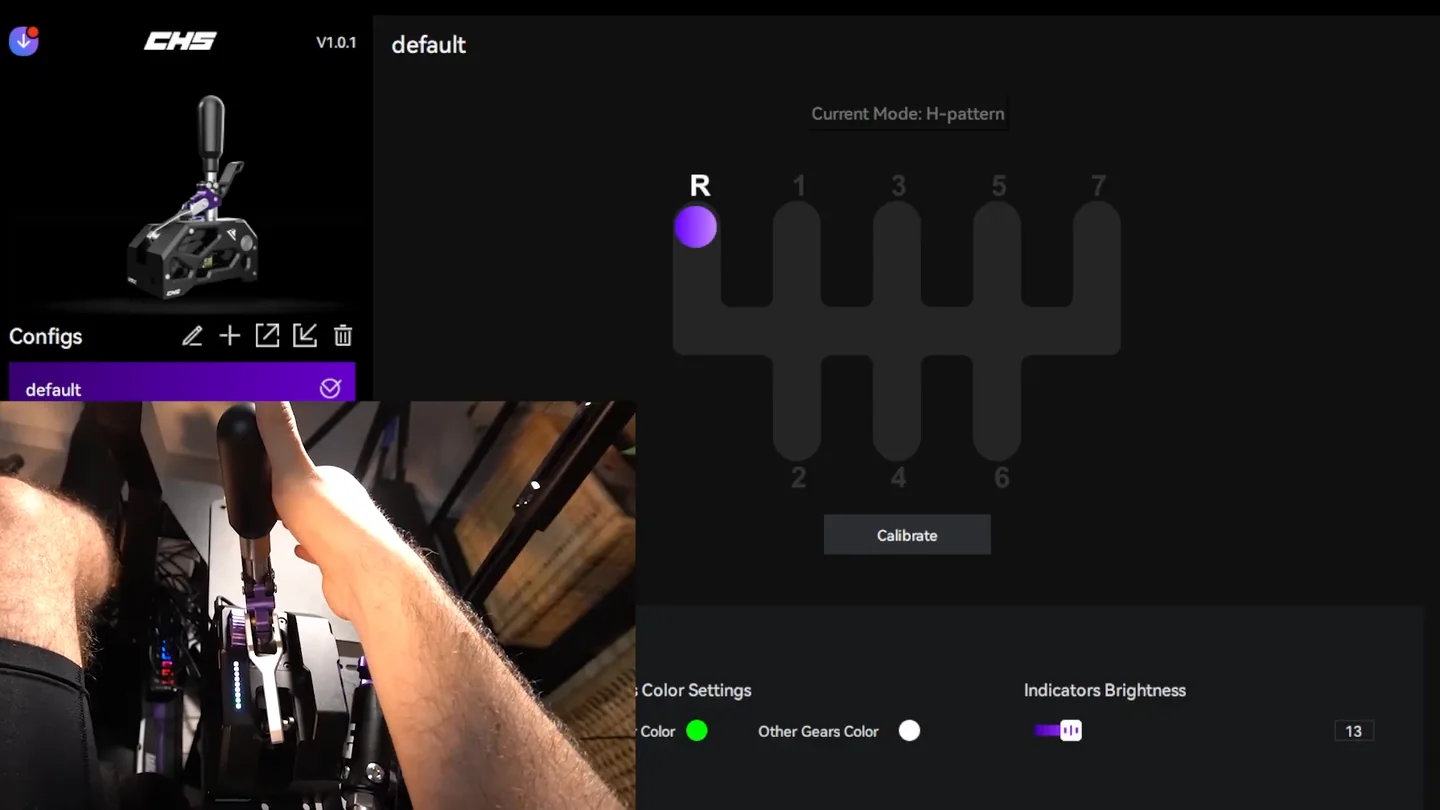
Every real gearbox is different, and every car feels a little different, so no sim shifter can be "the real thing". But in terms of the basic movement, the resistance and the way each gear engages, this was honestly the closest H-pattern experience to a real car that I have had on a rig. It has its own character too: it resembles a real gearbox a lot, but it is unique in its own way, and it is genuinely satisfying to drive with.
Driving it: the sequential
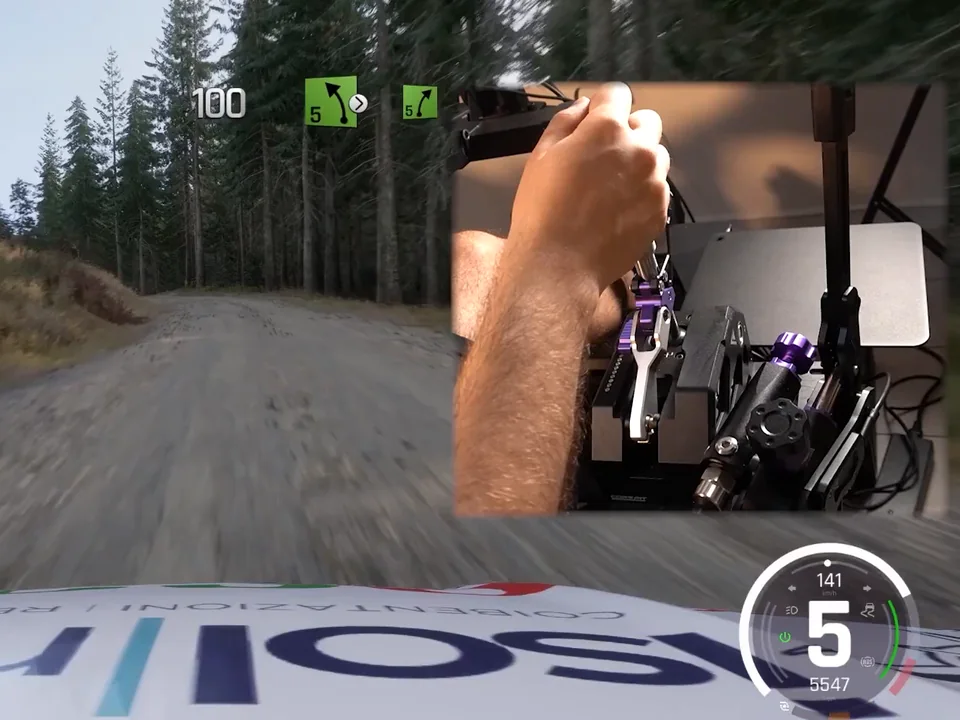
Switching over is as simple as sliding the selector. The sequential mode was better than I expected from a dual-mode shifter, and after more time on it I would go further: for a dual shifter, the sequential is very good. The separate internal mechanism is what makes the difference. You get a clean mechanical click on every shift and good resistance through the lever, and it feels like its own mode rather than an H-pattern with a gate closed.
Where it gives a little ground is only when you compare it against a dedicated sequential shifter, one built to do nothing else:
- A little side-to-side play. Even in sequential mode there is a small amount of lateral movement in the lever. It isn't locked completely solid from side to side.
- Slightly softer feedback. I suspect that play is part of why each shift feels a touch more muted than on the best standalone sequentials I have used.
On a top dedicated sequential the lever is constrained purely to forward and back, so every shift feels a little sharper and more direct. That is the gap, and it is a small one. It is the difference between a very good sequential and the very best, not the difference between a proper sequential and a gimmick.
So is it the best of both?
Not quite, and I don't think that was ever the goal. If you want the absolute best sequential, buy a dedicated sequential. If you want the absolute best H-pattern, buy a dedicated H-pattern. A dual-mode shifter is a different product, and it should be judged as one.
Judged that way, it is excellent. The H-pattern is right at the top, the sequential is very good, and you get both from one unit in one position on your rig. Personally, I don't see the point of buying two shifters and swapping them over whenever you change car when one unit gives you most of the realism of both. It is not the best of both. It is the best choice for most people who drive both.
Who should buy it
- You drive both kinds of car. Road cars and older race cars with H-pattern gearboxes, and modern race cars with sequentials. This is exactly who a dual-mode shifter is for.
- You only have room for one shifter position and don't want to be unbolting units between sessions.
- You care most about H-pattern feel. That is where this shifter is strongest.
If you only ever race cars with sequential gearboxes and want the sharpest possible shift, a dedicated sequential is still the better buy. And if a shifter is not yet on your list at all, it is worth checking what to upgrade first in your setup before spending on one; for other add-ons worth owning once the rig itself is sorted, see the best sim racing accessories.
Conspit discount code
5% off at Conspit
Enter GITGUD at checkout and check that the 5% comes off in your order summary before you pay. I earn a commission when you use this code, at no extra cost to you.
What I think of the rest of Conspit's hardware
I have been running more of Conspit's gear alongside the shifter. Their hydraulic handbrake is hands down the best handbrake I have used, and their hydraulic pedals are genuinely interesting and very good. You can see a clear vision running through their products, and the CHS fits it.
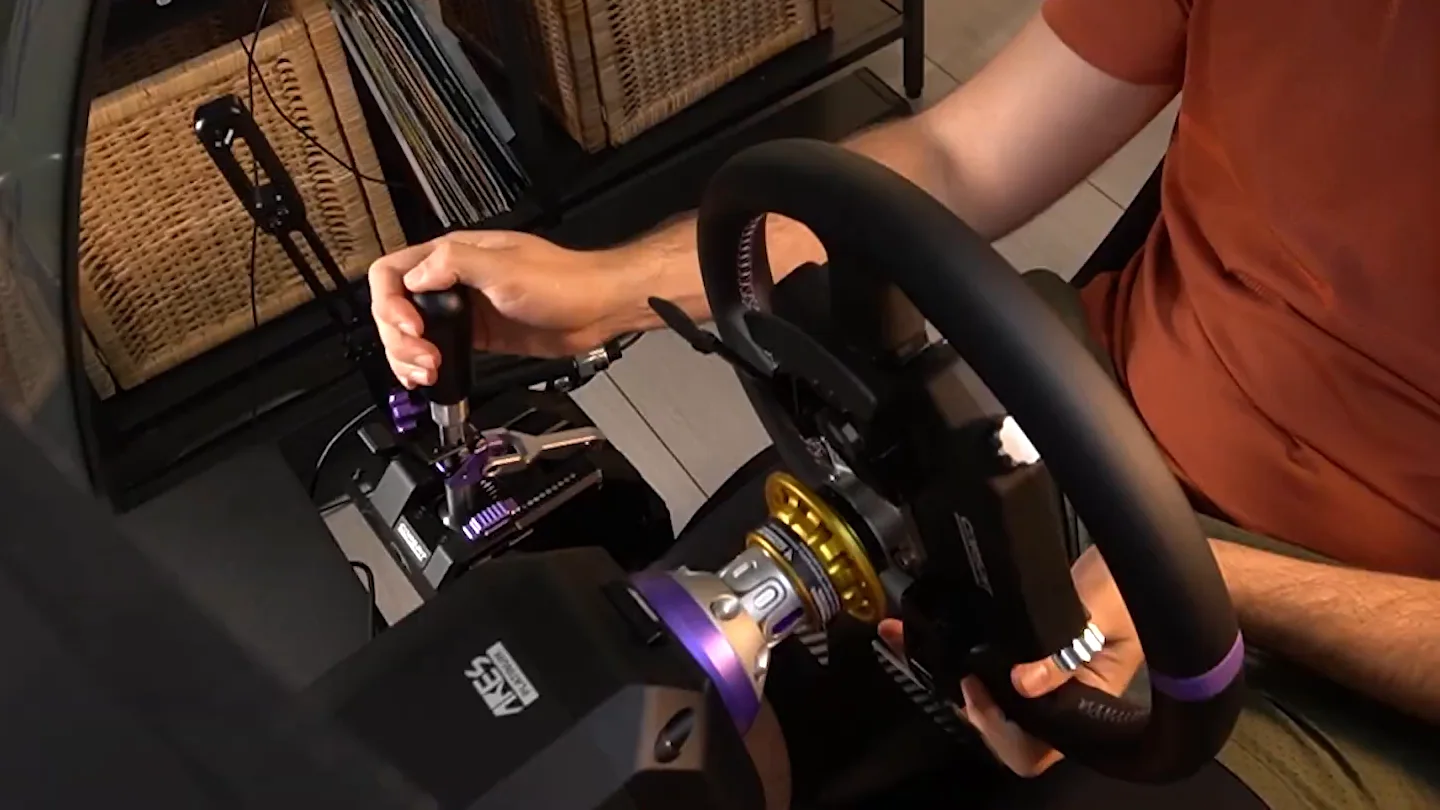
The shifter is now my daily driver. If what you are really after is getting faster rather than more hardware, that is what the GitGud Racing Academy is for: send us a lap and a coach will show you where the time is.
Conspit CHS shifter FAQ
Does the Conspit shifter do both H-pattern and sequential?
Yes. The Conspit CHS is a dual-mode shifter, and unlike most units that claim both, it does not fake the sequential by blocking the sideways movement of an H-pattern. It has two dedicated mechanisms inside, one for each mode, and you switch between them with a sliding selector.
How do you switch the Conspit CHS to sequential?
Slide the selector on the body across. That engages the separate sequential mechanism inside the shifter rather than just locking the H-pattern gate, which is why the base is wider than a single-mode shifter.
Is the Conspit sequential as good as a dedicated sequential shifter?
It is very good for a dual-mode shifter, and clearly more than an H-pattern with the sides blocked. Against a dedicated sequential it gives a little ground: there is a small amount of side-to-side play in the lever, and each shift feels slightly less crisp than on the best standalone units. If you only drive sequential cars and want the sharpest shift possible, a dedicated sequential is still the better buy.
How do you engage reverse on the Conspit shifter?
Reverse, and seventh gear, are engaged with the black lever underneath the shift knob, so you cannot select them by accident in H-pattern mode.
Does the Conspit CHS have buttons?
No assignable buttons on the body. It has configurable LEDs on the side that can show RPM or the current gear, which look good from outside the rig but are hard to see while driving. Two or three assignable buttons would be the more useful addition.
Can the Conspit shifter knob come loose?
It can. The knob screws onto the shaft, and with the shifter mounted on your right, rolling your wrist to the left while pulling back into second can start to unscrew it. It is easy to avoid once you know, but a small locking nut or collar under the knob would fix it properly.
Is a dual-mode shifter worth it over two separate shifters?
For most people who drive both H-pattern and sequential cars, yes. A dedicated shifter will always be the very best at its one job, but a good dual-mode unit gives you most of the realism of both from one position on the rig, with no swapping hardware between sessions. If you only ever drive one type of gearbox, buy the dedicated shifter for it instead.
This guide is part of the free library at GitGud Racing Academy — an online sim racing academy built around weekly lap reviews, structured courses, drills and training tools.
Train this the right way
Reading is step one. Build it into muscle memory with structured, car-specific courses and personal lap reviews from a coach — inside the Academy.
Apply for a spotWatch the full video on YouTube