Sensit MTC-P Extreme Review: The Most Fun I've Had Sim Racing in a Long Time
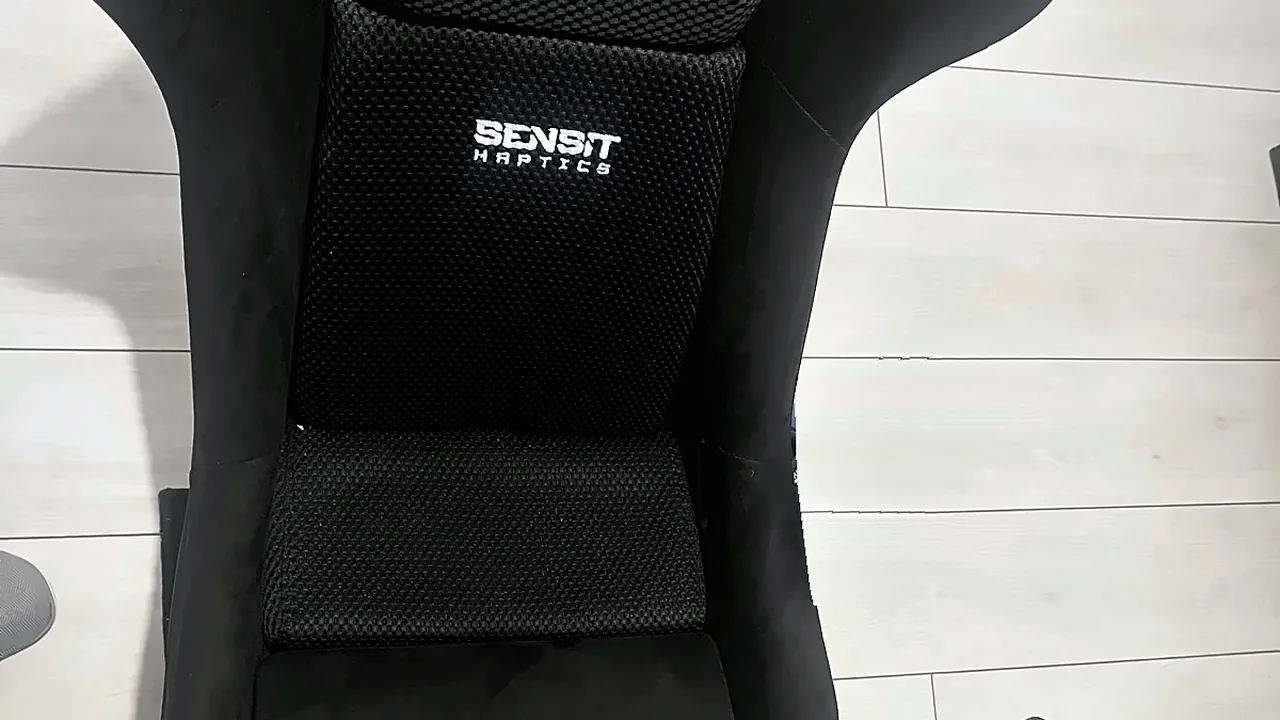
The Sensit MTC-P Extreme gave me something I wasn't expecting: a big smile while driving.
I already have two ButtKickers, one mounted on the left and one on the right, plus haptic reactors on my pedals. I'm familiar with what vibrations can add to a simulator. But none of those gave me quite the same sensation as having the feedback coming directly through these seat cushions.
Feeling the engine, the gear changes and the car sliding made driving much more enjoyable. I wouldn't call it a shortcut to faster lap times, but as an immersion upgrade, it impressed me immediately.
There is one significant limitation, though: it needs to fit your seat properly. It worked on my test rig, but I couldn't get a suitable fit on my main rig.
Sensit supplied this unit.
What the MTC-P Extreme actually does
The MTC-P Extreme is a set of cushions with haptic actuators built into the seat and back pads. They attach to a compatible seat using hook-and-loop fasteners and connect to a control unit, external power and your PC through USB.
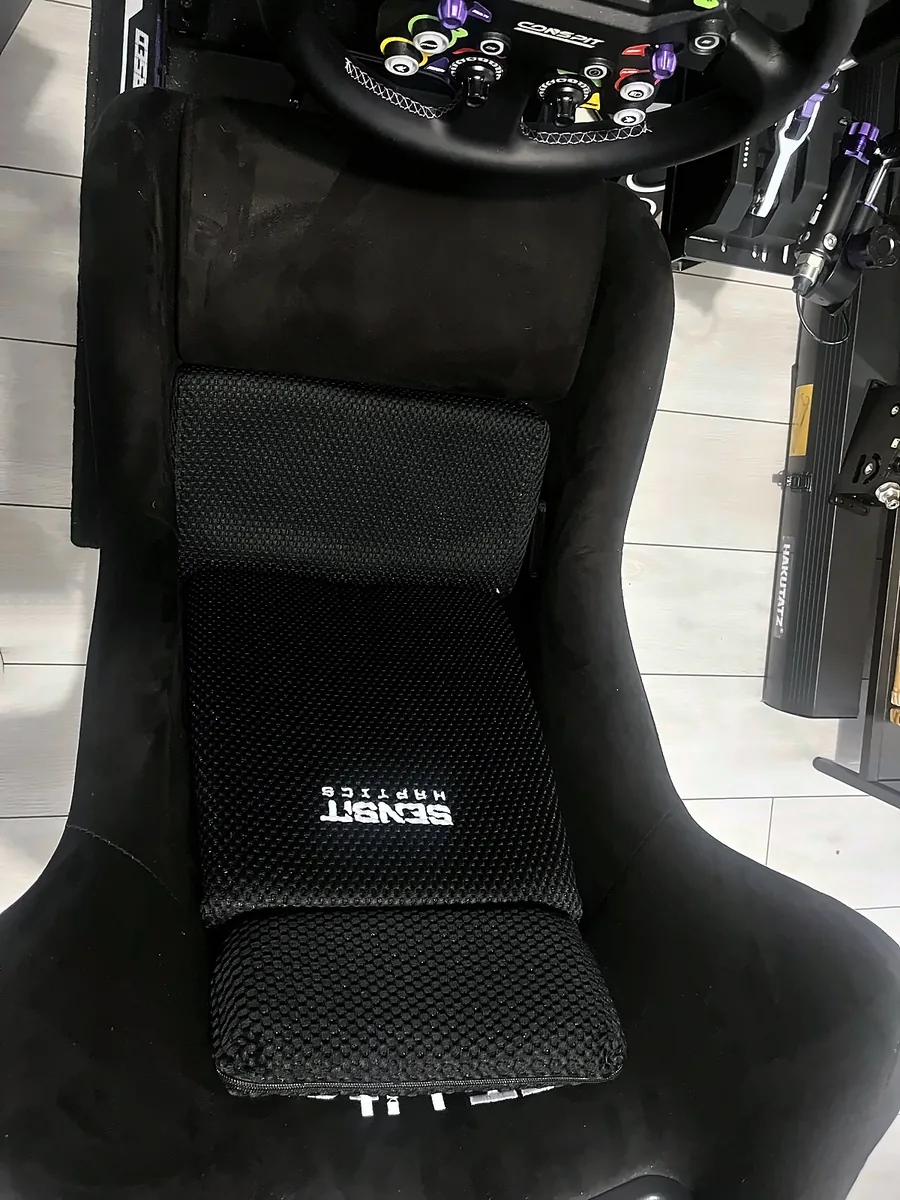
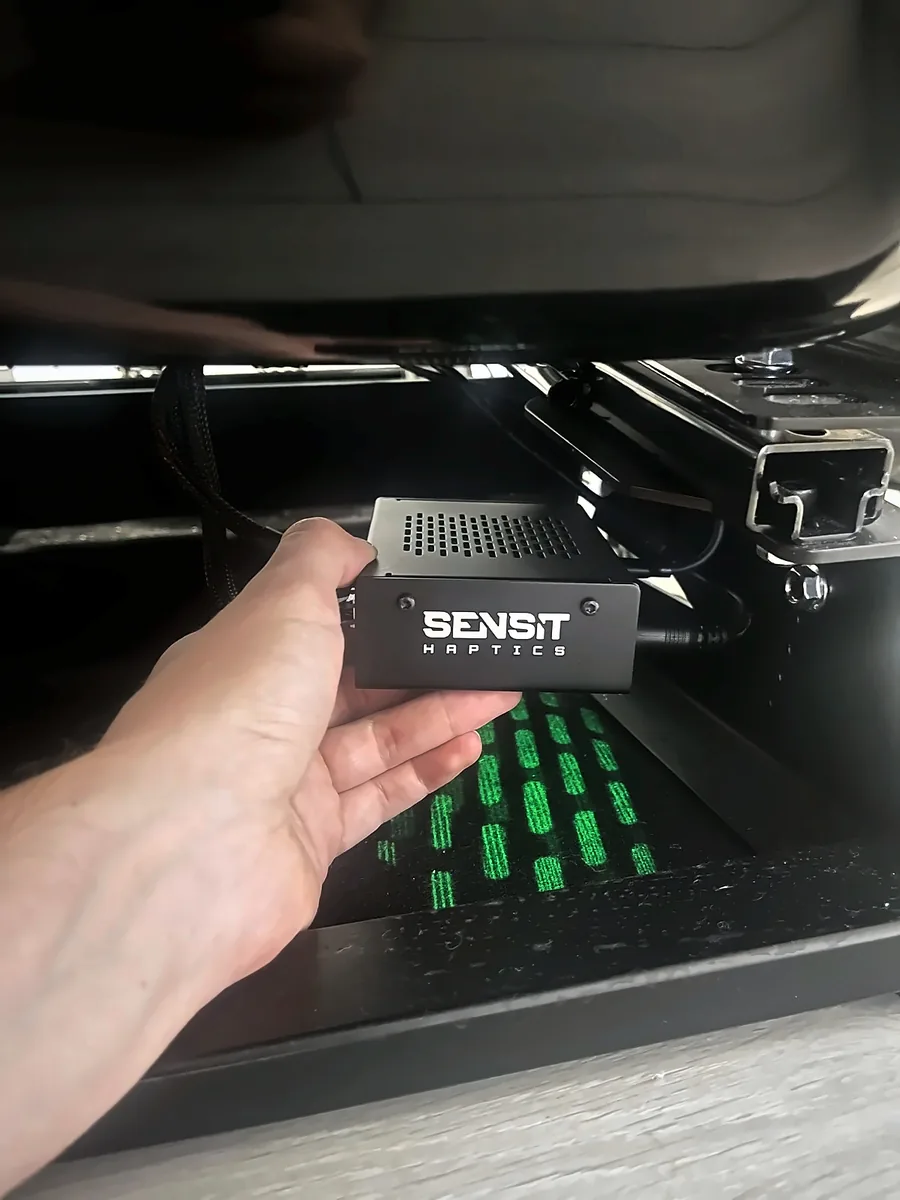
The system uses 14 actuators across eight channels, allowing feedback to come from different areas instead of making the entire seat vibrate in the same way. It is an active system, so you don't need a separate amplifier.
I used Sensit's own application for this review, rather than SimHub. SimHub is also supported, but the software impressions here relate to Sensit's app.
One detail worth clarifying: my unit is labelled MTC-P Extreme, but I couldn't confirm its generation. Sensit now sells a Gen3 version with Apex Ultra actuators, so I'm keeping my impressions specific to the unit I tested rather than assuming it has the latest hardware.
Why it felt different from my ButtKickers
My ButtKickers are powerful. They can produce strong vibrations, and SimHub gives me plenty of control over their effects. But with my installation, the vibration travels through the rig and seat before reaching me.
With the Sensit pads, the actuators are inside the cushions I'm sitting against. The feedback felt much more direct.
That difference was bigger than I expected. It wasn't simply about making the vibrations stronger. I could feel the effects through my body in a way that made them seem more connected to what the car was doing.
This is a comparison with my own ButtKicker setup, rather than every possible transducer installation. But in my rigs, the Sensit cushions delivered the more convincing experience.
The engine had presence. Gear changes had a physical kick. When the car started sliding, I felt a cue through the seat. It brought another layer to driving that I really enjoyed.
Different effects felt like different things
Initially, I switched on all the effects.
Normally, that can become a problem with haptics. Add engine vibration, suspension movement, gear shifts and tyre slip to the same output, and eventually you can end up with a lot of vibration but very little useful distinction.
On a circuit, the Sensit system handled this surprisingly well.
In the profile I used, rear sliding came through lower down, around the seat area. Front sliding felt higher up my back, while gear changes felt more central. The software's effect tests made it easier to recognise where the sensations were coming from.
Because the effects were distributed across different areas, I could distinguish them much more easily than I expected.
That spatial separation was one of the biggest highlights for me. I could enjoy several effects together without everything immediately blending into the same continuous rumble.
Does it help you drive faster?
I wouldn't buy it expecting an immediate improvement in lap time.
The sliding feedback can be useful. Feeling a cue through the seat gives you another way to recognise what the car is doing, alongside the steering, sound and visuals. With practice, I can see that becoming part of how you react.
But I didn't establish a measurable pace improvement, and I wouldn't describe it as a game changer for speed.
There is also a technical distinction with iRacing. Sensit says its wheel-slip effect estimates tyre behaviour from vehicle movement, including the relationship between steering input, expected rotation and actual rotation. It isn't reading a direct measurement of remaining tyre grip.
For me, the biggest benefit was enjoyment. Feeling the car through the seat reminded me of part of the physical involvement of driving a real car, even though vibrations obviously don't reproduce the actual forces.
I kept driving because it was fun. That was the strongest impression it left.
Rally needs a different approach
My initial testing included Assetto Corsa Rally, and that was where I found the limit of running everything together.
In rally, the car is constantly busy. The suspension is working, the tyres are sliding, the surface is changing, and you're adding engine vibration and gear changes on top.
With all those effects active, the feedback became too continuous. I could no longer separate everything as clearly as I could on a circuit.
For that kind of driving, I would reduce or disable engine and gear-change effects first, then concentrate on the suspension and tyre feedback. That gives the information I care about more room to stand out.
I don't see this as a problem unique to Sensit. I've found that overlapping effects can become difficult to interpret with other haptic equipment too. Rally simply makes it more obvious because so much is happening at once.
On a circuit, running multiple effects felt natural and enjoyable to me. For rally, I would build a simpler profile.
The software is part of the experience
One feature I appreciated in Sensit's application was being able to test the effects individually. It helped me understand the sensations before trying to recognise them while driving.
That is worth doing during setup. Once you know what an effect feels like and where it appears, it becomes easier to identify on track.
Sensit supports its own Cockpit application as well as SimHub. Its current supported-game list includes iRacing, Assetto Corsa, ACC, Assetto Corsa Rally, Le Mans Ultimate, RaceRoom, AMS2 and F1 25, among others. Available effects depend on the simulator and software being used.
My experience also showed why individual profiles matter. The settings I enjoyed on a circuit were too busy for rally. I would spend time adjusting the effects for the type of driving rather than treating one profile as suitable for everything.
Check your seat before buying
This was the biggest downside in my experience.
The cushions worked in the bucket seat on my test rig, but my main rig uses a more reclined Sparco seat from Sim-Lab, closer to a formula-style seating position. The Sensit cushions didn't fit that seat properly.
There were two issues.
First, the seat didn't have a suitable opening at the bottom for the cable route I wanted to use. I couldn't install it in the same way as on my test rig without finding another route or modifying the seat.
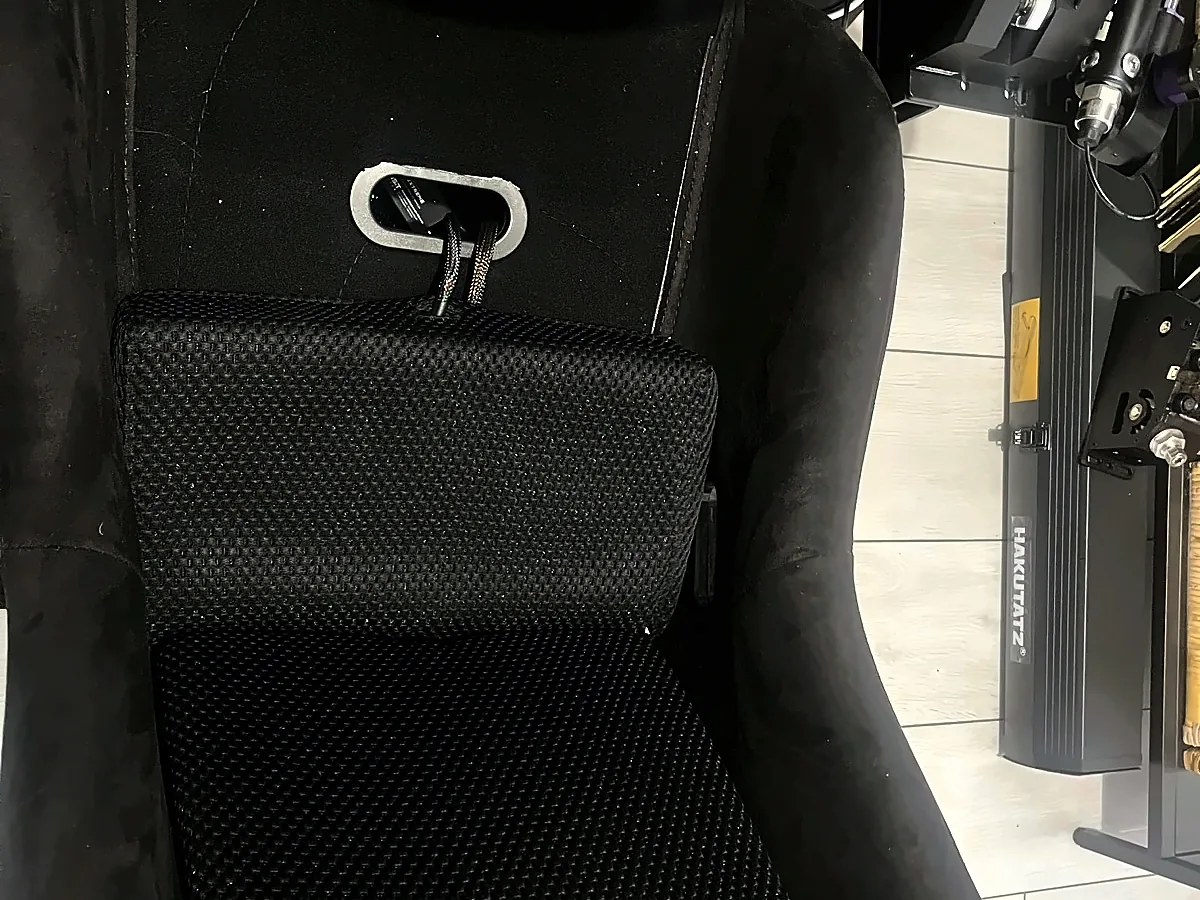
Second, the cushion shapes didn't suit the seating position. Replacing the original padding with the Sensit pads didn't give me the support or fit I needed. It felt like I would need additional cushioning to make it work properly.
That was disappointing because I would have loved to keep using the system on my main rig.
Check the exact seat model, cushion dimensions and cable routing before ordering. Even within bucket seats, compatibility shouldn't be assumed. Sensit provides a seat compatibility guide and regular and XL options, which are worth checking carefully.
My verdict
The Sensit MTC-P Extreme is one of the most enjoyable additions I've tried on a simulator.
Even with two ButtKickers and pedal haptics already in my setup, the direct feedback through the cushions felt different enough to surprise me. Engine vibration, gear changes and sliding cues made the car feel more alive, and the separation between different areas helped preserve detail during circuit driving.
For rally, I would simplify the effects. For any installation, I would check seat compatibility before spending the money.
I wouldn't promise that it will make you faster. What I can say is that it made me want to keep driving, and for an immersion upgrade, that matters a lot.
For me, the experience justified the price. My biggest frustration was that I couldn't fit it properly to the seat on my main rig—because otherwise, I would have wanted to keep it there.
This guide is part of the free library at GitGud Racing Academy — an online sim racing academy built around weekly lap reviews, structured courses, drills and training tools.
Train this the right way
Reading is step one. Build it into muscle memory with structured, car-specific courses and personal lap reviews from a coach — inside the Academy.
Join the Academy · $49.99/mo incl. VAT