Simgrade VX-PRO Pedals Review: An Excellent Brake, With One Small Compromise
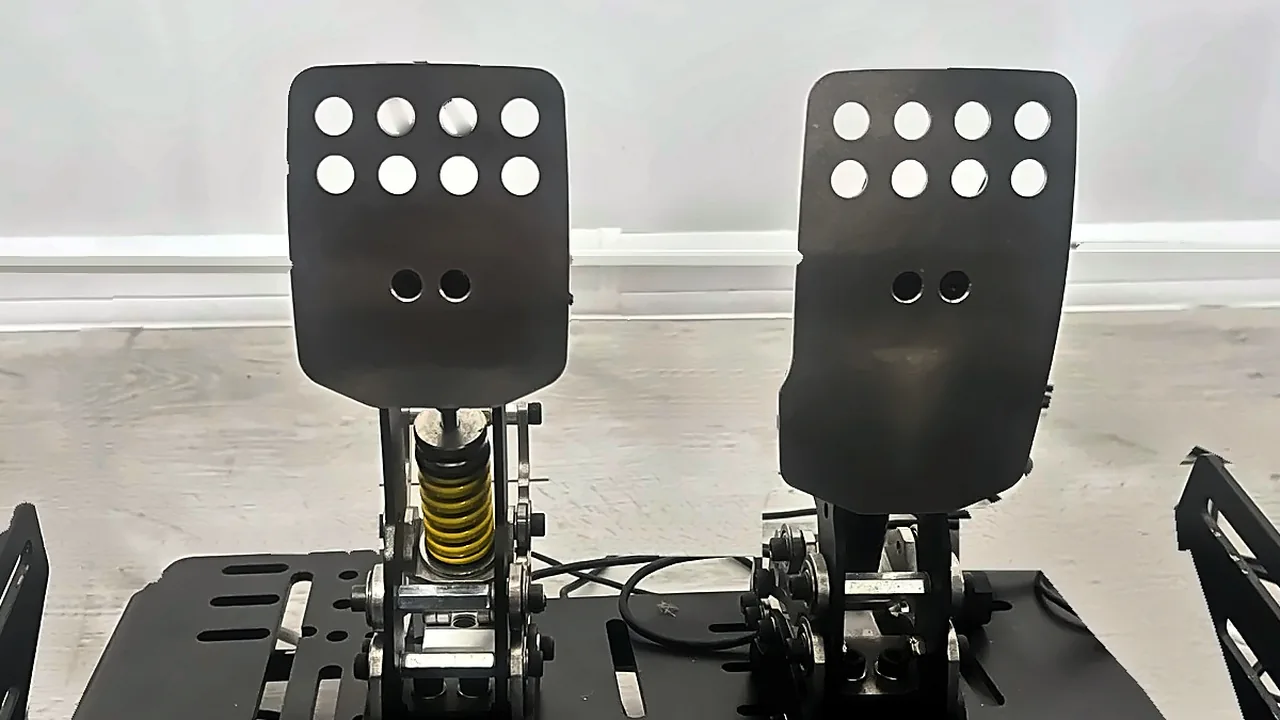
The brake on the Simgrade VX-PRO surprised me immediately. It feels solid, precise and comfortable to use, and switching from my main Heusinkveld Ultimate+ pedals took very little getting used to.
That is a strong starting point. The Heusinkvelds are my reference because I drive with them regularly, so I know exactly how I want a brake pedal to respond. With the VX-PRO, I felt comfortable almost straight away, without making any mechanical adjustments.
But feeling good is one thing. Being able to drive at the same pace is another. So I tested that too.
Simgrade supplied these pedals.
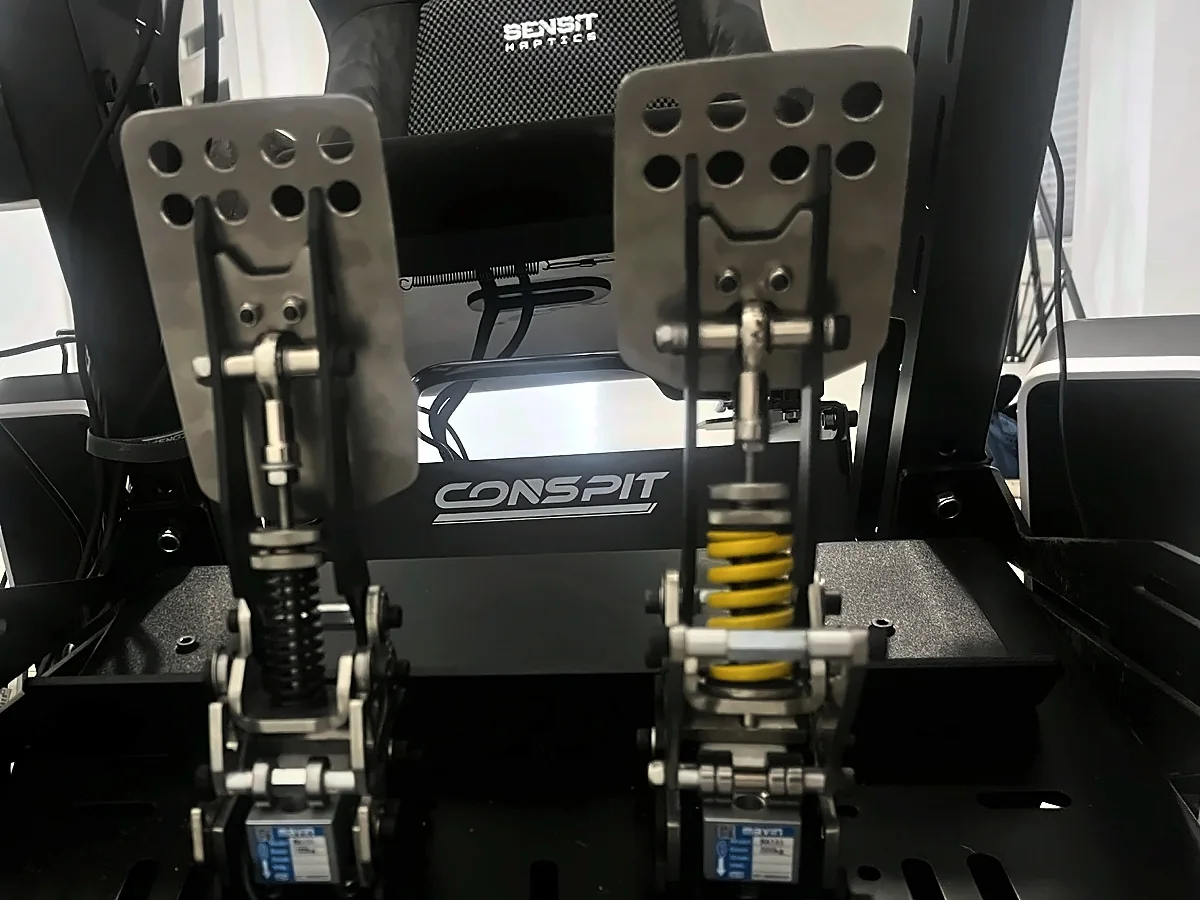
Matching my pace at the Red Bull Ring
I started on my main rig with the Heusinkveld pedals, driving a GT3 car at the Red Bull Ring. I spent around an hour putting laps together and setting my best time.
Then I moved to my other rig with the Simgrade VX-PRO pedals. After roughly another hour, I was able to match that lap time.
This was essentially my first proper session with them, using the mechanical setup exactly as it came out of the box.
Because I switched rigs and had already practised the combination, this wasn't a controlled comparison isolating the pedals. But it answered the question that mattered to me: could I get comfortable and reach my usual pace quickly? Absolutely.
I didn't feel like I was fighting unfamiliar braking behaviour or having to rebuild my technique around the pedal. The brake gave me the control I needed almost immediately.
The brake is the highlight
The best way I can describe the VX-PRO brake is solid and predictable. You can apply pressure confidently, then make small adjustments without feeling like the pedal is getting in your way.
That matters particularly when releasing the brake. Getting the initial braking force right is only part of the job. You also need to reduce it accurately as you turn in, controlling how the car rotates and how much grip remains available for steering.
The VX-PRO gave me a really good connection with that process. In terms of brake feel, it immediately reminded me of my Heusinkveld pedals. That doesn't mean the two sets are identical, but the difference in price was much bigger than the difference I felt under my left foot.
If I hadn't known the price, I could honestly have believed the brake alone belonged in the $700–800 range. That's how convincing it felt to me.
Technically, the brake uses a 200 kg load cell, with a manufacturer-rated maximum force of 90 kg at the pedal face. Those are different figures: the sensor rating is not the amount of force you should apply with your foot.
Spring resistance and a dual-stage brake
The VX-PRO uses spring resistance rather than an elastomer stack. It also has an adjustable dual-stage mechanism: an initial section of pedal movement followed by a much firmer section, where additional pressure produces very little movement. The transition can be adjusted to suit your preference.
I used the standard yellow spring, which is the stiffest of the yellow, red and blue options discussed here. For my preference, the pedal felt rock solid.
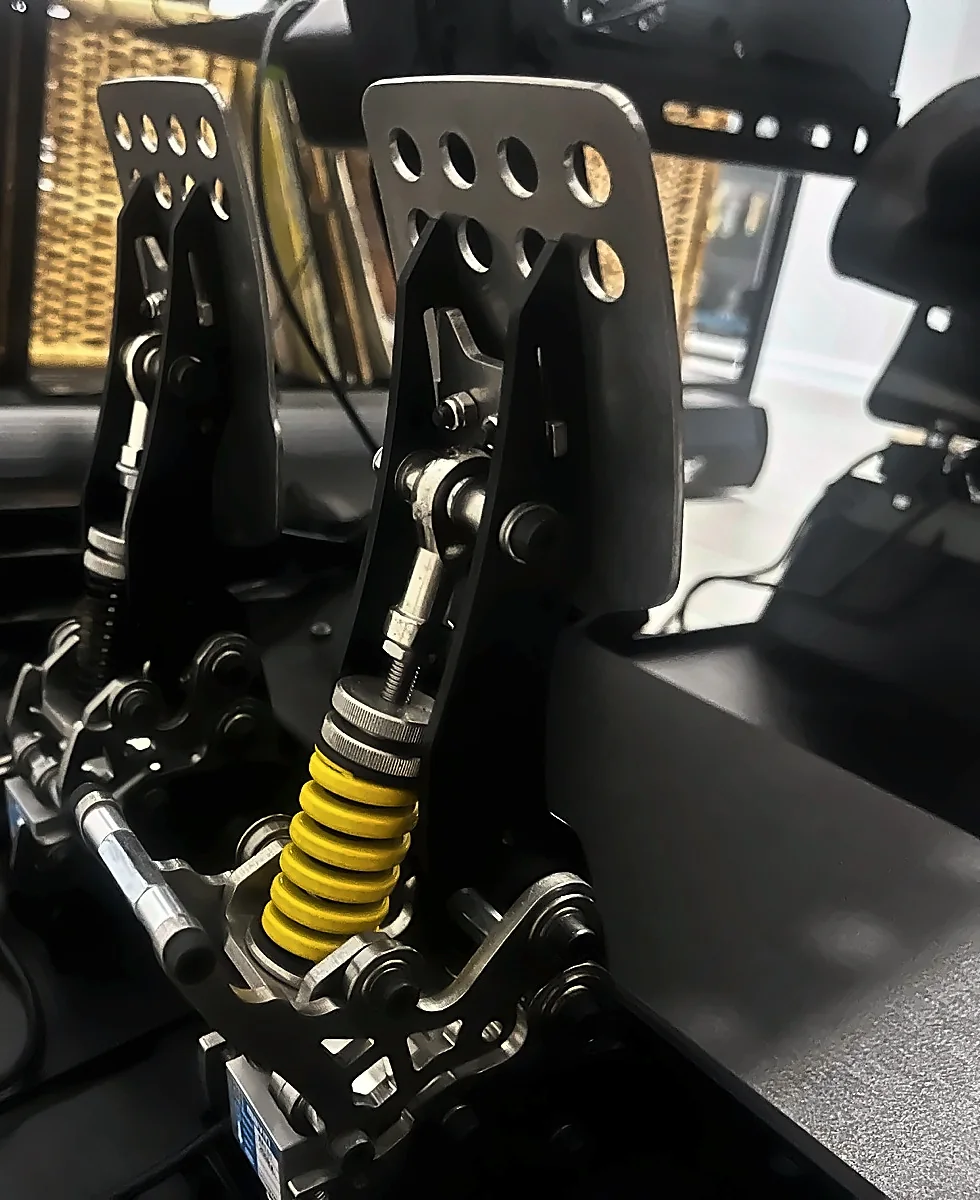
I generally prefer the feel of springs because I find them easier to build consistent inputs around. Elastomer brakes can still work very well, but the spring-based feel here suited me immediately. I wouldn't claim that my test proves better consistency over an entire endurance race; what I can say is that the response felt predictable throughout my driving.
The optional Brake Kit V1 adds softer red and blue springs, plus replacement side plates that expand the adjustment range. It can also provide a stiffer configuration with the original yellow spring.
Plenty of adjustment
After the initial driving test, I started experimenting with the settings.
There is a lot you can change, and I never felt that an essential adjustment was missing for my setup. You can alter the pedal position and resistance, adjust throttle travel, and tune the brake's dual-stage behaviour.
The manufacturer specifies height-adjustable pedal faces, 8.5 degrees of pedal-angle adjustment, four mechanical progressivity settings for the brake and three for the throttle. The calibration software also supports dead zones, response curves and saved profiles.
For me, the brake was already very good in its standard configuration. Having the extra adjustment available is useful, but I didn't need to spend hours changing things before I could drive properly.
The throttle doesn't quite match the brake
This is where my opinion becomes more mixed.
On my Heusinkveld Ultimate+ pedals, I really like the progressive feel of the throttle. It gives me fine control at low inputs, particularly when I'm just starting to apply power.
With the VX-PRO, I struggled to find that same precision in roughly the first 20% of throttle. To my foot, that initial section felt more on-or-off than I wanted.
I'm describing how easily I could control it, rather than saying the sensor literally behaves like a switch. But when you're trying to feed in a small amount of power, that distinction in feel matters.
I tried the available adjustments to find something that worked for me. Changing the geometry made the pedal harder to press, but it didn't give me the progression I was looking for. More resistance didn't automatically translate into better control of those small inputs.
I also tried a damper during my testing, but that didn't achieve the result I wanted either.
So while the brake immediately felt comparable to what I'm used to, the throttle didn't reach the same level for my preference.
How much does that matter while driving?
It depends on the cars you drive and how sensitive you are to throttle feel.
For GT3, the overall package worked very well for me. I matched my usual pace, and the throttle didn't prevent that. I'm being quite demanding here because I know how good a throttle pedal can feel, and I have a clear reference from my main rig.
Where I would pay closer attention is in powerful formula cars where you need to be careful with the first application of throttle. In those situations, I want those small inputs to feel as natural and controlled as possible.
For many drivers, I don't think this will be a major issue. But if low-percentage throttle modulation is something you're particularly sensitive to, it is the part of this set I would recommend trying before buying.
A compact design with useful technical features
The VX-PRO pedals are designed, manufactured and assembled in Finland. They use stainless-steel ball bearings at the pivot points, connect to a PC through USB, and currently carry a three-year warranty according to Simgrade's product page.
All three pedals use load-cell sensing, and the compact mechanism uses rolling bearings to transfer force to the sensors. That is an unusual approach, although a load cell on the throttle doesn't automatically make it better: the mechanical feel and how comfortably you can control the input still matter.
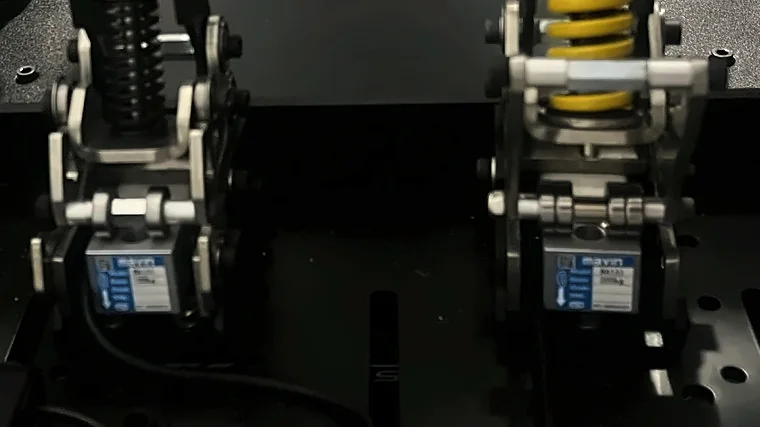
A clutch is available too, with adjustable preload, geometry and interchangeable profile plates. My driving impressions here focus on the throttle and brake.
My verdict
I really enjoyed driving with the Simgrade VX-PRO pedals, and the brake is the main reason.
It feels solid, allows precise modulation, and made the transition from my Heusinkveld Ultimate+ pedals surprisingly easy. Matching my GT3 lap time at the Red Bull Ring within roughly an hour, without changing the standard mechanical setup, gave me a lot of confidence in it.
The throttle is the compromise for me. I wanted more control and a more progressive feel in the first part of its range, and I couldn't quite achieve that with the adjustments I tried.
Even with that criticism, I think this is an excellent throttle-and-brake package. The brake feels far better than I expected at this price level, and my experience on track backed that up.
This guide is part of the free library at GitGud Racing Academy — an online sim racing academy built around weekly lap reviews, structured courses, drills and training tools.
Train this the right way
Reading is step one. Build it into muscle memory with structured, car-specific courses and personal lap reviews from a coach — inside the Academy.
Join the Academy · $49.99/mo incl. VAT