The Best Sim Racing Books: What to Read at Every Level
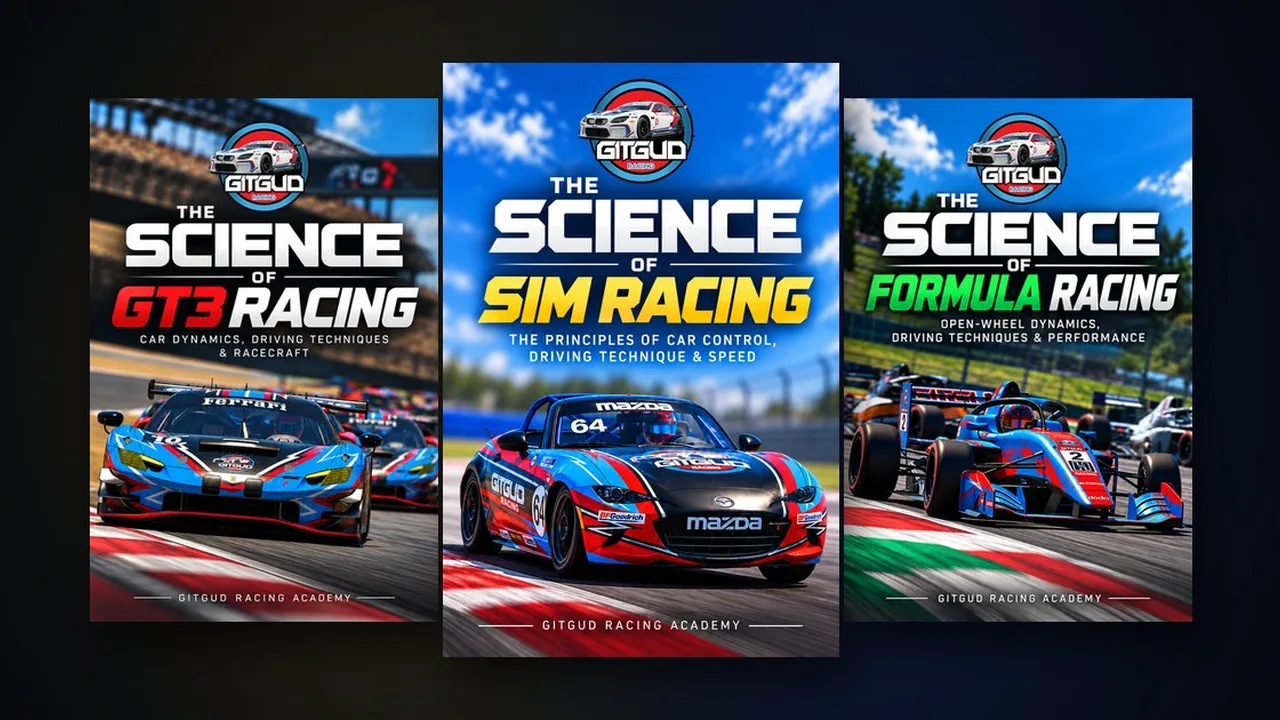
If you race in a simulator, the best book to start with is one written for the simulator. Most "best sim racing books" lists are really lists of real racing books, and those classics are still worth reading: the core of driving fast is the same in iRacing and at Silverstone. But they were written for a driver in a real seat, feeling the car through their body. You feel it through a wheel, pedals and a screen, and that changes how a lot of the advice should be applied.
That is why we wrote The Science of Sim Racing, and it is our first recommendation for most sim racers. It is not only a sim racing book: the technique in it is motorsport technique, and it works on a real track too. We are not neutral about it: we wrote it, and we sell it. So this guide also covers the real-car classics, the telemetry and setup books, and the other books written for sim racing, with what each one does well and where it falls short. If one of them suits you better than ours, the guide says so.
How we judged them. We coach sim racers, so the test is what a book does for the problems we see in coaching: inconsistent braking, a car that won't rotate, pace that disappears in races. For each book we looked at what it covers, its table of contents and the publisher's description and sample where there is one. The notes below describe what each book covers and who it suits. They are not page-by-page reviews of every book.
The best sim racing books compared
The short version. The sections below explain each book, what it won't do for you, and what to practise after reading it.
| Book | Best for | Level | Format | Languages | Main limitation |
|---|---|---|---|---|---|
| The Science of Sim Racing (ours) | Driving technique for the sim and the track | Beginner to intermediate | E-book (PDF) | 8 languages | New, so no long track record |
| The Science of GT3 Racing (ours) | GT3 in iRacing, ACC and Le Mans Ultimate | Intermediate | E-book (PDF) | 8 languages | GT3 cars only |
| The Science of Formula Racing (ours) | Formula and open-wheel cars | Intermediate | E-book (PDF) | 8 languages | Formula cars only |
| Going Faster! | One complete real-car method | Beginner to intermediate | English | Real-car focus, dated in places | |
| Ultimate Speed Secrets | Short, practical lessons | Beginner to intermediate | Print, Kindle | English | Written for real cars |
| Sports Car and Competition Driving | The classic fundamentals | Intermediate | English | First published in 1963 | |
| The Perfect Corner | Why the line is where it is | Intermediate to advanced | Print, e-book | English | Dense, analytical style |
| Drive to Win | An engineer's view of the driver | Intermediate to advanced | English | Print only | |
| Inner Speed Secrets | Nerves, focus and consistency | Intermediate | Print, e-book | English | No driving technique |
| Making Sense of Squiggly Lines | Reading telemetry | Intermediate to advanced | English | Leaves out setup | |
| Tune to Win | Understanding setup | Intermediate to engineer | English | Cars from the 1970s | |
| Race Car Vehicle Dynamics | Vehicle dynamics, with the maths | Engineer | Print (hardcover) | English | About 900 pages of engineering |
| SimRacing: Start Your Engines | Getting started: sims and hardware | Beginner | Print, PDF | English, German | Not a driving technique book |
The languages column is the editions we could find. If you read best in Spanish, Portuguese, Italian, German, Russian or Chinese, our three books are the only driving technique books in this list we found in your language.
The best sim racing book for beginners
Our pick: The Science of Sim Racing. A beginner's problems in a sim are rarely the ones a real-car book starts with. They start before the first lap: a wheel and pedals that don't tell the truth, a field of view that hides the speed. Then come the habits nobody points out because nobody is sitting next to you. The book starts there. It sets up the rig, then teaches the line, reference points, the grip limit, steering, throttle and braking in the order a sim racer meets them, with the illustrations on the page instead of described in words.
If you would rather start with a real-car classic, pick one: Going Faster! if you want a complete course, Ultimate Speed Secrets if you prefer short lessons. Read either with the next section in mind, because some of their advice needs translating for a sim.
Whichever you choose, read one technique book properly before you buy a second. A second book on the same basics adds less than a month of practice with the first.
What a real racing book can and can't teach a sim racer
Every book in this guide apart from the sim racing books was written for real cars. That doesn't make them wrong for you. It means you have to know which parts to take as they are and which to adapt.
The principles carry over. The racing line, reference points and where you look, the traction circle, weight transfer, how the inputs overlap, reading data, and the mental side. These come from how a car on the limit behaves, so they hold in a sim too. They are the same driving techniques that work in every car. The details still differ: each sim models tyres and cars in its own way, and each car has its own limit, so a principle carries over while the exact brake pressure or turn-in point has to be found again.
The inputs overlap. Many books teach braking, turning and throttle as separate steps, and that is a fair way to learn them. Fast driving blends them: you are still braking as you turn in, then you trade brake for steering, then steering for throttle. That is trail braking, and it matters even more in a sim, where the brake pedal is one of the clearest signals you have.
Anything taught through your body needs translating. When an author says you will feel the rear go light, or feel the car settle in your seat, a sim gives you little of that. A motion rig gives you short cues of movement, not the steady sideways load of a real corner. You read the same information through the wheel's force feedback, the sound of the tyres and what you see. So read "feel it in the seat" as "notice it in the wheel and on the screen". The lesson stays right. Only the channel changes.
Some things don't carry over at all. Pages on building up to the limit slowly because a crash is expensive, on fitness and heat, on preparing the car, and on licences and club rules. A sim also gives you something those authors could only wish for: the same corner fifty times in one evening, for free.
Our books: The Science of Sim Racing series
Marian Barbieru. Three illustrated e-books, 2026. PDF, in English, Spanish, Brazilian Portuguese, Italian, German, Russian, and Simplified and Traditional Chinese.
We wrote these because the sim racers we coach kept asking for a book written for the wheel, the pedals and the screen. Each book marks what carries over to a real car and what is specific to the sim, and each is built around illustrations and drills rather than long descriptions.
The Science of Sim Racing
308 pages, 29 chapters. The fundamentals. Setting up the rig so it tells you the truth, the racing line, reference points, understeer and oversteer, steering, throttle, braking and the traction circle, trail braking, reading telemetry, every type of corner, then tyre and race pace management, qualifying, racecraft, the wet, and how to practise.
Choose it over a real-car classic if you drive mainly or only in a sim, if you want the techniques shown rather than described, or if you would rather read in your own language. You will still need laps: the book gives you the drills, not the practice.
See inside The Science of Sim Racing
The Science of GT3 Racing and The Science of Formula Racing
The Science of GT3 Racing, 156 pages. What makes a GT3 different, when to lean on ABS and traction control, how to brake at low, medium and high-speed corners, the tools for rotation, and keeping the tyres alive. For GT3 drivers in iRacing, Assetto Corsa Competizione and Le Mans Ultimate.
The Science of Formula Racing, 193 pages. Braking with downforce, steering at the peak, brake bias, anti-roll bars and the differential as rotation tools, and racing open-wheelers, with a racing section by Adrian Kulleseid that goes through a top-split Super Formula Lights race corner by corner.
These are the only books we know of that teach one class of race car in sim terms. The general books, ours included, teach the principles. These teach what is different about the car you actually drive.
What to weigh up: the series is new, so it doesn't have the decades of reader reviews the classics have, and it is e-book only, with no print edition.
More than sim racing books: our books on a real track
The name says sim racing, but these are motorsport books. A car on the limit doesn't care whether you are sitting in a simulator or in a real cockpit, and almost everything the books teach comes from how a race car behaves, not from how a simulator works. That is why we wrote them for sim racers and track drivers alike, and why many real drivers use a simulator to practise the same technique between track days.
What carries over to a real car:
- The Science of Sim Racing: the racing line, reference points and every type of corner. Braking, trail braking, the traction circle and weight transfer. Car balance, throttle control, tyre management and racecraft.
- The Science of GT3 Racing: how ABS and traction control change the way you brake and accelerate. Braking by corner speed, trail braking, and rotation with downshifts and brake bias. The GT racing line, the limit, and keeping the tyres alive over a stint.
- The Science of Formula Racing: braking with downforce, steering at the peak and the release. Rotation with steering, throttle, brake bias, the anti-roll bars and the differential. Defending, attacking, overtaking and managing a race.
What is specific to the simulator is a small part of each book: setting up the rig, wheel and force feedback, choosing which car to drive in the sim, the online rating, and the way the drills use active reset, replays and the input overlay.
What changes on a real track. Each book says where the real car is different, and the differences are about how you practise, not what you practise:
- In a real car you feel the forces and carry the risk, so build up to the limit gradually instead of finding it in one lap.
- There is no reset button. A drill becomes a few laps in a track session, checked afterwards with a data logger.
- Real brakes and tyres heat up and wear in ways a simulator may not reproduce, and how much ABS, traction control and downforce help depends on the car and the conditions.
So if you do track days or club racing, or you are a sim racer moving to a real car, the books apply to you as they are. Read the chapter, drive the drill in the sim, then take the same idea to the track.
Racing driving technique books
The real-car classics. Each one is worth reading, and each one needs the translating described above.
Going Faster! Mastering the Art of Race Driving
Carl Lopez, with the Skip Barber Racing School. Bentley Publishers, first published 1997. Close to 300 pages, depending on the edition. Print.
What you learn: the method of one of the best-known racing schools in the US, written as a course: car control, braking, cornering lines and finding lap time, in the order a school teaches them. Choose it over Speed Secrets if you want one structured course rather than short lessons. You will still need to translate its real-car feel into sim terms, and some of it is dated. Practise after reading: one corner, one braking marker, ten laps, before you move to the next chapter.
Speed Secrets vs Ultimate Speed Secrets
Ross Bentley. Speed Secrets, Motorbooks, 1998, 160 pages. Ultimate Speed Secrets, Motorbooks, 2011, 336 pages. Print and e-book.
Bentley is a former professional racing driver and a well-known driving coach. Speed Secrets is a short book of short lessons on vision, car control, the line, practice and setup basics, and it started a whole series. Ultimate Speed Secrets brings that series together in one volume and adds the mental side and race strategy.
Which to buy: Ultimate Speed Secrets. It covers what Speed Secrets covers and more, and it has a Kindle edition. Buy the original only if you want the shortest possible introduction. You will still need sim-specific setup and feedback, which neither covers. Practise after reading: take one lesson into one session, and drive only that.
Sports Car and Competition Driving
Paul Frère, foreword by Phil Hill. First published 1963, reprinted by Bentley Publishers. About 155 pages. Print.
Frère won Le Mans and drove in Formula 1, then became one of the most respected motoring journalists of his time. This is his book on driving technique, and it has been reprinted for decades because the fundamentals in it haven't changed. Choose it if you want the classic explanation of car control from a driver who was also a gifted writer. You will still need a modern book for anything about aerodynamics, data or modern race cars: the cars in it are from the 1950s and 60s.
The Perfect Corner
Adam Brouillard. Paradigm Shift Motorsport Books, 2016, about 110 pages. Then Perfect Control and The Perfect Corner 2, both 2016. Print and e-book.
What you learn: how to work out the best line through any corner from the physics of the car, instead of memorising one. Perfect Control moves on to car control and the driver's inputs, and The Perfect Corner 2 takes the method into linked corners. Choose it if you want to know why the line is where it is. You will still need patience with the style, which some readers find dense. Practise after reading: test the line it predicts against your usual one in the same corner. A sim is the ideal place to do that.
Drive to Win
Carroll Smith. 1996, about 175 pages. Print.
Smith was a race engineer who worked with some of the best drivers of his time. This is his account of what those drivers did with the car that others didn't: technique, understanding what the car is doing, and racecraft. Choose it as a second book once you have the basics. You will still need a first book: this one assumes you know the fundamentals.
The best book on the mental side
Inner Speed Secrets
Ross Bentley and Ronn Langford. Motorbooks, 2000, 160 pages. Print and e-book.
What you learn: how the brain learns and stores a motor skill, why that makes visualisation and mental practice work, and how to stay focused under pressure. It explains a lot about why a perfect lap in practice disappears in the race. Choose it if your problem is consistency or nerves rather than technique. Nothing in it depends on the car, so it applies to a sim without changes. Pair it with our guides on why your lap times are inconsistent and how to get better at sim racing.
Racing telemetry books
Making Sense of Squiggly Lines
Christopher Brown. 2011, 144 pages. Print.
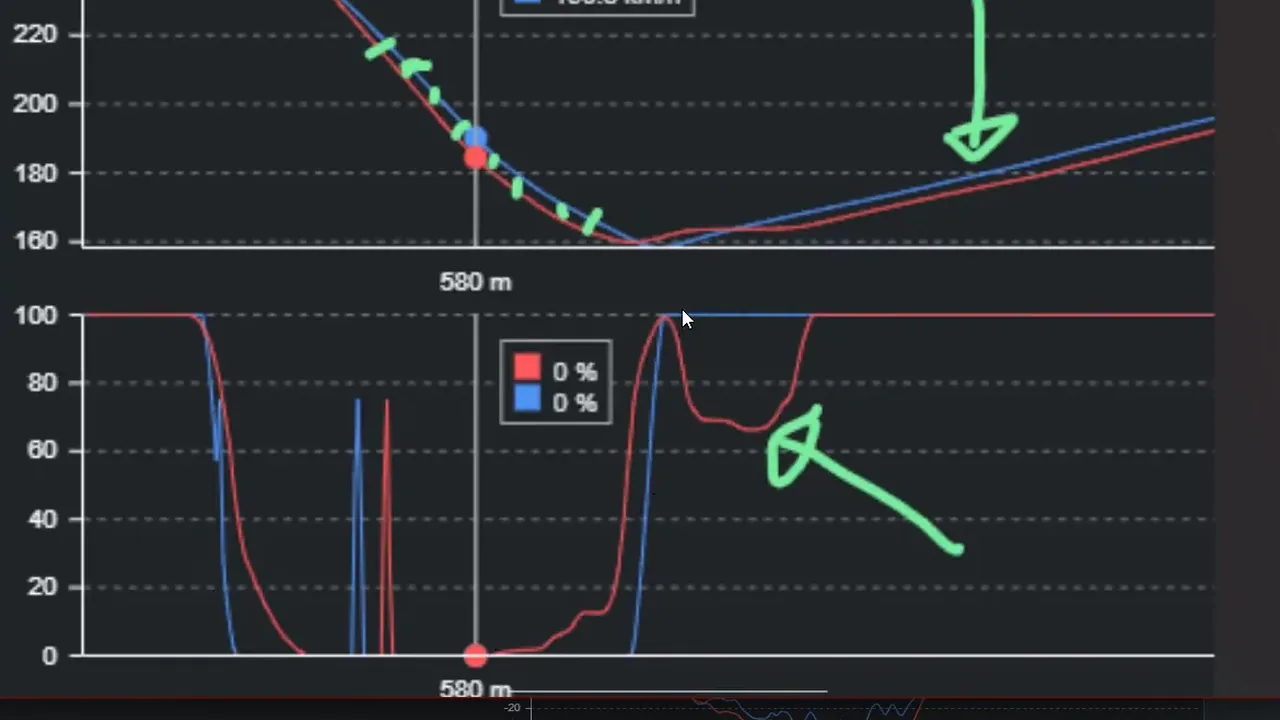
What you learn: how to read logged data to make the driver faster, starting from the speed trace, then braking, throttle, gears, wheel slip and g-force, with plenty of example plots. Choose it if you already record your laps and want to read them properly. The traces are the same ones you see in MoTeC, Garage 61 or your sim's own telemetry tool. You will still need a setup book: it leaves setup out on purpose. Our sim racing telemetry guide shows how a coach reads a lap, and The Science of Sim Racing has a chapter on reading telemetry.
Race car setup books
Tune to Win
Carroll Smith. 1978, about 175 pages. Print.
What you learn: what each part of a race car does to the handling: tyres, suspension geometry, springs, anti-roll bars, dampers and aerodynamics, and how to develop a car methodically. Choose it if you build your own setups. The ideas map straight onto a sim's setup screen, even though the cars in the book are from the 1970s. Skip it if you race in fixed-setup series. Our guide to fixed and open setups explains how much setup matters there.
Race Car Vehicle Dynamics
William F. Milliken and Douglas L. Milliken. SAE International, mid-1990s, about 900 pages. Hardcover.
The engineering reference on how a racing car behaves: tyres, the g-g diagram, aerodynamics, suspension, steady-state and transient handling, lap-time simulation. It is a textbook, full of maths, and priced like one. It is not a practical first driving book. Buy it if you want the engineering behind the setup screen in full. Otherwise, Tune to Win gives you most of what you will use.
Books for iRacing
There is no current book about iRacing itself worth recommending. The one we found, a beginner's guide from 2010, describes cars, rules and a service that have changed completely since. What makes you faster in iRacing is driving technique, and that is what the books above teach.
For iRacing drivers specifically: The Science of Sim Racing covers the fundamentals, and chapters on qualifying, race pace and the rating itself. The Science of GT3 Racing covers the GT3 class, and The Science of Formula Racing includes a full Super Formula Lights race. Our guide on how to be faster in iRacing is a free place to start.
Sim racing e-books and PDF books
Most of the classics are print books, and several are only easy to find second-hand. If you want something to read today, on any device, your choice is smaller:
- Our three books are PDFs you download straight after buying, readable on a phone, tablet or computer, in eight languages.
- Ultimate Speed Secrets and Inner Speed Secrets have e-book editions, as do Brouillard's books.
- SimRacing: Start Your Engines has a PDF edition.
A PDF also has one practical advantage for a sim racer: you can keep a page open on a second screen, or on a tablet beside the rig, while you drive the drill it describes.
Other books written for sim racing
Apart from ours, very few books are written for sim racing, and none has the track record of the real-car classics.
SimRacing: Start Your Engines, Christian Haasz, 2025, about 230 pages. Also in German as SimRacing: Einsteigen & Durchstarten. A broad introduction to the hobby: the main sims, hardware, setup basics, a first look at data, and racing online. Useful if you are choosing your first sim and wheel. It is a guide to getting started more than a book on driving technique, and it is too new to have many reviews yet.
You will also find many short sim racing e-books on Amazon. Length doesn't decide whether a book is good, and neither does how it was produced. What decides it is whether the advice is accurate, whether it shows real examples, whether it is clear, and whether it gives you something to practise. Read the sample with those four questions. If the sample could be about any sim and any car, so could the rest of the book.
Two famous books we would skip for now
Ayrton Senna's Principles of Race Driving (1993). A genuine instruction book, not a biography, with notes on specific corners and his approach to preparation. It is long out of print, and second-hand copies sell at collectors' prices. Buy it because you want Senna on your shelf, not to learn to drive.
Competition Driving by Alain Prost, with Pierre-François Rousselot. A well-illustrated introduction to driving position, steering, braking and the limit. It is out of print, and lighter than the books above. Fine if you find it cheap. It is a different book from Paul Frère's Sports Car and Competition Driving.
A reading order
You don't need all of these. A sensible path for a sim racer:
- Start with one technique book. The Science of Sim Racing, or Going Faster! or Ultimate Speed Secrets if you want a real-car classic. Just one.
- Then the car you drive. The Science of GT3 Racing or The Science of Formula Racing, or The Perfect Corner if the line is where you lose time.
- When you plateau, Inner Speed Secrets for the head and Making Sense of Squiggly Lines for the data.
- Only if you build setups, Tune to Win. And only if you want the engineering in full, Race Car Vehicle Dynamics.
If you want the whole first two steps at once, all three of our books come as a bundle.
A book won't make you faster on its own
Reading gives you the idea. Laps turn it into a habit. The drivers who get the most out of a book take one idea from it into each session, try it on purpose, and read the chapter again after they have driven it.
So when you finish a chapter, pick one thing and practise only that. Our guide on how to practise sim racing effectively shows how to structure the session, and the sim racing drills give you something specific to do with it.
Sim racing books FAQ
What is the best book for sim racing beginners?
For a beginner who drives mainly in a simulator, we recommend The Science of Sim Racing, which we wrote for exactly that: it starts with setting up the wheel and pedals so they tell you the truth, then teaches the line, reference points, steering, throttle and braking in sim terms, with illustrations and drills. If you would rather start with a real-car classic, Going Faster! from the Skip Barber Racing School is a complete course and Ultimate Speed Secrets by Ross Bentley covers the same ground in short lessons. Read one book properly before buying a second.
Are The Science of Sim Racing books useful for real racing and track days?
Yes. They are motorsport books as much as sim racing books: the racing line, reference points, every type of corner, braking and trail braking, the traction circle, weight transfer, car balance, tyre management and racecraft all come from how a race car behaves, so they apply on a real track. Only a small part of each book is specific to the simulator, such as setting up the rig and drills that use active reset. Each book also notes what changes in a real car: build up to the limit gradually, turn drills into laps in a track session checked with a data logger, and expect real brakes and tyres to heat and wear differently.
Do real racing books work for sim racing?
Mostly. The principles carry over: the racing line, reference points, the traction circle, weight transfer, reading data and the mental side all come from how a car on the limit behaves. What needs translating is anything taught through your body, because in a sim you read the car through force feedback, sound and the screen rather than the seat. The details also differ, since each sim models tyres and cars in its own way. Real-car material on risk, fitness, car preparation and club rules does not carry over.
Speed Secrets or Ultimate Speed Secrets: which should I buy?
Ultimate Speed Secrets. It brings Ross Bentley's series together in one 336-page volume, so it covers what the original 160-page Speed Secrets covers plus the mental side and race strategy, and it has a Kindle edition. Buy the original only if you want the shortest possible introduction. For the mental side in more depth, his Inner Speed Secrets, written with Ronn Langford, applies to sim racing without changes.
What are the best books for iRacing?
There is no current book about iRacing itself worth recommending: the one beginner's guide we found dates from 2010 and describes a service that has changed completely. What makes you faster in iRacing is driving technique. The Science of Sim Racing covers the fundamentals plus qualifying, race pace and the rating, The Science of GT3 Racing covers the GT3 class, and The Science of Formula Racing includes a full Super Formula Lights race. Of the real-car classics, Going Faster! and Ultimate Speed Secrets apply directly.
Is there a sim racing book as a PDF or e-book?
Yes. Our three books, The Science of Sim Racing, The Science of GT3 Racing and The Science of Formula Racing, are PDFs you download straight after buying, in eight languages. SimRacing: Start Your Engines by Christian Haasz also has a PDF edition, and of the real-car classics, Ultimate Speed Secrets, Inner Speed Secrets and Adam Brouillard's books have e-book editions. Most of the others are print only.
What book should I read to learn telemetry?
Making Sense of Squiggly Lines by Christopher Brown. It teaches you to read logged data to improve the driver, starting from the speed trace and then braking, throttle, gears and g-force, and the traces are the same ones you see in MoTeC, Garage 61 or a sim's own telemetry tool. It leaves setup out on purpose. The Science of Sim Racing also has a chapter on reading telemetry if you want it in sim terms first.
What is the best book about race car setup?
Tune to Win by Carroll Smith. It explains what tyres, suspension geometry, springs, anti-roll bars, dampers and aerodynamics each do to the handling, and those ideas map straight onto a sim's setup screen even though the book dates from 1978. If you want the full engineering with the maths, the reference is Race Car Vehicle Dynamics by William and Douglas Milliken, a textbook of about 900 pages rather than a practical driving book.
This guide is part of the free library at GitGud Racing Academy — an online sim racing academy built around weekly lap reviews, structured courses, drills and training tools.
Train this the right way
Reading is step one. Build it into muscle memory with structured, car-specific courses and personal lap reviews from a coach — inside the Academy.
Join the Academy · $39.99/mo incl. VAT